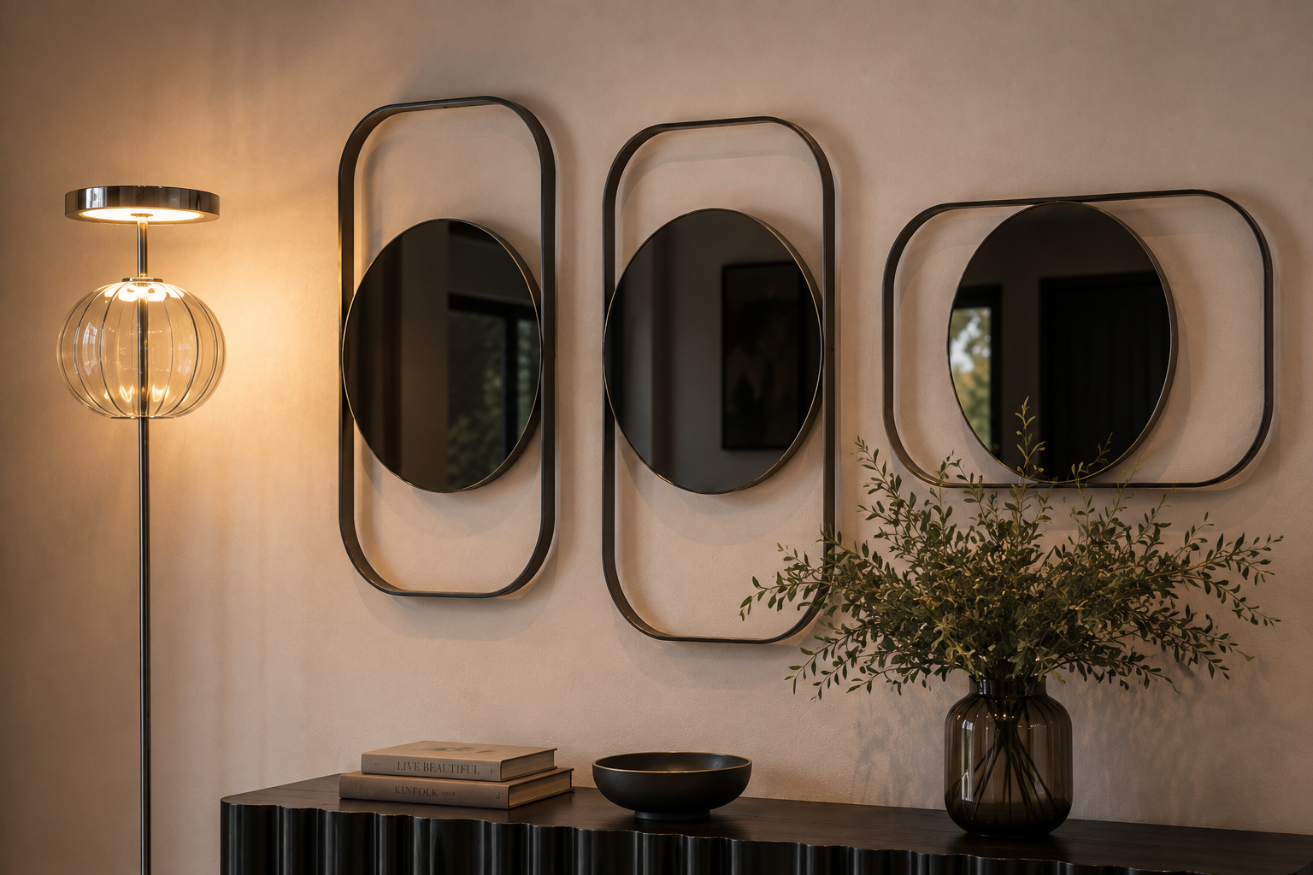
An entryway does more than welcome guests. It sets the tone for the rooms beyond it. Handles the keys and bags that arrive with daily life, and introduces your home's design language in a single view. The most successful European interiors balance practical storage with thoughtful reflection and warm illumination, rather than treating the foyer as a space to decorate last. Book your free design consultation to explore a tailored approach for your King of Prussia or Greater Philadelphia home.
Strong entryway design ideas begin with one coordinated composition: choose a console table that fits the wall and preserves comfortable circulation. Place a mirror to reflect available light, then layer ambient, task, and accent lighting. Finish with a small number of useful accents, such as a tray, bowl, or sculptural object, so the space feels polished without becoming crowded.
With that overall balance in mind, the console table provides the visual and functional foundation. Its proportions, depth, and relationship to the surrounding walkway determine how naturally the mirror, lighting, and accessories will work together.
The console table establishes the entryway's visual rhythm and gives everyday essentials a deliberate landing place. Choose it as an architectural element, not an afterthought. Its length, depth, finish, and relationship to the wall determine whether the entrance feels composed or crowded.
As a starting proportion, look for a console that spans about two-thirds of the wall behind it. This keeps the furniture substantial enough to anchor the space while leaving breathing room at each side for artwork, lighting, or architectural details. In a narrow hall, a shallow profile of 12 to 14 inches can provide a useful surface without turning the circulation path into an obstacle.
Clearance matters as much as proportion. Leave at least 36 inches for walking space in front of the table, especially where the entry connects the front door to the living areas. Measure with doors open and account for the way people carry coats, bags, or parcels through the space. A beautiful piece that interrupts movement will make the entire home feel less comfortable.
Consider what the surface needs to hold before selecting a style. A compact console may be enough for keys and a small tray. A wider design can accommodate a lamp, a bowl, and a sculptural accent while keeping the top visually balanced. If you need hidden storage, prioritize drawers or cabinets rather than adding loose baskets that consume valuable floor space.
European craftsmanship is especially useful when a standard dimension does not suit the architecture. EuroHome offers custom finishes and sizing for many Italian import pieces. Allowing the console to respond to an unusually short wall, a tight passage, or a specific material palette. This kind of tailored fit supports both function and the refined proportion associated with Italian interiors. See the guide to console table sizing for the essential measurements, then explore console table styling for ways to arrange the surface without overfilling it.
Finally, connect the entryway to the rooms beyond it. A wood tone, metal detail, or upholstery color can echo pieces elsewhere in your living room furniture collection. The result feels intentional from the moment guests enter, while the console remains practical enough for daily life.
A mirror can give a narrow foyer the generous feeling of a grand European entrance. Positioned opposite or near a light source, it reflects brightness through the room and creates more visual depth without taking up floor space. The most successful placement also relates to the console beneath it, so the composition feels intentional rather than like a mirror added as an afterthought.
For a console vignette, select a mirror whose width relates clearly to the furniture below it. A mirror that is dramatically narrower can look lost on the wall, while one that is much wider may overpower the console and surrounding architecture. As a starting point, keep the mirror comfortably within the visual footprint of the console, then assess the complete wall rather than judging the mirror alone.
Scale is especially important in a compact foyer. A tall, vertically oriented design can emphasize ceiling height and make the entry feel more open. A wider shape can visually expand a short wall. Before committing, place paper at the proposed dimensions or use painter's tape to outline the frame. Stand at the doorway and view the arrangement from the angle guests will actually see.
Place the center of the mirror at approximately eye level, about 57 to 60 inches from the floor. This range supports a balanced composition and makes the mirror useful for a final glance before leaving home. Adjust slightly when the household includes people of notably different heights, or when architectural details, a tall console, or a low ceiling require a more tailored solution.
Leave enough breathing room between the console and the lower edge of the frame for a lamp, vase, or small sculptural accent. The exact gap depends on the furniture and mirror design, but the arrangement should read as one vignette. Check that doors open freely, walking paths remain clear, and the frame does not collide visually with nearby trim, sconces, or artwork.
Consider what the mirror will reflect before installing it. A view toward a window, pendant, or softly illuminated wall can bring light deeper into a narrow foyer. A reflection of clutter, a blank utility door, or a harsh bulb will reinforce the wrong focal point. This practical check often makes more difference than choosing a larger mirror.
For further guidance, explore our entryway mirror design ideas and our guide to European wall art and mirrors. When you are ready to compare finishes, silhouettes, and European craftsmanship, browse our collection of entryway mirrors. Review the arrangement from several distances, make one final adjustment to height or width, and let the architecture determine the most elegant result.
At dusk, an entryway should feel inviting before it feels impressive. A single overhead fixture can leave the console in shadow or flatten the character of a tall foyer. Layered lighting gives the room depth, directs attention to the details you chose, and makes the first few steps inside feel intentional. Use these four layers to create a comfortable welcome.
Start with ambient light overhead. Choose a ceiling pendant or chandelier that spreads a soft, even glow through the entry. In a foyer with a high ceiling, a statement fixture can anchor the vertical space without competing with the console or mirror. Keep the scale and drop appropriate to the room, and make sure the fixture does not interrupt the path through the home.
Add task light at the console. Place a table lamp on the console to illuminate the surface where you set keys, mail, or a small tray. This lower light source creates a more intimate pool of light than an overhead fixture and makes the entryway useful after dark. For a polished European look, consider European table lamps with a shade that softens the bulb and complements the console's finish.
Use accent light to highlight a focal point. A wall sconce or picture light can draw attention to a mirror, artwork, or architectural detail. Aim the glow so it supports the reflection rather than producing glare at eye level. This layer adds visual depth and helps the entry feel composed from the living spaces beyond it. For a broader approach to layered lighting, adapt the same principle of combining practical illumination with atmosphere.
Finish with control and a warm evening setting. Put the fixtures on compatible dimmers so you can move from brighter arrival light to a quieter glow when entertaining. During the day, white light can support alertness and mood, according to the CDC. In the evening, avoid overly blue or cool bulbs because blue light exposure during the sensitive evening period can make it harder to fall and stay asleep. Select warm bulbs at night, then dim them until the entry feels welcoming rather than stark.
The final layer should make the entryway feel considered, not crowded. European interiors often achieve that balance through a small number of tactile, well-proportioned objects rather than a collection of unrelated decorations. Begin with a practical anchor, then add one element for height, one for texture, and one personal detail that gives the space character.
A common decorating rule of thumb is to arrange accessories in odd-numbered groupings, such as three, five, or seven. Odd groupings tend to feel more natural because the eye moves through the composition instead of stopping at a rigid midpoint. On a console, three objects are usually enough: a tray, a vase, and a sculpture or small stack of books. A wider surface may support five pieces, provided they remain visually connected through color, material, or scale.
Use a shallow tray or catch-all bowl as the functional center of the arrangement. It gives keys, sunglasses, and incoming mail a designated home while preventing daily items from spreading across the tabletop. Choose a tray in a material that supports the room's palette, such as warm wood, stone, leather, or ceramic. The goal is not to hide every practical object, but to contain it with intention.
A ceramic vase with a few stems introduces vertical scale and softens the harder lines of a console, mirror, or wall. Keep the arrangement light enough that it does not obscure the mirror or interfere with the door swing. Natural branches, seasonal stems, or restrained greenery can all work when the vessel and plant feel proportionate to the furniture.
Finish with a decorative sculpture or a small stack of design books. These pieces add personality and reinforce the European character of the room without demanding attention. Explore EuroHome's decorative accessories for objects that can carry this layer, or browse thoughtful decor pieces for more inspiration.
Edit ruthlessly before you consider the arrangement complete. Remove anything that blocks a drawer, crowds the mirror, collects dust without purpose, or has no relationship to the rest of the room. An elegant entryway leaves enough open surface for real life. When beauty and organization share the same composition, the result feels welcoming every day rather than staged only for photographs.
Your entryway creates the home's first impression, but it also manages the daily handoff between outside and in. Keys, mail, bags, and shoes need a deliberate landing spot, or even a beautifully furnished foyer quickly becomes a clutter zone. Use this comparison as a practical edit before you finalize your furniture, lighting, or accessories. For more ideas, see our guide to styling an entryway table.
| Common mistake | Better approach |
|---|---|
| Choosing furniture that overwhelms the wall or narrows the walkway. | Scale the console to the wall and preserve comfortable circulation, especially in a narrow hall. |
| Leaving keys, mail, and sunglasses loose on the console. | Use a catch-all tray or bowl to corral daily carry, then clear it regularly so the surface remains edited. |
| Adding a decorative table without planning for bags, shoes, or coats. | Pair the vignette with useful storage, such as a bench, hooks, or a designated landing area for everyday items. |
| Relying on one harsh overhead fixture. | Combine warm ambient light with a table lamp, wall sconce, or other accent source so the welcome feels layered rather than flat. |
| Using a mirror that is too small or mounting it too high. | Choose a size that relates to the console and wall, with the center near eye level. See this entryway mirror height guidance for a useful placement reference. |
| Filling every inch with accessories. | Leave visual breathing room and select a few purposeful pieces, such as a vase, sculpture, or framed work, rather than competing objects. |
The strongest entryway design ideas make organization feel intentional. If an object does not support arrival, departure, or the room's visual balance, remove it.
Book your free design consultation to turn these entryway design ideas into a finished foyer that works for your home.
Start with one functional focal point, usually a console table, then build upward with a mirror or artwork. Add only a few useful accents, such as a tray for keys, a bowl for small essentials, or a vase with seasonal branches. Keep a clear path for entering and leaving, and remove anything that does not support the room's daily use or visual balance.
The 3-5-7 rule is a common decorating rule of thumb that groups accessories in odd numbers. A trio of objects can create a simple console arrangement, while five or seven pieces may suit a larger surface or layered composition. Vary height, shape, and texture within the group, then edit one item if the display feels busy.
Choose a mirror that relates to the width and proportions of the console rather than treating it as an isolated piece. It should be easy to view and positioned at a comfortable eye level, while also reflecting daylight or a pleasant feature. For more guidance on scale and placement, review EuroHome's entryway mirror design recommendations.
A layered arrangement is usually the most welcoming. Use a ceiling fixture or pendant for ambient light, a table lamp for softer illumination at the console. And a sconce or picture light to highlight a mirror or artwork. In a taller foyer, a well-proportioned pendant or chandelier can establish the room's character without replacing practical illumination.
Avoid choosing furniture that restricts the walking route, filling the console with unrelated decor, or designing without a landing spot for keys, mail, and bags. An entryway should balance storage, reflection, and illumination because it is both a first impression and a working part of the home. If the space feels unfinished, improve function before adding more accessories.
A thoughtful entryway brings together welcome, proportion, light, and everyday function. Book your free design consultation with EuroHome Interiors to select a console table, mirror, and lighting that work as one composition.


