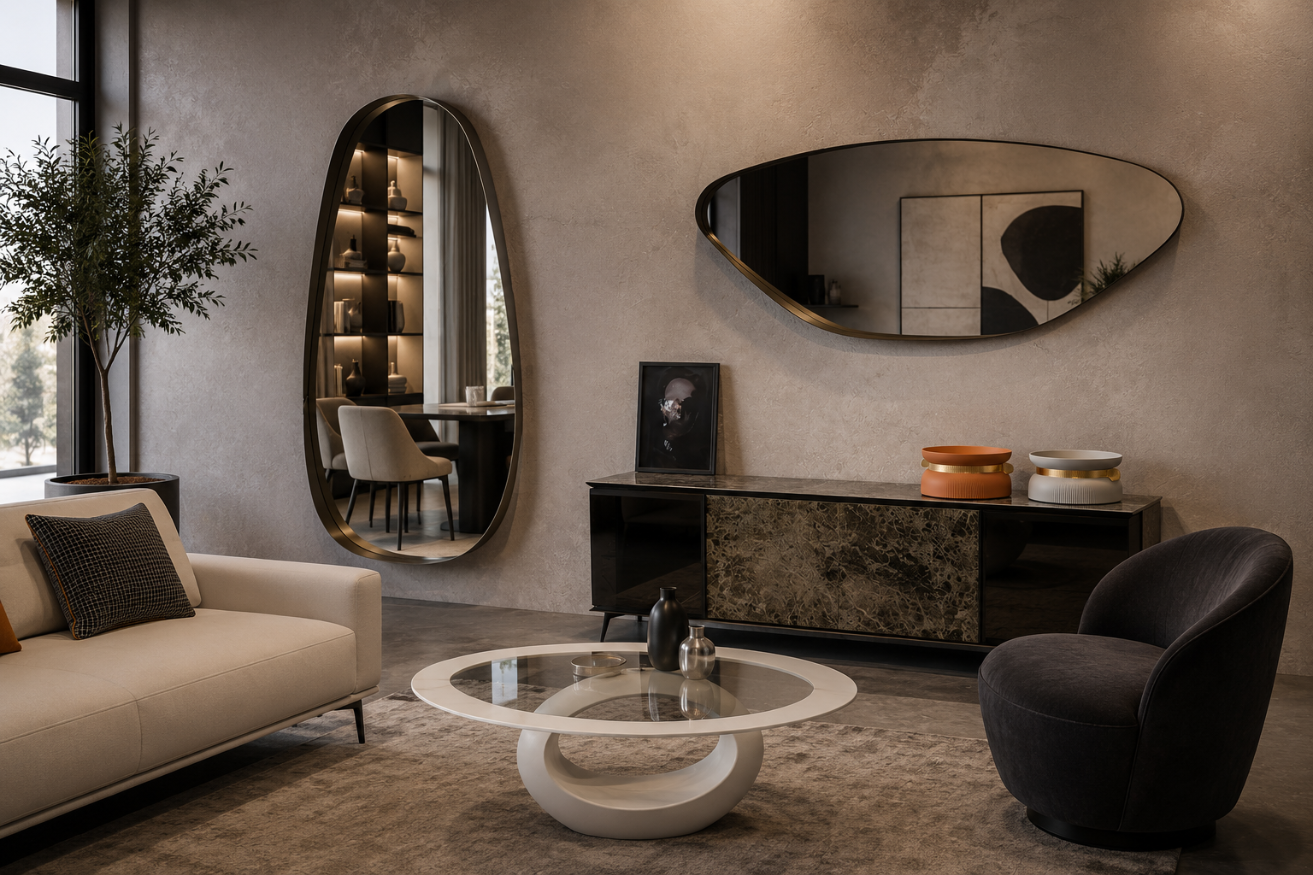
A room can have beautiful furniture and still feel unfinished when its walls do not support the composition. The right artwork, mirror, or decorative panel gives the eye a focal point, shapes the room's proportions, and connects individual pieces into a deliberate interior.
European wall art and mirrors work best when selected as part of the room's overall design, not added as an afterthought. Use art to establish character, mirrors to reflect light and expand the sense of space, and panels to add architectural depth. Keep scale, material, color, and sightlines aligned with the furniture and the room's emotional tone.
Even a restrained interior benefits from a curated focal point, so the goal is not to fill every wall. Start with the frame, material, and visual language that will give your space the right balance of warmth, refinement, and presence.
The right wall piece can do more than fill an empty surface. It can establish the visual focus of a room, direct attention toward a seating area, and give the surrounding furniture a stronger sense of purpose. Treat the artwork as part of the room's architecture rather than as a final accessory. A restrained composition can feel just as considered as a dramatic statement, provided its scale, material, and emotional tone support the space.
Frame material is one of the clearest ways to shape the formality of a piece. A slim metal frame tends to read as contemporary and precise, making it a natural partner for clean-lined sofas, glass tables, and modern architectural details. Wood introduces warmth and a more traditional feeling. Choose a finely finished wood frame for a tailored European interior, or a more substantial profile when the room calls for visual weight.
Ornate frames can bring history and ceremony to a dining room, entry, or formal sitting area. They work best when their detailing has a relationship to another element, such as carved furniture, aged finishes, or decorative lighting. Minimalist frames, by contrast, allow the artwork itself to lead. When selecting premium European decor styles, consider whether the frame should blend quietly into the wall or announce the art as a defining feature.
Canvas has a softer, more tactile presence. Its visible weave and lack of reflective glass can suit expressive paintings, abstract compositions, and relaxed living spaces. A framed print offers a crisper, more finished appearance, particularly when a mat creates breathing room around the image. Glass also gives the work a formal, protected presentation, although reflections should be considered in rooms with strong windows or directional lighting.
Neither option is inherently more luxurious. The better choice depends on the image, the room's furnishings, and the atmosphere you want to create. Art should align with the emotional tone of the interior: energetic color can enliven a neutral room, while quiet tonal work can reinforce a calm, contemplative one.
Oversized art can anchor a room and make a confident statement above a sofa, console, or dining sideboard. As a practical proportion, the piece should generally occupy about two-thirds to three-quarters of the furniture's width. A neutral backdrop gives vibrant art room to breathe and prevents competing finishes from weakening its impact. If the wall is already busy with color, texture, or architectural detail, a simpler composition may provide the necessary visual balance.
In a European interior, a mirror can do more than provide a last-minute glance before leaving the house. It can shape the room's light, establish a focal point, and reinforce the architectural character of the space. The most successful choices treat proportion, material, and placement as part of the overall design rather than as separate decorating decisions.
Round mirrors soften rooms with strong linear furniture and bring an approachable, sculptural quality to a foyer, bedroom, or dining area. Rectangular mirrors feel more architectural, especially above a console or sideboard, and can echo the lines of a European table or cabinet. Arched mirrors introduce a graceful vertical rhythm that works particularly well in rooms with tall ceilings, traditional detailing, or curved furnishings.
Geometric designs offer a useful bridge between classic and contemporary interiors. A hexagonal, asymmetrical, or segmented mirror can add structure to a traditional setting without making the room feel overly formal. This balance makes geometric mirrors a versatile choice when the goal is to connect European heritage with a more modern point of view.
| Shape | Best for | Style effect |
|---|---|---|
| Round | Entryways, bedrooms, dining rooms | Softens linear furniture, adds sculptural quality |
| Rectangular | Above consoles, sideboards, vanities | Architectural feel, echoes table and cabinet lines |
| Arched | Tall ceilings, hallways, traditional rooms | Adds vertical rhythm and graceful height |
| Geometric | Contemporary spaces, transitional interiors | Bridges classic and modern, adds structure |
An ornate gold-leaf frame can function as sculpture, turning a practical object into a decorative focal point. It suits a room with carved details, rich textiles, or other signs of craftsmanship. At the opposite end, a minimalist metal frame gives the reflection a cleaner outline and supports contemporary interiors. Wood frames add warmth and a more relaxed, traditional character. European mirror styles range from sleek and restrained to highly elaborate, so the right frame is the one that complements the room's materials instead of competing with them.
Positioning a mirror opposite a window can maximize natural light and make the room feel brighter. Before hanging it, check what the glass will reflect. A considered view of a window, artwork, or architectural detail adds depth, while an unappealing utility area can become the unintended focal point.
For a mirror used at close range, aim for the center to sit approximately 57 to 60 inches from the floor. This eye-level placement supports practical use while maintaining visual balance. In a larger composition, adjust the height to the furniture and the surrounding sightlines rather than treating the measurement as an inflexible rule.
Several smaller mirrors can reflect different perspectives and architectural details, adding layers of interest to a hallway or dining room. Keep a consistent thread, such as a shared finish, shape family, or spacing pattern, so the arrangement feels curated rather than accidental. For more guidance, explore our European mirror design and placement ideas, then browse premium European decor styles to see how mirrors can work with the rest of a room's design language.
Decorative panels bring architectural depth to rooms that might otherwise rely on paint and furnishings alone. Wall panels, wainscoting, slatted panels, and relief designs introduce texture while giving the eye a deliberate surface to follow. In a European-inspired interior, that sense of structure helps a modern room feel considered rather than overly sparse.
Open-plan homes benefit especially from this approach. A slatted wood wall behind a dining table, for example, can distinguish the eating area from the living room without interrupting light or conversation. Similarly, a relief panel behind a console can mark an entry zone, while a low wainscoting treatment can visually organize a long hallway. Decorative panels create separation through pattern, shadow, and material instead of adding another partition. This makes them useful where you want clear functional zones and an open, connected atmosphere.
The strongest panel designs work with the room's existing lines. In a home with tall windows, substantial trim, or classical proportions, symmetrical paneling can reinforce the formal balance associated with European interiors. Matching the panel grid to nearby door casings, cabinetry, or ceiling details keeps the treatment integrated. In a more contemporary setting, narrow vertical slats or broad, uninterrupted relief can echo clean architectural geometry without imitating historic ornament.
Symmetry is not a requirement for every room, but it is a useful tool when you want order and quiet formality. Centering a panel treatment behind a sofa, fireplace, or bed gives the main furnishing a stronger visual anchor. In an asymmetrical room, a carefully measured panel edge can also establish a boundary and make an unusual layout feel intentional.
Panels have long carried both structural and aesthetic roles in European architecture. Their historical significance continues to influence contemporary interiors, but modern applications should feel relevant to the home rather than theatrical. Look for proportion, crisp joinery, convincing relief, and finishes that develop character over time. Handcrafted or traditionally detailed panels showcase artisanal heritage through the quality of their surface, not through excessive decoration.
Keep the surrounding furnishings restrained when the panel has a pronounced pattern. A sculptural chair, refined lighting, or a mirror with a quiet frame may be enough to complete the composition. For additional inspiration, explore EuroHome's premium European decor styles, where architectural accents can be considered alongside European wall art and mirrors.
A gallery wall feels collected rather than cluttered when each piece has a relationship to the others. Grouping smaller European prints creates a curated effect, especially when the artwork shares a color family, subject, or visual mood. Begin with one anchor piece, then build around it with smaller works that support rather than compete with its scale.
Use kraft paper or newspaper to cut templates for every frame. Tape the templates to the wall and adjust the composition while you can still change it easily. Keep the outer edges of the group intentional, and leave consistent breathing room between frames. A spacing range of roughly two to four inches usually feels connected without becoming crowded, but the exact distance should respond to the wall and frame sizes.
Symmetry works well in a dining room, entry, or formal sitting area where you want a sense of order. An asymmetrical arrangement feels more relaxed and personal, making it a natural choice for a living room or staircase. In either case, align at least one visual line, such as the center points or lower edges, so the grouping feels designed rather than accidental.
Choose a framing language before mixing artwork. Matching frames create a quiet, architectural look, while a controlled combination of wood, metal, and painted finishes can add character. Repeat one finish or color at least twice so the variety feels deliberate. The surrounding wall color and furnishings should also harmonize with the arrangement's palette. A gallery wall can be expressive, but it should still belong to the room.
A small mirror can interrupt a run of prints and introduce a changing reflection, making the composition feel more dimensional. Place it where it reflects an attractive view, architectural detail, or natural light rather than a busy passage. Combining mirrors with framed art is one form of layering that adds textural depth through differences in glass, paper, frame, and reflection.
Finally, check the gallery from nearby rooms and hallways. Sightlines across rooms matter, especially in open layouts, so the arrangement should support visual continuity rather than appear disconnected from the rest of the home. For more inspiration, explore premium European decor styles for a considered approach to art, mirrors, and furnishings.
A cohesive European interior treats wall decor as part of the room's architecture, not as a collection of unrelated purchases. Begin with one visual anchor, then let the other elements support its scale, material, and purpose. A substantial mirror can reflect light and open a sightline, while framed art supplies color and narrative. Decorative panels add relief, warmth, or a quiet architectural rhythm. Together, they create a layered composition without making the room feel crowded.
Use the sofa wall or fireplace wall as the primary focal point. Pair a large painting with a mirror placed slightly off axis, then repeat one detail. Such as a bronze finish, warm wood tone, or muted blue, in a nearby panel. Keep the arrangement connected through a shared palette rather than matching every frame. Textured art or a relief panel introduces a tactile element that flat prints cannot provide. The result balances form and function: the art establishes character, the mirror expands light, and the panel softens a large wall.
In an entry, function should lead. Place the mirror where it can be used before leaving and where it catches available light. Add a narrow panel or sculptural artwork beside it to establish the home's design language immediately. Consider the view from the living room or hall as you position each piece. Strong sightlines help the entry feel like the beginning of a story rather than a separate vestibule.
A dining room benefits from a deliberate focal point. Center art or a panel composition with the table, and use a mirror to reflect candlelight or an architectural feature rather than a cluttered service area. Decorative panels can also define the dining zone in an open plan without blocking circulation. Symmetry works well in a formal setting, while one geometric mirror can introduce a contemporary European note.
Choose quieter imagery and tactile finishes for the bedroom. A framed piece above the headboard can carry personal meaning, with slim panels or a softly finished mirror providing balance at the sides. Select pieces that support the room's intended mood, and leave enough visual rest around them. For a deeper look at scale and placement, explore this European mirror design and placement guide. Browse premium European decor styles to develop a coherent palette across the home.
The strongest arrangement tells a story: where you have been, what you value, and how you want the room to feel. That personal thread gives a carefully edited composition its warmth.
Choose a piece or arrangement that spans roughly two-thirds to three-fourths of the furniture below it. This proportion gives the composition visual weight without making the furniture feel undersized. An oversized piece can anchor a large room, while several smaller works can create a balanced gallery effect.
Start with the room's light and sightlines. A mirror opposite a window can reflect and amplify natural light, making the space feel brighter and more open. For a mirror intended for everyday use, place its center approximately 57 to 60 inches from the floor, then adjust for the household's height and the surrounding furniture. EuroHome Interiors identifies this eye-level range as a practical starting point.
Yes. Panels can distinguish a dining, living, or entry zone without closing off light or circulation. Select a finish that relates to the home's architectural lines, and use symmetry when you want a more formal European look. Textured or handcrafted panels also add depth where a flat wall feels unfinished.
Give each element a clear role and connect the group through a shared palette, material, or visual rhythm. For example, pair a sculptural mirror with quieter artwork, or use a panel as the backdrop for a smaller collection. Leave enough breathing room around each focal point, and check the arrangement from nearby rooms so the sightlines feel intentional.
A thoughtful consultation can help you balance scale, texture, and placement so your wall art, mirrors, and decorative panels feel intentional within the room. Schedule a design consultation with EuroHome Interiors to discuss your space and the look you want to create. Call (610) 477-7760 to take the next step.

