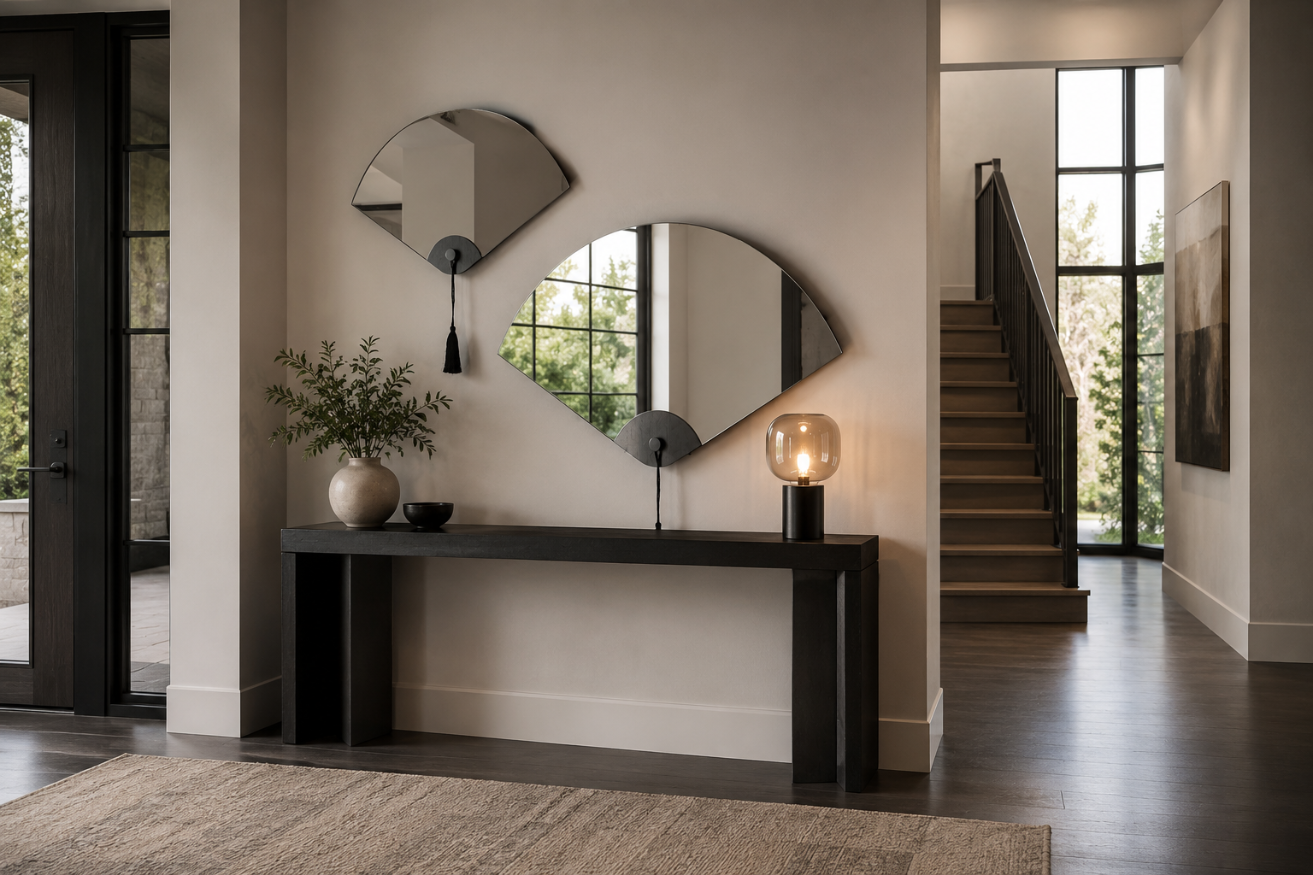
A European mirror can change a room before you add a single new chair, lamp, or wall color. It can widen a narrow entry, brighten a dining room, soften a bedroom, and turn an empty wall into a composed design moment.
Schedule a EuroHome design consultation to choose a European mirror with the right scale, finish, and placement for your home.
The best mirror is not chosen by frame style alone. It works because its size, reflected view, lighting angle, and surrounding furniture all support the same design goal. For EuroHome Interiors clients, that goal is usually a home that feels modern, comfortable, European, and carefully finished.
This guide explains how to use European mirrors with intention. You will see how to choose size, where to place mirrors in key rooms, how frames influence mood, and when to use EuroHome's Beautify collection as the finishing layer for a cohesive space.
Direct answer: A European mirror should feel connected to the furniture, wall, and sightline around it. Size the mirror at about two-thirds to three-quarters the width of the piece below it. Then adjust for ceiling height, frame weight, and how much visual drama you want.
Proportion is the difference between a mirror that looks placed and a mirror that looks planned. A small mirror floating above a wide console can make the wall feel unfinished. A heavy frame that overwhelms a slim table can make the whole entry feel top-heavy. The goal is balance, not just size.
European design often succeeds because each piece has a clear relationship to the room. A tall mirror can stretch the sense of height in a hallway. A wide mirror above a sideboard can make a dining room feel more generous. A round mirror can soften the hard lines of a modern bedroom set.
Start with the object below the mirror. For a console, sideboard, mantel, or dresser, the mirror should usually be narrower than the furniture but not tiny. A width of 65 to 75 percent of the furniture below it gives the eye enough structure while leaving breathing room on both sides.
Height matters too. Hang the mirror so the center sits close to average eye level, then adjust for furniture height. Above a console, 6 to 8 inches between the tabletop and the bottom of the frame usually feels connected without crowding accessories.
A thin metal frame reads lighter than a carved wood frame. A thick gold frame may need more empty wall around it. A frameless or minimal mirror can be larger because it does not add as much visual mass. This is why two mirrors with the same dimensions can feel completely different in the same room.
EuroHome's design process is helpful here because scale is easier to judge in context. Through the Design Center, homeowners can review proportions with professional guidance instead of relying on a measurement alone.
| Placement | Suggested Scale | Design Note |
|---|---|---|
| Entry console | Two-thirds to three-quarters of console width | Leave room for lamps, art objects, or a tray. |
| Dining sideboard | Slightly narrower than the sideboard | Reflect a window, chandelier, or composed wall view. |
| Bedroom dresser | About two-thirds of dresser width | Keep the center near eye level for daily use. |
| Living room wall | Large enough to anchor the seating area | Use a stronger frame if the wall has few other details. |
| Floor mirror | 60 inches or taller for full impact | Lean or mount securely where traffic flow is clear. |
Direct answer: Choose a European mirror large enough to anchor its wall but small enough to leave visual space around the frame. For most furniture pairings, the mirror should be narrower than the piece below it. For floor mirrors, height and safe placement matter more than width.
Size should support how the room is used. A dining room mirror can be generous because it reflects light and atmosphere during meals. A hallway mirror must stay practical and avoid blocking movement. A bedroom mirror may need enough height for dressing while still feeling calm.
The common mistake is buying a mirror that looks impressive online but feels either too timid or too dominant at home. Measure the wall, the furniture below, and the open space around doors, windows, and walkways before choosing.
An entryway mirror should welcome guests and serve daily life. A piece from EuroHome's mirror collection can create a strong first impression when it is sized to the console below it. Aim for a mirror that is wide enough to feel intentional but not so wide that it hangs beyond the table edges.
If the entry is narrow, a tall mirror often works better than a wide one. It draws the eye upward, reflects more of the space, and helps the hall feel less compressed. Choose a slimmer frame when the walkway is tight.
Dining rooms can handle more drama. A large mirror above a buffet can reflect a chandelier, candlelight, or daylight from nearby windows. Interior design research often notes that mirrors create the perception of more space by extending visual depth, a point also discussed by RMCAD's mirror and light guidance.
Living rooms need more restraint. The mirror should not compete with the sofa, media wall, or art. If the seating area already has strong shapes, choose a simpler frame. If the room is minimal, a more sculptural frame can add personality without clutter.
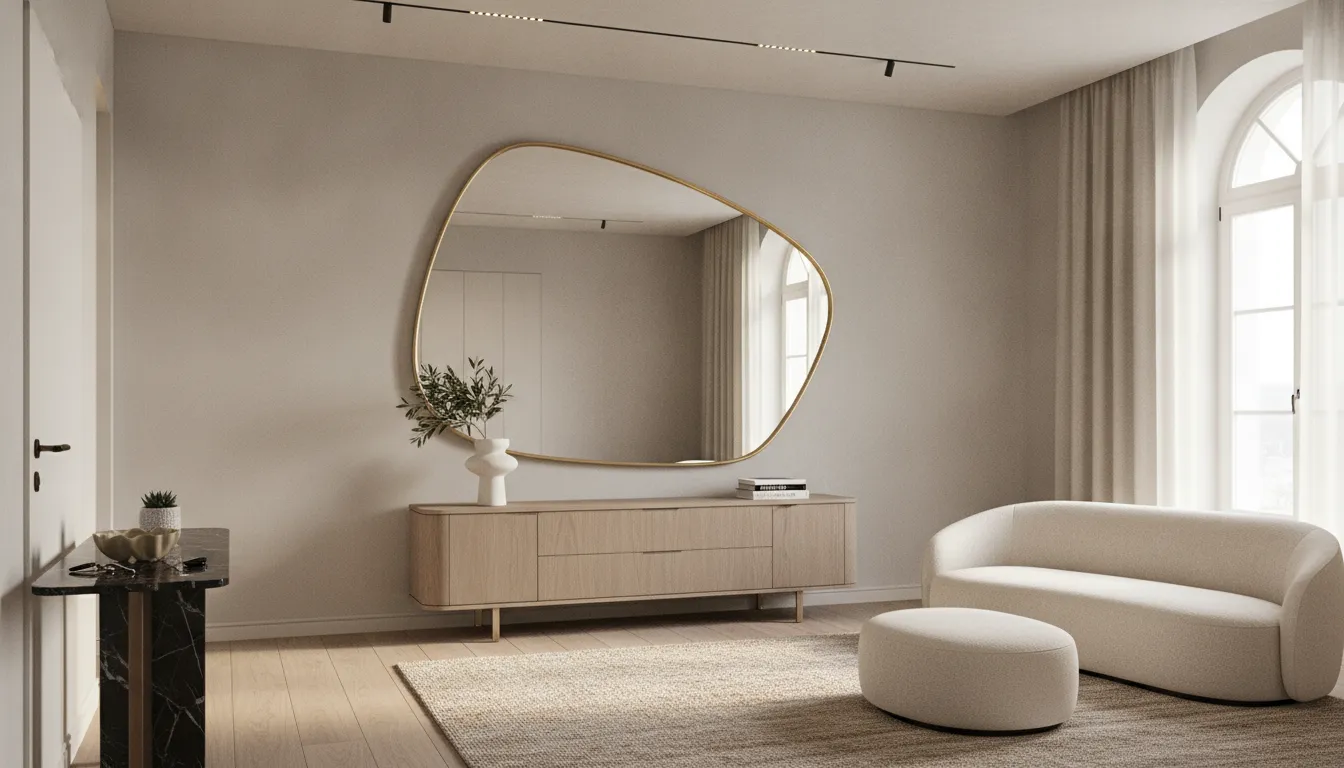
Direct answer: Place an entryway mirror where it improves light, supports a quick daily check, and reflects a view you want guests to notice. The best spot is often above a slim console, beside a window, or on the wall that visually opens the longest part of the hall.
The entry is a transition space, but it should not feel like an afterthought. It is the first signal of the home's style. A European mirror can bring polish to that moment because it combines function with visual presence.
Before choosing the wall, stand at the front door and look at what the mirror would reflect. A mirror that reflects art, greenery, a beautiful light fixture, or an orderly living space improves the entry. A mirror that reflects a coat pile, a dark corridor, or visual clutter weakens it.
A mirror creates a second view of the room. That view should be curated. If the entry opens toward a living area, place the mirror where it catches a composed seating arrangement or a beautiful table lamp. If the entry lacks windows, use the mirror to borrow light from nearby spaces.
This is also where European furniture values matter. The mirror should work with the console, bench, rug, and lighting rather than acting as a separate decorative item. EuroHome's curated approach helps homeowners coordinate those layers with fewer guesses.
A hallway mirror should not make people feel like they need to move around it. Avoid thick frames in narrow passages unless the wall is recessed. In busy entries, use a secure wall mount rather than a leaning mirror. This keeps the look refined and the walkway clear.
For practical use, place the center of the mirror around eye level. If several family members use the entry, a taller vertical mirror may be more useful than a small decorative one.
Direct answer: A European mirror works best when it redirects existing light into a useful part of the room. Place it across from or beside a window, near a lamp, or behind a reflective design moment. Avoid spots that create harsh glare or reflect unfinished areas.
Mirrors do not create light. They move it. That simple idea should guide placement. A mirror across from a window can brighten a room during the day. A mirror near a lamp can add glow in the evening. A mirror behind a dining sideboard can multiply candlelight and make entertaining feel more polished.
Light placement also affects comfort. Direct sun on a mirror can create glare. It may also be too harsh for some frame finishes or nearby textiles. A side angle usually gives a softer result. The room feels brighter without becoming uncomfortable.
Every mirror edits the room by repeating something. Let it repeat the best thing. In a living room, that might be a sculptural chair, a bright window, or a clean-lined table. In a bedroom, it might be soft bedding or a quiet corner. In a dining room, it might be the chandelier or a well-styled buffet.
For technical perspective, the University of Illinois physics team explains that curved mirrors change how reflected light rays spread, which is why convex and shaped mirrors can create different visual effects than flat glass. In interiors, this means shape can be decorative and spatial at the same time.
Mirror placement should be part of the room plan, not the final patch for an empty wall. When EuroHome helps with space planning, the team considers furniture, traffic flow, natural light, and finishing pieces together. That creates a room that feels cohesive instead of assembled in separate steps.
If you are choosing a mirror for a room already filled with furniture, take photos from the main doorway and seating areas. Those photos will show what the mirror is likely to reflect and whether the placement improves the room.
Direct answer: The frame determines whether a European mirror feels classic, modern, minimal, or dramatic. Gold, bronze, carved wood, black metal, chrome, and frameless designs each create a different mood. Match the frame to the room's furniture finishes and architectural style.
A mirror frame is a design language. An ornate frame suggests heritage and ceremony. A thin black frame feels modern and architectural. A warm metal frame adds glow. A frameless mirror keeps attention on light and proportion.
EuroHome Interiors balances Italian, European, modern, and contemporary design. That means the right frame does not need to be overly ornate. It needs to support the room's mix of luxury, comfort, functionality, and craftsmanship.
Traditional European mirrors often use carved details, warm metallic finishes, and generous shapes. They work well with formal dining rooms, elegant entries, and bedrooms that need a focal point. The key is restraint. If the frame is detailed, keep nearby accessories cleaner.
Gold and bronze finishes can warm a room that has stone, glass, or cool fabrics. They also reflect evening light beautifully. Use them where you want the mirror to feel like a design object, not just a practical surface.
Modern European interiors often favor clean silhouettes. A slim black, chrome, or walnut frame can feel refined without being loud. This works especially well with contemporary sofas, platform beds, streamlined dining tables, and EuroHome's broader Living, Eating, and Sleeping categories.
Shape can matter as much as finish. Round mirrors soften straight furniture lines. Rectangular mirrors reinforce architecture. Arched mirrors add height and a subtle European reference without heavy ornament.
Direct answer: European mirrors work best in entries, dining rooms, bedrooms, living rooms, and dressing areas where they can improve light, scale, or daily function. The right room depends on whether you need a focal point, more brightness, a final design layer, or a practical full-length view.
The same mirror can feel completely different from room to room. In an entry, it is a welcome point. In a dining room, it adds atmosphere. In a bedroom, it supports routine and calm. In a living room, it can make the space feel more open while connecting design elements.
For travel-inspired entertainers, a dining room mirror is one of the most useful finishing pieces. It can reflect table settings, candlelight, glassware, and a chandelier. The effect is subtle but memorable. It makes the room feel prepared for guests even before anyone sits down.
Place the mirror above a buffet or sideboard, not where it reflects people too closely while they eat. A slightly higher placement often feels more comfortable because it reflects the room and lighting rather than faces at the table.
Bedrooms need calm. Choose a frame that supports the bed, nightstands, and textiles. A mirror above a dresser should feel connected to the furniture below. A full-length mirror should be placed where it is useful without reflecting the bed in a way that feels distracting.
If the bedroom has limited light, place the mirror to catch a window or bedside lamp. If the room already has strong light, use the mirror mainly for balance and function.
Direct answer: EuroHome helps homeowners choose a European mirror by connecting the mirror to the full room plan. The team considers size, finish, sightlines, furniture, lighting, and installation so the final piece looks intentional and supports the way the home is used.
Many homeowners can identify a mirror they like. The harder question is whether it will work in the actual room. EuroHome Interiors reduces that uncertainty through design guidance, curated European sourcing, customization options, 3D visualization, and white-glove support.
That matters for mirrors because small differences have a large effect. A frame that is two inches too wide can crowd a console. A mirror hung too high can feel disconnected. A reflective view aimed at the wrong wall can make the room feel busy instead of open.
EuroHome's design-led approach brings the mirror into the larger furniture plan. The same conversation can include a console, dining table, bedroom furniture, lighting, and accessories. That creates a home that feels cohesive, not pieced together.
Explore EuroHome's Beautify collection or contact the Design Center for help selecting a European mirror that fits your room, style, and long-term plans.
A European mirror above a console usually looks best when it is about two-thirds to three-quarters the width of the table. Leave 6 to 8 inches between the tabletop and the bottom of the frame so the mirror and console read as one balanced design group.
Place it across from or beside a window so it catches existing daylight and reflects it deeper into the room. Avoid long periods of direct, harsh sun because it can create glare and may affect delicate frame finishes or nearby textiles.
Round mirrors soften rooms with many straight lines, while rectangular mirrors create order, height, and structure. The better choice depends on the architecture, furniture silhouettes, and the view the mirror will reflect.
Yes. EuroHome Interiors offers design guidance, space planning, and 3D visualization from its King of Prussia Design Center. The team can help you choose scale, finish, placement, and supporting furniture with confidence.

