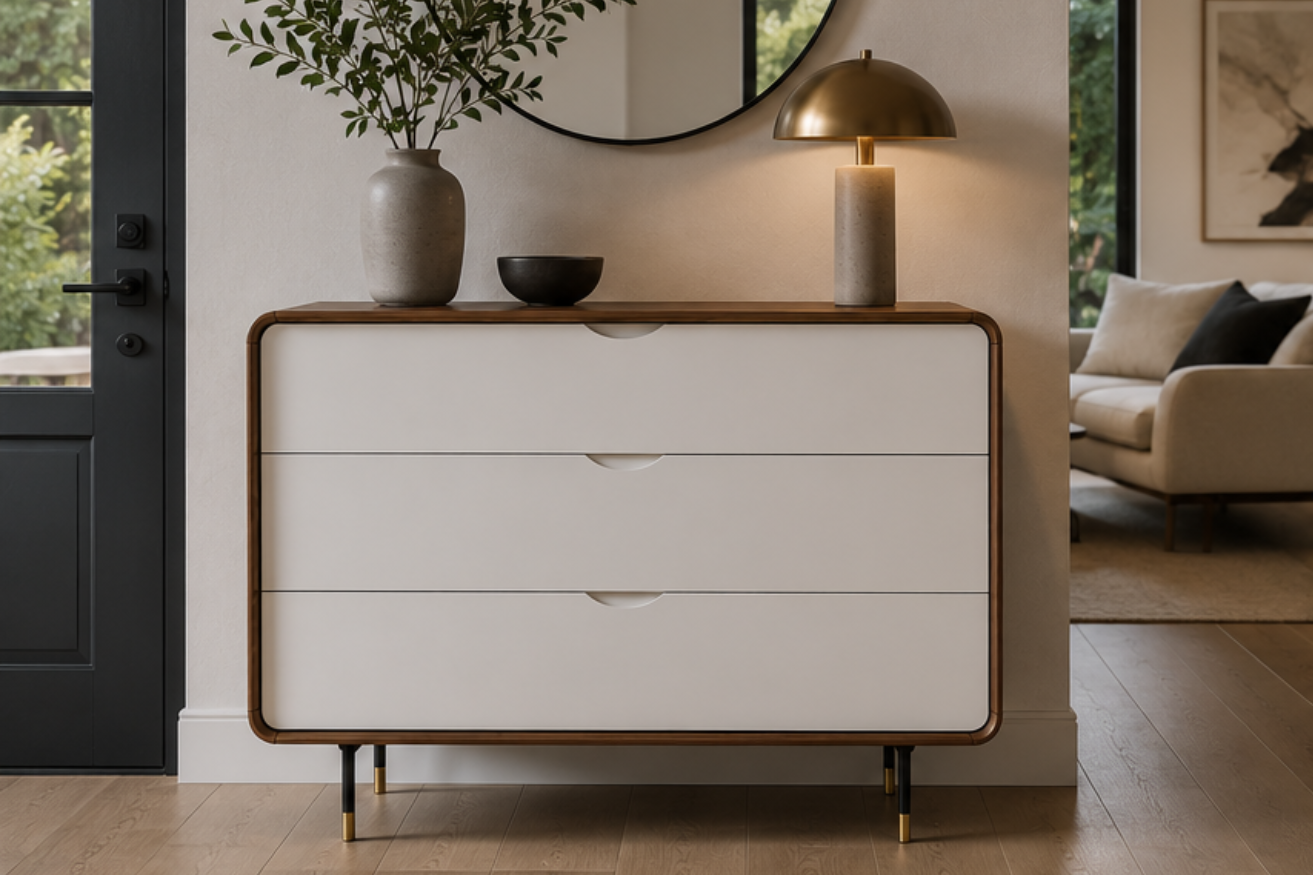
A contemporary console table can turn an overlooked wall or awkward passage into a useful, composed part of the home. The right one is usually 28 to 32 inches high, 8 to 15 inches deep in a compact circulation area, and scaled so at least 30 to 36 inches remains clear for walking. Choose its length, storage, and material according to the room rather than the table alone. Done well, it provides a natural landing point while strengthening the clean proportions of a modern European interior.
Explore contemporary console tables selected for refined modern living.
Console tables are deceptively simple. Their narrow profile makes them easy to place, yet small differences in depth, height, finish, and base design can change how comfortably a room functions. A substantial stone top may anchor a generous foyer, while the same dimensions in clear glass can almost disappear against a tight wall. A table with drawers can organize daily essentials, but only if there is room to open them without stepping into a doorway.
This guide gives you a practical method for choosing a table that fits. It covers measurement, placement, storage, materials, styling, delivery, and long-term care. Use it before visiting a showroom or browsing the broader living room furniture collection, and you will be able to compare designs by how they serve your home, not simply by how they look in a product photograph.
The right console table size preserves an easy walking path, relates to the wall or sofa beside it, and provides enough surface area for its intended use without dominating the room.
Measure the location before deciding on a style. Record the usable wall width, the maximum safe depth, and any nearby obstacles. Include baseboards, radiators, vents, outlets, switches, door trim, and the full swing of every door. If the table will sit near a corner, confirm that its edge will not project into the adjacent route. A painter's-tape outline on the floor and wall makes the proposed footprint much easier to judge than dimensions written on a note.
Console tables commonly range from 24 to 72 inches long, 8 to 18 inches deep, and 28 to 32 inches high. Those numbers are only a starting point. A 60-inch design may look balanced on a broad wall but crowded beside a narrow door. A 15-inch-deep table may be practical behind a sofa but intrusive in a hallway. Let the usable footprint set the limit, then select the most appealing design within it.
Walking clearance is the first functional test. In a frequently used route, aim to maintain 36 inches of open passage after the table is installed. Thirty inches may work in a low-traffic spot, but it can feel restrictive when people pass each other or carry bags. Measure from the outermost part of the table, including projecting handles, curved legs, or a top that extends beyond the base.
Visual breathing room matters too. A console does not need to fill an entire wall. Leaving open space at each end lets its silhouette read clearly and avoids a built-in appearance. On a long wall, use art, a mirror, or a nearby chair to complete the composition instead of automatically choosing the longest possible table.
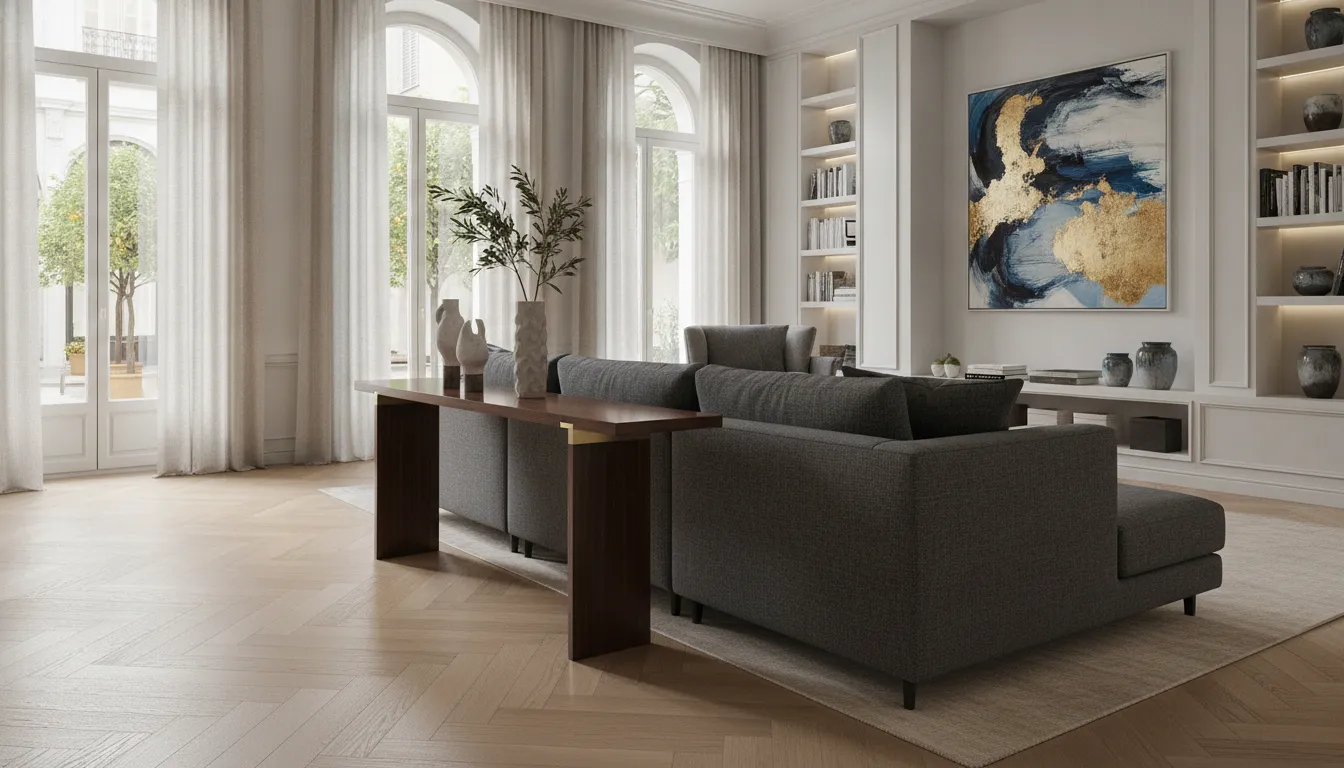
Behind a sofa, measure the sofa back at its highest structural point rather than at the top of loose cushions. The console should be level with that point or up to two inches lower. A taller table can interrupt the sightline and expose an unfinished sofa back; a much shorter table may look incidental and make lamps difficult to reach.
Keep the console shorter than the sofa, ideally ending several inches inside each arm. Check the depth against the route behind it. In an open-plan room, a console can create a graceful boundary between seating and circulation, but it should never turn that boundary into a bottleneck. If stools will tuck below the table, include the pulled-out stool depth when testing the path.
Two tables with identical dimensions can feel very different. A solid cabinet base, dark finish, or thick stone slab has greater visual weight. A slim metal frame, pale wood, or glass top feels lighter and may suit a smaller room. Consider the mass of nearby pieces as well. A delicate console can seem undersized behind a deep sectional, while a blocky sideboard-style design may overwhelm an airy entry.
Use the tape outline for at least a day. Walk past it, open doors, place a chair nearby, and view it from connected rooms. This simple exercise reveals whether the measurements work during normal life rather than only when the room is still.
A console table belongs where a slim surface or subtle room divider improves daily function, most often in an entryway, behind a sofa, along a hallway wall, or at the edge of an open dining area.
In an entryway, a console establishes the first usable zone inside the home. It can hold a tray for keys, support a lamp, and create a considered welcome without requiring the floor area of a chest. Place it where people naturally pause, but away from the direct door swing. If the entrance opens into a compact hall, an 8-to-12-inch depth is often enough for small essentials and a decorative object.
A mirror above the table is especially practical in a foyer because it adds a final-check point and reflects light. Browse modern mirrors for living spaces with proportions that relate to the table below. A mirror or artwork generally looks most settled when it is narrower than the console and mounted close enough to form one composition rather than floating far above it.
Behind a floating sofa, a console softens the view of the sofa back and creates a transition between zones. It can support low lighting, books, or a restrained display. Keep tall accessories away from important sightlines, especially when the table faces a television or connects the kitchen to the seating area. Lamps should be stable, and cords should be routed so they cannot cross a walkway.
Against a living room wall, the console can act as a quiet focal point. It works particularly well where a full cabinet would project too far. If storage is the main need and the room can support more depth, compare the console with a contemporary sideboard. A sideboard offers greater capacity, while a console preserves more open floor area and a lighter profile.
The table below is a useful planning reference. Confirm the exact dimensions against your household's movement patterns, doorways, and accessibility needs before purchasing.
| Room Area | Table Depth | Clearance |
|---|---|---|
| Small Entryway | 10 to 12 inches | 36 inches. |
| Large Foyer | 14 to 18 inches | 48 inches. |
| Behind Sofa | 12 to 15 inches | 30 inches. |
| Narrow Hall | 8 to 10 inches | 32 inches. |
A console at the edge of a dining zone can hold serving pieces during a meal without the volume of a traditional buffet. Choose a durable, wipeable top and confirm that dining chairs can pull out comfortably. In an open plan, align the table with an architectural line, such as the back of a sofa, the edge of a rug, or the opening between rooms. That alignment makes the table feel intentional.
A console can also give purpose to the space beneath a staircase, provided headroom and passage remain safe. Avoid placing delicate objects where they may be brushed by traffic. In any transitional area, function should lead the arrangement: the piece should make movement easier, never ask people to navigate around it.

Choose open shelves for display and a light appearance, drawers for small daily essentials, or doors for concealed storage; the best configuration holds what you actually use without making the table deeper than the room allows.
An open console keeps the floor visible and helps a compact area feel spacious. It is ideal when the table's primary role is visual: displaying a sculptural object, a few books, or a lamp. A lower shelf adds useful space for baskets or larger pieces while maintaining an open profile. Keep the shelf arrangement edited so it does not become a catchall visible from every angle.
Open frames also simplify access in a narrow area because there are no doors or drawers extending into the path. They do, however, expose cords and stored items. Plan how a lamp cable will reach an outlet, and select only containers that suit the design. One well-proportioned basket is usually more composed than several unrelated bins.
Drawers make sense in an entrance where keys, sunglasses, dog leads, or charging cables need a consistent home. Before buying, check the interior dimensions; a sleek drawer front may conceal less capacity than expected. Confirm that the drawer opens smoothly and fully without colliding with a door, wall return, or person standing in the normal walking route.
Cabinet doors conceal larger items but add visual mass. They work best in generous foyers, living rooms, or dining areas where the console can behave like a shallow cabinet. If substantial concealed storage is essential, a purpose-built sideboard may serve the room better. Forcing too much storage into a slender console often produces an awkwardly deep piece that compromises circulation.
List what the console must hold on an ordinary day. Separate essential items from objects that could live elsewhere. Then choose the smallest storage configuration that accommodates the essentials. This prevents a common mistake: buying extra capacity that quickly fills with clutter and weakens the clean character that made the console appealing.
Storage should support a calm room rather than encourage accumulation. If every item has a defined place, the table stays useful and its material, proportions, and craftsmanship remain visible.
Select a console material by balancing the atmosphere you want with the wear the surface will receive: wood and stone feel warm and substantial, while glass, lacquer, and metal create a lighter, sharper expression.
Wood adds warmth, grain, and tactile variation to contemporary rooms. Walnut can deepen a pale interior, while oak and other lighter finishes support an airy palette. Examine the direction and consistency of the grain, the edge profile, and how the finish responds to touch. A refined wood console should feel considered from every visible angle, particularly when it stands behind a floating sofa.
Stone creates a strong focal point. Marble and other natural stones have unique veining, making each top distinctive. They also require informed care. Ask whether the surface is sealed, how quickly spills should be cleaned, and which products are safe. A stone top can be heavy, so confirm delivery access, floor suitability, and whether the base is engineered to support it securely.
Glass allows light and flooring to remain visible, which is valuable in a small entry or a room with a detailed rug. Tempered glass offers greater safety than ordinary glass, but edges and surfaces still need regular care. Check how the top is secured and whether the joints feel precise. Smudges will show more readily in a busy household, so glass is best for owners comfortable with frequent wiping.
Lacquer creates a crisp, polished surface with strong color control. It can connect easily with contemporary cabinetry and other smooth finishes. Ceramic and porcelain-style surfaces offer a stone-like appearance with practical resistance to many everyday marks. Metal is most often used for the base, where a slender profile can provide strength without visual bulk. Look closely at welds, corners, finish consistency, and floor-protecting feet.
A successful room relates materials without repeating them mechanically. A console can echo the warm tone of a dining table without using the identical wood. A dark metal base can connect with window frames or lighting, while a pale top provides contrast. The goal is a layered, coherent palette rather than a furniture set in which every surface is the same.
Bring samples or clear photographs of nearby upholstery, flooring, stone, and cabinetry when comparing finishes. View samples in the room's daylight and evening light if possible. Color temperature and sheen can shift considerably, and a finish that looks neutral in a showroom may read warm or cool at home.
Style a console with one clear focal point, a small supporting group, and deliberate open space; this creates visual balance while leaving enough surface free for the table's practical role.
Begin with the wall above the table. A mirror, artwork, or sculptural wall piece gives the arrangement a center. Its scale should relate to the console without matching its width exactly. As a practical starting point, choose a piece that occupies roughly one-half to three-quarters of the table's width, then adjust according to frame weight and surrounding architecture.
Mount the focal point close enough to connect with the table. A large gap can make the wall element appear detached. If the console sits behind a sofa, wall art may relate more strongly to the sofa than to the table, so assess the entire elevation rather than styling each item in isolation.
Add a lamp, vase, or branch arrangement to introduce height. Then place a lower object, such as a tray, bowl, or short stack of books, nearby. Varying height creates movement across the surface, while repeated shapes can connect the grouping. A round bowl can soften a rectilinear table; a slim lamp can reinforce an architectural base.
Keep practical items inside the composition. A key tray can be attractive and useful. A small box can conceal chargers. If the table is in a foyer, leave a genuinely empty section where a guest can set down a bag or where mail can rest briefly. Styling that consumes the entire surface defeats the table's everyday purpose.
Contemporary interiors often benefit from asymmetrical arrangements because they feel relaxed and collected. Balance visual weight rather than placing matching objects at both ends. A tall lamp on one side might be offset by a lower but broader group on the other. Step back and view the arrangement from the entrance and nearby seating, not only from directly in front.
Limit the palette to materials and colors already present in the room. A few intentional connections create cohesion: a ceramic vessel that echoes a rug tone, a metal lamp related to the table base, or books that pick up colors from nearby art. Avoid generic filler. Each object should contribute shape, texture, meaning, or function.
The area beneath an open console is part of the design. It can remain empty to emphasize the table's silhouette, hold one or two upholstered stools, or contain a single substantial basket. Do not crowd the base with many small objects. If stools are included, verify that they tuck in fully and can be removed without obstructing the route.
Seasonal changes should be restrained. Exchange one branch arrangement, textile, or decorative object instead of rebuilding the entire display. A consistent foundation gives the room continuity and lets the quality of the console remain central.
Before purchasing, confirm the measured footprint, circulation clearance, intended use, finish suitability, delivery route, and care requirements so the console works from installation through years of daily use.
Return to the tape outline after choosing a specific model. Update it with the exact top dimensions, base position, and any projections. If the design has drawers or doors, mark their open depth on the floor. Walk the route at busy times, and consider children, pets, guests, and anyone who needs additional clearance.
Ask how the finish should be cleaned and which substances can damage it. A pristine lacquer top may suit a formal room, while a durable ceramic surface may be easier in a busy entrance. If the table will hold a lamp, check outlet placement and cord routing. If it will support heavy objects, verify the recommended load and distribute weight appropriately.
Inspect construction wherever possible. The table should stand level without rocking. Drawers should move cleanly, doors should align, and the top should feel secure. Look beneath the surface and around the back, especially if the piece will be visible from multiple directions. Quality is often clearest in the details that product photographs do not emphasize.
Measure every stage of the delivery route: exterior gate, building entrance, elevator, stairs, hallway turns, and the final room doorway. Note tight corners and low fixtures. Confirm whether the console arrives assembled, whether the top and base travel separately, and whether professional installation is recommended. Stone and glass require particular care because their weight and fragility can make informal handling unsafe.
Decide where packaging can be opened and whether floors or walls need temporary protection. After installation, check stability and use any required wall restraint, particularly in a home with children or in an area where the table might be pulled or bumped. Keep care instructions and finish information for future reference.
When comparing finalists, score each design against the same practical criteria rather than choosing on appearance alone. The strongest option will fit the measured area, preserve movement, provide the right amount of storage, withstand expected use, and complement the room's architecture. A visually striking table that fails one of those fundamentals will become frustrating; a well-resolved choice will quietly improve the room every day.
Most console-table questions come down to proportion, circulation, material performance, and the intended routine; these concise answers provide a reliable starting point.
Most console tables are 28 to 32 inches high. Behind a sofa, choose a table that is level with the sofa back or up to two inches lower. In an entryway or along a wall, select the height that feels comfortable to use and looks proportional to nearby furniture.
The best material depends on the room and how the table will be used. Wood and stone bring warmth and visual weight, glass keeps a compact room feeling open, lacquer offers a crisp finish, and metal provides a strong, slender base. Durable, easy-care surfaces are best for busy entryways.
Place a console where it supports the room without narrowing the walking path. Allow about 30 to 36 inches of clear passage in active areas. Behind a sofa, keep the table at or slightly below the sofa-back height and avoid extending it beyond the sofa arms.
Measure the wall, doorway swing, and walking path before shopping. A table about 8 to 12 inches deep with an open or visually light base usually suits a small entryway. Choose drawers only if they can open fully without interrupting circulation.
The best contemporary console table is not simply the most dramatic design; it is the piece whose dimensions, materials, storage, and visual weight make the room feel easier to use and more complete.
Begin with precise measurements, protect the walking route, and define the table's daily job. Then compare materials and forms with those requirements in mind. Whether you need a slender entry landing zone, a polished surface behind a sofa, or a refined boundary in an open plan, a carefully selected console can bring structure and purpose without adding unnecessary bulk.

