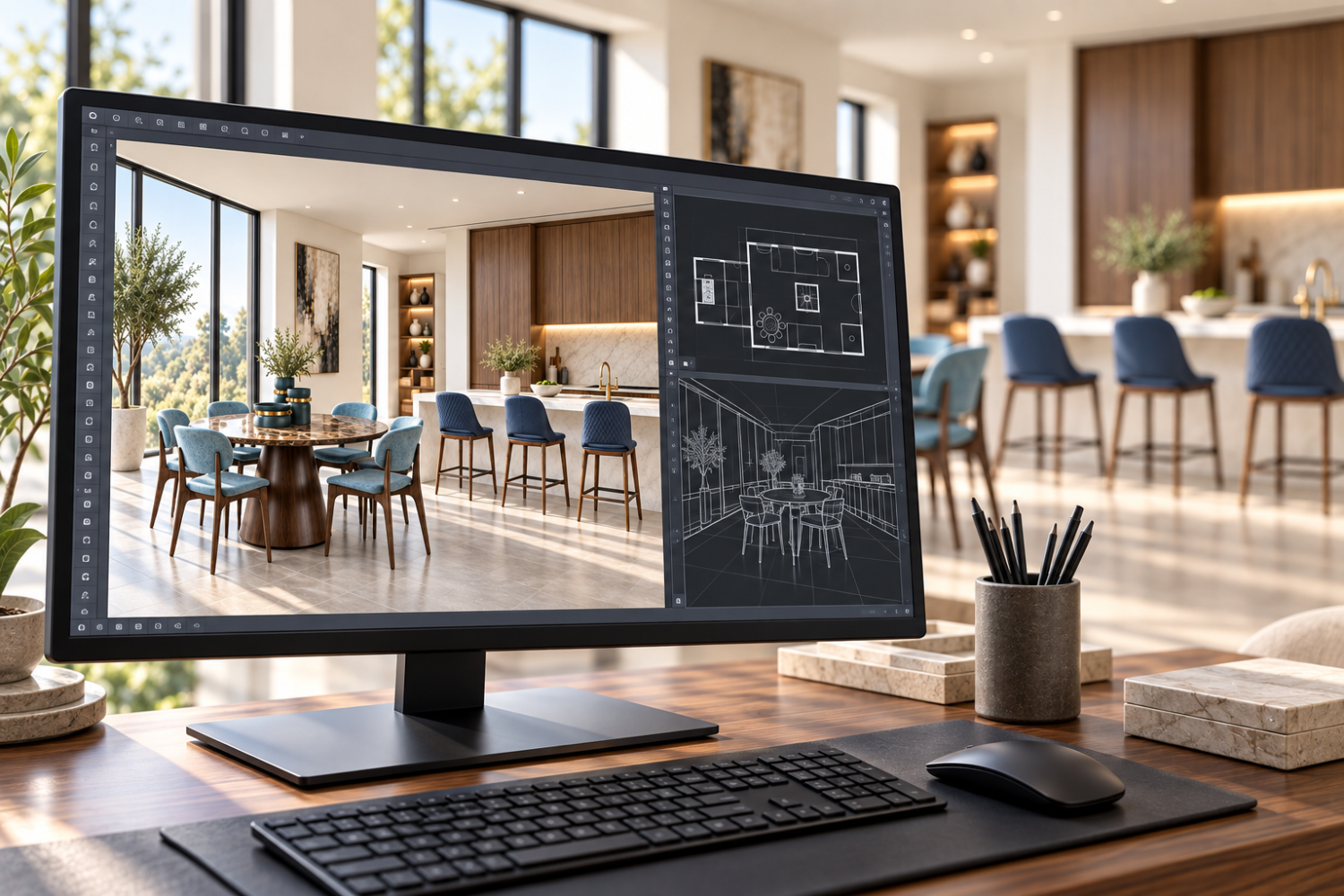
Furnishing your home is an investment, not just in furniture, but in your comfort and lifestyle. Like any smart investment, it’s wise to protect it from unnecessary risk. A custom-ordered sofa that doesn’t fit or a paint color that looks completely different on the wall are frustrating and expensive mistakes. Think of 3D visualization as your design insurance policy. It’s a strategic step that allows you to identify and solve potential problems before they happen, saving you time, money, and buyer’s remorse. The value of 3D interior design visualization King of Prussia services is its ability to guarantee a beautiful, functional result. This article explains how this process provides peace of mind and ensures your design budget is spent wisely.
Have you ever wished you could see exactly how a new sofa would look in your living room before buying it? That’s the magic of 3D interior design visualization. Think of it as a photorealistic preview of your future space. This technology uses advanced software to create a detailed digital model of your room, complete with furniture, lighting, colors, and textures. It’s a powerful tool that allows you and your designer to see the final outcome of a project before any physical work begins.
The main goal is to bridge the gap between an idea and reality. Instead of relying on fabric swatches and paint chips alone, you get a complete picture that brings your ideas to life. This helps you visualize how different elements in your living space will come together, from the scale of a coffee table to the way sunlight hits the floor throughout the day. It takes the guesswork out of decorating, giving you the confidence to move forward with a design you truly love. Ultimately, this process ensures that the final result is not just beautiful, but also a functional and perfect reflection of your personal style, saving you from potential design regrets down the line.
At its core, 3D rendering is the process of turning a wireframe model into a lifelike image. Designers use specialized 3D rendering software that often works alongside other professional tools like CAD and BIM. This integration helps create a smooth and efficient workflow from the initial floor plan to the final, polished image. While the technology is complex, the result for you is simple: a clear, realistic picture of your home’s potential. It’s important to remember that creating these detailed visualizations takes time, but a skilled designer will manage the project timeline to ensure everything stays on track without unnecessary delays.
The journey begins with a simple conversation. During an initial meeting, your designer will get to know your preferences, from your favorite colors and materials to your budget and lifestyle needs. This foundational step is all about understanding your vision. Once your designer has this information, they use it to build the 3D model. You’ll get to see the entire room, including how different furniture arrangements for your bedroom might look or how a specific color palette changes the mood. This allows you to make informed decisions and request adjustments before committing to any purchases, ensuring the final design is exactly what you dreamed of.
Have you ever stood in a room, paint swatches in hand, trying to imagine how a new sofa, rug, and coffee table will all look together? It can feel like a high-stakes guessing game. This is where 3D visualization completely changes the design process. It takes the abstract ideas from your mind and turns them into a stunningly realistic preview of your future space. Instead of hoping everything will work out, you get to see it, test it, and perfect it before you spend a single dollar on furniture or paint. It’s about moving from uncertainty to absolute confidence in your design choices.
One of the biggest challenges in interior design is bridging the gap between imagination and reality. A 3D rendering allows you to see your design ideas in a photorealistic model before any physical work begins. You can walk through your redesigned living room, see how the morning light hits your new dining table, and understand the true scale of each piece. This isn't just a flat floor plan; it's a dynamic, detailed preview of your home. It lets you experience the flow, ambiance, and feel of the room, ensuring the final result is exactly what you envisioned.
Making permanent design decisions can be stressful. With 3D visualization, you can explore different concepts and make choices with clarity and conviction. Wondering if a sleek, contemporary sectional would fit better than a classic sofa? You can see both options in your virtual room. Curious about a bold accent wall or a different lighting fixture? A designer can show you how each choice impacts the overall aesthetic. This process empowers you to experiment freely without risk, ensuring every decision aligns perfectly with your vision so you can unlock your home's potential with certainty.
We’ve all heard stories of a custom-ordered sofa that didn’t fit through the door or a paint color that looked completely different on the wall. These mistakes are not only frustrating but also expensive. 3D visualization is your best defense against them. By seeing the final look before construction starts or furniture is ordered, you can catch potential issues early. You can confirm that traffic flows smoothly, that furniture is properly scaled, and that all the materials and colors harmonize beautifully. This digital dress rehearsal saves you time, money, and the headache of buyer’s remorse.
Once you decide to use 3D visualization for your home project, the next step is finding the right professional to bring your vision to life. King of Prussia and the surrounding area offer several excellent options, each suited to different project scopes and needs. Whether you're looking for a seamless, all-in-one experience or need a specialist for a large-scale renovation, you can find a great fit. The key is to understand what each type of service offers so you can choose the one that aligns perfectly with your goals.
For a truly streamlined experience, starting with us at EuroHome is your best bet. We offer comprehensive 3D interior design services that allow you to see exactly how our furniture will look and feel in your space before you commit. This integrated approach removes the guesswork. You can experiment with different layouts, styles, and pieces from our collections, from a stunning sofa for your living room to a complete dining set. Our design team works with you to create a realistic rendering, ensuring the final result is cohesive, functional, and perfectly tailored to your taste. It’s the ideal solution for anyone who values convenience and wants to furnish their home with beautiful, high-quality European designs.
If you prefer to work with an independent designer or a boutique studio, the King of Prussia area has a vibrant community of talented professionals. This path is great if you want to blend new furniture with existing pieces or source items from various retailers. Freelancers and small studios often provide a highly personalized service, working closely with you on every detail of the project. You can find local experts on platforms like Houzz, where you can review portfolios and read client testimonials. This option gives you flexibility and access to a wide range of creative styles, making it a solid choice for projects that require a unique, eclectic touch.
For those embarking on a major renovation or a new build, an architectural firm that offers interior design visualization is often the most logical choice. These firms can create detailed 3D models that show how your interior spaces will interact with the home's overall structure. This holistic view is crucial for ensuring a seamless flow between architecture and decor. They use advanced software to provide a realistic digital preview of everything from lighting placement to material finishes. If your project involves moving walls, adding extensions, or designing a home from the ground up, partnering with an architectural firm can help you make informed decisions and avoid costly mistakes down the line.
Choosing a 3D interior designer is a bit like dating. You need to find someone who gets your vision, communicates well, and has the skills to bring it all together. This partnership is key to creating a space you’ll love, so it’s worth taking the time to find the right fit. Before you commit, focus on three main areas: their past work, their technical know-how, and their process for working with clients. Getting clear on these points will help you hire with confidence and ensure your project runs smoothly from start to finish.
A designer’s portfolio is their visual resume, and it’s the best place to start. As you browse their past projects, look for a style that resonates with you. Do their designs feel clean and contemporary, or warm and traditional? Pay attention to how they use color, texture, and light to create a mood. It’s also smart to read what past clients have said in testimonials or reviews. Look for projects similar in scope to yours, whether you’re redesigning a single room or an entire home. This will give you a clear idea of their aesthetic and if it aligns with your vision for your own beautiful living spaces.
Beyond a great eye for design, your 3D designer needs solid technical skills. They’ll be using specialized software like AutoCAD, SketchUp, or Revit to build a digital model of your space, so you want to be sure they’re proficient. A skilled designer can create renderings that are not just beautiful but also dimensionally accurate and realistic. This precision is what allows you to see exactly how a new dining table will fit or how different lighting will affect the room. Don’t be afraid to ask what software they use and if they can show you examples of their technical drawings or detailed renderings. This ensures they can translate creative ideas into a workable plan.
Great design is a collaborative process, so clear communication is essential. From the very first conversation, you should feel like the designer is listening to your needs and ideas. Many designers offer an initial consultation to discuss your project, which is a great opportunity to see if you connect. Be sure to ask about their process for feedback and revisions. How many rounds of changes are included in their fee? How do they prefer to communicate (email, phone calls, in-person meetings)? A designer who is responsive, professional, and has a clear system for collaboration will make the entire experience much more enjoyable and ensure the final design for your bedroom truly reflects you.
Let's talk numbers. Budgeting for a 3D interior design project can feel a bit like a puzzle, but it doesn't have to be complicated. The cost in King of Prussia varies based on your project's scope, the designer's expertise, and the level of detail you're looking for. Think of it not just as a cost, but as an investment in creating a home you truly love, without the guesswork. Understanding the pricing structure is the first step to making a smart, confident decision for your space. Whether you're redesigning your living room or planning a full home makeover, knowing the potential costs helps you plan effectively and find the right professional to bring your vision to life.
Most 3D interior designers in the King of Prussia area charge by the hour or by the project. Hourly rates can range from around $50 to $120, depending on the complexity of the work. Some designers also have a project minimum, which is the smallest fee they’ll accept for a job, often starting around $200. This ensures that even smaller projects receive professional attention. It's always a good idea to ask for a detailed quote upfront so you know exactly what to expect. This transparency helps you align the project scope with your budget from the very beginning.
Several key factors will shape the final price tag for your 3D visualization. The complexity of your space is a big one; a multi-room project with intricate architectural details will naturally cost more than a simple room layout. The designer’s experience and reputation also play a significant role. Highly-rated professionals who have a strong portfolio and glowing client reviews may have higher rates, but their expertise often translates into a smoother process and a more refined final design. The number of revisions you request can also affect the cost, so having a clear vision helps keep things on track.
Getting the most out of your investment comes down to smart planning. Start by gathering inspiration and having a clear idea of your style and functional needs. When you can communicate your vision effectively, the designer can work more efficiently. Don't hesitate to review portfolios and get quotes from a few different designers to find the right fit. Remember, the true value of 3D rendering is its ability to prevent expensive mistakes. Seeing exactly how a new sofa will fit or how different paint colors will look helps you make confident decisions before you spend a dime on furniture or renovations.
When you see a stunningly realistic 3D rendering of a room, it can feel like a bit of magic. But behind every great visualization is a process grounded in skill, technology, and collaboration. Understanding this process helps you get the most out of it. Let's clear up a few common misconceptions about what it takes to bring a digital design to life, so you can approach your project with confidence.
One of the biggest myths is that 3D rendering happens instantly, with just the click of a button. In reality, creating a high-quality, photorealistic image is a meticulous craft. The complete visualization process involves building a detailed digital model of your space, applying textures and materials, setting up realistic lighting, and finally, rendering the final image. This thoughtful process ensures the final visuals are not just beautiful but also accurate, helping you make decisions you’ll be happy with for years. The time invested upfront is what prevents costly surprises later on.
Many people believe 3D visualization is an expensive luxury reserved only for massive architectural projects. This simply isn't true anymore. While it is an investment, 3D rendering is a scalable service that provides immense value for projects of any size, whether you're redesigning a single living room or planning a full home renovation. Think of it as design insurance. Seeing exactly how a new sofa will fit or how different paint colors will look in your home’s natural light can save you from making expensive purchasing mistakes. The clarity it provides is often worth far more than the initial cost.
While the software is incredibly powerful, it can’t read your mind. A 3D visualization is only as good as the information and creative direction behind it. A vague concept without a clear design brief will likely result in a flat, uninspired render. The technology’s true strength is its ability to translate a well-defined vision into a tangible, digital reality. This is why working with a skilled designer is so important. They know how to provide the necessary detail and artistic input to create a render that doesn’t just show a room, but also captures the exact feeling you want your home to have.
Have you ever fallen in love with a piece of furniture online, only to hesitate because you can’t quite picture it in your home? It’s a common roadblock. You wonder if the sofa will overwhelm your living room, if the dining table will leave enough space to walk around, or if the colors will clash with your existing decor. This uncertainty can make the entire design process feel stressful and full of risk. That’s where 3D visualization comes in. Think of it as a digital dress rehearsal for your home, allowing you to see exactly how everything will look and fit together before you spend a single dollar.
This technology transforms your ideas and floor plans into a photorealistic, interactive model of your space. It takes the guesswork out of design by giving you a clear, comprehensive view of your future room. You can explore different layouts, play with color palettes, and ensure every piece of furniture is perfectly scaled. By seeing the final result upfront, you can move forward with your project feeling excited and assured. It’s an essential tool for anyone looking to create a beautiful and functional home, and our interior design services often use it to bring a client's vision to life.
One of the biggest challenges in room planning is getting the layout right. A floor plan can tell you the dimensions, but it can’t always communicate the feeling of a space or the flow of movement. With 3D visualization, you can virtually arrange and rearrange furniture to find the perfect configuration. See how a large sectional from our Living collection compares to a classic sofa and armchair setup. You can test whether there’s enough clearance around a coffee table or if a media console feels too bulky for a particular wall. This process helps you make practical, informed decisions that prevent the costly mistake of ordering furniture that doesn’t fit your space or your lifestyle.
Creating a cohesive look involves more than just picking furniture; it’s about how different colors, textures, and materials work together. A fabric swatch or a paint chip can only tell you so much. 3D visualization allows you to see all these elements in context. You can instantly see how a rich walnut dining table looks next to upholstered chairs, or how a new area rug complements your wall color and curtains. This holistic view is key to achieving a polished, designer-quality look. It gives you the freedom to experiment with different combinations and beautify your space with confidence, ensuring every choice contributes to a harmonious and inviting atmosphere.
Whether you have a spacious home or a compact apartment, making the most of your available area is always a priority. 3D visualization is an incredible tool for space optimization. It helps you plan with precision, ensuring that every piece of furniture serves a purpose without making the room feel crowded. You can map out walkways, identify awkward or underused corners, and find the ideal spot for everything from a king-sized bed in your sleeping space to a statement bookshelf. This level of detailed planning helps you create a room that is not only stylish but also highly functional, comfortable, and perfectly suited to your daily life.
While 3D visualization can bring any aesthetic to life, some design styles are particularly stunning when rendered digitally. The technology excels at capturing specific details, whether it’s the crisp, clean lines of a modern sofa or the intricate texture of a hand-carved table. It’s all about seeing the interplay of light, color, and materials in a photorealistic way before you make any final decisions. Understanding which styles translate best can help you get the most out of the visualization process. Let's look at a few that truly pop on screen, giving you a crystal-clear picture of your future home.
Contemporary and modern designs are all about clean lines, minimalism, and letting the architecture speak for itself. This is where 3D visualization truly excels. The software can perfectly capture the sharp angles of a sectional sofa or the smooth, unadorned surface of a lacquer coffee table. More importantly, it allows you to see how light interacts with the space, which is a key element of modern design. You can visualize how sunlight from a window will fall across the floor or how a statement pendant light will illuminate a room. This clear representation of space and light makes it so much easier to create a balanced, functional, and beautiful living area that feels both intentional and inviting.
If your taste leans toward the timeless elegance of European and Italian design, you’ll love what 3D visualization can do. These styles often feature rich textures, ornate details, and a deep sense of history that can be difficult to imagine from a simple swatch or photo. 3D rendering brings these intricate elements to life, showcasing the luxurious feel of a velvet armchair or the detailed grain of a classic wooden credenza. It allows you to appreciate the sophistication and craftsmanship of each piece within the context of your own room. This process ensures that every element, from a statement chandelier to a subtly patterned rug, contributes to the room's overall harmony and European-inspired aesthetic.
Sustainable design is gaining momentum, focusing on organic materials and energy-efficient solutions that are as beautiful as they are responsible. 3D visualization is a fantastic tool for planning these spaces because it excels at rendering natural textures. You can see exactly how a bamboo floor, a reclaimed wood dining table, or organic linen curtains will look and feel in your home. This helps you make thoughtful choices about the sustainable materials you bring into your space. The technology also helps you map out natural light sources, allowing you to design a room that is bright, airy, and less reliant on artificial lighting. It’s a perfect way to ensure your eco-friendly vision is realized perfectly.
Choosing the right 3D designer is a lot like choosing the right furniture: it’s a partnership that should align with your vision and last for years. To make sure you find the perfect match for your project, it’s essential to ask the right questions upfront. This isn’t just about their technical skills; it’s about finding a professional who understands your style, communicates clearly, and can translate your ideas into a stunning, realistic visualization.
Going into the conversation prepared will help you gauge their experience, working style, and whether they’re the right fit to bring your dream space to life. Think of it as an interview where you’re building a creative team. A great designer will welcome these questions and provide clear, confident answers. Here are the three most important topics to cover before you sign a contract.
Not all design projects are the same, so you need a designer who gets the nuances of yours. Ask potential candidates about their experience with projects similar in scale and style to what you have in mind. Someone who specializes in commercial spaces might not be the best fit for a cozy, residential living room remodel. A designer should be able to show you examples of their work, whether it’s a full home construction or a single-room refresh. This helps you confirm they have the right expertise to execute your vision, especially if you’re aiming for a specific aesthetic like modern European design.
A 3D visualization is a collaborative process, and it’s rare to get everything perfect on the first try. That’s where revisions come in. Before committing, ask about their policy for making changes. How many rounds of revisions are included in the initial quote? What is the cost for additional changes? A good designer often starts with a thorough consultation to fully grasp your needs and minimize extensive back-and-forth. Understanding their revision process from the beginning ensures your feedback is incorporated and the final design truly reflects your personal style without unexpected costs or delays.
Clear communication is the foundation of a successful design project. Discuss how you’ll stay in touch, whether it’s through email, phone calls, or project management software. It’s also crucial to establish a realistic timeline. Ask about their current workload and how long each phase of the design process will take, from the initial concept to the final rendering. A professional designer should be able to provide a clear schedule. This conversation sets expectations for both sides and ensures the project moves forward smoothly, turning your vision for a beautifully designed living space into a well-managed reality.
How is a 3D visualization different from a simple floor plan? Think of a floor plan as a flat, 2D map of your room from above. It’s great for understanding dimensions and basic layout. A 3D visualization, however, is a fully immersive, photorealistic experience. It shows you how light will fall across the room, what the textures of different fabrics will look like, and how the scale of the furniture truly feels in the space. It brings the design to life in a way a simple blueprint never could.
Do I need a complete design plan before I can use this service? Not at all. In fact, the 3D visualization process is designed to help you create that plan. You don't need to have every detail figured out. The best place to start is with a general idea of your style and how you want the room to function. Bringing inspiration photos or a list of what you don’t like about your current space is more than enough for a designer to begin crafting a vision with you.
What information should I prepare for my first meeting with a designer? To make your first meeting as productive as possible, try to gather a few key things. Basic room measurements and photos of the space from different angles are incredibly helpful. It’s also a great idea to collect some inspiration images that capture the feeling you’re going for. Finally, be ready to talk about your lifestyle, how you use the room, and your overall budget for the project.
Can 3D visualization incorporate my existing furniture? Yes, absolutely. This is a common request and a great way to see how new pieces will blend with items you already own and love. A skilled designer can create digital models of your existing furniture and place them in the 3D rendering alongside new selections. This ensures the final design feels cohesive and personal, preventing any clashes in style or scale.
How long does it typically take to get the final 3D renderings? The timeline can vary depending on the complexity of your project and the number of revisions you request. For a single, straightforward room, you might see initial concepts within a week or two. A more complex, multi-room project will naturally take longer. Your designer will provide a clear timeline upfront so you know exactly what to expect throughout the process.

