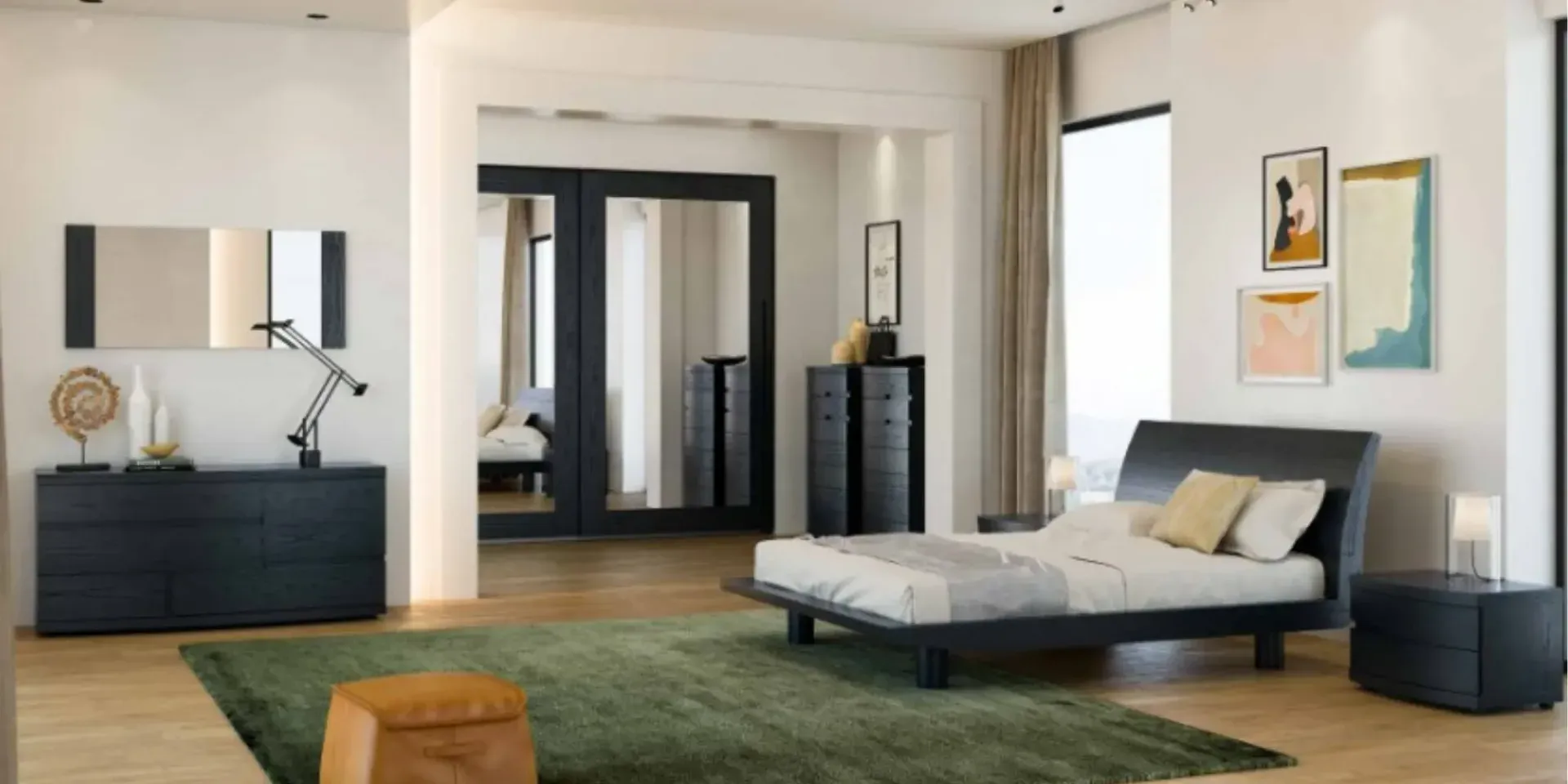
A tall bedroom dresser can add useful storage without taking as much floor space as a wide chest. But height alone does not make a piece a good fit. Measure its footprint, plan what belongs in each drawer, and check stability and access before choosing. This guide focuses on those practical decisions for compact bedrooms, rather than comparing dresser styles in general.
Discuss your bedroom storage plan
A vertical dresser uses wall height to hold folded clothing, accessories, linens or other bedroom items. It can suit a narrow wall or a room where a wide case would interfere with the bed or a walkway. The trade-off is that drawers are stacked higher, so upper drawers must remain comfortable to reach and the furniture needs a stable, sensible placement.
Think of the choice as a room-planning problem, not simply a search for the tallest cabinet. Check four things together:
If your room can accommodate more width than height, compare a vertical dresser with the broader pieces in the bedroom dresser collection. A wider case may offer easier access to every drawer. If floor area is the constraint, a tall model may make better use of a smaller section of wall.
Measure the available wall before looking at product dimensions. Record the usable width, the distance from the wall to the nearest obstacle, and the height of anything above the planned location. Include baseboards, trim, outlets, window sills and door swings. A piece that fits on paper can still be awkward if a drawer hits a bed or a door.
Do not plan around the case’s width alone. A narrow model with deep drawers can project far into a walkway when open. For example, a dresser beside the bed may fit with all drawers shut but prevent someone from passing when a lower drawer is extended. Test the taped footprint and the open-drawer position at the same time.
Also consider how the dresser relates to the bed. If you are furnishing the room together, measure the bed and the path around it before committing to storage. The bed collection can help you consider the main furniture footprint as one plan, rather than treating each piece as a separate purchase.
The right height depends on who will use the dresser, what will go in the upper drawers and how the room is arranged. A tall case may save floor area, but it should not turn everyday clothing into hard-to-reach storage. Before choosing, stand at the proposed location and imagine opening each drawer. Keep frequently used items in the drawers that feel easy and comfortable to reach.
Think carefully if a household member is shorter, has limited reach, or will use the dresser while carrying other items. There is no one height that suits every person. If reaching the top drawer requires stretching or standing on something, that drawer is poorly placed for an everyday item. Reserve higher drawers for occasional-use items only if they remain safely accessible.
Check whether the top surface is part of your plan. A lamp, tray or framed photograph adds function and personality, but it also takes up space above the case. Avoid stacking heavy or unstable objects high on the dresser. If you want bedside lighting, a lamp on a nightstand may be easier to reach and less likely to crowd the dresser top; compare options in the nightstand collection and lighting collection.
Count the kinds of things you intend to store before deciding how many drawers you need. A drawer count does not tell you whether the interior will suit bulky sweaters, small accessories or neatly folded shirts. Consider drawer height and usable width, then assign a job to each drawer.
These are planning categories, not a guarantee of any particular dresser’s interior dimensions. Verify the product measurements and drawer configuration for the actual piece. A useful method is to sort a representative group of clothing, fold it the way you expect to store it, and measure the stack. Compare that with the available drawer interior rather than relying on the outside dimensions.
Then create a simple drawer map. Put daily-use items in the easiest-to-reach locations. Group similar items together, and leave some room for the drawer to open and close without being packed tight. If you share the dresser, decide how to divide drawers before it arrives. That avoids discovering too late that one person’s everyday items are all stored at the top.
Be realistic about capacity. A tall dresser is not automatically a replacement for every other storage piece. If you need hanging space, a dresser will not provide it; if you have more folded clothing than the drawers can comfortably hold, another solution may be needed. For the broad product range, start with the bedroom furniture collection and match the furniture type to the job.
Height changes how a dresser occupies a room, so stability should be part of the decision, not an afterthought. Look for product information about construction, intended placement and any supplied anchoring hardware. Follow the manufacturer’s assembly and safety instructions. Do not assume that a heavy-looking piece is automatically secure or that a particular wall fastener suits every wall.
Plan where the dresser will sit before assembly. A level, stable floor and a position away from impacts and busy routes can help reduce avoidable disturbance. Keep drawers closed when not in use, and avoid leaning, climbing or placing a child on furniture. If anchoring is recommended or supplied, use the instructions and hardware appropriate to the wall and installation. Ask a qualified installer if you are unsure about the wall or fixing method.
For general furniture tip-over safety information, consult the U.S. Consumer Product Safety Commission. Product-specific instructions still matter: check the information provided with the dresser and contact the seller or manufacturer if its anchoring or assembly guidance is unclear.
Start with the wall that gives drawers the clearest opening space. A dresser beside the bed can be convenient, but the open drawers must not block the route around the bed. A wall opposite the bed may be another option if doors, closets and circulation still work. Avoid placing the case where it interferes with window operation or covers a vent, switch or outlet you need.
Use a room sketch to compare possible locations. Mark the bed, entry door, closet, windows and the dresser’s full open-drawer depth. Add other pieces after the main circulation paths are clear. If the layout feels tight, try a narrower footprint or a different wall before deciding that more storage is always better.
A tall piece can feel visually dominant in a small room. Balance it with open floor around it and avoid crowding its top with many objects. A rug can help define the sleeping area, but should not interfere with stable placement or create a raised, uneven surface beneath the dresser. Browse bedroom rugs as a separate finishing decision, and plan the furniture position first.
For a warm, collected room, a clean-lined dresser can sit alongside softer bedding, natural textures and familiar pieces. The goal is not to make every item match. Repeat a finish, tone or material in a few places so the tall case feels connected to the room, while leaving enough visual breathing space around it.
Before ordering, make a simple scale sketch or a full-size floor outline. The sketch does not need to be an interior-design drawing. It needs to show the furniture edges, the doors and the path people take through the room. Add the dresser’s open-drawer depth as a second outline, because the usable space changes when someone is putting clothes away.
Imagine a compact bedroom with the bed along one wall and a closet near the entry. A tall dresser might fit on the short wall opposite the bed, but that position is only workable if its drawers clear the bed and the entry route stays open. If the dresser is placed near the closet instead, check whether a closet door can open fully and whether someone can stand at the closet while another person uses the dresser. The best position is the one that supports the room’s real routines, not just the one that looks balanced in a photograph.
Try the outline with the drawer you expect to use most often extended. Stand in front of it and pretend to retrieve and replace a folded item. Then walk past the open drawer as another person might. If the route feels pinched, test the next wall or a smaller footprint. Repeat the exercise with the bedroom door and closet door open. This quick test can expose conflicts that are easy to overlook when looking at a closed dresser in a product image.
Finally, consider the visual balance. A tall case may look substantial beside a low bed or a small nightstand. You can reduce that sense of crowding by leaving the top relatively clear and avoiding a second tall item immediately beside it. A larger piece may feel more integrated if it relates to the bed’s finish or the room’s materials, but it does not need to be an exact match. Prioritize comfortable movement and practical access, then use finish and styling to make the arrangement feel intentional.
Compare the trade-offs against your measurements and storage routine. Neither shape is automatically better; the room and the user determine which one works.
Tall dresser: Usually uses less width, but may project deeply into the room.
Wide dresser: Uses more wall width and may spread storage across a lower profile.
Tall dresser: Upper drawers may require more reach; place daily items within easy reach.
Wide dresser: Drawers may be easier to access at a lower level, depending on dimensions.
Tall dresser: Needs enough vertical clearance and a suitable placement plan.
Wide dresser: Needs an adequate stretch of uninterrupted wall.
Tall dresser: Can suit a narrow wall if the open drawers leave a clear route.
Wide dresser: Can suit a wider room where more wall length is available.
Tall dresser: Test height, drawer reach, stability guidance and open depth.
Wide dresser: Test width, wall clearance and its relationship to the bed.
Use this final checklist to turn measurements into a choice:
If the piece passes those checks, it can provide useful storage while preserving more floor area for movement. If it fails on access, stability or circulation, compare a wider dresser or another storage arrangement instead of forcing the fit.
Schedule a consultation about your bedroom layout
It can be, if the smaller footprint leaves a clear route and drawers can open fully. Measure the piece with drawers extended and consider whether its height and upper drawers suit the people who will use it.
Use upper drawers for items you can reach comfortably. Store frequently used clothing at an easy height, and avoid making a hard-to-reach drawer the only place for something you need every day.
Yes, if the placement leaves room to walk and open the drawers without hitting the bed. Tape the dresser’s footprint and drawer extension on the floor to test the relationship before you commit.
Check the dresser’s assembly and safety instructions for anchoring guidance, and follow them carefully. Use suitable hardware for the wall and seek qualified help if you are unsure about installation.
The best tall bedroom dresser is the one that fits the wall, holds what you need and remains easy and sensible to use every day.


