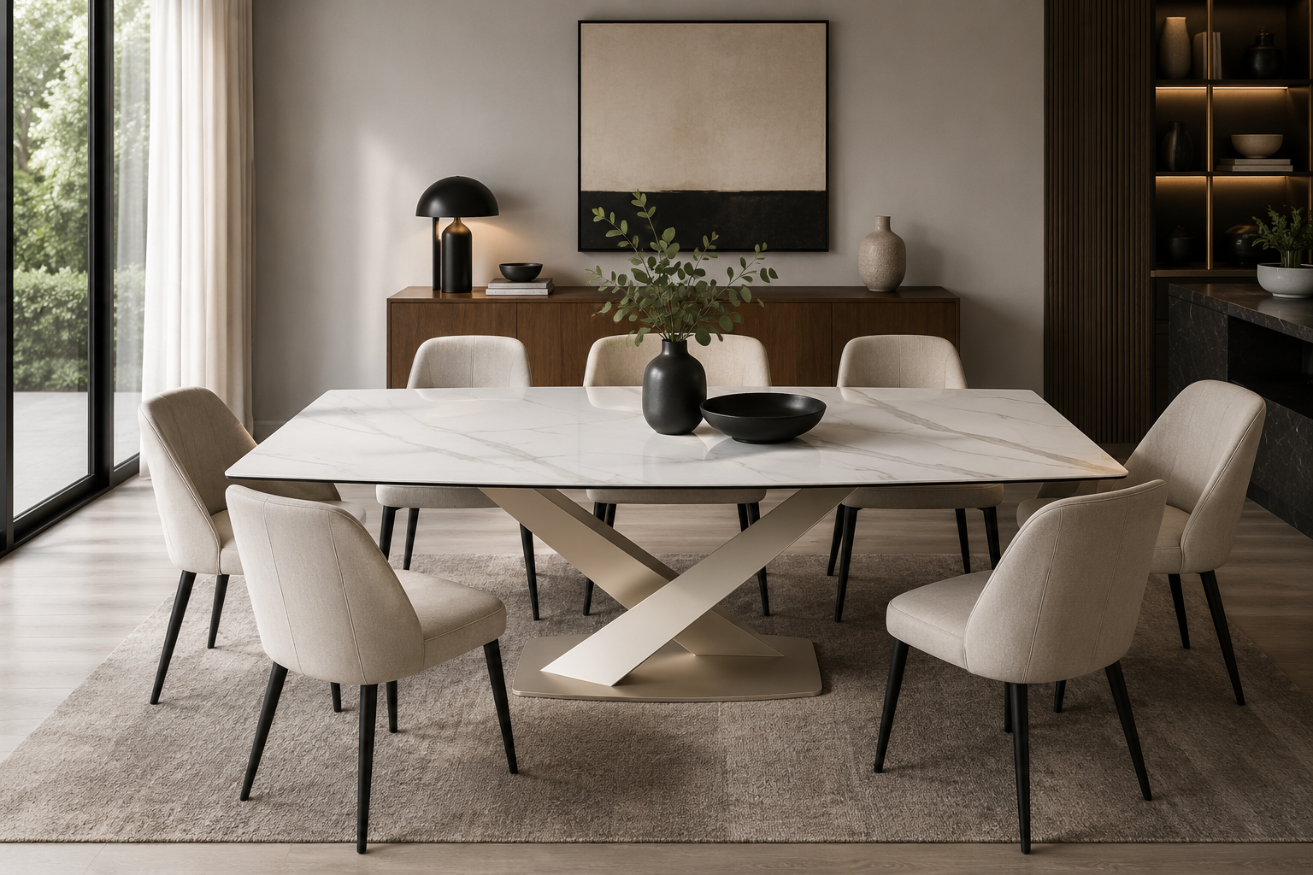
A dining table should survive hot serving dishes and weeknight spills without looking utilitarian. The right surface brings a polished European presence to the room, yet remains ready for breakfast, homework, and a full dinner party.
A porcelain dining table combines a refined, slim profile with the strength needed for breakfasts, family dinners, homework sessions, and regular entertaining. Porcelain stoneware is robust and essentially impermeable, so food and drink spills stay near the surface instead of sinking in, as published materials research confirms. That low absorption supports simple cleanup and helps the tabletop retain its finish through busy routines and frequent gatherings year after year. Its hard surface resists everyday scratches and heat, while mild soap and water usually handle routine care without harsh products. Designs can echo marble, concrete, or stone, giving modern European rooms a calm focal point that remains useful instead of precious.
The real question is whether a beautiful dining surface can keep its character through daily meals, work, and hosting. We answer it in Why a porcelain dining table fits everyday luxury, beginning with the balance between visual restraint and dependable performance. Here's how:
A porcelain dining table brings refined European style into the part of the home that works hardest. Its clean lines and slim surface feel polished, yet the material suits weekday meals, work sessions, and long dinners. That balance makes luxury easier to live with, rather than something saved for special occasions.
The surface can offer the visual depth of stone, concrete, or another natural finish without demanding the same daily care. This range also helps a porcelain table sit comfortably beside warm wood, soft upholstery, metal accents, and modern lighting. A well-chosen table can anchor an open plan while still fitting its wider design.
Everyday luxury starts with a table that supports real routines. Porcelain stoneware is described as robust, attractive, and impermeable in a peer-reviewed study of the material. Its low absorption helps the tabletop handle shared meals and drinks while keeping its composed look.
That practical surface also gives hosts more freedom. Serving dishes, place settings, and centerpieces can take priority over efforts to protect a delicate finish. For larger gatherings, an extendable design can add seats when needed and return to a smaller footprint afterward.
These choices make it easier to match the table to how a household eats and hosts. EuroHome's durable porcelain dining table shows how an expandable format can pair a streamlined top with a sculptural base.
A dining table is often one of the room's largest pieces, so visual staying power matters. Porcelain supports restrained European forms and a wide range of finishes. That flexibility lets the surrounding chairs, rugs, and lighting change over time without forcing a new table purchase.
Longevity also depends on fit, not just the surface material. The table should leave clear paths through the room and provide enough space for chairs to move. Scale, base position, and extension direction all affect whether it remains pleasant during daily use.
Finish samples and careful space planning can help confirm those details before delivery. For more context on available styles and practical features, explore EuroHome's modern porcelain top dining table guide. The right combination of surface, shape, and size keeps the room refined while supporting the way it is used.
A porcelain dining table is a strong choice for daily meals, work sessions, and regular entertaining. Its top is made from dense ceramic material fired under high heat. Researchers describe porcelain stoneware as both robust and impermeable, two traits that help it handle busy dining spaces.
The hard surface resists the light scratches caused by plates, serving pieces, and common tableware. It also stands up well to heat and does not readily absorb spilled drinks or sauces. This mix makes porcelain useful when a table must look refined without demanding constant care.
Porcelain performs well against the small risks that come with shared meals. A ceramic mug, metal serving spoon, or warm plate is unlikely to mark the top during normal use. Still, a cutting board protects both the surface and your knives when preparing food.
Heat resistance adds another layer of practical value. Hot serving dishes will not usually scorch the porcelain surface, yet a trivet remains a wise habit. It protects nearby finishes and guards against sudden temperature changes from cookware taken straight off a burner.
Because porcelain stoneware is nearly impermeable, wine, coffee, oil, and tomato sauce stay near the surface instead of soaking in. Prompt wiping helps prevent residue around seams, extension joints, or the table edge. For most spills, a soft cloth with mild soap and water is enough.
Scratch resistance is not the same as immunity to damage. A forceful blow from a heavy, hard object can chip an exposed edge. Dragging rough ceramic pieces or grit across the top can also leave marks, so lift decor and wipe away crumbs before moving items.
The table base matters as much as the top. A level, well-sized base supports the slab and limits stress at weak points. This is important for long or extendable designs, which carry changing loads as leaves open and guests gather around them.
Professional setup also helps protect the top during its most vulnerable stage: transport and assembly. EuroHome's white-glove delivery details explain how a planned delivery supports careful placement and setup. Once installed, avoid sitting on the table or using its edge as a lifting point.
For a useful example, compare how a porcelain top fits your routine rather than judging the surface alone. A durable porcelain dining table paired with a suitable base can serve frequent meals while keeping a clean, modern look. Use placemats when desired, wipe spills soon, and protect the edges from hard impacts.
A dining table's surface affects far more than its look. It shapes daily care, how the room feels, and how comfortably the household can use it.
A porcelain dining table balances a refined, stone-like look with practical care. Research describes porcelain stoneware as robust and impermeable, which helps explain its fit for busy dining spaces. The same porcelain stoneware research also notes its visual appeal.
| Material. | Durability and care. | Look and weight. | Best fit. |
|---|---|---|---|
| Porcelain. | Resists wear and moisture. Simple routine care. | Clean stone look. Often substantial. | Busy homes and frequent hosts. |
| Wood. | Can mark or stain. Develops character with age. | Warm and natural. Weight varies. | Relaxed, layered interiors. |
| Glass. | Needs frequent wiping. Edges require care. | Light visual effect. Top can be heavy. | Small or airy rooms. |
| Marble. | Needs attentive care. Can show marks. | Unique veining. Usually heavy. | Formal, statement-led rooms. |
Wood brings warmth and visible grain, while glass keeps sightlines open. Marble gives each table a distinct pattern, but it calls for a more careful household routine. Porcelain offers a crisp European feel without making daily upkeep the room's main concern.
Start with an honest picture of daily life. A family table may handle quick breakfasts, homework, and weeknight meals. Frequent hosts may care more about easy cleanup, generous seating, and a surface that keeps its polished look.
Porcelain suits households that want a durable surface with low-fuss care. For a closer look at that balance, explore a durable porcelain dining table with a modern profile. Even so, coasters, placemats, and prompt cleaning are sensible habits for any fine table.
Wood may be the better choice when warmth and natural aging matter most. Glass works well when the room needs visual space. Marble fits homeowners who welcome its unique veining and accept a more attentive care routine.
Weight also matters before purchase. Glass, marble, and many porcelain tops can be heavy, so measure doors, stairs, and the final placement area. White-glove delivery can make setup safer and protect both the table and the home.
The table should also work with chairs, lighting, storage, and the room's traffic flow. EuroHome's broader Eating collection helps place each surface choice within a complete dining plan. The right material depends on lifestyle, care preferences, and the design story you want the room to tell.
A porcelain dining table needs a simple, steady care routine rather than special treatment. Wipe away crumbs, clean spills soon, and use gentle tools that will not dull the finish. Porcelain stoneware is described as robust and impermeable in a published material study, which helps explain why daily care is usually manageable.
Keep a soft microfiber cloth close to the dining area for quick cleanup after meals. Use a clean, damp cloth first, then add a small amount of mild soap when needed. Placemats and coasters also catch grit, drips, and food before they spread across the tabletop.
This routine suits a durable porcelain dining table used for weekday meals or larger gatherings. If your table extends, open it as directed and clean the leaves, rails, and seams without forcing them. Dry each part before closing the table again.
Skip steel wool, rough scouring pads, and gritty cleaning powders. These tools are not needed for routine care, and they may affect the sheen or leave marks on nearby finishes. Start with the gentlest method, then repeat it before trying a stronger cleaner.
Do not use an unknown chemical cleaner without checking the maker's guidance. Porcelain tops may sit beside wood, metal, lacquer, or painted parts that need different care. Apply cleaner to the cloth instead of spraying it near seams, hardware, or the table base.
Protect the tabletop from impact even when the broad surface handles daily use well. Set heavy serving pieces down with care, and do not strike thin edges with cookware. Use padded mats under rough pottery, stone decor, or items that may be moved often.
Placemats are useful, but lift and clean them often so grit does not collect underneath. Avoid dragging dishes, centerpieces, or small appliances across the top. For any stain, chip, or change in finish that remains after gentle cleaning, check the manufacturer's care guide before taking further action.
A porcelain dining table can suit several European design styles without losing its own clear character. Italian rooms often pair a slim top with a sculptural base and tailored seating. In Scandinavian spaces, a pale stone look works well beside light wood, soft fabric, and simple forms. Contemporary rooms can support stronger contrast, such as a dark top over a bright metal base.
Porcelain finishes can suggest marble, natural stone, or concrete, so the surface sets the room's visual direction. Marble-like veining adds movement and polish, while soft gray concrete creates a quieter architectural mood. Porcelain stoneware is also described as robust, impermeable, and pleasing in this published material study. That mix of style and strength suits dining areas used each day.
Let the finish relate to nearby materials rather than match them exactly. A warm stone pattern can bridge oak chairs, cream upholstery, and brass lighting. Cooler concrete tones pair naturally with black metal, smoked glass, or charcoal fabric. For a softer modern look, choose low-contrast veining that reads as texture from across the room.
The base changes how a table feels and functions. A central pedestal gives round tables a clean profile and leaves more space for chair placement. Angled or crossed bases add energy beneath a simple rectangular top. Slim four-leg frames feel calm and ordered, which often suits Scandinavian dining rooms and smaller open plans.
Choose chairs by balancing the tabletop, not copying it. A bold marble-look surface benefits from chairs with simple lines and one quiet fabric. A plain porcelain top can handle richer leather, curved backs, or mixed materials. EuroHome's dining room furniture collection offers useful context for comparing these shapes as a complete setting.
Room scale should guide both the table shape and base. Round tables soften square rooms and make conversation easy, while long tables help define open dining areas. Keep clear walking space around every side, including when chairs are pulled out. Also check that a sculptural base does not limit comfortable knee room.
An extendable table supports both daily meals and larger gatherings without taking over the room. Before choosing one, picture where extra chairs will sit when the top opens. Check the full extended length against nearby doors, cabinets, and walking paths. The durable porcelain dining table model also shows how an extension can remain visually clean.
Lighting completes the composition. Center a pendant over the closed table, then make sure its light still reaches guests when the table extends. A broad linear fixture suits a long top, while a round pendant echoes a circular table. Warm, soft light brings depth to veining and keeps stone-like finishes from feeling cold.
A porcelain dining table should suit both the room and the way people gather in it. Shape affects conversation, seating, and the path around the table. Size matters just as much, since a table can look right yet make chairs hard to pull out. Start with the room, then narrow the options.
Round tables work well in square rooms and create an easy flow around corners. They also keep every guest within the same conversation. A central base can leave more open space for legs, but check how the base meets each chair before choosing a model.
Rectangular tables suit long rooms and can define a clear dining zone in an open plan. Oval tables offer much of the same surface area with softer edges. Their curved ends can help when a main walkway passes close to the dining area.
An extendable porcelain dining table gives hosts more flexibility without filling the room every day. Check the table at both its closed and open sizes. Make sure chairs still fit at the ends, and confirm that nearby doors, cabinets, and walkways remain easy to use.
Porcelain also supports a refined look while standing up to regular use. Research describes porcelain stoneware as robust and impermeable. That makes it a practical surface for a table sized around daily meals, work, and frequent gatherings.
Before ordering, mark the full tabletop outline on the floor. Then place dining chairs around it and pull them back as guests would. Walk each normal route through the room. This simple test shows whether the proposed size leaves comfortable traffic clearance in real use.
Plan seating by chair width and base position, not by the table length alone. Wide arms, angled legs, and a sculptural base can change how many seats fit. Compare those details when viewing a durable porcelain dining table, especially if flexible seating matters.
Finish swatches help reveal undertones, texture, and pattern scale under the room's actual light. A 3D view can also show how a round, oval, or rectangular top relates to nearby furniture. Use both tools before settling on the final finish and size.
For rooms with unusual dimensions, custom sizing may provide a cleaner fit than a standard table. EuroHome's direct relationships with European factories can help shoppers explore available sizes, shapes, finishes, and base options. Bring room measurements and photos to the design center so each choice can be checked together.
A porcelain dining table is a strong choice when meals, homework, and gatherings all share one surface. Porcelain stoneware is described as robust and impermeable in published materials research. That makes it well suited to families who want refined design without a demanding care routine.
It also works well for frequent hosts. An extendable model can keep the room open on ordinary days, then add seats when guests arrive. Explore EuroHome's dining room furniture to compare proportions, base styles, and finishes across a full setting.
For low-maintenance homes, the appeal is simple. Spills stay at the surface instead of soaking in, and routine cleanup is usually direct. The hard top also suits daily use better than a finish that owners may worry about marking. Still, use trivets and wipe spills soon. Good habits protect the table and keep its finish looking consistent.
Porcelain is not the right answer for every room. Choose solid wood if you want warmth, visible grain, and a surface that gains character with age. Glass may better suit a compact room where visual lightness matters. Natural stone can appeal when unique veining matters more than easy care.
Also consider how often the table may need to move. A substantial top calls for careful handling and planned placement. EuroHome's white-glove delivery service can manage arrival and assembly, but the final location should be clear before delivery day.
Before choosing, balance the room size, seating plan, and daily habits against the look you want. Families may put easy care first, while entertainers may value an extension system. Luxury design shoppers may focus on the slab pattern, edge profile, and base. At the King of Prussia design center, finish swatches and space planning can help test those choices together.
The best candidate wants a sleek European look, steady everyday performance, and less concern about routine spills. Another material may be better when touch, natural aging, or frequent rearranging leads the decision.
Yes. A porcelain dining table handles daily meals, homework, and entertaining well because its surface resists moisture and routine wear. Research describes porcelain stoneware as robust and essentially impermeable. Wipe spills promptly, avoid dropping heavy objects near the edges, and follow the maker's care instructions for the frame and extension mechanism.
Porcelain dining tables are highly scratch resistant, but no tabletop is completely scratch proof. Normal plates, utensils, and serving pieces should not easily mark a quality surface. Grit trapped beneath dishes can still abrade finishes, while hard impacts may chip an edge. Use placemats when practical, lift objects instead of dragging them, and avoid cutting directly on the table.
Porcelain generally tolerates heat better than many wood or laminate surfaces. However, use trivets beneath hot cookware to protect surrounding finishes and reduce the risk of sudden temperature changes. Never assume every table has the same limits because porcelain thickness, backing materials, adhesives, and edge treatments vary. Check the manufacturer's instructions before placing very hot pans directly on the surface.
For routine care, remove crumbs and wipe the porcelain top with a soft cloth, warm water, and mild soap. Design Within Reach also recommends this simple approach for routine porcelain-table cleaning. Dry the surface afterward to prevent streaks. Avoid abrasive pads, harsh chemicals, and waxes unless the manufacturer approves them. Clean spills promptly and check extension tracks periodically.
A modern European porcelain dining table combines a slim visual profile with strong everyday performance. Porcelain can reproduce the look of marble, stone, wood, or concrete without the same maintenance needs. Large-format tops also support clean lines and fewer visual breaks. Many European designs offer extension mechanisms, making one refined table practical for both daily meals and larger gatherings.
Waiting to replace a delicate or hard-to-maintain dining table can mean more time worrying about hot dishes, spills, scratches, and daily cleanup. Starting your search now gives you time to compare porcelain finishes, sizes, and extendable options before your next gathering or room update. With thoughtful design guidance, you can choose a practical table that supports everyday meals while fitting a clean, modern European interior.
Ready to find the right balance of durability, care, and style? Request design guidance at the EuroHome design center to review suitable porcelain dining tables for your space and routine. Bring your room measurements, seating needs, and finish preferences so the conversation can begin with clear priorities. Starting now gives you more time to make a confident, considered choice without rushing the details.

