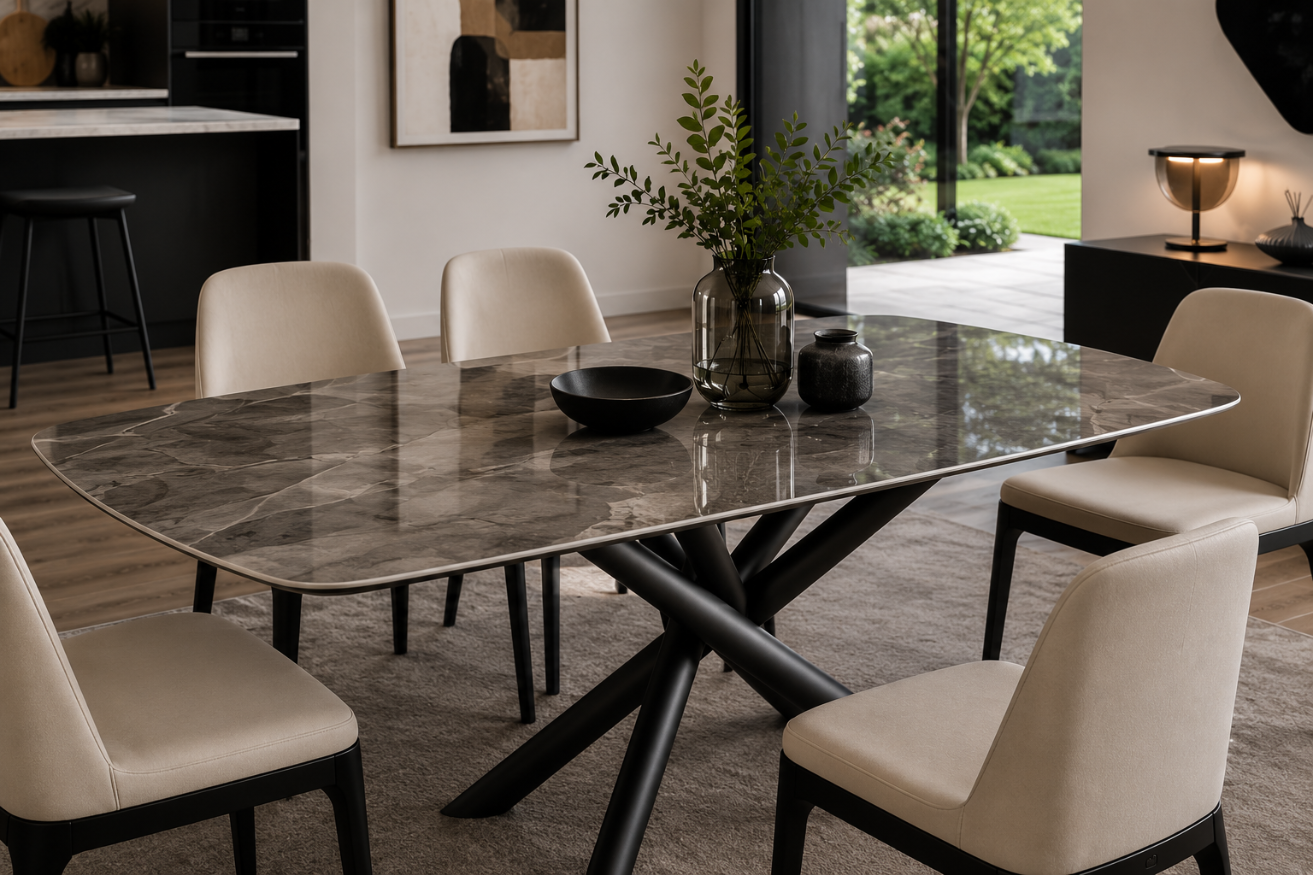
The word "porcelain" might bring to mind delicate teacups, not a robust dining surface. It’s time to set the record straight. The material used for a modern porcelain top dining table is a feat of engineering, created by firing natural clays at extreme temperatures to produce a surface that is incredibly dense and strong. This isn't your grandmother's china; it's a non-porous, commercial-grade material built to handle hot pans, spilled wine, and daily use without a second thought. It combines the elegance you want with the practical, worry-free durability your busy life actually requires, proving that beautiful furniture can also be tough.
When you picture your dream dining room, you might imagine a classic wood or sleek glass table. But there’s another material making a name for itself in modern design: porcelain. A porcelain top dining table offers a unique combination of sophisticated style and incredible resilience. It’s a surface that looks delicate and luxurious but is tough enough for the demands of daily life. If you’re looking for a piece that’s as practical as it is beautiful, a porcelain table might just be the perfect centerpiece for your dining space.
A dining table is the heart of the home, a place for everything from quiet morning coffee to lively dinner parties. Your table needs to handle it all, and porcelain is more than up to the task. Because porcelain is fired at extremely high temperatures, the resulting material is incredibly dense and strong. This process makes it highly resistant to scratches, heat, and impact. You can place a hot dish on the surface without panicking or worry about an accidental scrape from a fork. It’s a surface built for the beautiful chaos of a life well-lived, ensuring your investment looks stunning for years to come.
One of the biggest advantages of a porcelain top is how easy it is to care for. The surface is non-porous, which means spills like red wine, coffee, or oil sit on the surface instead of soaking in and causing a permanent stain. A simple wipe with a damp cloth is usually all it takes to clean up any mess, leaving your table looking pristine. You can say goodbye to the constant worry about water rings and the need for special polishes or waxes. This low-maintenance quality makes porcelain an ideal choice for busy professionals and families who want a beautiful home without the extra work.
The durability of porcelain extends beyond the dining room walls. Its robust nature makes it one of the few materials that transitions seamlessly from your indoor dining area to your outdoor patio. Porcelain is resistant to UV rays, so its color won't fade even after years in the sun. It also stands up to moisture and temperature fluctuations without cracking or warping. This versatility allows you to create a cohesive design aesthetic throughout your home, perfect for those who love to entertain and want their outdoor spaces to feel just as elegant as their interiors.
Choosing furniture that lasts is one of the most effective ways to create a more sustainable home. A porcelain dining table is a purchase you make for the long haul. Its exceptional durability means it won't need to be replaced every few years, reducing waste and the consumption of resources. Made from natural materials like clay, porcelain is a testament to the idea that you don't have to sacrifice style for sustainability. By investing in a high-quality, long-lasting piece, you’re making a thoughtful choice for both your home and the environment, creating a legacy of timeless design.
Choosing a dining table material is a big decision. While wood and glass have been popular for years, porcelain offers a unique combination of style and practicality that often makes it a better fit for modern homes. Understanding the key differences will help you decide which material truly suits your lifestyle, whether you're hosting lively dinner parties or enjoying quiet family meals. Let's look at how porcelain stacks up against these traditional choices.
A classic wood table has a certain warmth, but it comes with a demanding upkeep schedule. Wood is prone to scratches, stains, and water rings, and it requires regular polishing or sealing to keep it looking its best. Porcelain, on the other hand, is incredibly resilient. Its non-porous surface resists heat, scratches, and stains, so you don’t have to worry about a spilled glass of wine. This durability makes porcelain dining tables a fantastic, low-maintenance choice for busy households. Aesthetically, porcelain can even mimic the look of wood, giving you that natural vibe without the vulnerability.
Glass tables can make a room feel open and airy, but they have their downsides. They show every fingerprint and smudge, requiring constant cleaning to look pristine. Glass is also more fragile and can chip, scratch, or even shatter under impact. Porcelain provides a much more stable and forgiving surface. It’s heavier, making the table sturdier, which is a significant plus in homes with children or pets. Porcelain is also far more resistant to scratches and less likely to show marks, keeping your eating area looking effortlessly clean. With a wider array of colors and patterns available, porcelain gives you more freedom to express your personal style.
One of the best parts about choosing a porcelain top dining table is the sheer variety available. This isn't a one-size-fits-all situation. Instead, think of the porcelain top as a beautiful, durable canvas that you can tailor to fit your home's unique character. Because porcelain can be produced to mimic everything from natural marble to raw concrete, the design possibilities are nearly endless. You have the power to create a piece that feels truly personal and perfectly suited to your space.
The ability to customize goes far beyond just the tabletop. You can play with different shapes, sizes, finishes, and base materials to assemble a dining table that aligns with your vision. Whether your style is strictly minimalist, warm and contemporary, or bold and dramatic, there’s a combination that will work for you. This level of personalization ensures your dining table isn’t just a piece of furniture, but a central part of your home's design story. Exploring the different dining collections available is a great way to see these combinations in action and find inspiration for your own space.
The shape of your dining table sets the tone for your entire dining area. Round tables are fantastic for encouraging conversation, as everyone can see and engage with each other easily. They also work well in smaller rooms or square spaces where they can soften corners and improve flow. Rectangular tables are the classic choice for a reason; they are perfect for larger gatherings and fit beautifully in long, narrow rooms. For a distinctly modern feel, a square table creates a sense of symmetry and intimacy. You can often find options in over ten different sizes, ensuring a perfect fit for both grand dining halls and cozy breakfast nooks.
Here’s where you can really let your personality shine. Porcelain tops come in an incredible range of colors and patterns. You can opt for a top that flawlessly imitates the dramatic veining of Calacatta marble or the subtle texture of slate, giving you the look of natural stone without the upkeep. If you prefer a more uniform look, solid colors from crisp white to moody charcoal are widely available. Many collections offer more than a dozen patterns and colors. The finish also plays a key role. A polished finish provides a high-gloss, luxurious look that reflects light, while a matte finish offers a soft, contemporary feel that’s excellent at hiding fingerprints.
The base of your table is just as important as the top for defining its overall style. Combining a sleek porcelain top with different base materials can create a stunning visual contrast. A metal base, whether it’s powder-coated steel or heavy wrought iron, lends an industrial or modern edge to the table. These frames are often treated to resist rust and fading, making them incredibly durable. Pairing that same porcelain top with a solid wood base can instantly add warmth, creating a look that leans more towards Scandinavian or organic modern design. This mix-and-match approach allows you to curate a living space where every piece complements the others.
If you love to entertain but are working with a smaller footprint, an extendable porcelain top table is a brilliant solution. Many modern furniture designers offer innovative extendable designs that are both stylish and practical. These tables function perfectly for daily family meals in their compact form but can easily expand to accommodate extra guests during dinner parties or holiday gatherings. The extension mechanisms are often cleverly engineered to be smooth and seamless, so you don't have to sacrifice aesthetics for functionality. It’s the perfect way to ensure you’re always ready to host, no matter the occasion.
Ultimately, the goal is to select a table that feels like a natural extension of your home’s style. With so many customization options, you can combine elements to achieve your desired look. For a chic, minimalist aesthetic, you might pair a large, rectangular matte white top with a slim black metal base. If you’re aiming for something warmer and more inviting, a round marble-look porcelain top on a solid oak pedestal base could be the perfect fit. The strength and beauty of porcelain mean you don't have to compromise. You can design a home with a dining table that is not only a durable centerpiece for everyday life but also a true reflection of your personal taste.
You’ve explored the styles and seen the benefits, and now you’re ready to think about the practical side of bringing a porcelain table into your home. Making a smart purchase is about more than just falling in love with a design; it’s about understanding the details that ensure your new table will be a perfect fit for your space, lifestyle, and budget for years to come. From decoding price tags to knowing what to look for in a quality frame, a little preparation goes a long way. Let’s walk through the key things to consider before you make your final decision.
Porcelain dining tables are an investment in lasting style, with prices often ranging from around $1,100 to over $4,000. The final cost depends on several factors. Size is a major driver, as larger tables require more material and engineering. The complexity and material of the base also play a significant role; an intricate metal pedestal will cost more than simple wooden legs. Finally, the brand and the specific finish or pattern on the porcelain can influence the price. Think of it not just as a purchase, but as acquiring a durable centerpiece for your eating area that will stand the test of time.
When people hear "porcelain," they sometimes picture delicate teacups. The reality of a porcelain tabletop couldn't be more different. These surfaces are made from special commercial-grade porcelain that is baked at extremely high temperatures. This process makes the material incredibly strong, dense, and non-porous, meaning it’s highly resistant to soaking up liquids. Forget worrying about spills, heat marks from hot dishes, or scratches from daily use. This is an engineered material built for the demands of a busy home, combining the elegance of natural stone with superior, real-world durability that you can rely on every single day.
Before you fall for a specific table, measure your dining room. A common mistake is choosing a table that’s too large or too small for the area. You’ll want to leave at least 36 inches of clearance on all sides to allow people to comfortably pull out chairs and walk around. With porcelain tables available in numerous sizes and shapes, including round, square, and rectangular options, you can find the perfect fit. A great tip is to use painter's tape on the floor to outline the dimensions of a potential table. This helps you visualize how it will occupy the space and interact with other furniture.
A beautiful top deserves a solid foundation. The base of your dining table provides stability and contributes significantly to its overall aesthetic. Look for frames made from high-quality materials like solid wood, wrought iron, or powder-coated steel, which offers excellent resistance to rust and fading. Check the joints to ensure they are secure and well-crafted. A well-built table won't wobble or feel flimsy. The combination of a durable porcelain top and a sturdy, stylish base is what creates a truly premium piece of furniture that you can enjoy for many years.
Where you buy your table matters. A reputable retailer will offer a curated selection of high-quality furniture and provide transparent information about their products. Look for companies that specialize in modern and contemporary European design, as they are more likely to carry authentic, well-crafted porcelain tables. A good retailer, like EuroHome Furniture, provides excellent customer service, clear warranty details, and reliable delivery options. They should also be able to answer your questions about customization, care, and construction, giving you confidence in your investment.
Is porcelain really strong enough for a family, or can it chip? This is a great question because it gets to the heart of what makes these tables so special. The material used for tabletops isn't like the porcelain of a delicate vase; it's a commercial-grade product fired at incredibly high temperatures. This process makes it extremely dense and resistant to scratches and impact from everyday life, like sliding plates or dropped silverware. While a very forceful, direct blow with a heavy object could potentially cause a chip (as it could with granite or marble), for all normal household activities, it's one of the most durable surfaces you can choose.
What's the best way to clean a porcelain table after a messy dinner? One of the best parts of owning a porcelain table is how simple cleanup is. Because the surface is non-porous, liquids like red wine or coffee can't seep in and stain. For most messes, all you need is a soft cloth with warm water and a bit of mild soap. Just wipe it down and you're done. You can skip the special polishes, waxes, and constant worry that comes with materials like wood or marble.
Can I really place a hot pan on the surface without damaging it? Yes, you really can. The same high-temperature firing process that makes porcelain so strong also makes it highly resistant to heat. You can take a hot dish straight from the oven and place it on the table without searching for a trivet. It’s a huge benefit for anyone who loves to host and wants a dining surface that is as functional as it is beautiful.
Why do some porcelain tables cost so much more than others? The price of a porcelain table is typically influenced by three main things: size, the base, and the specific porcelain finish. A larger table naturally requires more material and more complex engineering for support. The material and design of the base also play a big part; an intricate, solid metal base will have a different cost than simpler wooden legs. Finally, some porcelain patterns that mimic rare stones are more complex to produce, which can affect the price.
Are extendable porcelain tables difficult to operate? Not at all. The extendable models are designed with modern convenience in mind. They feature smooth, high-quality mechanisms that make expanding and contracting the table a simple process. You won't need a team of people to get it ready for a dinner party. Most designs are engineered to be a seamless, one-person job, giving you the flexibility to host more guests without any hassle.

