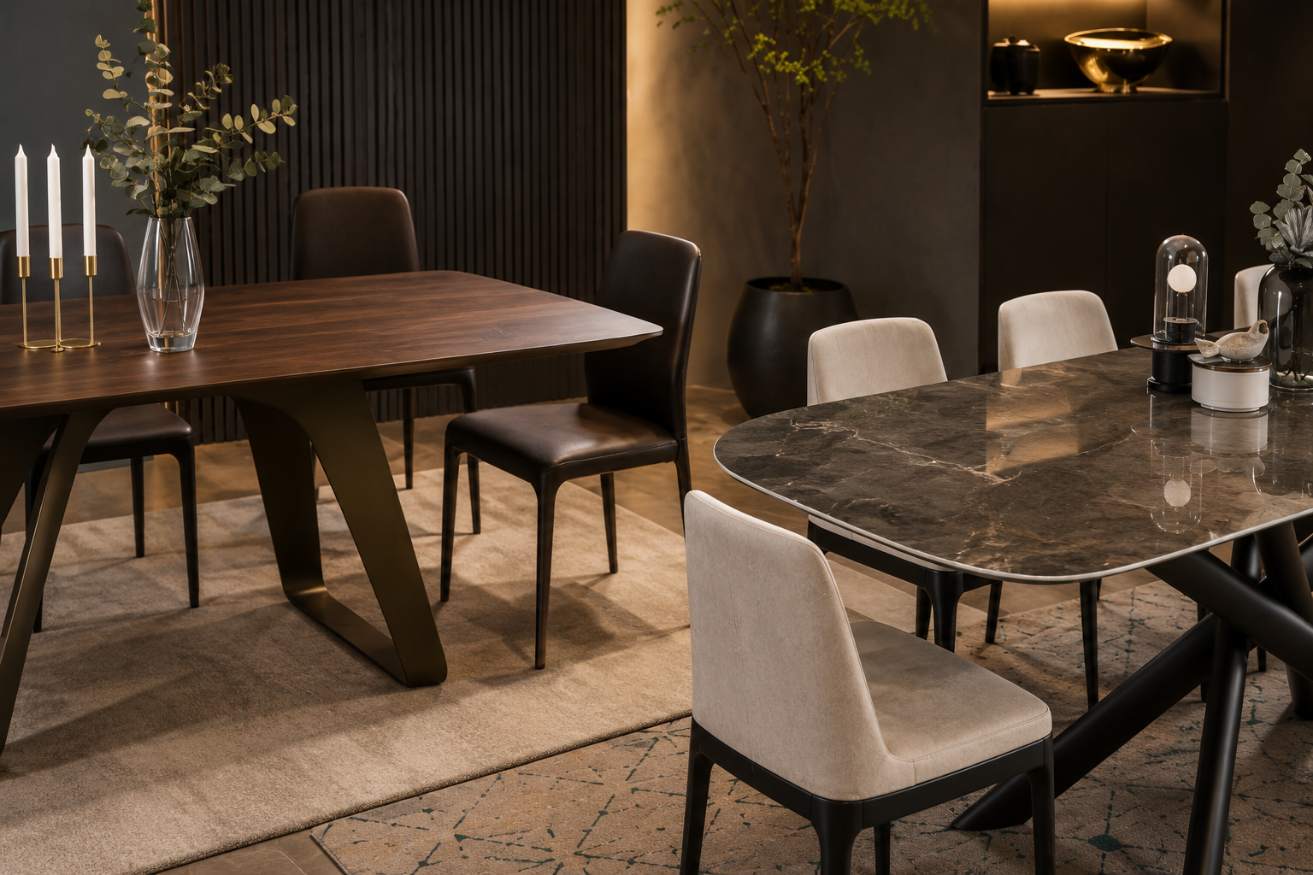
Your dining table has to work as hard as you do. For some, it’s a bustling hub for family meals, homework sessions, and craft projects. For others, it’s a sophisticated stage for elegant dinner parties and entertaining guests. The material you choose for your tabletop should support your unique lifestyle. Melamine and ceramic are two fantastic contemporary options, but they are engineered for different demands. Melamine offers incredible resilience for high-traffic homes, while ceramic provides a luxurious, heat-resistant surface perfect for hosting. To find your perfect match, you need to understand the core of the melamine vs ceramic table top comparison. We’ll break down how each material performs in real-world scenarios, so you can confidently select a table that fits seamlessly into your life.
When you're choosing a new dining table, the top surface is one of the most important decisions you'll make. It sets the tone for your entire dining space and needs to stand up to daily life. Two popular and stylish options you'll often see are melamine and ceramic. They can look similar at first glance, but they have distinct qualities. Let's break down what each material is all about so you can find the perfect fit for your home.
Think of melamine as a super-durable, modern material. At its core, melamine is a strong type of plastic that’s built to last. It often has the polished look of ceramic but feels different to the touch. This durability makes it a fantastic choice for busy households. The production process for high-quality melamine starts with carefully selected raw materials, which are then molded under high pressure and heat. This creates a non-porous, resilient surface that’s perfect for everything from family dinners to kids' craft sessions. It’s a practical material that doesn’t sacrifice style.
Ceramic brings a sense of timeless, earthy elegance to the table. Ceramic tabletops are crafted from natural clay that is shaped, dried, and then fired in a kiln at a very high temperature. This traditional method results in a hard, durable surface with a unique character. The creation of a ceramic table involves a meticulous process of forming, glazing, and firing, which gives it a beautiful, high-end finish. You’ll find it in various forms, from sleek porcelain to rustic stoneware, offering a wide range of styles to complement your dining room decor. It’s a classic choice that speaks to quality craftsmanship.
When you’re investing in a new table, you want it to look beautiful and stand up to daily life. Both melamine and ceramic are known for their resilience, but they handle wear and tear differently. Understanding these distinctions is key to choosing a piece that not only fits your aesthetic but also suits your lifestyle, whether you're hosting elegant dinner parties or managing a busy household. Let's break down how they compare in the areas that matter most: resistance to damage, heat handling, and overall weight.
Melamine is famously durable and shatter-resistant. If you drop something heavy on it, it’s unlikely to crack or chip, making it a fantastic option for families with young children or for use in high-traffic areas. It’s the kind of material that offers peace of mind. However, its surface can be prone to scratching from sharp utensils over time. In contrast, ceramic is more fragile and can chip or break from a strong impact. That said, high-quality ceramic is incredibly hard and resistant to scratches and everyday wear. With proper care, a ceramic dining table can maintain its flawless finish for decades.
Your dining table is often the center of activity, so it needs to handle everything from hot coffee mugs to spilled wine. Ceramic excels here. It’s non-porous and highly resistant to heat, meaning you can place a warm dish on it without worry. It’s also very easy to clean and won't stain easily. Melamine, on the other hand, is not as heat-friendly. Placing hot pans directly on its surface can cause damage or discoloration. While it’s generally stain-resistant, it’s best to be cautious with heat. For versatility in the kitchen and dining room, ceramic’s ability to handle temperature changes gives it a clear advantage.
The weight of a table impacts both its feel and its function. Melamine is very lightweight, which makes it easy to move around. This is a huge plus if you love rearranging your space or need a versatile table for both indoor and outdoor entertaining. Ceramic is significantly heavier, giving it a substantial, premium feel. This heft provides excellent stability, anchoring your dining space with a sense of permanence and luxury. While you won’t be moving a ceramic table often, its solid presence is part of its appeal, assuring you of its quality and craftsmanship.
Choosing between melamine and ceramic isn't just about durability; it's about defining the entire mood of your dining space. The material you select for your table top is a major design decision that influences everything from the lighting to the chairs you pair with it. Both materials offer a surprising amount of flexibility, but they achieve their looks in different ways. Ceramic often brings a sleek, substantial feel to a room, with finishes that can mimic luxurious natural stone or polished concrete. It’s a statement piece that feels both modern and timeless.
Melamine, on the other hand, is the ultimate chameleon. It can convincingly replicate the look of natural wood, stone, or solid colors, giving you a wide range of aesthetic options, often at a more accessible price point. While a trained eye might spot the difference up close, high-quality melamine provides an impressive finish that can anchor a room's decor. Your choice will come down to the specific look you want to achieve, the feel you want under your fingertips, and how the table will harmonize with the other elements in your beautifully designed home.
When it comes to design versatility, ceramic is a true powerhouse. Because ceramic tops are typically layered onto a stable base (like glass or MDF), designers have incredible freedom. This process allows for a huge array of styles, shapes, and finishes, from glossy marble-effect surfaces to matte, textured stone looks. This adaptability makes ceramic a go-to for homeowners looking to match a specific decor theme, whether it's ultra-modern minimalism or a sophisticated, art-deco inspired space. You can find ceramic tables that are sleek and understated or bold and dramatic, ensuring a perfect fit for your vision.
The tactile experience of a table is a subtle but important part of its appeal. Ceramic has a cool, smooth, and solid feel that conveys a sense of quality and permanence. It feels substantial and grounded, much like natural stone. This inherent sturdiness is reassuring and adds a touch of luxury to every meal. Melamine, while smooth to the touch, generally feels lighter and a bit warmer than ceramic. While high-end melamine has a pleasant finish, it doesn't quite replicate the dense, cool feel of ceramic, which is something to consider if the sensory details of your dining furniture are a top priority.
Integrating your new table into your home's existing style is the final, crucial step. A ceramic top is a natural choice for chic and modern aesthetics. Its clean lines and sophisticated finishes, whether mimicking marble or concrete, lend an air of elegance that complements contemporary decor beautifully. Paired with sleek metal legs, a ceramic table can become the stunning centerpiece of a minimalist dining room. Melamine’s strength lies in its versatility. A table with a warm, wood-grain melamine top can create a cozy, inviting atmosphere, while a solid white or grey melamine top can fit seamlessly into a bright, modern, or even Scandinavian-inspired interior.
A beautiful table is the heart of your dining space, and keeping it pristine is simpler than you might think. Whether you choose the everyday resilience of melamine or the sophisticated elegance of ceramic, you’ve selected a surface designed for modern living. Both materials are remarkably easy to care for without special polishes or complicated routines. With just a few simple habits, you can ensure your tabletop remains a stunning centerpiece for countless meals and gatherings. Proper maintenance protects your investment and keeps the surface looking as new as the day it arrived.
It’s about creating a space that’s not just beautiful, but also livable. You want a table that can handle morning coffee spills, family dinners, and late-night conversations without demanding constant attention. The good news is that both melamine and ceramic are engineered for exactly that kind of life. Their durability means less time worrying about upkeep and more time enjoying the moments that matter. Forget about intensive scrubbing or special treatments. The focus here is on gentle, consistent care that fits seamlessly into your daily routine. Let's walk through the simple steps to care for each surface, so you can feel confident in your choice for years to come.
One of the best features of a melamine table is its incredible resilience, making it a perfect match for busy households. Its non-porous surface resists stains and is wonderfully easy to clean. For daily wipe-downs, a soft cloth dampened with water and a bit of mild dish soap is all you need. Gently wipe the surface and dry it with a clean cloth to prevent water spots. While melamine is tough, it’s best to avoid abrasive cleaners or scouring pads, as they can dull the finish over time. Also, always use a cutting board for chopping and placemats for hot pans to keep your table looking flawless. This simple routine ensures your dining table remains a durable and stylish hub for family life.
Ceramic tabletops bring a touch of refined luxury to your home, and their care routine is just as straightforward. Since ceramic is non-porous, it won’t absorb liquids, which makes cleaning up spills a breeze. Simply wipe them away with a soft cloth and a pH-neutral cleaner. Ceramic is also highly resistant to heat, so you can place warm dishes directly on the surface without worry. However, it’s still wise to use trivets for very hot pots straight from the oven. To protect its beautiful finish, avoid harsh, acidic cleaners and abrasive sponges. While the surface is scratch-resistant, be mindful of the edges, which can be vulnerable to chipping from heavy impacts. This minimal effort preserves the timeless beauty of your entertaining space.
When you’re designing the spaces where your family gathers, safety is just as important as style. This is especially true for your dining table, the centerpiece of so many meals and memories. You want to feel confident that the surface is safe for daily contact, for accidental spills, and for your little ones. Both melamine and ceramic are popular, durable options, but they have different profiles when it comes to health and safety. Understanding how each material handles food contact, potential toxins, and heat will help you choose the perfect, worry-free table for your home. Let's look at the key safety considerations for both melamine and ceramic tabletops.
It’s a fair question, especially since melamine is so widely used. Generally, melamine is considered safe for surfaces that come into contact with food. However, there are a few things to keep in mind. Research shows that melamine can potentially release small amounts of its chemical compounds when exposed to very high heat or highly acidic foods. While you probably aren't serving dinner directly on your tabletop, spills from a hot bowl of tomato soup or a splash of lemon vinaigrette are part of life. For everyday use, a melamine table is perfectly fine, but it’s best to use placemats and trivets and to clean up acidic spills promptly.
If you’re seeking total peace of mind, ceramic is an outstandingly safe and non-toxic option. Made from natural clay and fired at incredibly high temperatures, ceramic creates a dense, non-porous surface. When finished with a modern, food-safe glaze, it becomes completely inert. This means a high-quality ceramic table will not leach any chemicals, even when in contact with hot or acidic foods. Our collection of ceramic dining tables is crafted to meet rigorous European standards, ensuring they are free of lead and cadmium. This makes ceramic an ideal choice for families and anyone who prioritizes a healthy, beautiful home environment.
A table's ability to handle heat is crucial for both safety and durability. Melamine has a distinct temperature threshold; the FDA advises against heating it above 160°F. This means you should never place a hot pan or pot directly on a melamine surface, as the intense heat can damage the material and cause it to degrade over time. In contrast, ceramic is exceptionally heat-resistant. Thanks to its kiln-fired origins, a ceramic tabletop can handle hot dishes without scorching or cracking. While using a trivet is always a good habit to protect your beautiful furniture, ceramic’s superior heat tolerance offers an extra layer of confidence during family dinners and get-togethers.
When you're choosing furniture, the price tag is often the first thing you see. But the true cost of an item goes far beyond that initial number. It’s about the long-term value it brings to your home and your life. A dining table, for instance, is the heart of so many memories: holiday dinners, late-night conversations, and daily family check-ins. Viewing this purchase as an investment helps you decide which material will truly serve you best.
Melamine and ceramic come with very different stories when it comes to cost and longevity. One might save you money upfront, while the other is built to last, potentially saving you the cost and hassle of a replacement down the road. It’s a classic case of price versus value. To help you make a confident decision, let's break down how they compare in initial cost, durability, and even their impact on the environment. This will give you a clearer picture of which table top is the smarter investment for your home.
There’s no getting around it: melamine tables are generally more affordable at the outset. If you're furnishing a space on a tight budget or need a solution quickly, the lower price point of melamine can be very appealing. It’s a practical material that makes stylish designs accessible. Ceramic, on the other hand, typically requires a higher initial investment. This cost reflects the natural materials, like clay, and the intensive process required to create such a durable and resilient surface. While the upfront expense is greater, it’s important to view it in the context of the table’s entire lifespan.
When it comes to longevity, ceramic has a clear advantage. A well-cared-for ceramic table can last for decades, becoming a lasting fixture in your home. Its incredible hardness makes it resistant to the kind of daily wear that can degrade other materials. Melamine, while durable for its price, typically has a shorter lifespan. You can expect to see signs of wear, like scratches or fading, within just a few years of regular use. This means you might find yourself shopping for a replacement sooner than you’d like. Investing in a high-quality dining table made from a material like ceramic often means you buy it once and enjoy it for a lifetime.
If sustainability is a priority for you, the choice becomes even clearer. Ceramic is crafted from natural materials, primarily clay, which is an abundant resource. Because these tables last so long, they contribute to less waste over time by reducing the need for replacements. It’s a choice that aligns with a more conscious approach to consumption. Melamine, however, is a type of plastic derived from fossil fuels. It’s not biodegradable and poses environmental challenges at the end of its life. Choosing ceramic means you’re not only investing in a durable piece for your home but also making a more eco-friendly decision.
Choosing the right table top is about more than just looks; it’s about finding a surface that complements your daily life. Whether your home is a bustling hub for family and friends or a serene space for quiet dinners, the material you choose plays a big role. Your table is the backdrop for so many memories, from weekday breakfasts to celebratory feasts. Let's walk through which material, melamine or ceramic, is the right fit for the life you lead.
If your dining area often doubles as a homework station, craft corner, or the center of a lively family meal, a melamine table top is a fantastic, stress-free option. Think of it as the MVP for busy households. Melamine is incredibly durable and resistant to breaking or shattering, so you won’t have to worry about every little knock or spill. This resilience makes it a smart choice for homes with children. It’s also lightweight, which is a huge plus for outdoor furniture that you might want to move around the patio. It’s a stylish and practical material that holds up beautifully in high-traffic settings.
For those who love to host and create an atmosphere of refined elegance, a ceramic table top is the clear winner. Ceramic has a substantial, high-end feel that instantly elevates a dining room. Made from natural clay and fired at high temperatures, its finish is baked right in, ensuring the design remains vibrant for years. It’s the perfect surface for serving hot dishes directly on the table without panic. If you envision your dining room as a sophisticated space for memorable dinner parties and holiday gatherings, investing in a ceramic table provides a beautiful and lasting centerpiece that truly makes a statement.
Ultimately, the best choice comes down to your priorities. For everyday use in a busy home, melamine offers a winning combination of style, durability, and ease of care. It’s built to withstand the beautiful chaos of daily life. However, if you’re looking for a long-term investment piece with timeless appeal, ceramic is unmatched. While it may require a larger upfront investment, a quality ceramic table can last for decades, becoming a cherished part of your home. Consider how you’ll use your table most often, and you’ll find the perfect material to beautify your space and fit your lifestyle.
Which tabletop is truly better if I have young children? This really depends on your main concern. Melamine is fantastic because it's nearly shatterproof, so you won't have to worry about a dropped toy or cup causing a major crack. It offers great peace of mind in a high-energy home. Ceramic, while more susceptible to chipping from a hard impact on its edge, is incredibly resistant to scratches and stains. This means crayon marks or juice spills clean up effortlessly without a trace.
Can you really tell the difference between a high-end melamine and a ceramic table? Visually, high-quality melamine does an impressive job of mimicking materials like wood or stone. From a distance, it can be quite convincing. The difference becomes clear when you touch it. Ceramic has a cool, solid, and substantial feel, much like natural stone. Melamine feels lighter and a bit warmer to the touch. The weight and grounded presence of a ceramic table give it a distinct, premium quality that you can feel.
Is the higher cost of a ceramic table genuinely worth the investment? If you view your table as a long-term fixture in your home, then yes, ceramic is an excellent investment. Its durability against scratches, heat, and stains means it will maintain its beautiful finish for decades with minimal care. While melamine is more affordable upfront, it may show wear and tear like scratches or fading over a few years, potentially leading you to replace it sooner. A ceramic table is often a "buy it once" piece that offers lasting value.
I love hosting dinner parties. Which surface is more forgiving with spills and hot dishes? For entertaining, ceramic is the clear winner. Its surface is non-porous, so a red wine spill won't cause a panic, it will simply wipe away without staining. Ceramic is also highly resistant to heat, meaning you can place a warm serving dish directly on the table without searching for a trivet. This makes serving and cleanup much more relaxed, allowing you to focus on your guests instead of your furniture.
Besides cleaning, is there any special care I need to know about for these tables? Both are quite low-maintenance, but a couple of habits will keep them looking their best. With melamine, consistently using placemats and trivets is key to protecting the surface from scratches from utensils and damage from hot pans. For ceramic, the main thing to be mindful of are the edges. While the surface is tough, a hard knock on the edge with a heavy object could cause a chip, so it's just something to be aware of during daily use.

