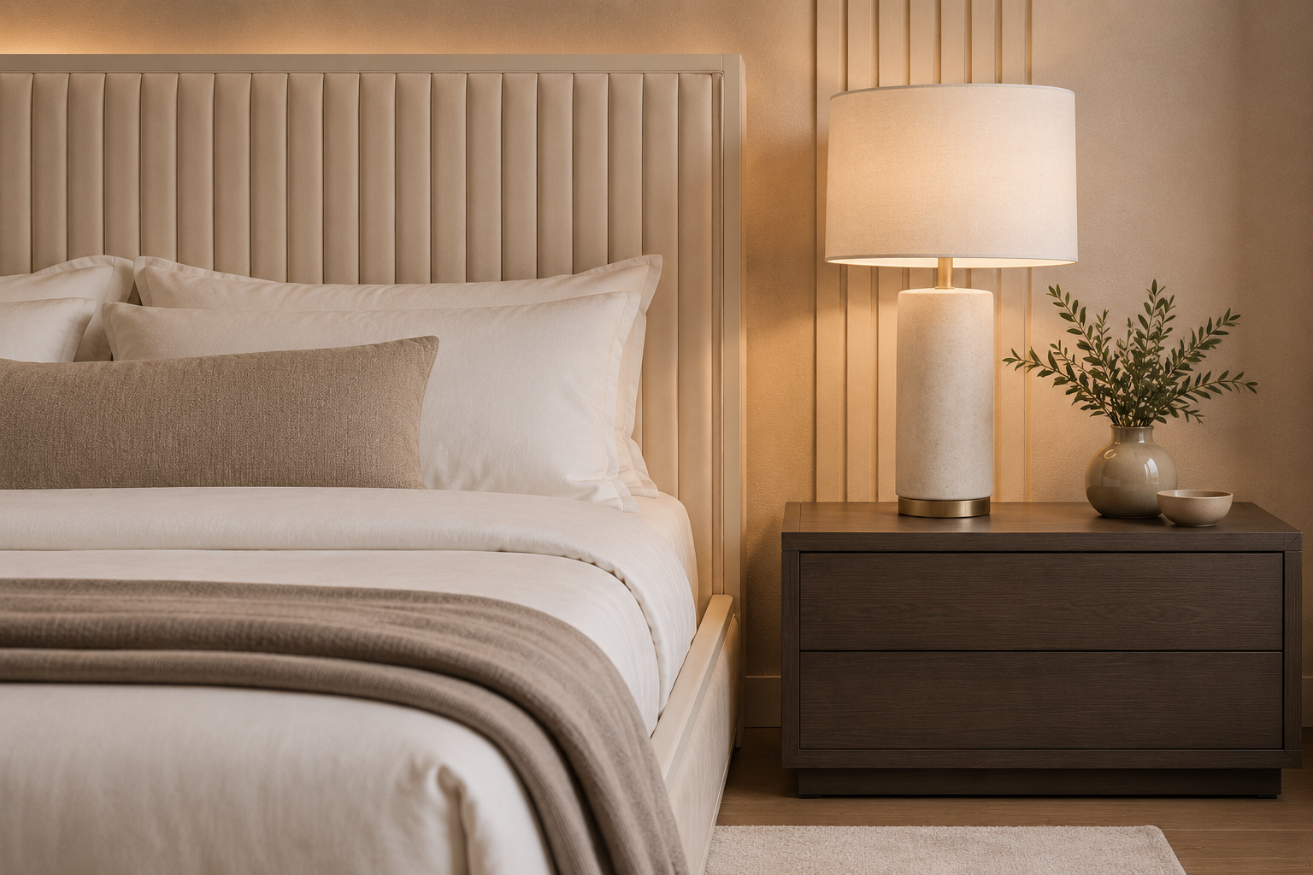
Beautiful bedroom lighting does more than illuminate a room. It shapes how the space feels at sunrise, supports quiet reading at night, and brings attention to the materials, proportions, and comfort that make a bedroom feel considered. The most successful schemes are layered rather than dependent on a single overhead fixture.
Book a free design consultation through our Design Center to plan your perfect layered bedroom lighting layout.
The best bedroom lighting ideas combine ambient light for overall warmth, task lighting for reading and dressing, and accent lighting for art, architectural details, or texture. Place fixtures at varied heights, connect each layer to a dimmer. And choose bulbs with a warm color temperature so the room can shift from practical in the morning to restful at night.
For a luxury bedroom, the goal is balance: a statement fixture can establish the mood, while sconces and bedside lamps add useful illumination exactly where it is needed. Thoughtful controls then let you adjust each layer without disturbing the room's calm. Start by considering how ambient, task, and accent light work together.
The most comfortable bedrooms rarely rely on one ceiling fixture. A considered lighting plan combines three layers: ambient light for overall illumination. Task light for focused activities such as reading, and accent light to draw attention to architectural details or decor. Together, these layers let the room shift from bright and practical in the morning to calm and atmospheric in the evening.
| Layer | Purpose | Typical Fixtures | Placement |
|---|---|---|---|
| Ambient | General room illumination | Chandeliers, flush mounts, pendants | Ceiling center or over the bed |
| Task | Focused light for reading, dressing, makeup | Bedside lamps, wall sconces, floor lamps | Adjacent to the bed, near a mirror or wardrobe |
| Accent | Highlight art, texture, architectural features | Picture lights, track heads, LED strips | Focused on a specific object or wall surface |
Ambient lighting establishes the room's general brightness. A flush mount, pendant, or chandelier can provide the foundation. But the fixture should be paired with a dimmer so it does not dominate the room at every hour. Choose a scale and finish that complement your luxury bed frames rather than competing with them. In a modern European bedroom, a sculptural fixture can act as a focal point while still supporting a restful, uncluttered composition.
Task lighting brings useful illumination close to the bed or a seating area. Bedside lamps and reading sconces are the most practical choices, especially when each side of the bed has its own switch. Place them where the light reaches a book without shining directly into your eyes. The right proportions also depend on the surrounding furniture, so select nightstands that complement your lighting scheme in height, width, and surface area.
Accent lighting is the finishing layer. A softly illuminated artwork, textured wall, architectural feature, or nearby plant gives the room visual depth without increasing overall brightness. Keep the effect subtle. The goal is to guide the eye and add warmth, not turn the bedroom into a showroom.
Layering works best when light comes from more than one level. Combine a ceiling fixture with bedside lamps, then add a floor lamp near a reading chair if the room allows. This multi-height approach prevents the ceiling from carrying all the visual weight and creates a more enveloping atmosphere. It also makes the room feel finished from every viewpoint, whether you are standing at the doorway or relaxing in bed.
LED bulbs support this strategy with lower operating demands. According to the U.S. Department of Energy, LEDs use up to 80% less energy than traditional incandescent bulbs and can last up to 25 times longer. Use warm, dimmable LEDs where possible, and keep the color temperature consistent across fixtures so the layers feel intentional rather than mismatched.
A chandelier above the bed can establish the room's visual center before you add a single accent. It draws the eye upward, gives the bed a sense of arrival, and provides the soft, broad illumination that makes the entire space feel finished. In a modern European bedroom, look for a fixture with a clear silhouette and considered materials such as sculptural glass. Satin brass, brushed metal, or a restrained dark finish. The goal is presence without visual clutter.
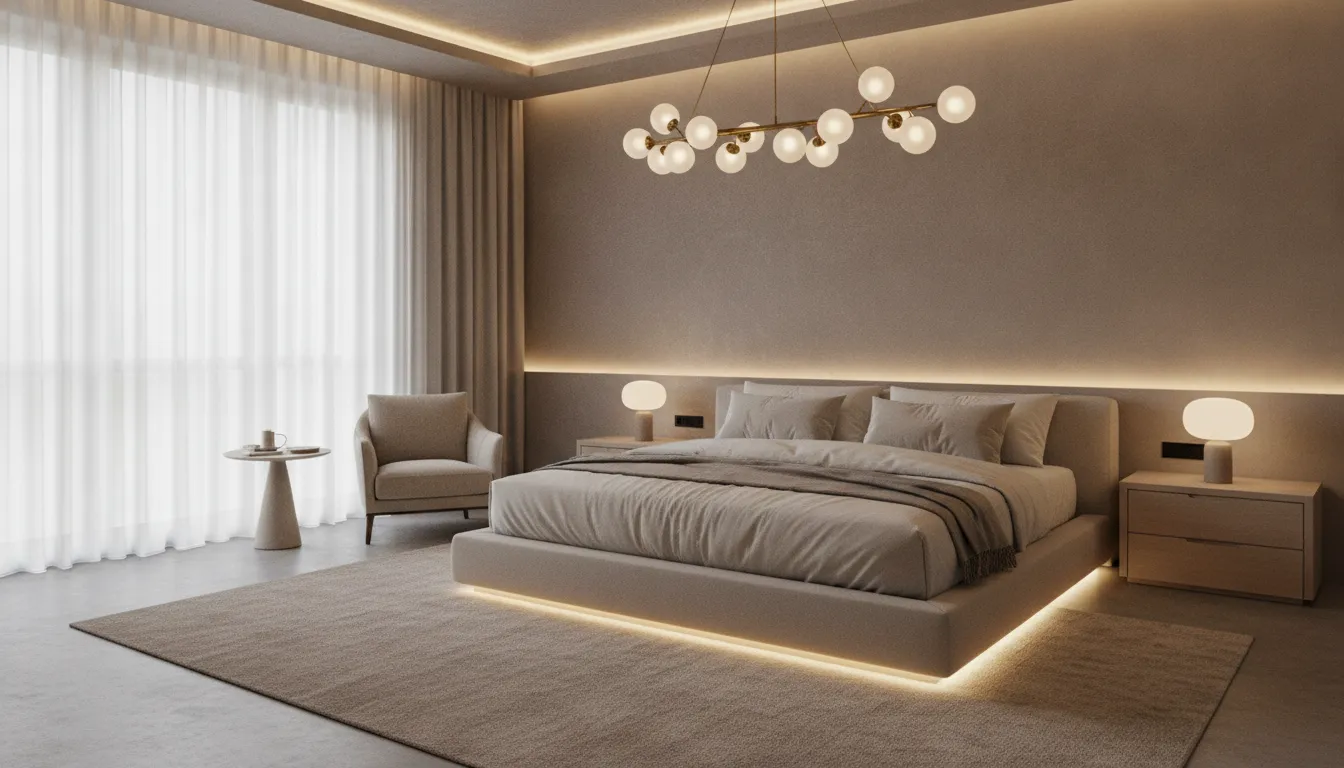
Scale matters more than the number of crystals or the complexity of the arms. A fixture that is too small can disappear above a substantial bed. While one that is too large may make the ceiling feel low and compete with the headboard. Consider the bed, nightstands, ceiling height, and the room's walking paths together. A wide, low-profile design often suits a contemporary room with a strong headboard. A more vertical chandelier can work in a taller room where the extra drop creates balance.
Architectural Digest places particular emphasis on scale when selecting bedroom lighting, and that principle is useful here: the chandelier should provide sufficient ambient light without overwhelming the room. Review the proportions from the doorway and from the pillows, not only from directly beneath the fixture. If the bed is centered under a ceiling junction box, the chandelier should generally align with the bed rather than the room's geometric center.
For an 8-foot ceiling, allow approximately 30 to 36 inches between the ceiling and the bottom of the chandelier. This keeps the fixture visually connected to the bed while leaving comfortable clearance above anyone sitting up or moving around the room. Higher ceilings require a proportional adjustment, but avoid dropping the fixture so far that it interrupts sightlines or becomes a hazard. Always confirm the final clearance with the electrician and account for the fixture's exact dimensions before installation.
Treat the chandelier as the ambient light anchor, then build around it with more focused sources. Warm, dimmable bulbs make the fixture useful for winding down, while bedside lighting handles reading without forcing the chandelier to do every job. A pair of designer lamps to complement a chandelier can reinforce the finish or introduce a subtle contrast. The result is layered, comfortable illumination rather than one bright point overhead.
Wall sconces bring focused light to the bedside without taking valuable surface area from a nightstand. That makes them especially effective in compact bedrooms, carefully planned guest rooms, and calm, minimal interiors where every object should earn its place. A well-chosen pair can also frame the bed, adding architectural balance and a refined European character.
Hardwired sconces create the most built-in, polished appearance. Concealed wiring keeps the wall visually clean, and a professional electrician can position the switches where they are easiest to reach from bed. This approach works well when you are renovating or planning a new bedroom from the beginning.
Plug-in swing-arm sconces offer flexibility without hardwiring. Their adjustable arms direct light toward a book, tablet, or conversation area, then fold closer to the wall when not in use. Choose a design with an attractive cord, or use a discreet cord cover so the practical connection feels intentional rather than improvised. If you may rearrange the room later, plug-in fixtures make that change simpler.
Mounting height should support comfortable reading without shining directly into your eyes. As a starting point, position the fixture so its light source sits near eye level when you are seated in bed. Then adjust for the bed height, mattress thickness, and the sconce design. Swing-arm models need enough clearance to move freely over the nightstand without striking the headboard.
Keep the pair visually aligned with the bed and headboard rather than relying on a fixed measurement. A upholstered platform bed buying guide can help you consider the relationship between sconces, bed proportions, and nightstand scale. The result is a practical layer of task lighting that preserves nightstand space for essentials while adding a warm ambient glow when the reading light is switched off.
The best bedside lamp does more than fill an empty corner. It should make reading comfortable, soften the room at night, and support the proportions of your bed and nightstands. Begin by considering how you use the space, then choose a lamp with a height, shade, and light direction that feels intentional rather than oversized.
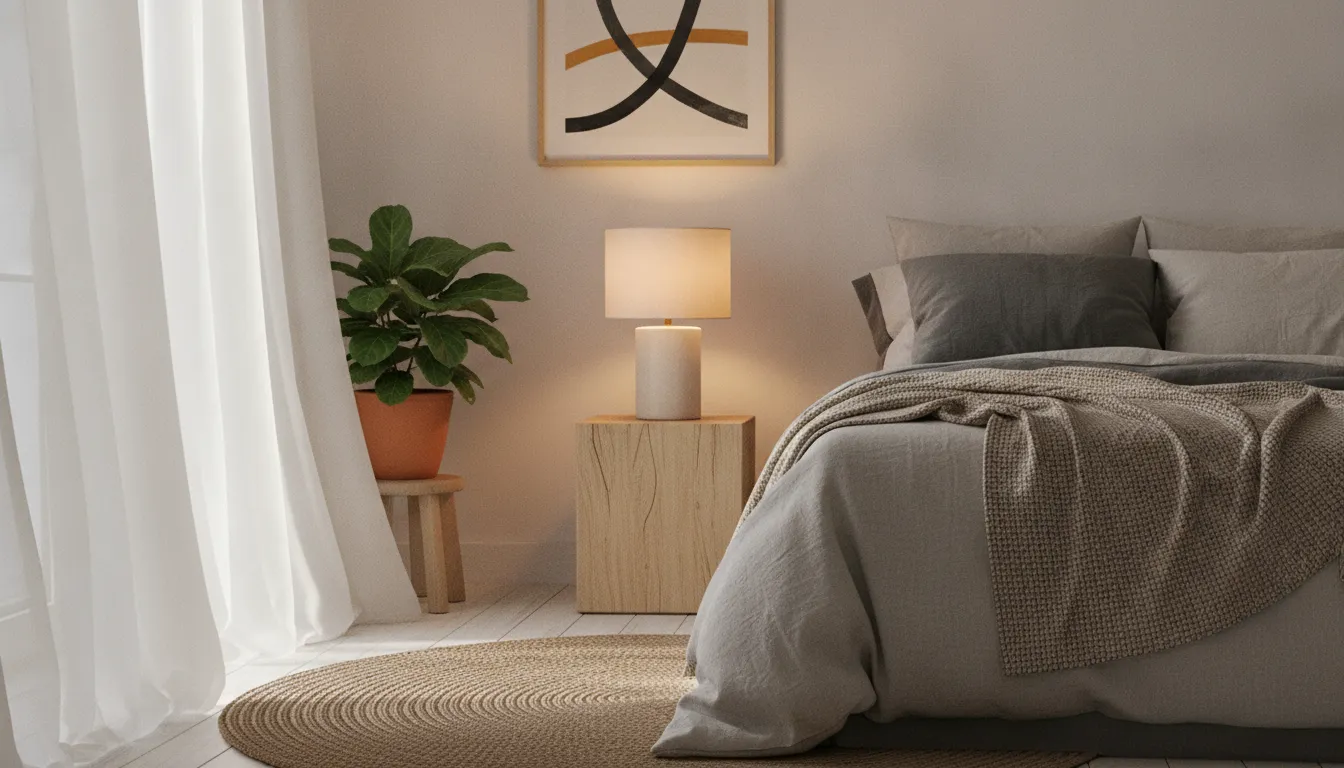
When you are seated in bed, the lamp should sit close to eye level. As a practical guideline, the top of the lamp is often about 24 to 30 inches above the bed surface, depending on the mattress height and nightstand. The bottom edge of the lampshade should align near your shoulder when you sit up. This keeps the bulb comfortably shielded from view while placing useful light over a book or tablet.
Measure the nightstand, mattress, and headboard together instead of choosing a lamp in isolation. A low platform bed may need a slightly taller lamp, while a tall upholstered headboard can call for a more substantial silhouette. Matching lamps on either side creates balance, but a pair does not have to be visually plain. Look for complementary finishes, shapes, or materials that echo details elsewhere in the room. Browse our Beautify collection for decorative lighting options that suit your style.
Shade material has a direct effect on the atmosphere. Fabric shades diffuse light gently, making them a strong choice for winding down and creating a warm accent layer. They are especially effective in bedrooms with upholstered beds, natural wood, or other tactile finishes. Metal shades create a more directed beam, which can work well for focused reading or for a room that needs a sharper contemporary note. If you prefer a metal shade, look for an adjustable design or pair it with a softer ambient fixture so the room does not feel stark.
Think of the bedside lamp as task and accent lighting working together. It should provide enough illumination for reading without competing with the ceiling fixture or sconces. A dimmable bulb gives you more control as the room shifts from morning preparation to evening relaxation. For a broader view of how lighting choices fit into a cohesive room plan, explore our guide to European bed frames and bedroom design.
Finally, coordinate the lamp with the bed's scale and the nightstand's usable surface. Leave room for a book, glass of water, or personal items. The result should feel luxurious because it is comfortable and considered, not because every surface is filled.
A beautiful bedroom should adapt to the way you use it. The lighting that helps you read in bed can feel too bright when you are winding down. While a soft glow may not provide enough visibility when you are dressing. Dimmers make that transition simple, allowing one lighting plan to support several moments without changing the room's character.
Whenever possible, place ambient, task, and accent lighting on separate dimmer zones. Lower the ceiling fixture for a calm evening atmosphere while keeping a bedside lamp bright enough for reading. When you are getting dressed, raise the ambient level and use focused task lighting near the wardrobe or mirror. Accent lighting can remain subtle, highlighting architectural details, artwork, or a refined headboard without competing with the room's primary illumination.
This arrangement also makes a room feel more considered. Instead of relying on one harsh overhead source, you can balance brightness across several heights and surfaces. Dimmers may extend bulb life and reduce energy consumption, particularly when lights are regularly used below full output. Choose dimmer switches and bulbs that are designed to work together, since incompatible combinations can cause flicker or limited adjustment.
Smart lighting adds another level of flexibility. Compatible systems let you adjust brightness from a smartphone or by voice, set a gentle evening scene, or switch off multiple fixtures without walking around the room. Preset scenes can be especially useful in a primary bedroom: create one for reading, another for relaxing, and a brighter setting for dressing or tidying.
Keep the technology discreet. Select fixtures and controls that support the modern European character of the space rather than making the system the focal point. If you are planning a new bedroom layout, explore bedroom dressers and storage that coordinate with your lighting and furniture plan.
Ready to bring your lighting vision to life? Book a free design consultation with our team.
Begin with ambient light from a chandelier or ceiling fixture, then add task lighting at the bedside for reading. Finish with accent lighting that highlights artwork, architectural details, or a textured wall. Put each layer on its own dimmer when possible so the room can shift from bright and functional in the morning to soft and restful at night.
Choose fixtures that provide useful light without taking up valuable floor or table space. Wall sconces, especially plug-in swing-arm styles, can replace bedside lamps, while a compact ceiling fixture supplies ambient illumination. Reflective finishes and light-colored shades can also help distribute light more evenly without making the room feel crowded.
Warm light is generally the more comfortable choice for a bedroom because it supports a relaxed, residential atmosphere. Use brighter, clearer light where you read or dress, but keep the overall palette visually warm. Dimmers make this balance easier by allowing one fixture to serve different activities throughout the day.
Position a bedside lamp so its shade sits around shoulder height when you are sitting up in bed. A wall sconce should direct light toward the reading position without shining into your eyes or your partner's. Keep switches within easy reach, and coordinate the fixture scale with the bed and nightstand rather than treating it as an isolated accent.
Yes. Dimmable fixtures let you control each lighting layer for reading, conversation, dressing, and winding down. Separate controls for ambient, task, and accent lighting offer the greatest flexibility. If you use smart lighting, smartphone or voice controls can add convenience, provided the switches and bulbs are compatible.
Book a free design consultation through our Design Center and let our team help you select the perfect bedroom lighting for your space.

