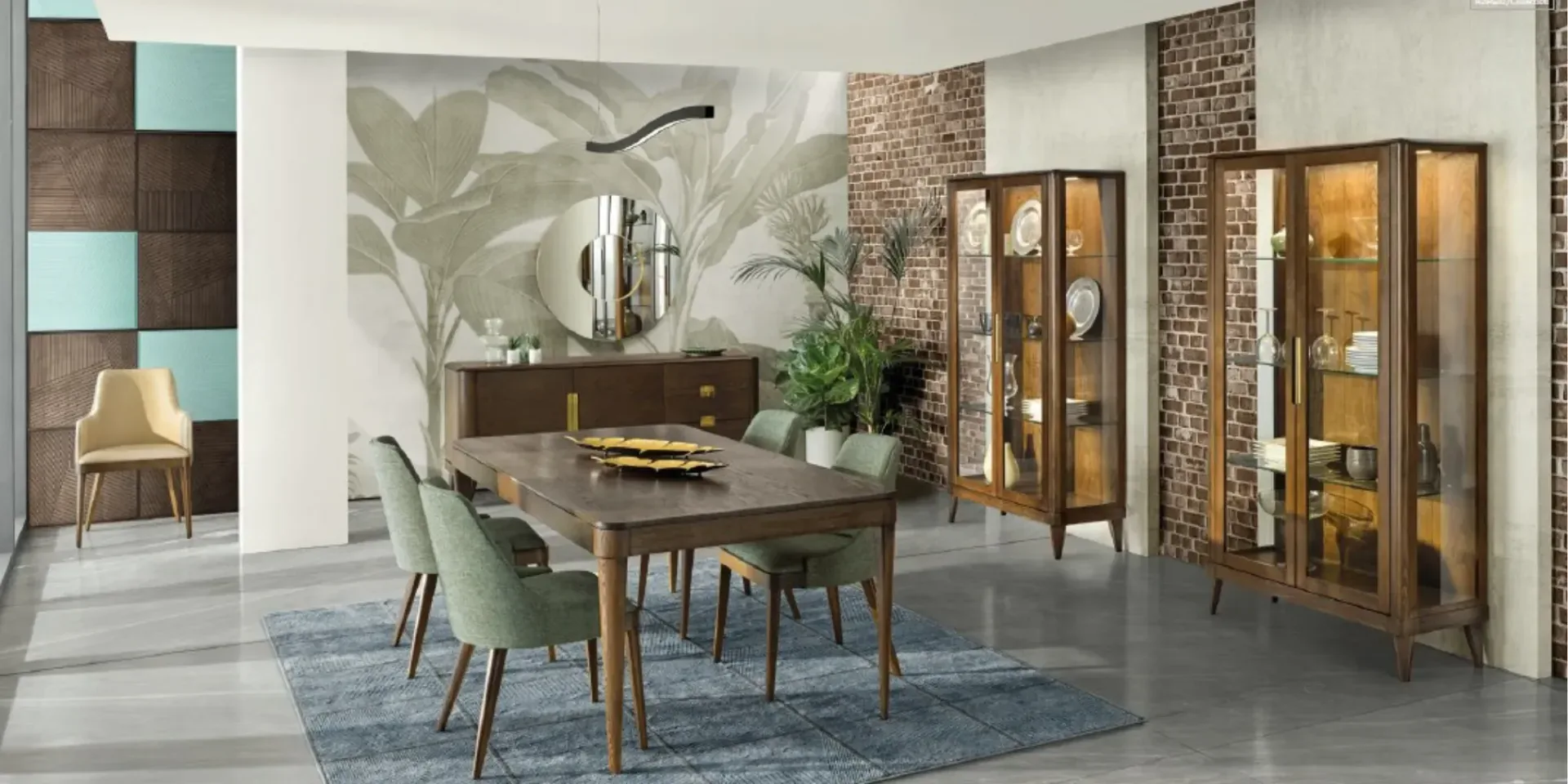
A home office can feel polished and calm without hiding every sign of work. The right tall storage piece keeps documents, technology, and daily supplies close at hand while giving the room a more composed vertical line than a low credenza.
An office storage cabinet is the better choice when you need mostly closed, upright storage. It cuts visual clutter and uses wall height. Proportions, materials, and finish can still match the room. A low credenza suits broad, accessible storage; an open bookcase keeps objects on display; and a dining sideboard is shaped around serving and dining needs.
Choosing well starts with the contents, not the label. Consider what must be concealed, what deserves quick access, and which items need to remain visible before comparing door and drawer arrangements. From there, room scale, circulation, finish coordination, and the flexibility of custom sizing can guide a more confident decision for a European modern interior.
Choose a home office storage cabinet by what it needs to hold, not by the product label alone. A cabinet that looks refined but cannot keep daily tools accessible will make work feel harder. One that offers more closed storage than you need may also take up visual space without solving a real problem. Start by sorting the contents of your workspace into three practical loads:
That breakdown helps determine whether you need drawers, doors, open compartments, or a combination. It also keeps the cabinet connected to the way the room is used. A design-conscious home office should support concentration while still feeling like part of the home, whether the room is crisp and contemporary or warm and traditionally furnished.
Consider the cabinet's position as well as its contents. If you need a long surface beside the desk for a lamp, paperwork. A printer, or objects you want to keep close, a low credenza is the better piece. See these modern office credenza ideas for a closer look at that format. The point is not to add another category to your list, but to match the furniture's shape to the work zone and the available wall.
For books you want on view, an open bookcase is usually a more natural choice than a fully enclosed office storage cabinet. Open shelving gives frequently consulted titles and selected objects a visible place, while a cabinet can keep visual noise under control elsewhere. If you are comparing proportions and arrangements, this guide to choosing a modern bookcase can help. European furniture is meant to be lived with, so the strongest choice is the one that accommodates your working habits and still belongs comfortably in the room.
The right access type changes how an office storage cabinet feels in the room and how quickly you can use it. Start with what the cabinet needs to hold, then choose the opening that supports that routine rather than choosing a facade first.
| Cabinet type | Best for | Watch for |
|---|---|---|
| Solid doors. | Paper and samples stay hidden behind a calm wall. | Shelves must stay easy to reach. |
| Drawers. | Small supplies you sort and grab daily. | A pull should not block the chair. |
| Glass doors. | Books and objects meant to be seen. | Glass also shows clutter. |
Solid doors are the most forgiving choice when an office has paper, material samples, or equipment that does not need to be on display. They create visual quiet, but only if the interior is practical. Check that shelves are reachable without unloading the cabinet, especially when the piece is deeper or positioned beside a desk.
Drawers make sense for the things you grab repeatedly: pens, chargers, notebooks, clips, and other small supplies. Before choosing a drawer layout, consider both its pull and its clearance. A handle that projects into the chair zone can make a well-designed cabinet awkward to use. Also check the intended filing capacity rather than assuming any deep drawer will accept folders. A letter-size file folder is 11 3/4 inches wide, and its front flap is 8 5/8 inches high, according to the National Archives folder specification. A file drawer needs to clear that folder plus the rail; do not infer the interior dimensions without a verified product specification.
Glass doors turn storage into part of the office design. They work well for a considered selection of books, ceramics, or objects, provided you are comfortable keeping the contents edited. If the cabinet will hold loose papers, packaging, or unfinished project materials, solid doors will usually create a more composed result.
Finally, match the cabinet to the room's job. A dining sideboard is designed for a different storage context and is the wrong piece for files simply because it has doors or drawers. Choose access around the office's daily habits, then confirm the actual interior before ordering.
A taller office storage cabinet should fit the room before it fills the room. Start with the wall, then look beyond the cabinet itself: doors need to open. People need to pass, and a desk chair should be able to roll through without catching on a corner. These practical clearances matter as much as the cabinet's footprint.
Depth is easy to underestimate. A piece near 15 to 18 inches deep generally sits closer to the wall than a desk, but its doors or drawers still need usable clearance in front. Mark the full depth on the floor with painter's tape, then leave enough room for a chair to roll past. If the cabinet will share a wall with a desk, measure the passage between them rather than assuming the room's overall width tells the whole story.
EuroHome examples help establish scale without turning the decision into a product checklist. The Paris Showcase includes a 2x2 configuration measuring 48 7/8 inches wide, 15 3/4 inches deep, and 50 7/8 inches high. Its smaller configuration is 25 1/8 inches wide by 15 3/4 inches deep by 25 7/8 inches high. Those proportions show how the same general idea can occupy either a broad section of wall or a much smaller vertical zone.
For a stronger vertical presence, the Droppin Storage measures 39 1/2 inches wide, 18 1/2 inches deep, and 52 3/4 inches high. The Dottie measures 43 1/4 inches wide, 18 inches deep, and 69 1/4 inches high. A cabinet near 50 inches high usually reads as furniture within the room. One closer to 69 inches begins to read more like architecture, so check ceiling height, doorways, window trim, and the route into the room before committing.
Keep the desk decision separate. Its height, legroom, and working surface determine how comfortably you work, while the cabinet determines how storage occupies the wall. If both pieces are being planned together, use the storage measurement as a boundary rather than forcing the desk to fit around it. A considered Italian writing desk can complement the cabinet, but each should be sized for its own job and for the space needed to use it.
A tall cabinet is a stability decision as much as a storage decision. Put heavier items in the lower portion so the center of gravity stays low, and avoid stacking loose boxes or decorative objects on top. Before placing a freestanding piece against a wall, ask how it is intended to be anchored and what hardware or installation method is appropriate for that wall. A secure installation is part of choosing the cabinet, not an afterthought.
For context, ANSI/BIFMA X5.9 is a voluntary commercial storage-unit performance standard that tests stability and durability for storage furniture. A residential European cabinet is not required to carry that label. The more useful question is how the piece stands, how it will be loaded. And how it can be secured in your room, rather than whether it displays a certification badge.
Finish changes the atmosphere around the cabinet. Visible wood grain brings warmth and texture to a traditional room, especially when the rest of the space includes natural materials and collected furnishings. A matte lacquer can keep a small office visually quiet, allowing the cabinet's shape to recede instead of competing with the desk or artwork. Glass introduces lightness and lets the room breathe, but it also reveals what is inside, so it works best when the contents can remain orderly.
EuroHome pieces are made to order in chosen finishes. That flexibility allows a modern cabinet to belong in a warm, traditional home rather than reading as a steel supply cabinet placed in an otherwise personal room. The goal is not to make every element match. It is to choose a finish, sheen, and level of transparency that support the room's existing character while giving the storage a clear purpose.
Samples are especially helpful because a finish can change noticeably in daylight, evening light, and beside the colors already in your room. At the King of Prussia Design Center, you can compare finish samples in person and consider how the cabinet's surface will relate to nearby furnishings before making a decision.
Once the contents, the opening, and the wall are clear, the last step is seeing the finish in the room it will live in. A made-to-order cabinet can be sized and finished for that wall, which is hard to judge from a thumbnail.
Book a design consultation to compare cabinet height, finish, and what the piece needs to hold. You can also call EuroHome Interiors at (610) 477-7760.
Run through the cabinet in the order you will live with it. The list is short on purpose.
If a step fails, change the piece before you change the room around it. Delivery and placement are easier to plan once the size is settled. EuroHome's shipping and delivery page covers how an order reaches the house.
Use a cabinet for supplies, equipment, reference materials, project folders, and other items you need nearby but do not use continuously. Group similar items together, and place the things you reach for most often between waist and eye level. Before choosing a size, measure the items that must fit rather than relying on the cabinet's overall dimensions.
Doors are useful for larger, taller, or irregularly shaped items and keep shelves visually contained. Drawers make smaller supplies and frequently used documents easier to sort and reach. If you need both types of storage, choose a cabinet with adjustable shelving behind doors and add a drawer unit for items that benefit from quick access.
Choose a height that fits the wall, ceiling clearance, and your access needs. A low cabinet keeps the room open and can provide a surface for a printer or decor. A taller cabinet uses vertical space efficiently, but leave enough clearance to open doors and ensure upper shelves are comfortable to reach safely.
A credenza is a strong choice when you want broad, low storage along a wall, a work surface, or space for office equipment. Choose a bookcase when the contents are primarily books, binders, or display items and open access is useful. A cabinet is usually better when you want to conceal supplies, reduce visual clutter, or protect contents from dust.


