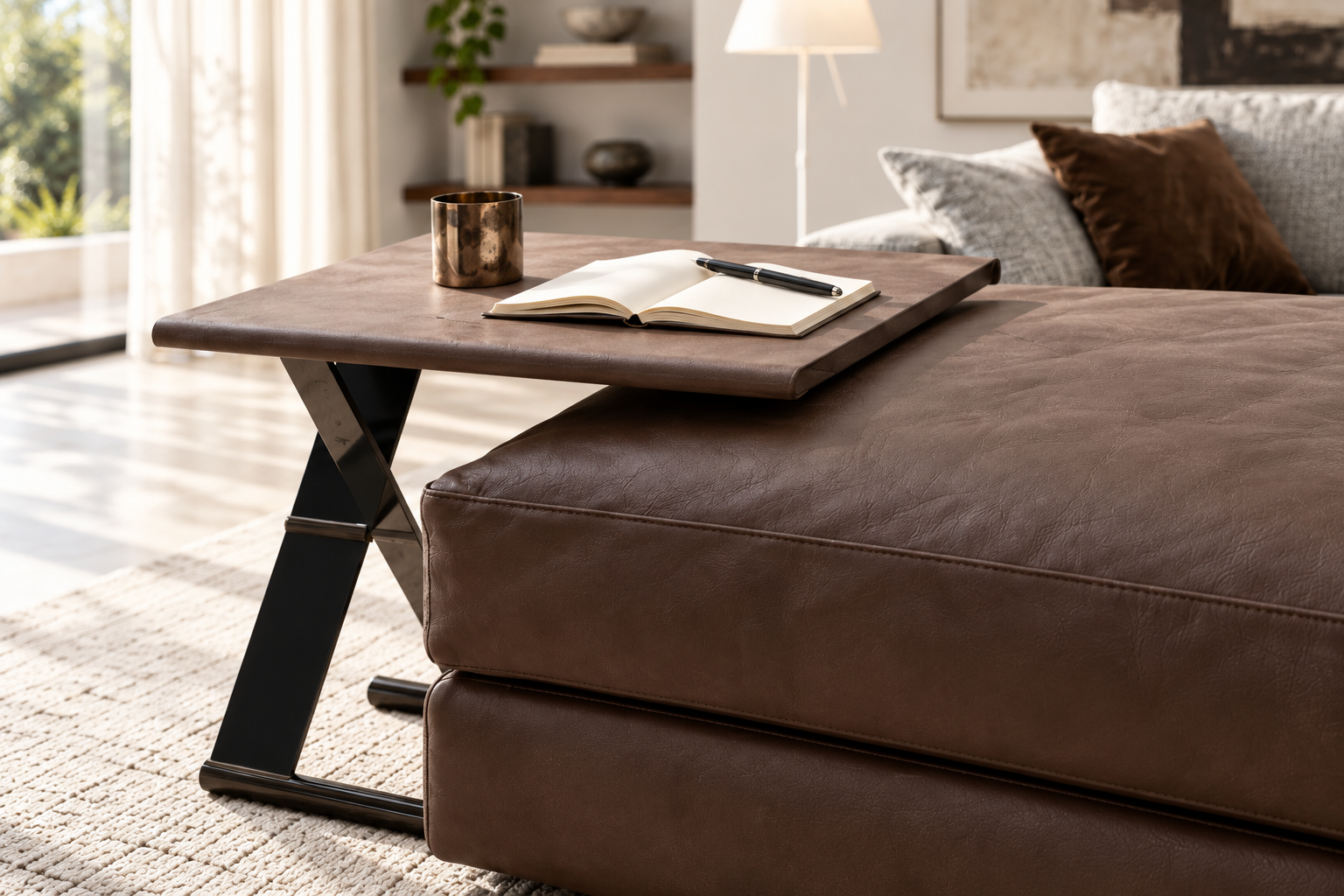
An Italian writing desk can bring craftsmanship and character to a room, but the right choice needs to do more than look beautiful. Consider the desk’s size, work surface, storage, finish, and relationship to your chair and room before you decide. These checks help you find a piece that supports real work and feels connected to the rest of your home.
Ask about finding the right writing desk
“Italian” describes a design heritage, not one fixed look or construction method. A writing desk may feel minimal and architectural, richly detailed, or somewhere between those points. The name alone does not tell you how the desk is made, what materials it uses, or whether it will work for your needs. Evaluate the actual piece rather than relying on a country label as a quality guarantee.
Look closely at the balance of form and function. Consider the leg shape, edge profile, joinery, surface finish, drawer fronts, and hardware. A desk with fine proportions and carefully resolved details can feel refined without dominating a room. A more decorative piece can provide a strong focal point, especially when its finish and scale relate to nearby furniture.
Think, too, about how you will use it. A desk for occasional writing has different demands from one used for a laptop, monitor, paperwork, or long work sessions. The best choice has enough clear surface for your routine while allowing the room to remain comfortable and uncluttered.
Start with the routine, not the catalog. Write down the tasks you expect to do at the desk and the objects that must stay within reach. A short list makes it easier to distinguish useful features from details that merely look appealing.
Be realistic about what belongs on the desk every day. A small surface can look graceful in a showroom yet become crowded by a screen, lamp, notebook, and charging accessories. Conversely, a very large desk may take over a quiet corner if your work is occasional. Make a list of essential items and use it to assess the actual usable area, not only the overall width.
If the desk will serve several purposes, define the main one first. A work surface that doubles as a console or occasional writing spot still needs enough clearance for a chair and the items you use. If the desk is mostly decorative, you may choose a narrower profile, but should still consider whether it can accommodate a book, a lamp, or a laptop when needed.
Measure the proposed location before shopping. Record the available width, depth, ceiling height if relevant, and distance to doors, windows, radiators, and other furniture. Note the route from the entrance to the desk as well. A piece can fit against a wall and still be difficult to carry into the room or maneuver around a tight turn.
Mark the desk footprint on the floor with painter’s tape or paper. Add the chair’s footprint, including the space needed to pull it back and sit down. Walk through the room with the outline in place. Check whether drawers can open fully, whether the chair blocks a passage, and whether nearby doors or closet doors can move freely.
Check dimensions in three ways: the outer footprint, the clear working area, and the height beneath the desk. Aprons, drawers, supports, and decorative panels can reduce knee and leg space. If you use a rolling chair or a footrest, account for those dimensions. For a specific desk, ask for a dimensioned drawing or measurements of the knee opening rather than assuming the entire width is usable.
Also consider visual scale. A desk with a thick top, bold legs, or ornate details can feel larger than its measurements suggest. A slim frame or raised leg profile may look lighter in a small room. Compare the desk’s overall mass with the nearby pieces, such as a console table or bookcase, and leave breathing room around the arrangement.
Ask what the main surfaces and structural parts are made from, and how each material is finished. A product description may use terms such as wood, veneer, lacquer, or metal, but you need to know where each material appears and what that means for daily use. Request clear details for the top, legs, drawer fronts, and interior surfaces rather than treating the desk as one uniform material.
Inspect the finish in the light where the desk will live, if you can. Color and sheen shift with daylight, warm lamps, and surrounding wall colors. A sample can help you compare the desk to your flooring, trim, and other furniture. Look for an even appearance across visible faces and edges, and ask how the finish should be cleaned or protected.
Think about the demands of the surface. A desk may hold a laptop, writing tools, books, and a lamp. Use a desk pad or protective mat if your routine involves frequent writing, hot cups, or objects that could scratch the surface. Ask the seller which care instructions apply to that particular finish; do not assume a generic polish is suitable.
Hardware contributes both to the visual character and the everyday experience. Open and close the drawers if a sample is available. Notice whether the pulls feel comfortable, whether the drawer fronts align, and whether the motion suits your expectations. If the desk is made to order, clarify whether hardware or finish choices can be changed and whether that affects the final dimensions or lead time.
Choose storage around the objects you actually use. A few shallow drawers may suit pens, paper, and small accessories. Larger drawers may be more useful for folders or notebooks. An open shelf can make frequently used items easy to reach, while closed storage can keep the surface visually calm.
Consider what you want to hide and what you want close at hand. If the desk needs to hold bulky equipment, check the internal drawer measurements and the height of any shelf. If cables are part of your setup, ask whether there is a cable opening or a practical route behind the desk. Do not assume a drawer can house a power strip or computer accessories without measuring them.
Storage adds visual and physical volume. A bank of drawers can make a desk feel substantial, while a slim writing table may look open but offer little concealment. One useful historical reference is the Gardner Museum’s record for a writing desk (scrivania), which describes a desk with drawers arranged on both sides and in the center. The detail is a reminder to look at how storage is integrated, not simply count drawers.
If you need more storage than the desk provides, plan a companion piece rather than forcing every task into the desk. A nearby bookcase or chest can keep the work surface open. Compare the height, finish, and visual weight of additional pieces so the room reads as a considered arrangement. EuroHome’s bookcase selection is one place to explore complementary storage forms.
Comfort depends on the relationship between the desk, chair, and your body. Check the desk height and the clearance beneath it. When seated, you should be able to approach the work surface without the apron or drawer unit pressing against your legs. The chair should fit under the desk when not in use, but also leave room to sit naturally while working.
If possible, test the desk with a chair of similar dimensions to the one you plan to use. Sit down, place your hands on the surface, and mimic your usual tasks. Check whether your shoulders stay relaxed and whether the desktop height feels practical. A showroom test is not a substitute for considering your own chair and routine, but it can reveal a mismatch before ordering.
Think about lighting and power at the same time. A desk placed near a window may benefit from daylight, but watch for screen glare. A lamp should illuminate the work area without crowding the surface. Measure the lamp base and shade, and decide where cords can run without creating a tangle. If you are also choosing a table lamp, compare its scale and finish with the desk.
For sustained work, consider how much surface you need beyond the keyboard or notebook. A monitor, laptop stand, and documents can quickly consume a narrow top. If you need equipment to remain set up, plan around its footprint. If you prefer an uncluttered room, you might instead choose a desk that supports shorter sessions and store equipment elsewhere when it is not in use.
Yes. A European modern piece can sit comfortably in a traditional home when its scale, materials, and surrounding details are chosen with care. It does not need to match every existing item. The aim is to create a relationship between the desk and the room, not to make all furniture look as if it came from the same set.
Start by identifying a point of connection. The desk might echo a wood tone in the floor, repeat a metal finish found in a light fixture, or provide a clean contrast to more detailed millwork. A warm wood finish can soften a crisp silhouette. A restrained desk can give a busy room a calm counterpoint, while a more expressive shape can bring energy to a quiet corner.
Use familiar, tactile elements around a modern desk to make the arrangement welcoming: a comfortable upholstered chair, a soft rug, books, framed art, or a shaded lamp. Keep the desk’s working surface practical, then add personal character through objects that can be moved or changed. This approach allows a strong contemporary form to feel lived-in rather than formal.
When mixing styles, compare undertones and proportions before matching exact colors. Two different wood finishes can work together if their warmth is compatible and the room includes other connecting details. If you want a coordinated look, compare samples in the actual room and view them at different times of day.
Use the same criteria for every option. A comparison is more useful when it considers the way you will use the desk, not only its appearance or price. Write down the dimensions and features you care about, then note what is confirmed and what still needs an answer.
What to check: Width, depth, height, chair clearance, drawer opening, and delivery route.
Why it matters: Confirms the desk works in the room and can be placed there.
What to check: Clear usable area after accounting for supports, equipment, and accessories.
Why it matters: Shows whether the desk supports your actual routine.
What to check: Materials by component, finish details, edge treatment, hardware, and care instructions.
Why it matters: Helps set clear expectations for appearance and upkeep.
What to check: Drawer dimensions, shelf location, cable needs, and room for daily essentials.
Why it matters: Reveals whether the desk can keep necessities accessible without crowding the top.
What to check: Available sizes and finishes, customization limits, timing, delivery, assembly, and returns.
Why it matters: Surfaces practical constraints before you commit.
Keep the comparison specific. Instead of writing “good storage,” record which objects fit and where. Instead of “fits the room,” record the measured clearance behind the chair and around the drawers. This turns impressions into decisions you can explain and revisit.
For a side-by-side comparison, place the strongest candidates in the same room plan. Include a chair, lamp, storage, and walking path. This can reveal that a desk with fewer drawers is the better option because it offers more legroom, or that a wider surface is worthwhile because your monitor and paperwork need to remain in place.
Get the details that affect use, appearance, and delivery in writing. Product pages and display models may not answer every question, especially when finishes, sizes, or configurations vary. Ask concise, practical questions and confirm which details apply to the exact configuration you are considering.
Do not assume customization is available for every desk or that a custom option changes only one dimension. A change to width, depth, finish, or hardware may affect proportions, availability, or delivery timing. Ask for a final specification that captures the exact choices before placing the order.
Delivery details deserve early attention. Measure entry doors and narrow turns as well as the final location. Confirm who will place or assemble the desk and what preparation is needed. Review EuroHome’s delivery information and shipping and delivery details as part of your planning.
Begin by removing options that fail a non-negotiable requirement: the desk does not fit, the knee clearance is inadequate, the surface cannot support your routine, or the finish conflicts with your room. Then compare what remains on design, storage, and practical details. It is easier to make a confident decision from a short list than to keep adding alternatives without a clear reason.
Visit a showroom when you need to judge scale, finish, or comfort in person. Bring room measurements, photos, and notes about your chair and equipment. A design professional can help you think through proportion and how a desk relates to other furnishings, but the measurements and final specifications should still be confirmed before ordering. Learn more about the EuroHome Design Center and the pieces available through its online shop.
Finally, ask yourself whether you like the desk for the way it will be used, not only for how it looks in a photograph. A successful choice should feel considered in the room, support the work you expect to do, and make everyday use straightforward.
Choose a size based on your room, chair, and work equipment. Measure the full desk footprint, the clear space beneath it, and the room needed to sit and move around it. Then confirm the usable work surface is large enough for your everyday tasks.
It can be, if its dimensions, storage, and surface support the way you work. Check desk height and legroom, then account for a laptop or monitor, lighting, cables, and paperwork. A desk designed for occasional writing may not provide enough area for a full-time workstation.
Ask which material and finish are used on each visible part, review a sample if available, and compare it with the room’s light and furnishings. Request care instructions for the specific finish. Do not assume a photo accurately shows color or sheen in your home.
Yes. Look for a connection through tone, material, proportion, or repeated details instead of trying to match every piece. A warm finish, upholstered chair, soft rug, and personal objects can help a contemporary desk feel natural in a traditional room.
Ask for the exact dimensions and configuration, including usable surface, leg clearance, drawer interiors, finish, and delivery details. Confirm that these specifics suit your room and routine before you place an order.
A well-chosen Italian writing desk balances character with clear, everyday function. Measure carefully, compare the details that matter to you, and choose a piece that feels at home in the room as well as useful at the desk.


