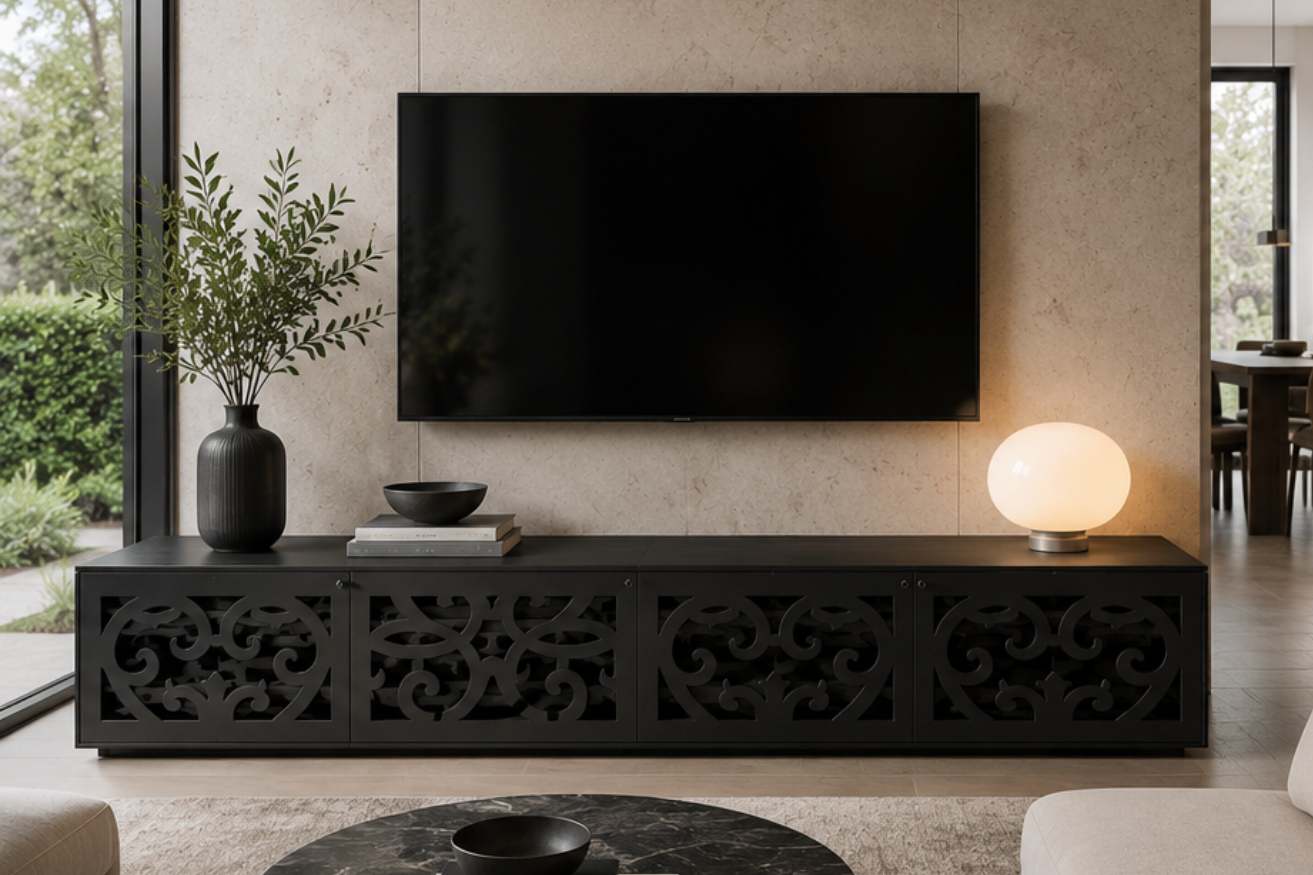
The wrong TV stand turns a refined living room into a tangle of cables and mismatched proportions. A well-chosen unit balances the screen, conceals equipment, and connects every nearby piece.
Shop EuroHome's modern TV stands to find a European media unit scaled for your room, storage needs, and contemporary living room style.
A modern tv stand should be wider than the television, sized to the room, and designed around the equipment you actually use. Check screen width, viewing height, walking paths, and nearby seating before choosing a low console, modular European media unit, or full wall system. Closed cabinets create a calm look, while ventilated compartments, rear cable openings, and easy equipment access keep daily use practical. Select wood, lacquer, glass, or metal finishes that repeat tones in your contemporary living room furniture, and consider custom finishes for a precise match. The right choice combines proportion, storage, cable control, finish, and flexibility, rather than treating the television as a separate design problem.
The central question is not simply which console looks best, but which one makes the entire living area feel balanced, intentional, and practical each day. The first step is clear: Start with scale: how a modern tv stand should fit the room. Here's how.
A modern TV stand should relate to the full room, not just the screen. Start by measuring the wall, nearby seating, and clear walking paths. These limits help define a useful footprint before style or finish enters the choice.
A stand that extends beyond the screen usually gives the setup a calm, grounded look. It also leaves room for speakers, lighting, or a few simple objects. Avoid squeezing a wide television onto a narrow cabinet, since the top can look crowded and unstable.
Common shopping ranges group stands around 55-to-65-inch, 65-to-75-inch, and 75-to-100-inch televisions. These TV width ranges are useful starting points, but the room should guide the final choice. Measure the actual screen width because the listed television size refers to its diagonal.
Visual weight matters as much as width. Dark wood, deep cabinets, and closed storage tend to feel heavier. Slim legs, pale finishes, floating units, and open shelves give the same footprint a lighter presence.
The screen should sit at a comfortable viewing height from the main seat. Begin with the seated viewer's eye line, then place the screen near that natural line. A low sofa may call for a shorter stand, while upright seating can support more height.
Check the complete setup before buying. Include the stand, television feet, soundbar, and planned decor in the height calculation. Also confirm that doors, drawers, and remotes work without the screen or nearby furniture getting in the way.
The right height can also affect storage. A low modern tv stand keeps the wall open, but it may offer fewer closed compartments. Browse Italian TV stands and media units with both viewing comfort and equipment needs in mind.
A European media wall can combine base cabinets, tall storage, shelving, and display space. Because each part adds visual weight, the full setup needs breathing room. Leave enough open wall around it so the design feels intentional rather than compressed.
Map the unit against windows, outlets, vents, doors, and traffic paths. Then mark its outer edges on the wall and floor with removable tape. This simple test shows how the planned depth and width will feel from each seat.
Custom sizing and modular parts help when a standard console leaves awkward gaps. EuroHome's interior design services include space planning and 3D views for fitting large media units into an existing floor plan.
These four furniture types can all support a media setup, but they shape a room in different ways. The right choice depends on floor space, storage needs, and the visual role you want the television to play.
A low modern TV stand keeps the room open and gives a large screen a grounded base. Its long, simple form works well when you need some storage without adding much visual weight.
A media console offers a more balanced mix of display space and closed storage. It often suits a family living room where devices, games, remotes, and cables need a set place. Browse EuroHome's Italian TV stands and media units to compare these proportions and storage layouts.
A sideboard is a useful TV stand alternative when flexible storage matters more than dedicated media features. Its deeper cabinets can hold serving pieces, books, or games. This makes it practical in an open living and dining area.
A modular European wall unit has the strongest design impact. It can combine lower cabinets, shelves, display areas, and wall-mounted pieces into one planned layout. Plan the layout and installation early, including safe anchoring based on the unit and wall type. The U.S. Consumer Product Safety Commission offers furniture anchoring guidance for the home.
Use the table as a first filter, then check each piece against the room's true dimensions. Also note door swings, outlet locations, viewing lines, and the space needed for easy movement.
| Type | Best room fit | Storage level | Design impact |
|---|---|---|---|
| Low TV stand | Small to medium rooms | Light to moderate | Clean, quiet design. |
| Media console | Medium rooms | Moderate to high | Balanced focal point. |
| Sideboard | Open living and dining spaces | High and flexible | Flexible furniture look. |
| European wall unit | Medium to large rooms | Flexible | Architectural focal point. |
Start with what the room must store. A few devices may fit in a low stand, while a shared room may need a console with closed cabinets. A sideboard works well when media storage must serve more than one purpose.
Next, decide how much attention the media area should draw. A low stand can recede into the room, while a wall unit frames the screen and becomes part of the architecture. Finish, scale, and nearby furniture should support the same visual direction.
For a large wall unit, custom sizing can keep the layout in step with the room rather than forcing a standard plan. EuroHome's interior design services include space planning and 3D visualization for fitting large media units into an existing floor plan.
A modern tv stand should support the way the room works each day, not just frame the screen. Start by listing every device, cable, controller, and remote the unit must hold. This simple check helps you choose useful storage instead of paying for doors and drawers that stay empty.
Drawers keep remotes, game controllers, spare batteries, and small accessories out of sight. Drop-down doors suit media players and consoles because they create a broad opening without taking up side space. Open shelves make often-used devices easy to reach, but they also put wires and visual clutter on display.
Plan each compartment around the item inside it. A deep drawer may hold controllers well, while a shallow one prevents remotes from getting buried. If the media unit cannot hold every object, modern sideboards for additional media storage can keep less-used items nearby.
Gaming consoles, receivers, and streaming devices need room around them, so avoid packing every compartment tightly. Look for open backs, vent slots, or roomy shelves that let warm air escape. The U.S. Department of Energy guidance on home electronics also notes that electronics use energy even when turned off.
Cable openings should sit near each device, not only at the center of the stand. Rear channels, pass-through holes, and hidden power-strip space keep cords off the floor. Check that plugs can pass through each opening, since the connector is often much wider than the cable.
Keep power cords apart from loose accessories, and leave enough slack to pull a device forward for service. A clean cable path should remain easy to inspect. If reaching one plug means emptying the whole cabinet, the layout will become frustrating over time.
A sound bar needs a clear position that does not block the screen or remote signal. Measure its full width, depth, and height before choosing a stand. An open shelf can create a built-in look, while a wide top leaves more freedom to adjust placement.
European modular storage can combine drawers, doors, shelves, and wall-mounted elements in one calm design. That mix hides clutter without forcing every device behind a closed front. Custom sizing and finishes also help the unit fit the room instead of leaving awkward gaps.
Think beyond the current setup. Consoles change, speakers move, and collections grow. Adjustable shelves and modular sections let the stand respond without a full replacement. EuroHome's Italian TV stands and media units offer a useful starting point for comparing these storage layouts.
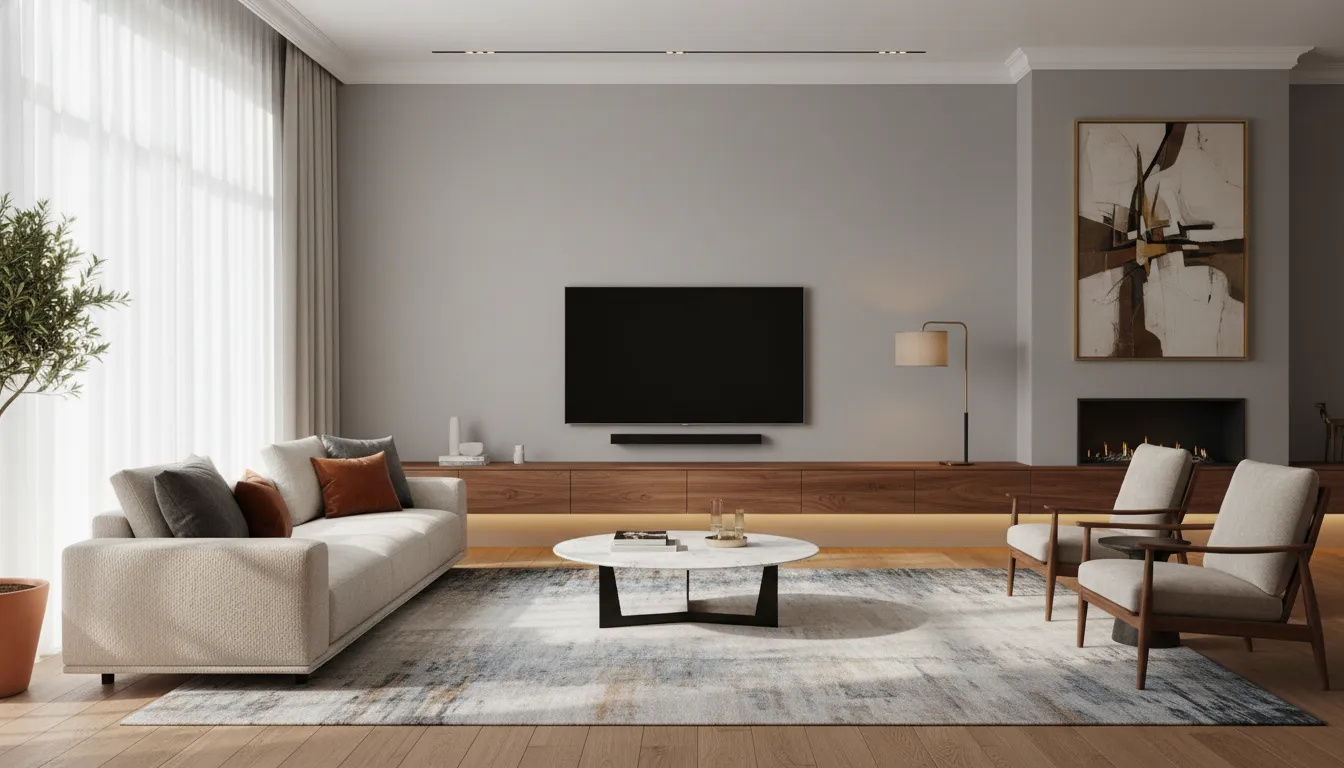
A modern TV stand should relate to the room without copying every nearby piece. Start with one shared trait, such as wood tone, metal color, or visual weight. Then add a contrasting finish that gives the media area its own clear role.
Walnut brings warmth and depth, so it works well near cream upholstery, smoked glass, and dark metal. Oak feels lighter and pairs well with soft gray sofas, woven rugs, and pale stone. Explore Italian TV stands and media units with the room's main wood tone in mind.
Matte lacquer can link a console to painted walls or a sofa's quiet neutral color. Glass keeps a low unit from looking heavy, while stone adds a firm visual anchor. Metal works best as a small repeated accent on legs, lighting, or table frames.
A matched set repeats the same finish, shape, and detail across the whole room. A coordinated room repeats only a few cues. For example, pair a fluted walnut stand with a smooth oak coffee table, then repeat walnut in one lamp or tray.
Keep large pieces distinct but related. A curved sofa can soften a sharp media unit, while a round rug can echo the curve without copying it. When choosing coordinating modern coffee tables, look for a shared line, tone, or proportion rather than an exact finish.
Finish should support the way the room is used. Matte lacquer hides glare near a screen and gives strong shapes a calm look. Glass feels light, but it can show fingerprints. Stone is durable in feel, yet its grain can draw focus from a detailed console.
Ask for finish samples before choosing a custom unit. View them beside the sofa, rug, coffee table, and sideboard during daylight and after the lamps are on. This check shows whether warm walnut, pale oak, or cool lacquer fits the room's actual light.
Also ask how paint, lacquer, and wood coatings affect the home. The EPA's guide to volatile organic compounds notes that paints, varnishes, and waxes can release organic compounds. Product details can help you compare finish care, odor, and indoor use.
Fluted fronts add depth without adding another color, which makes them useful in a restrained room. Pair them with simpler sofas and smooth tables. If a sideboard also has a bold texture, keep the TV stand quieter so both pieces do not compete.
The latest modern TV stand trends favor a clean, architectural look with less visual weight. Low profiles, floating forms, warm woods, and hidden storage keep the screen area calm. Modular parts and display shelves also help the unit feel connected to the whole room.
Long, low consoles remain a strong choice because they create a wide visual base without crowding the wall. Floating units take that idea further by leaving the floor open. The result feels light, even when the stand holds several media components.
These designs work best when storage stays easy to reach. Look for deep drawers, drop-down doors, cable openings, and space for airflow. Browse current Italian TV stands and media units to compare low and wall-mounted forms.
Modern does not have to mean cold or glossy. Warm European woods bring depth to simple shapes, while stone, glass, or metal add contrast. Mixed materials can also connect a media unit with nearby tables, lighting, and seating.
A related storage piece can make the room feel more balanced. For example, modern sideboards for additional media storage can hold items that do not need to sit under the television.
Flexible layouts are another clear trend. Retail collections now feature extendable TV stands that can change width as the room or screen changes. This approach suits open plans where a fixed console may feel too short or too heavy.
Modular wall systems offer even more control. A plan may combine a low cabinet, tall display case, open shelf, and wall panel. Each part serves a purpose, yet the full setup reads as one piece of furniture.
Before choosing a large system, map the wall, outlets, viewing height, and walking paths. Custom sizing and finishes can help the unit fit the architecture rather than dominate it. The strongest setup balances display space with hidden storage and leaves room for future changes.
The best modern TV stand fits the room, supports your equipment, and keeps daily use simple. Start with practical needs before comparing colors, finishes, or decorative details.
Measure the television, available wall space, viewing height, and nearby walkways. Also note outlet locations, cable routes, vents, baseboards, and doors that may affect placement.
Storage should solve visible clutter without making equipment hard to use. Ventilated shelves suit warm electronics, while drawers keep small items easy to sort and reach.
Think beyond the console when the room needs more storage. A modern sideboard for additional media storage can hold items that do not need to sit near the screen.
Open shelves make equipment easy to reach, but they also put cables and devices on view. Closed doors give a calmer look, so check how remotes and signals work through them.
A quality TV stand should relate to the sofa, coffee table, lighting, and open space. Compare finish samples in the room, since daylight and evening light can shift their tone.
Review EuroHome's Italian TV stands and media units to compare layouts without treating style as the only test. Then check each option against your measurements, storage list, and installation needs.
For an unusual layout or a large media unit, ask EuroHome about interior design services and customization. Space planning and 3D views can help test scale, placement, storage, and finish choices before you order.
Before buying, review the final drawing or product sheet against your measurements and equipment list. Confirm the warranty, care needs, return terms, and delivery plan in writing. The strongest choice works with the room and remains easy to use.
A sideboard, credenza, floating cabinet, built-in wall system, or modular media unit can replace a standard TV stand. The right choice should support the screen while keeping equipment, cables, and the room's scale in balance.
A sideboard or credenza works well when you want media storage that does not look tied to a television. Its broad top can ground a wall-mounted screen, while drawers and doors hide remotes, games, and other items.
Before using one, check its depth against each receiver, console, and cable connection. Allow open space around equipment that gives off heat, and make sure cords can reach an outlet without sharp bends. EuroHome's modern sideboards for additional media storage show how this furniture can serve both practical and visual roles.
A floating cabinet keeps the floor clear and gives the media wall a lighter look. It can also make cleaning easier, but wall mounting calls for careful planning. The cabinet, screen, and wall must work together as one safe installation.
A built-in wall system offers more storage and a strong architectural frame. Open shelves can hold books and decor, while closed cabinets keep media gear out of sight. Plan access panels, cord paths, power points, and ventilation before work starts, since later changes may be hard.
Proportion matters with either option. A narrow cabinet beneath a large screen can look unsteady, while a full wall unit may crowd a small room. EuroHome's interior design services include space planning for fitting larger media units into an existing layout.
European modular media furniture sits between a simple cabinet and a permanent built-in. You can combine low consoles, wall cabinets, open shelves, and display sections to suit the room. Custom sizing and finishes also help the media area relate to nearby seating and tables.
Start with the television's position, then map each device and cable before selecting modules. Leave enough depth for plugs and airflow, and keep service points easy to reach. Browse Italian TV stands and media units to compare flexible arrangements with a standard modern TV stand.
Each alternative changes the media wall's role. A credenza feels furniture-led, a floating cabinet appears lighter, and a built-in creates a stronger focal point. Choose the form that fits the room first, then confirm storage, ventilation, cord access, and installation needs.
Current trends favor low profiles, warm wood finishes, fluted fronts, concealed storage, and modular pieces that adapt to changing rooms. Extendable consoles are also gaining attention because they offer flexible scale without the visual weight of a full wall unit. For example, Homary lists extendable models spanning several width ranges, from compact configurations to units over 100 inches wide.
The best modern TV stand fits the television, viewing height, room proportions, and equipment that needs storage. Look for sturdy construction, ventilation around electronics, practical cable openings, and doors or drawers suited to your devices. Choose a finish that relates to nearby contemporary living room furniture. For an unusual floor plan, custom sizing or a modular media unit may create a more balanced result.
Alternatives to a standard TV stand include a wall-mounted console, floating shelf, sideboard, credenza, built-in cabinet, or full media wall. A sideboard offers useful concealed storage, while a floating console keeps more floor visible in a smaller room. Any alternative must safely support the television or accompany a secure wall mount. It should also provide ventilation and a clear route for power and media cables.
Modern TV stands include low media consoles, floating cabinets, corner units, extendable consoles, modular systems, and full wall units. Low consoles keep the room visually open, while floating models simplify floor cleaning. Extendable and modular designs adjust to changing layouts. Wall units combine the television with shelving and storage, making them useful when one coordinated installation must organize books, decor, electronics, and cables.
Waiting to plan your media area can leave you with mismatched proportions, exposed cables, limited storage, and finishes that compete with nearby furniture. Starting now gives you time to compare stand and wall-unit options, confirm measurements, and choose practical storage before your room feels incomplete. Early design guidance also helps you coordinate the media unit with seating, tables, lighting, and the way your household uses the space.
Ready to choose with confidence? Contact EuroHome for design guidance through the EuroHome Design Center and request help choosing the right modern TV stand or European media unit. Start the conversation now so you can make clear decisions before ordering furniture or planning installation.

