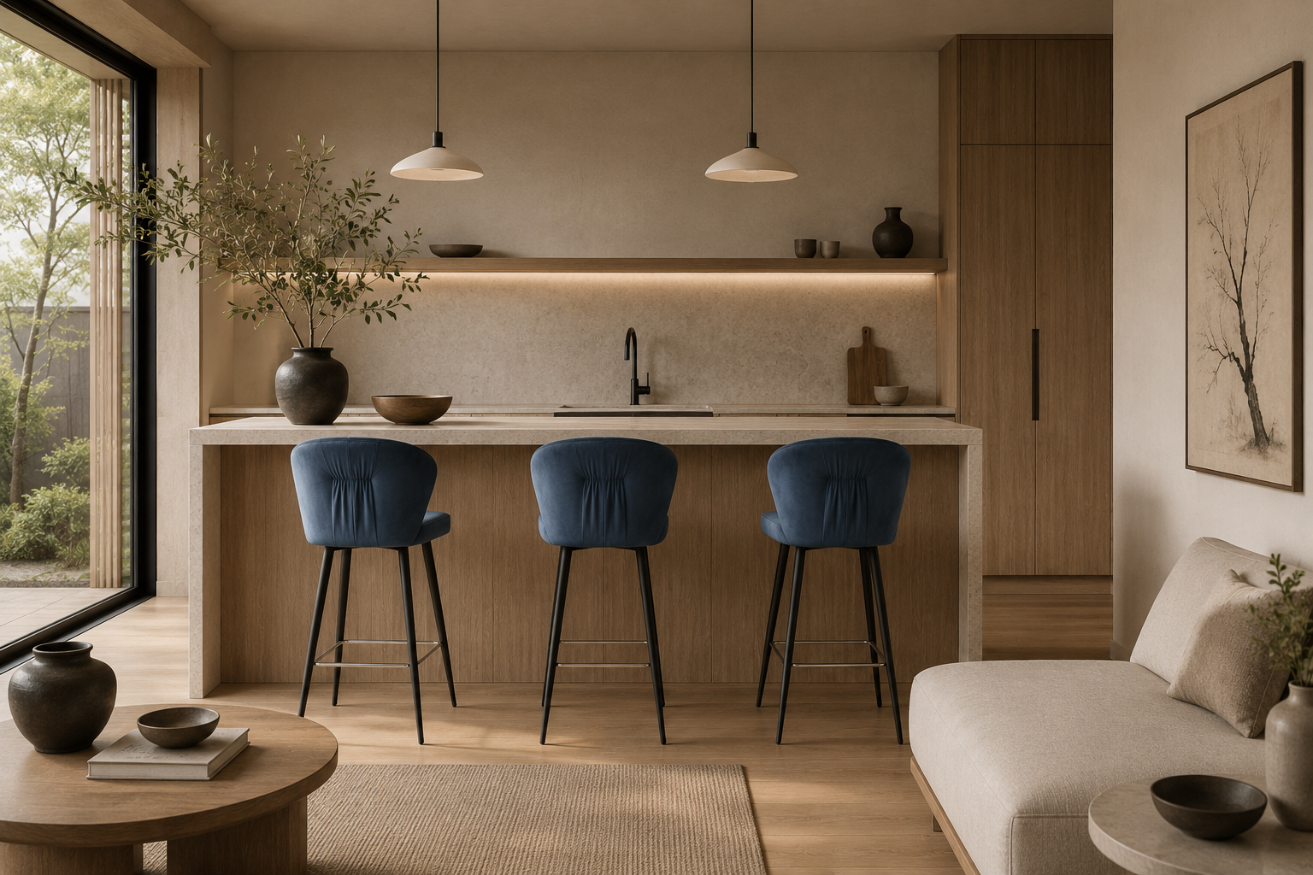
Modern bar stools should make an island more comfortable, not merely fill the space beneath it. The right choice begins with exact measurements, then accounts for how long people sit, how they move around the room, and which materials complement the surrounding furniture. This guide turns those decisions into a practical plan.
Browse EuroHome Interiors' modern stool collection to compare refined European designs for your kitchen or entertaining space.
EuroHome Interiors pairs curated Italian and Scandinavian furniture with professional space planning and 3D visualization. That design-led approach matters for bar seating, where an inch of height or a few inches of crowding can change how the entire area feels.
Before making a final selection, mark each stool position on the floor with painter's tape. This simple check reveals whether doors open freely, guests can move behind seated people, and the arrangement still feels balanced from the adjoining room.
The best stool leaves roughly 10 to 12 inches between the seat and the underside of the counter. Measure from the finished floor to the underside of the counter, not its decorative edge. Then choose a seat height that keeps knees comfortable and lets guests sit naturally.
Use a rigid tape measure and check the counter in at least two places. Flooring transitions, thick stone, and decorative aprons can change the usable clearance. If the counter has a deep apron, measure to its lowest point because that is where a seated guest's knees need room.
Counter-height stools generally suit surfaces around 36 inches high, while bar-height stools generally suit surfaces around 40 to 42 inches. Extra-tall seating is designed for higher surfaces and should not be used at a standard island. Always confirm the individual product's listed seat height before ordering.
| Surface type | Typical surface height | Typical seat height | Target clearance |
|---|---|---|---|
| Kitchen counter | 35-37 inches | 24-26 inches | 10-12 inches |
| Raised bar | 40-42 inches | 28-30 inches | 10-12 inches |
| Extra-tall bar | 44-47 inches | 33-36 inches | 10-12 inches |
Adjustable stools can serve counters with unusual dimensions, but their range still needs to place the seat at a comfortable height. Check the stool's lowest and highest settings, along with its stability at the intended position.
Plan about 24 inches of counter width per compact backless stool and 26 to 30 inches per stool with a broad seat, arms, or swivel function. Leave extra space near walls and corners. Comfortable spacing helps people sit down, turn, and dine without bumping elbows or frames.
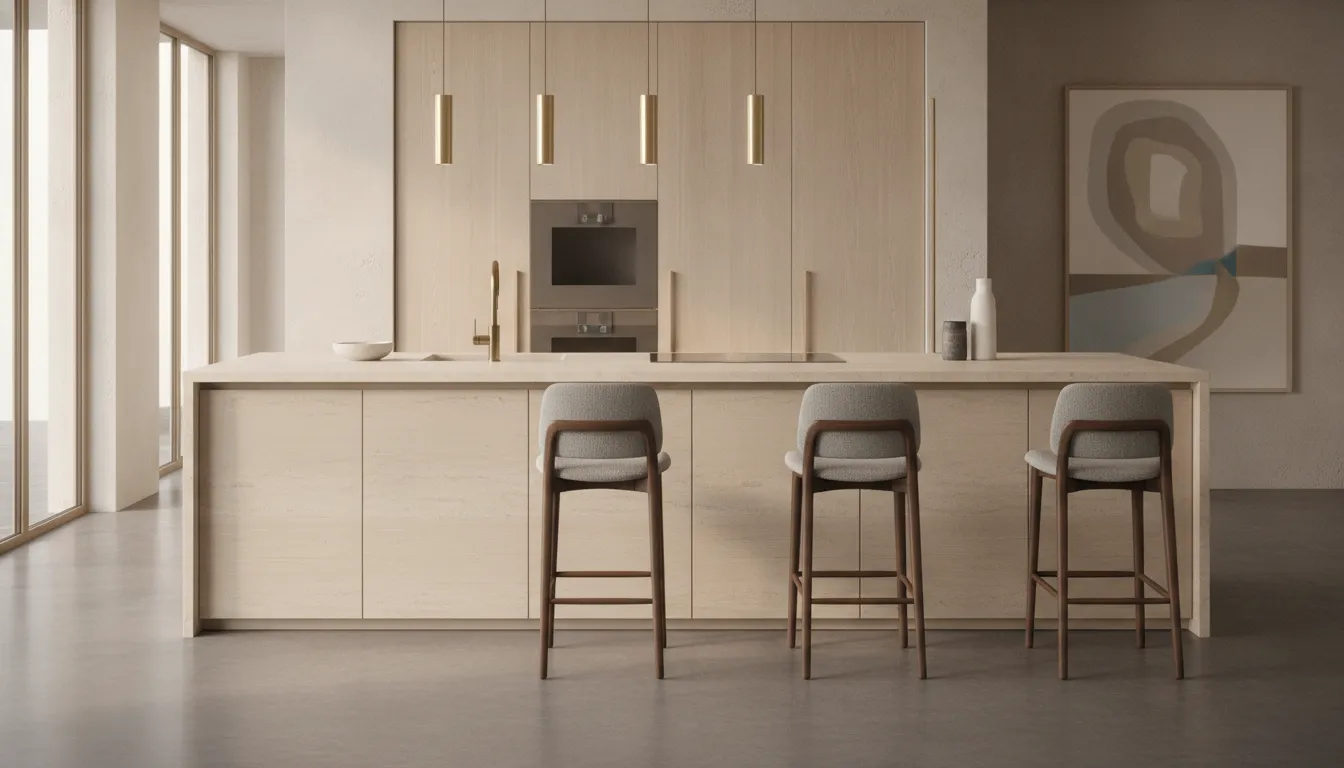
Measure the straight, unobstructed seating run. Exclude cabinets, brackets, waterfall edges, and any portion where a stool would block a walkway. Divide the remaining width by the space needed for the stool style you prefer, then round down. A 96-inch island may technically hold four narrow stools, but three generous arm stools could create a better experience.
Swivel designs need enough side clearance to rotate without striking the next stool or the counter. Arms also increase the visual and physical footprint. In an open-plan room, maintain the primary walking path behind seated guests so the kitchen remains easy to use during meals and gatherings.
If you are furnishing an entire dining zone, compare the stool footprint with your preferred contemporary dining table options. Repeating similar clearances around both areas helps the room feel intentional.
A stool's support should match the way it will be used. Backless stools are compact and easy to tuck away, low backs add subtle support, and full backs suit longer meals or work sessions. Arms create a lounge-like seat but require more width and careful counter clearance.
For quick coffee or occasional entertaining, a sculpted backless seat can keep the island visually open. For family dinners, conversation, or laptop work, a supportive back and upholstered seat usually justify their larger footprint. Test whether the back meets the body at a comfortable point rather than forcing an upright or reclined posture.
A well-positioned footrest gives the legs a natural place to settle. Check that it feels sturdy and sits at a usable height for the intended users. Rather than treating every feature as mandatory, prioritize the elements that support your household's most common routine.
Coordinate the level of comfort across the room by viewing European dining chairs. Dining chairs and stools do not need to match, but they should share a similar standard of support and material quality.
Choose materials according to touch, maintenance, and the surrounding finishes. Top-grain Italian leather brings a refined, tailored character; performance fabric offers softness with practical resilience; wood adds warmth; and metal creates a clean architectural line. The strongest scheme uses contrast deliberately rather than matching every surface.
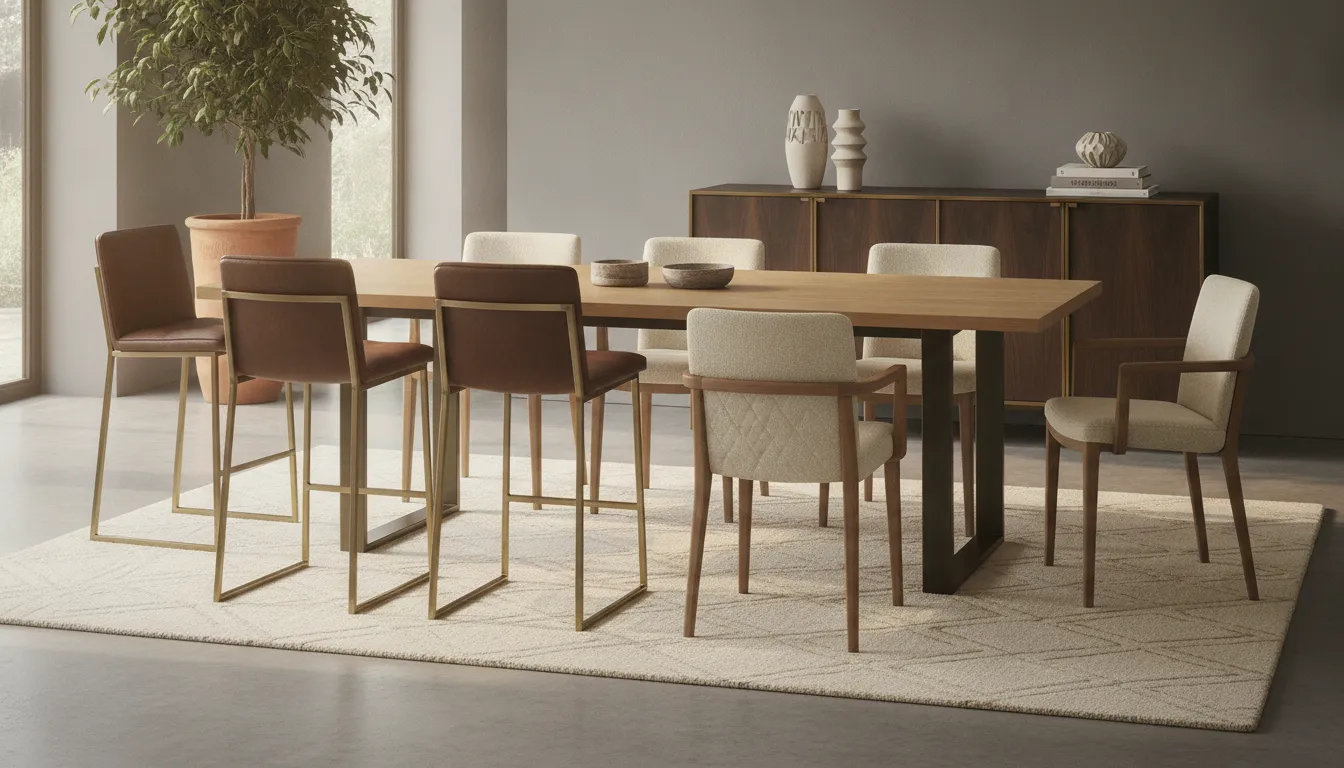
Upholstery determines much of the tactile experience. Leather is easy to wipe and develops character with use, while performance fabric can soften a room dominated by stone and metal. Follow the maker's care instructions, and test cleaning products on an inconspicuous area first.
The frame affects stability and visual weight. Slender metal frames suit streamlined interiors, while wood frames can echo cabinetry or nearby dining furniture. EuroHome's curated European collections include premium finishes such as canaletto walnut, black ash, lacquered gold accents, top-grain Italian leather, and performance fabrics. Custom-order options can help align the finish with a larger design plan.
For a broader view of how these materials work together, read the guide to contemporary furniture.
Swivel stools make conversation and entry easier, especially at an island facing more than one room. Adjustable stools accommodate unusual counter heights or changing needs. Both features add moving components, so quality construction, a stable base, and enough operating clearance are essential considerations.
A swivel function is useful when guests regularly turn between the kitchen and living area. Look for controlled movement and confirm the rotating seat will not strike the counter. A return swivel can help the stools look orderly when not in use.
Adjustability is valuable for a nonstandard surface or a multipurpose space. It is less important when the island dimensions are fixed and a correctly sized stool is available. In that case, a fixed-height design often creates a calmer, more tailored visual line.
Want a second opinion on proportions and finishes? Consult EuroHome's design team for space planning and coordinated selections.
A successful selection combines measurements, comfort, circulation, and style. Record the details before comparing designs, then evaluate each candidate against the same list. This prevents an attractive stool from winning attention before you confirm that it works in the room and supports everyday use.
Take photographs of the island and nearby furniture in natural light. Finish samples can shift in different lighting, so compare them in the actual room. For a coordinated dining area, explore EuroHome's broader Eating collection alongside the stool selection.
European contemporary rooms feel collected rather than copied. Repeat one or two visual cues, such as a metal tone, warm walnut, or curved silhouette, while allowing other elements to contrast. Proportion and material quality create cohesion more effectively than buying every piece from a matching set.
Begin with the island and its strongest existing features. A waterfall stone edge can pair with a slender upholstered stool to soften the geometry. Warm cabinetry can connect naturally with walnut, while a black metal frame can repeat lighting or hardware without overwhelming the space.
Keep the number of finishes controlled. If the kitchen already includes stone, wood, metal, and painted cabinetry, introduce one of those materials again rather than adding another competing finish. Custom-order upholstery or frame choices can refine the relationship between the stool and the room.
EuroHome Interiors serves homeowners in the Greater Philadelphia area with curated Italian and Scandinavian furniture, space planning, 3D visualization, and white-glove installation. That end-to-end service can turn a stool purchase into a considered part of a complete interior.
Most questions about modern bar stools come down to dimensions, comfort, and care. Measure first, give each seat enough width, and choose features based on actual sitting time. The concise answers below cover the practical points homeowners most often need before narrowing their options.
Current designs favor clean silhouettes, comfortable upholstery, warm woods, refined metal frames, and tactile finishes. The most enduring choice is one that relates to the room's architecture while remaining comfortable enough for everyday use.
Allow about 24 inches per compact stool and 26 to 30 inches for wider, armed, or swivel designs. Divide the usable counter width by that allowance and round down. Add clearance near walls and primary walkways.
Leather is easy to wipe and offers a tailored appearance. Performance fabric can provide a softer feel with practical durability. Choose based on the maker's care guidance, your household, and the texture you want in the room.
Not always. A sculpted backless seat works well for shorter sitting periods and tight spaces. For longer meals, entertaining, or work, a supportive back generally improves comfort.
Counter-height stools typically have seats around 24 to 26 inches high, while bar-height stools are often around 28 to 30 inches. Measure your surface and preserve approximately 10 to 12 inches between the seat and underside.
The right modern bar stools bring comfort, proportion, and a refined point of view to the busiest gathering place in the home. Start with exact measurements, then choose the support, materials, and movement features that fit how you live. A coordinated selection will feel considered long after a passing trend fades.
Contact EuroHome Interiors or call (610) 477-7760 to discuss your space with a designer.

