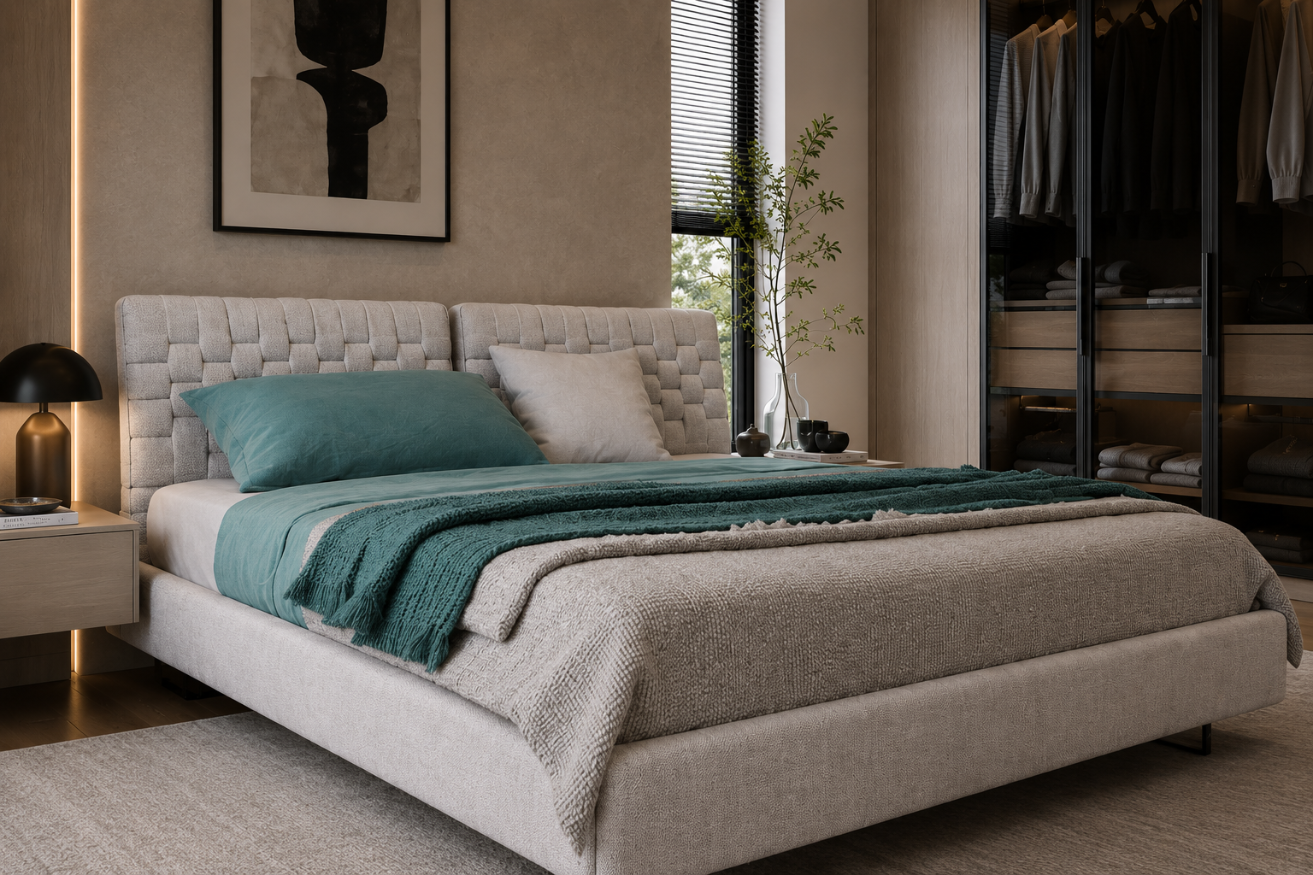
A bedroom can feel luxurious and organized without turning the walls into a construction project. A well-designed freestanding European piece brings tailored storage, refined materials, and a finished architectural presence while preserving the freedom to rearrange the room later.
That flexibility matters whether you are furnishing a new home, refining a compact bedroom, or planning for a future move. It also makes storage part of the room's design rather than an afterthought, with craftsmanship and proportion working together. The practical differences become clearest when you compare how each approach handles installation, adaptability, and everyday space planning.
Book your free design consultation today and let our designers match a European wardrobe closet to your space.
A freestanding wardrobe closet gives you substantial bedroom storage without committing to construction, wall changes, or a fixed layout. Choose a European piece that suits your room today, then move or reconfigure it when your needs change. It is especially practical for renters, frequent movers, and homeowners who want to separate sleeping and dressing areas while preserving a polished, intentional look.
Built-in closets can make excellent use of an alcove, but they also make the room's storage plan permanent. A freestanding European wardrobe offers a more adaptable alternative. If you redecorate, move to a new home, or change how the room functions, the piece can move with you rather than becoming part of the architecture.
That flexibility matters in bedrooms that need to serve more than one purpose. A wardrobe can sit between a sleeping area and a dressing area, creating a sense of separation without a new wall or a major renovation. In an open primary suite, it can establish a more private dressing zone. In a guest room, it can provide generous storage now and later move to a study, nursery, or spare room as the household changes.
Choosing freestanding storage also avoids much of the disruption associated with construction. There is no need to open walls, coordinate a remodeling crew, or wait for a built-in installation service before the room becomes functional. The result is a quicker path from an empty corner to organized clothing storage, with less dust, noise, and scheduling complexity. For a furnishing project with a tight timeline, that distinction can be as valuable as the storage itself.
Renters benefit particularly from this approach. Permanent installations may be restricted by a lease or require a landlord's approval, while a freestanding unit can provide a considered storage solution without altering the property. It also offers a more elevated option than treating temporary furniture as an afterthought. Explore a curated European wardrobe closet to compare pieces that bring structure, proportion, and craftsmanship to the bedroom.
Mobility does not mean the piece has to look temporary. European wardrobes can act as architectural furniture, defining the room while contributing to its visual character. Place one to frame a dressing area, align it with the bed for a balanced composition, or use it to organize a long bedroom that lacks natural divisions. When the layout changes, the same investment can be repositioned rather than replaced.
The strongest choice is one that supports both your current floor plan and your future plans. Consider how easily the wardrobe can be moved, whether its proportions suit more than one room, and how its finish will work with existing bedroom furniture. That combination of immediate function and long-term adaptability is where freestanding storage earns its advantage over a built-in.
A wardrobe closet is a freestanding piece of furniture designed to store clothing, linens, and accessories. Unlike a built-in closet, it arrives as a finished cabinet that can be positioned, moved, or replaced without altering the room's walls. Its enclosed doors also give the bedroom a more deliberate, furniture-like appearance.
The word wardrobe has long referred to both clothing and the cabinet used to hold it. Historical wardrobes developed as substantial storage furniture for garments, particularly when homes did not have the dedicated closets common in many modern residences. The furniture could be crafted, decorated, and moved with the household. Wikipedia's history of the wardrobe traces that evolution from practical clothing storage to an important piece of interior furniture.
In contemporary furniture conversations, wardrobe is the broadest term for a freestanding clothing cabinet. An armoire is a closely related form, often associated with a taller, more substantial cabinet with hinged doors. The distinction is not always strict, and retailers may use the terms differently depending on the design, region, and period being referenced. You can explore armoires when you want a more architectural statement piece for the bedroom.
A closet, by contrast, generally describes a built-in or recessed storage space within a room. The term has also referred historically to a small private room or enclosed space, as described in Wikipedia's overview of closets. Today, a closet may contain shelves, rods, drawers, and organizers, but its defining feature is usually its relationship to the architecture rather than its status as movable furniture.
Choosing a freestanding wardrobe gives you control over placement, finish, scale, and storage configuration. It can complement a bed and nightstands as part of a coordinated suite, or divide a larger room into sleeping and dressing zones. A built-in closet may maximize a fixed alcove, while a wardrobe can adapt as your layout or needs change. Browse European bedroom furniture to see how this furniture-led approach brings storage into the overall design rather than treating it as an afterthought.
The right choice depends on how firmly you want storage tied to the room. A freestanding European wardrobe can deliver polished organization without construction, while a built-in closet may make sense when a permanent, highly tailored installation is the priority.
| Consideration | Freestanding European wardrobe | Built-in closet |
|---|---|---|
| Flexibility | Can be repositioned or replaced as your bedroom layout, storage needs, or design direction changes. | Designed for one location and typically shaped around the room's existing walls. |
| Installation and construction | Provides immediate storage without construction or a separate installation service wait. | Usually involves measuring, fabrication, site work, and coordination with installers. |
| Timeline | A selected piece can furnish the room as soon as it is delivered and positioned. | Often requires more planning before the storage is ready to use. |
| Cost | Upfront pricing is easier to evaluate as a furniture purchase, with no built-in construction scope. | Budget should account for cabinetry, materials, labor, and any associated remodeling work. |
| Moving | Can move with you or shift during a renovation, making it useful beyond one address. | Generally remains with the property and has little value outside its original footprint. |
| Renters | Often the practical choice because it does not require a permanent installation. | May be restricted by a lease or require landlord approval. |
| Room zoning | Can help separate a sleeping area from a dressing area in an open or shared bedroom. | Maximizes wall storage but usually cannot divide the room without additional construction. |
Choose freestanding storage when flexibility, a faster refresh, or future relocation matters. Choose a built-in when the room will remain stable and a permanent, wall-to-wall solution justifies the longer process. For help weighing proportions, placement, and finish, contact EuroHome for a design consultation.
Book your free design consultation
A well-chosen wardrobe should do more than conceal clothing. Its proportions, materials, and detailing can establish the bedroom's visual direction, then help the bed, nightstands, lighting, and accessories feel intentionally connected. Contemporary European design typically favors clean lines, high-quality materials, and a restrained aesthetic, so the wardrobe can act as a quiet architectural anchor rather than competing with the rest of the room.
Begin with the finish you want to repeat throughout the room. Solid wood brings visible grain and warmth, while high-grade veneers can deliver a refined, consistent surface with the appearance of natural timber. Both are established options for luxury wardrobe construction, offering durability and aesthetic appeal when properly specified. Compare material details and construction quality carefully, since the surface should feel substantial at the scale of a tall wardrobe.
For a calm, contemporary bedroom, consider a matte wood tone, soft white, or another low-sheen finish. Gloss can brighten a darker room, but it works best when balanced with tactile textiles and warmer natural accents. If the wardrobe has a strong grain or dramatic finish, keep the bed upholstery and bedding simpler. Conversely, a minimal wardrobe can support more expressive artwork, rugs, or sculptural pieces from EuroHome's Beautify collection.
Hardware is a small detail with a large effect. Decorative knobs or handles should relate to the bedroom's other metal finishes, whether that means brushed brass, dark bronze, or polished chrome. High-quality soft-close hinges or glides improve everyday use while adding functional longevity, making the wardrobe feel considered each time a door or drawer is opened. Choose hardware with enough presence to complement the scale of the piece, but avoid adding ornament simply for its own sake.
Finally, repeat one or two visual cues rather than matching every item exactly. A wood tone can echo the nightstands, a handle finish can connect to the lighting, and a related upholstery color can bridge the wardrobe and bed. For more guidance on layering these elements, explore this cohesive luxury bedroom approach. The goal is a room where the wardrobe anchors the composition and every surrounding choice supports its material, proportion, and purpose.
A wardrobe is a piece of furniture, usually freestanding, that stores clothing behind doors. A closet is typically a permanent, built-in part of a room. Because a wardrobe can be moved or repositioned, it offers more flexibility when you redecorate, relocate, or change the bedroom layout.
Measure the available wall, ceiling height, door swing, walking paths, and nearby furniture before selecting a piece. Allow enough depth for comfortable hanging storage. A deep wardrobe generally needs about 24 inches for hangers. The University of Oregon lists a standard wardrobe at 36 inches wide, 24 inches deep, and 72 inches high: University of Oregon room dimensions.
Sliding doors are often the better choice in a compact bedroom because they do not require clearance into the room. Hinged doors can provide a more traditional furniture look and allow the full interior to open at once. Choose based on your available floor space, preferred style, and how easily you want to see the entire storage interior.
The answer depends on materials, finish, storage requirements, labor, and the condition of the room. Buying a well-designed freestanding wardrobe can reduce construction work, installation delays, and disruption. Built-ins may make sense when you need highly specific dimensions or permanent architectural integration. Compare the complete project cost, not just the furniture price.
Look for a considered mix of hanging rods, drawers, and adjustable shelving, along with durable materials and smoothly operating hardware. Soft-close hinges or glides improve daily use and longevity. Mirrored doors can reflect light in a smaller bedroom, while a refined finish and hardware that complements the rest of the room help the wardrobe read as intentional furniture rather than an afterthought.
A thoughtfully planned European wardrobe closet can bring together elegant proportions, practical storage, and a bedroom layout that feels distinctly yours. Book your free design consultation to discuss your space, preferred finish, and storage priorities with the EuroHome Interiors team.
Book your free design consultation or call (610) 477-7760 to get started.

