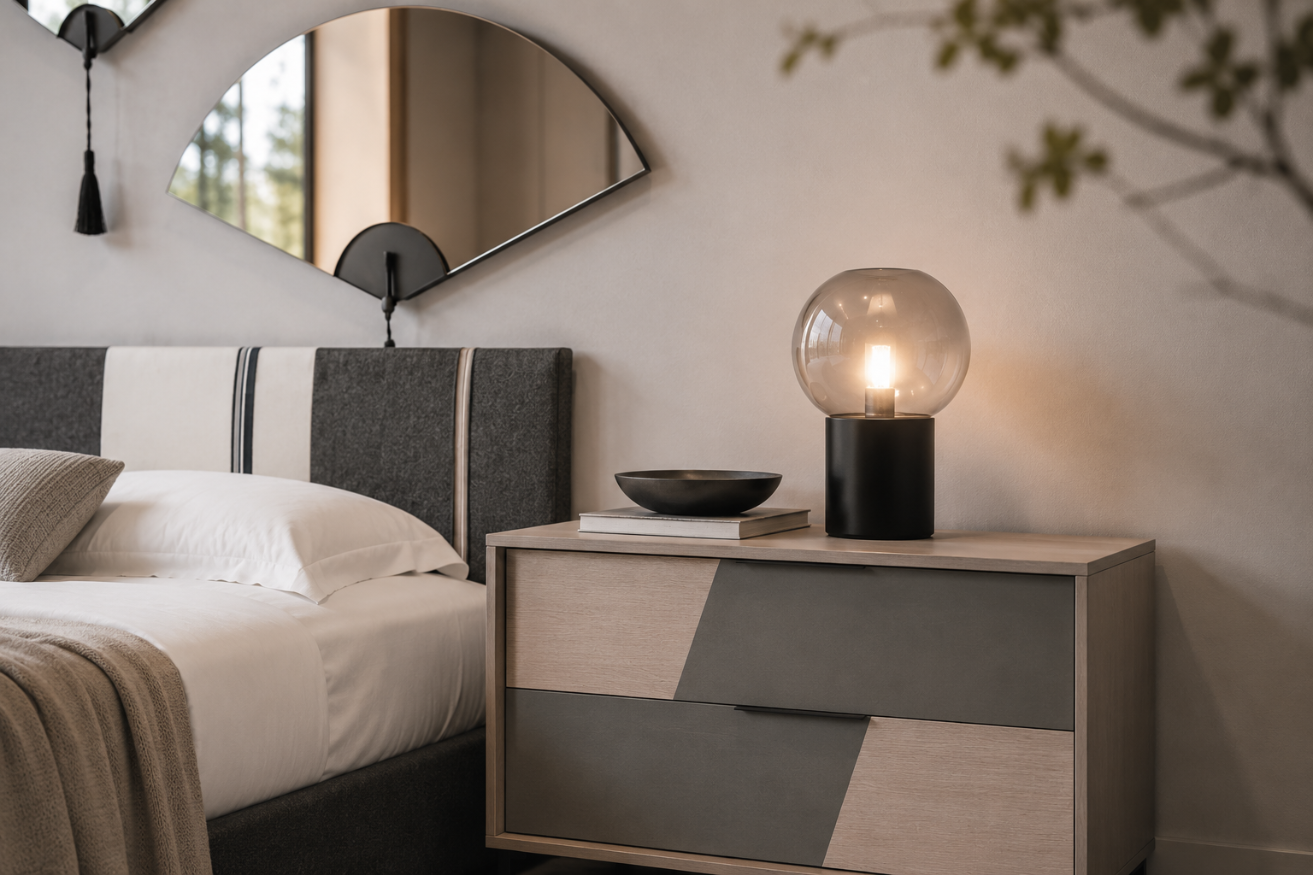
Italian bedroom furniture can make a bedroom feel calm, intentional, and luxurious when every piece supports the same room plan. The goal is not to buy a matching set and hope it works. The goal is to choose a bed, nightstands, dressers, finishes, lighting, and storage pieces that share proportion, material direction, and a clear design point of view.
Ready to plan a complete bedroom? Explore EuroHome's Sleeping collection or contact the design team for guidance on scale, finishes, and room planning.
For many homeowners. The bedroom is the room where luxury matters most because it is used every day but rarely planned with the same care as a living room or dining area. A cohesive Italian bedroom should feel refined without feeling cold, practical without looking heavy, and personal without becoming visually busy. That balance comes from planning the room as a complete composition before you commit to individual pieces.
The bed is the visual and functional center of the room. It should be the first major decision in a cohesive Italian bedroom plan. Its height, headboard shape, upholstery, platform profile, and finish direction influence almost every other choice. A low platform bed creates a calm, modern line. A taller upholstered headboard adds softness and presence. A storage bed can solve a practical problem, but it should still feel light enough for the room.
Begin with scale. A king bed may be the right comfort choice, but it needs enough wall width for balanced nightstands and enough walking space around the frame. If the room is narrower, a cleaner platform silhouette can preserve visual openness. If the ceiling is high, a more substantial headboard can help the bed feel grounded. The best luxury bedroom does not simply fit the furniture. It lets each piece breathe.
Next, decide whether the bed will introduce the dominant material. Italian-designed beds often pair upholstered panels, warm wood, lacquered surfaces, leather details, or metal accents. Choose one primary language and repeat it with restraint. For example, a warm walnut bed can connect naturally to a dresser or wardrobe. A soft neutral fabric headboard can support lacquered nightstands without making the room feel hard.
This is also where comfort and craftsmanship matter. Look at the support system, frame construction, upholstery details, and how the bed will be delivered and assembled. A luxury bed should look elegant, but it should also support daily use for years. EuroHome's design-led approach is useful here because the bed is selected for the room, not just for a catalog photo.
Once the bed is selected, the surrounding storage pieces should support it rather than compete with it. Nightstands, dressers, chests, wardrobes, and benches do not all have to match exactly. In fact, a room can feel more custom when the pieces coordinate through line, proportion, and finish instead of repeating the same object in every corner.
Nightstands should be chosen for both scale and function. Their height should sit close to the mattress height so lamps, phones, books, and water glasses are easy to reach. Their width should leave breathing room on either side of the bed. If the bed has a strong headboard, consider cleaner nightstands. If the bed is very minimal, a nightstand with a richer finish or sculptural detail can add character.
Dressers and chests need a different level of planning because they affect traffic flow. A long dresser can create a beautiful horizontal line, especially across from a bed, but it needs drawer clearance and walking space. A taller chest may work better in a smaller room. A wardrobe can add major storage, but its visual weight must be balanced with open wall space, mirrors, or lighter finishes.
Think about what needs to be stored before choosing the piece. Folded clothing, accessories, linens, jewelry, and seasonal items may require different drawer depths or internal organization. Luxury is not only the exterior finish. It is also the ease of using the room every morning and evening.
For product discovery, EuroHome's nightstand collection is a useful place to compare bedside proportions, finish options, and modern silhouettes that pair with Italian-designed beds.
Finish planning is what separates a collected luxury bedroom from a room that feels assembled piece by piece. Italian bedroom furniture often uses refined materials such as walnut, oak, lacquer, leather, glass, metal, stone accents, and textured upholstery. Each material can look beautiful on its own, but the room needs a hierarchy so the finishes do not compete.
A strong rule is to choose one dominant finish, one supporting finish, and one accent. The dominant finish might be a warm wood tone used on the bed and dresser. The supporting finish might be a soft matte lacquer on the nightstands. The accent might be bronze, smoked glass, stone, or leather used sparingly in handles, legs, mirrors, or lighting. This approach gives the room depth without visual clutter.
Color temperature matters too. Mixing a very cool gray lacquer with a warm honey wood can work. But it needs a bridge, such as a neutral rug, warm metal, or textile that contains both tones. If the palette is mostly light and bright, texture becomes important. Boucle, linen, leather, ribbed wood, and matte finishes can keep a neutral room from feeling flat.
Also consider sheen. Too many glossy surfaces can feel formal and reflective, especially under bedroom lighting. Too many matte surfaces can feel dull if there is no contrast. A balanced Italian bedroom may use matte woods and upholstery for calm, then introduce a controlled shine through glass, metal, or lacquer.
If you are unsure which finishes belong together, request samples and view them in the room's actual light. Morning light, evening light, and artificial light can change how wood, fabric, and lacquer read. EuroHome's design services can help narrow finish choices before an order is placed, which reduces guesswork for custom or imported pieces.
An Italian bedroom usually feels refined, balanced, and quietly expressive. Modern Italian bedrooms often feature clean geometry, low horizontal lines, elegant materials, integrated storage, and a calm palette. The space may be minimal, but it should not feel empty. The luxury comes from proportion, craftsmanship, texture, and the way each piece relates to the next.
Common elements include a strong bed silhouette, coordinated bedside pieces, soft lighting, quality textiles, and furniture that feels architectural rather than decorative for decoration's sake. Light walls, earthy tones, warm woods, neutral upholstery, and precise accents can all support the look. A chandelier or sculptural lamp can be used, but it should support the furniture instead of overpowering it.
Traditional Italian bedrooms may lean toward richer woods, carved details, ornate shapes, and more formal symmetry. Contemporary Italian bedrooms are usually cleaner, with smoother surfaces, slimmer profiles, and more emphasis on material contrast. Both can be luxurious. The right direction depends on the home's architecture, the homeowner's taste, and how restful the room should feel.
The most important point is cohesion. A beautiful bed, a beautiful dresser, and beautiful nightstands can still feel wrong together if their scale, finish, or design language does not align. The room should have a point of view. It should feel like one complete bedroom, not a collection of separate purchases.
Before selecting pieces, decide which design direction best fits the home. This keeps shopping focused and helps prevent expensive finish or scale mistakes.
| Style direction | Best for | Planning note | |
|---|---|---|---|
| Modern Italian | Clean, calm rooms | Use proportion and texture. | |
| Contemporary European | Homes that blend Italian, Scandinavian, and modern design | Light woods, neutral fabrics, glass, mixed matte finishes | Keep the palette restrained and repeat one finish across two or more pieces. |
| Classic luxury Italian | Formal primary suites and traditional architecture | Rich woods, polished surfaces, detailed hardware, shaped headboards | Balance heavier pieces with open space and softer textiles. |
| Warm transitional | Homeowners who want luxury without a severe modern look | Wood, upholstered beds, soft neutrals, bronze or champagne metal accents | Choose one statement piece and keep the remaining forms quieter. |
A comparison like this helps clarify the room before you start shopping. If you are drawn to a modern Italian bed but a classic dresser, a designer can often bridge the two through finish, hardware, lighting, or rug selection. The key is to make the blend intentional.
EuroHome's curated mix of Italian, European, modern, and contemporary furniture is useful because the goal is not limited to one rigid set. A bedroom can be cohesive while still feeling personal, layered, and tailored to the home.
A cohesive bedroom plan is easier to build when the process is sequential. Instead of shopping for every item at once, move from the largest decisions to the smaller layers.
This is where professional design guidance can save time. EuroHome offers design services that can support space planning, product selection, finish coordination, procurement, and white-glove installation. That matters for a bedroom because small mistakes are highly visible. A nightstand that is two inches too tall, a dresser that blocks circulation, or a finish that clashes in natural light can weaken the entire room.
For shoppers who want to begin with the primary piece, the Italian-designed beds category is a practical starting point. From there, a designer can help connect the bed to storage, lighting, and finishing details.
Italian bedroom furniture is worth considering when the buyer values design, craftsmanship, material quality, and long-term use. The value is not only in the name or country of origin. It is in the way the piece is designed, constructed, finished, delivered, and integrated into the room.
Look for thoughtful proportions, durable finishes, smooth drawer operation, quality hardware, stable construction, and details that feel resolved from every angle. A bedroom piece is touched and used daily, so tactile quality matters. Drawers should feel substantial. Upholstery should be well fitted. Edges, seams, handles, legs, and interior storage should all feel intentional.
Customization can also add value. Direct European sourcing and access to custom sizing or finishes can help the final room fit the homeowner's needs more precisely. That is especially important in primary suites with unusual wall lengths, limited storage, or a specific architectural style.
Service is part of the investment as well. Luxury furniture needs accurate ordering, careful delivery, professional assembly, and a plan for how the room comes together. EuroHome's white-glove support, design guidance, and curated selection help reduce the uncertainty that can come with imported or custom furniture.
The best purchase is not always the most expensive individual piece. It is the piece that improves the whole room. When the furniture fits the space, supports storage, and reflects a consistent design language, the bedroom feels more finished and more comfortable every day.
Italy is known for many high-end furniture makers across modern, contemporary, and classic design. Rather than focusing only on a brand name, buyers should compare craftsmanship, materials, finish options, lead times, and whether the pieces fit the room plan.
The best bedroom furniture company depends on your style, budget, storage needs, and room size. For a luxury bedroom, choose a retailer or design partner that can help coordinate the bed, nightstands, dressers, finishes, and delivery details together.
Current luxury bedroom trends favor low-profile beds, warm wood, soft neutral upholstery, integrated storage, textured finishes, and calm palettes. The strongest rooms feel tailored rather than trendy, with furniture selected for proportion and long-term comfort.
Italian bedroom sets can be worth the investment when they offer strong construction, refined materials, useful storage, and a design language that fits the home. A coordinated plan often delivers more value than buying separate pieces without a clear direction.
A luxury bedroom should feel effortless, but it should not be guessed together. If you are comparing beds, nightstands, dressers, finishes, and storage options, EuroHome can help you shape the complete room plan before you buy. Visit the Sleeping collection for inspiration, or call (610) 477-7760 to discuss design guidance for your space.

