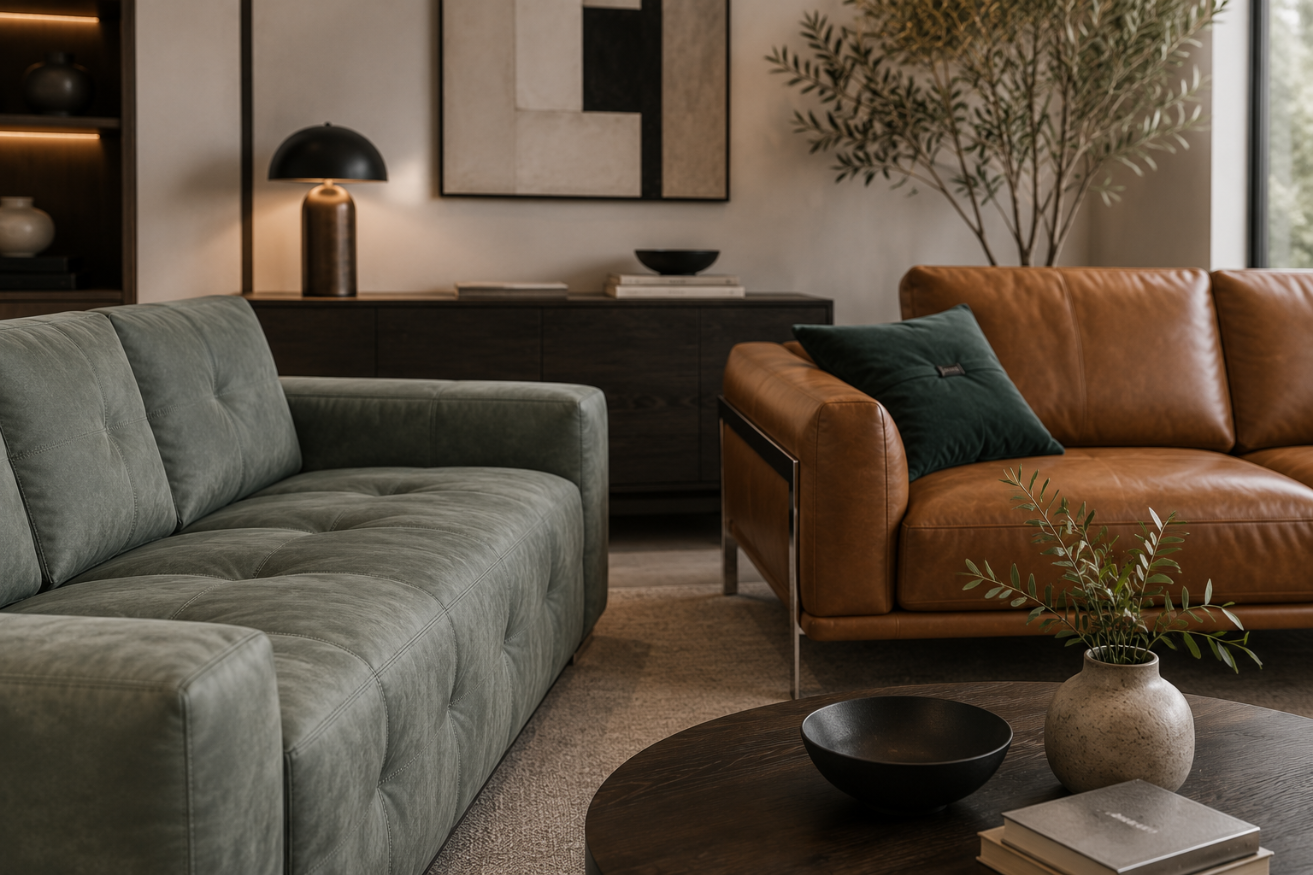
A luxury sofa defines the tone and comfort of your main living space for a decade or more. Choosing between velvet and leather is one of the most important furniture decisions you will make.
Schedule a design consultation at our King of Prussia showroom to see and compare our premium velvet and leather sofa collections in person.
When choosing a velvet vs leather sofa, the right option depends on your lifestyle and aesthetic goals. Leather offers exceptional durability, lasting over twenty years, while velvet provides unmatched warmth and deep color saturation ideal for design-forward spaces.
Selecting the perfect upholstery for your home involves weighing practical traits against your personal design vision. This guide breaks down how each material performs in real-world settings so you can make an informed decision.
Choosing the right upholstery is the most crucial decision when selecting a new centerpiece for your living room. Both materials offer distinct benefits in terms of longevity, comfort, and daily care.
| Feature | Leather Sofa | Velvet Sofa |
|---|---|---|
| Average Lifespan | 20 or more years | 8 to 12 years |
| Comfort and Feel | Adapts to body heat; firm support | Soft, warm, and highly plush |
| Maintenance Level | Low; needs conditioning every few months | Medium; needs regular light vacuuming |
| Stain Resistance | High; liquids wipe off easily | Moderate; synthetic fibers resist spills |
| Allergy Friendly | Excellent; does not trap dust or pet hair | Moderate; can trap dust and hair |
Leather sofas win on durability and easy maintenance, while velvet sofas deliver superior softness and rich color depth. Your household lifestyle determines which factor matters most.
A high-quality leather sofa is a long-term investment. Research from Utah State University Extension shows that leather is widely regarded as a superior choice for durability and ease of cleaning in high-traffic households. With proper care, a leather sofa can easily last for two decades or more. The natural fibers in full-grain leather resist tearing and puncturing far better than any fabric. Making it an exceptional choice for homes that see daily use from both people and pets.
The choice between these materials also shapes how your living room feels throughout the seasons. Leather acts as a natural temperature regulator. It feels cool during hot summer days and warms up quickly with body heat when the room is cold. For those who prioritize a cozy feel, velvet provides a softer tactile experience. Academic studies published on NC State University BioResources show that velvet fabric enhances the sensory experience through its unique light-reflecting pile.
When investing in high-end living room furniture, durability is a primary concern. The material you choose directly impacts how long your sofa retains its beauty, comfort, and structure.
Leather sofas can last 20+ years with proper conditioning, while velvet sofas typically last 8 to 12 years before showing wear. Modern performance velvets offer improved resistance but still trail leather in longevity.
Leather is widely regarded as a superior choice for durability in busy households, according to Utah State University Extension research. A high-quality leather piece, specifically full-grain or top-grain, outlasts velvet significantly, often lasting 20 or more years with proper maintenance.
Unlike fabric options that degrade over time, genuine leather actually improves with age. It is prized by designers for its ability to develop a natural patina that adds unique character. Over years of use, the material softens, molds to body shapes, and develops subtle shading from natural oils and contact.
A high-quality velvet sofa generally has a lifespan of 8 to 12 years. Modern performance velvet is often woven from synthetic fibers like polyester, which greatly improves wear resistance and helps prevent fiber crushing. Over extended periods of heavy use, however, velvet can show wear patterns and lighter colors can show soil more quickly.
For homes with pets, consider these practical differences:
If you prioritize absolute longevity, ease of cleaning, and a piece that gets better over decades, premium leather is the clear winner. If you want a softer feel that resists pet claw damage, performance velvet is an excellent design-led option. Browse our living room sofa collection to find both options.
Your sofa is the center of your home life. The choice of upholstery materials shapes how your space feels in every season.
Leather stays cool in summer and warms quickly in winter, making it ideal for varied climates. Velvet delivers instant warmth and cozy comfort, best suited for colder regions or homes that prioritize softness over temperature adaptability.
Genuine leather acts as a natural temperature regulator. During hotter months, leather stays cool to the touch because it lacks insulating pile. In cold weather, it warms up within minutes by absorbing your body heat. For a stable feel, place your sofa away from direct sun or radiators.
Velvet offers a soft and plush tactile experience focused on warmth. Its dense upright pile acts like light insulation, making it feel warm the moment you sit down. In the summer, modern synthetic velvets remain breathable and do not trap heat or stick to your skin. This all-season versatility is one reason velvet remains a favorite among interior designers who want a single sofa to transition seamlessly between seasons without sacrificing comfort.
If you live in a warm or humid region, a leather sofa is often the best choice because it stays cool and resists humidity-related issues like mildew. For cold northern climates with long winters, a velvet sofa provides a warmer and more inviting seat that feels cozy from the moment you sit down. For those who move between climates seasonally, EuroHome offers both options in a range of styles and configurations. Explore a premium European sofa collection to find the ideal texture for your home.
Choosing between a velvet vs leather sofa often comes down to your daily routine. Both materials offer distinct benefits, but they require very different care to keep their luxury appearance.
Leather requires minimal daily care and resists stains naturally, needing only occasional conditioning. Velvet demands regular vacuuming and prompt spill treatment, with professional steam cleaning every six to twelve months.
Leather is an excellent choice for active homes because it is simple to wipe clean. Its smooth surface does not trap dust mites, pet dander, or pollen. This makes leather highly hypoallergenic for allergy sufferers. To keep the hide supple, apply a high-quality leather conditioner every four to six months. You can find beautiful, easy-to-care-for options in the EuroHome living room sofa collection.
Velvet fibers require fast action when spills occur. Wet stains can set quickly into the dense pile, so blot spills immediately rather than rubbing. For daily care, vacuum once a week using a soft upholstery brush to lift away loose dirt. Plan for a professional steam clean every six to twelve months to keep the fabric looking its best.
If you love the soft feel of fabric but worry about spills, performance velvet offers a smart middle ground. Many modern velvet sofas use tight synthetic fibers like polyester. This construction helps the fabric resist heavy wear, crushing, and deep stains far better than traditional cotton velvets. Performance velvet also dries faster when spills do occur, and the fibers hold their upright pile shape longer than natural velvet materials.
When you compare a velvet vs leather sofa, the choice shapes your entire room. The material you choose sets the mood, style, and tone for your home.
Velvet creates a bold, luxurious statement with deep color saturation and soft texture. While leather delivers a clean, timeless look that develops unique character through natural patina over years of use.
Velvet is loved for its deep color saturation and soft feel. According to a study on fabric aesthetics, velvet textures enhance our emotional experience through their unique visual and tactile qualities. A velvet sofa works well as a bold statement piece in modern spaces, adding rich texture, warmth, and depth.
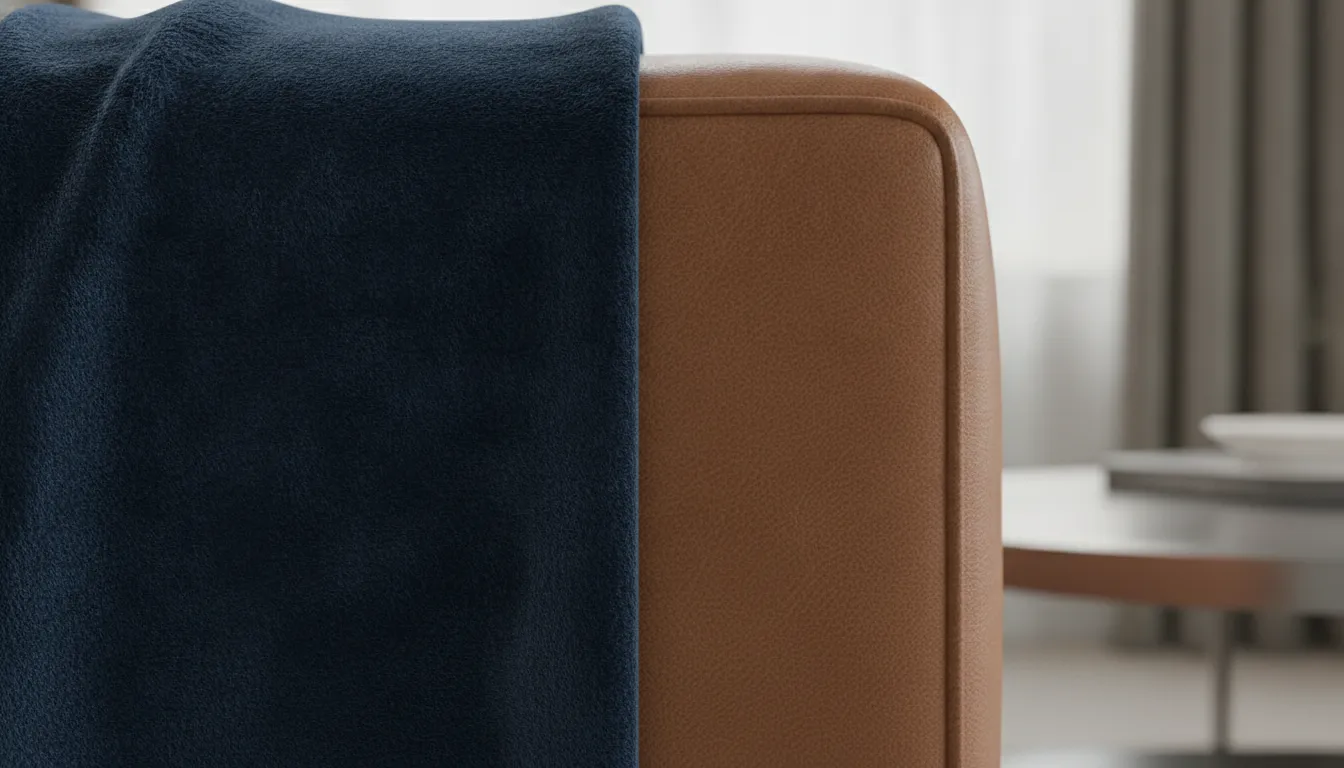
Leather has a classic, clean look that works well in modern spaces. Genuine leather is prized because it develops a natural patina over time. A study on upholstery selection notes that this patina process adds aesthetic value and character. Full-grain leather shows the natural markings of the hide, while top-grain leather offers a more uniform look. Each hide is unique, meaning your leather sofa is truly one of a kind from the moment it arrives.
| Design Element | Velvet Sofa | Leather Sofa |
|---|---|---|
| Best color palette | Jewel tones: navy, emerald, amber | Warm tan, cognac, black, dove grey |
| Pair with | Smooth wood, glass, polished metals | Cozy knits, linen pillows, wool throws |
| Room style | Bold statement, design-forward | Clean lines, timeless elegance |
| Best accent | Light pillows on deep color | Warm rug on dark flooring |
It can be hard to picture how a velvet vs leather sofa will look in your home. You can use our professional design consultation to see the look before you buy. EuroHome Interiors offers a 3D design service that creates digital models of your living room. Letting you see how different colors, materials, and layouts work in your actual space before you make a commitment.
A leather sofa offers superior durability and easier daily upkeep than velvet. According to research from Utah State University, leather is highly resilient, resists tears, and does not trap dust mites or pet dander, making it ideal for allergy sufferers. Leather also ages beautifully, developing a rich patina over time.
Both materials have unique benefits for pet owners. Smooth-grain leather is simple to wipe clean of pet hair and dirt, but sharp claws can scratch its surface. Synthetic velvet is durable and lacks woven loops, which prevents pet claws from snagging. Regular vacuuming with a soft brush attachment keeps velvet fresh.
The primary drawbacks are maintenance needs and susceptibility to wear. Velvet can show crushing in high-traffic areas over time. Spills require immediate blotting rather than rubbing. Lighter shades show soil and wear marks more quickly, requiring more frequent professional cleaning.
A luxury leather sofa typically requires a higher upfront investment than a velvet sofa. This reflects premium top-grain hides and complex tanning processes. However, leather often provides better long-term value, lasting over twenty years compared to velvet's eight to twelve year lifespan.
Leather is generally the better choice for active family living rooms where spills, crumbs, and high traffic are daily occurrences. Its natural spill resistance makes cleaning simple. A high-quality performance velvet sofa is a wonderful alternative if you prioritize a cozy, plush feel. Performance velvet features synthetic fibers that resist stains while offering a softer seating experience.
Choosing between a velvet and leather sofa is not just about style. Making the wrong choice can lead to years of regret if the material does not match your daily life. The best way to decide is to see and feel these premium materials in person.
Schedule a design consultation today to visit our King of Prussia showroom and compare our luxury velvet and leather sofa collections.

