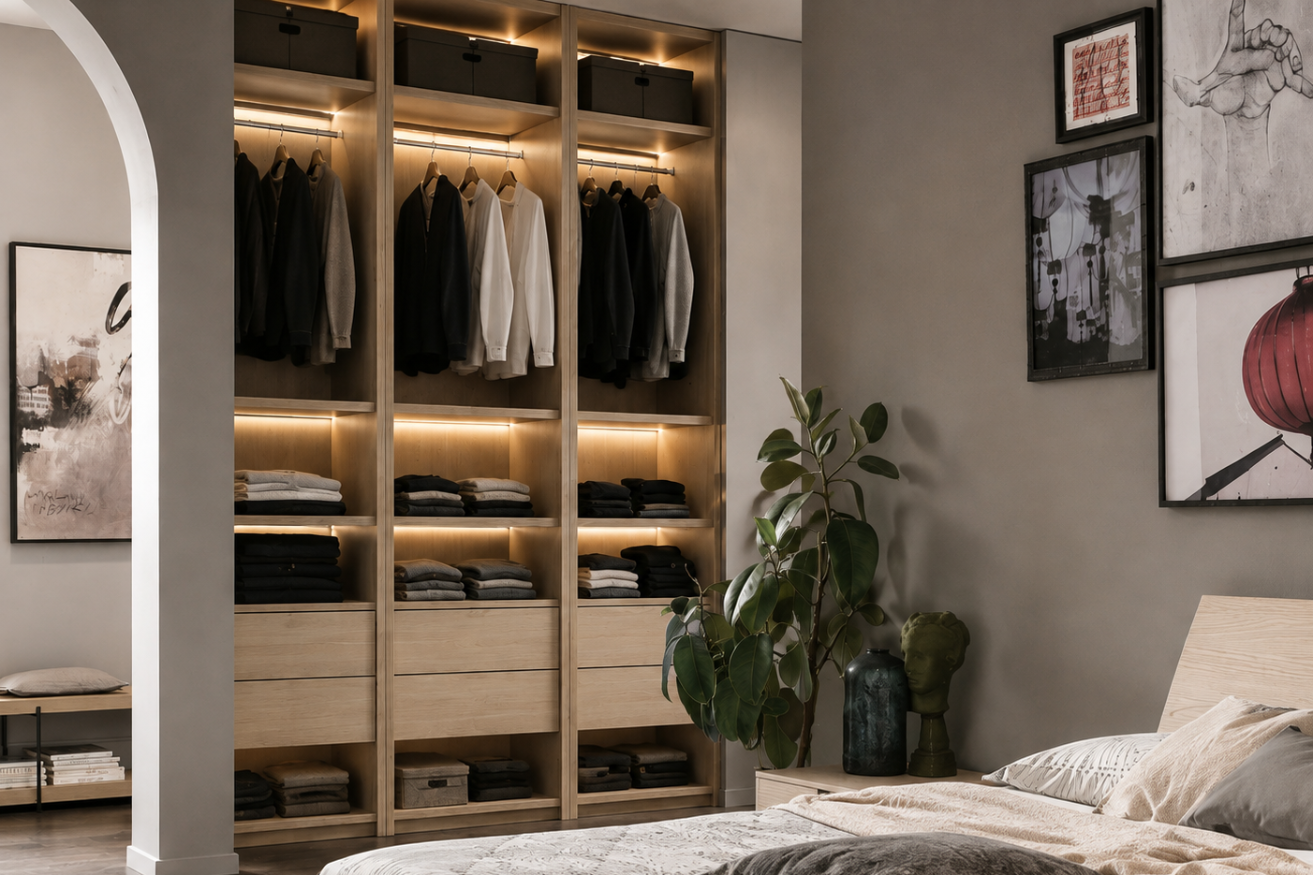
A single stack of falling sweaters shows that your current closet storage is not working. True bedroom storage relies on a well-planned system of shelves and rods that fits your daily routine.
Closet shelving improves your bedroom storage by using vertical wall space for folded clothes, shoes, and bins. Standard systems work best when shelves are twelve to fourteen inches deep, which keeps clothes neat and within easy reach. According to bedroom design guidelines from Universal Design, adjustable systems offer the greatest storage options. You can change their heights as your needs shift over time. Combining these shelves with low clothing rods allows you to plan the perfect layout for any items. This setup easily holds bulky winter sweaters and small daily items. This clean, modern setup prevents messy piles, makes your daily morning routine much faster, and keeps your entire wardrobe looking beautiful and organized.
Planning a smart storage system means answering several key design questions.
Before you choose your layout, you can Book your free design consultation with our team to find the best solutions.
To design a wardrobe that works, we must first look at What Is the Right Closet Shelving Depth for Folded Clothes? The path begins with:
Finding the right shelf size is key to a tidy home. If shelves are too deep, small items get lost in the back. If they are too shallow, shirts and sweaters will hang over the edge. Choosing the right closet shelving dimensions ensures that your wardrobe remains neat and easy to use.
Most folded clothes, such as sweaters, t-shirts, and jeans, fit best on shelves that are twelve to fourteen inches deep. This standard range provides enough room for neat stacks without creating deep, dark pockets where clothes are hard to find. If you have extra bulky items, you might want to use a dresser or deep chest instead of deep shelves. A shallow shelf setup also keeps your closet looking clean and modern, as all your things stay right in your line of sight.
The size of your closet room also affects your shelving choices. For a standard reach-in closet, your closet shelving is often twelve to sixteen inches deep to balance storage and floor space. In contrast, a walk-in closet has more room, giving you shelves that are fourteen to twenty inches deep. As shown in a guide for each closet type, these deeper shelves can hold large storage boxes or winter gear. But even in a large walk-in closet, keeping shelves for daily clothes under fourteen inches prevents stacks from tipping over.
It is helpful to keep your folded clothes and hanging garments apart. Hanging items, like jackets and coats, need about twenty-four inches of depth so they do not rub against the closet doors or walls. If your closet has wire shelves, you should place shelf liners or clear storage bins on them. These liners and bins keep small items from falling through the gaps and help maintain a flat surface for your clothes. This simple change keeps your garments clean, neat, and in perfect shape.
Lastly, think about how high you place your shelves. To make your space easy for all to use, keep the things you use most within easy reach. Under universal design standards, you should keep your main low shelves and rods no higher than forty-eight inches from the floor. This layout helps kids, seated users, or anyone with less reach get their clothes without strain. A smart closet should balance good looks with total ease of use.
Choosing the right boards for your closet shelving is the first step to a wardrobe that lasts. Strong options can support heavy loads without bending or breaking under weight. When you select the best woods, you make sure your closet is both safe and stylish for years.
To build a system that stands up to daily use, choosing durable materials like solid wood or quality laminates is recommended. These options can support heavy loads without sagging or failing as the years pass. They also keep their shape and look elegant in a modern bedroom.
To keep shelves from bowing, the Oklahoma State University Extension explains how wood stiffness and bending strength prevent sag under load. Solid wood closet shelves should be 3/4 inch to 1 inch thick. This provides lasting strength for premium wardrobes. Hardwood species like oak, maple, and walnut are the most robust choices.
Plywood is another strong option for custom wardrobes. Design experts suggest using 3/4-inch plywood shelves with proper edging to add extra durability to your storage.
High-quality laminate is also a great choice. It has a tough top layer that resists scratches and stains, and it is easy to wipe clean. Many modern European designs use these laminates for their sleek look and low maintenance.
When planning closet shelving, remember that shelf thickness and span distance are the two main factors that prevent sagging under heavy items. For most homes, 3/4-inch thick boards are standard. This thickness works well for folded shirts, pants, and light items. Standard spans should not exceed thirty-six inches without support.
Do you have heavier gear like books, large bins, or winter boots? If so, choose shelves that are 1 inch thick or more. These thicker boards give the extra strength needed to support heavy loads without bending. They ensure your storage remains straight and sturdy even when fully packed.
For items that do not fit well on open shelves, consider adding elegant storage chests to your bedroom. Chests work well alongside closet shelving to keep smaller items neat and dust-free. Combining closed drawers with open shelves gives you the perfect balance of easy access and tidy storage.
Wire and plastic are also options for basic closet storage. Wire shelves are cheap and allow air to flow, but they can bend under heavy loads and lack a polished look. Plastic shelving is light and resists moisture, but it lacks the premium feel and strength needed for high-end bedrooms. For a luxury home, these materials are best left to utility rooms or pantries.
Your room type and floor space will guide your closet layout. Both reach-in and walk-in systems have unique setups. The best choice depends on how much depth you have. A smart design uses space well to keep your clothes clean and easy to find. Choosing the right layout makes daily routines smooth.
Reach-in closets need to use space very well because they are small. Using every inch is key. When you plan your closet shelving, look at what you wear most. These systems often use shelves that are 12 to 16 inches deep. A simple setup works best. To get the most storage, a balanced design should combine hanging areas with shelves for folded clothes or bins. You can hang long coats on a single rod and place sweaters on the shelves above. This mix keeps the closet neat and stops clutter from growing.
Walk-in closets offer more room for deep storage. This design gives you a resort feel at home. You can walk around with ease and see all your clothes at once. These systems use shelves that are 14 to 20 inches deep. This extra depth lets you use custom zones or even center islands. You can add large racks for shoes and deep baskets for laundry. If you want to store small items, you can use sleek storage chests under the main shelves. You can also match these shelves with modern dressers to keep your room tidy.
| Feature | Reach-In Closet | Walk-In Closet |
|---|---|---|
| Shelf Depth | 12 to 16 inches | 14 to 20 inches |
| Best Layout | Single wall setup | Two or three walls |
| Rod Setup | One main rod | Two or more rods |
| Storage Style | Flat and neat | Deep and zoned |
Whether you choose a reach-in or walk-in closet, good design must focus on easy access. Both types of closets share the same basic rules. First, closet doorways should be at least 32 inches wide to let people enter with ease. This rule helps ensure all can reach their things. Second, you should keep low shelves and rods no higher than 48 inches from the floor. This height makes it simple for seated users or those with less reach to get items. Placing key storage at this level keeps the space useful for all.
A well-planned bedroom wardrobe relies on smart layout choices. To get the most out of your space, you must think about how you stack and arrange your closet shelving. Standard layouts often leave a lot of empty room. By using smart design, you can make every inch of your wardrobe useful and tidy.
Most bedroom wardrobes have wasted space at the top and the bottom. You can solve this by mixing different storage zones in one layout. A balanced layout combines hanging rods for long clothes with structured zones for shelves. This helps you split your items by size and use. It also keeps your wardrobe clean and easy to use. For other bedroom storage, you can pair this setup with sleek dressers to hold smaller items. Adding the right shelving is a great way of maximizing closet shelving potential in small bedrooms.
Your storage needs will change over time. High-quality systems allow you to adjust your layout without breaking the walls. Using adjustable systems lets you change things easily. You can shift shelf heights as you buy new items. This is also key when planning children's rooms, where smart closet shelving and clever storage systems must grow with the child. Modern layouts make it easy to rebuild your wardrobe as your life changes.
To get the best results, you should stack and arrange your parts in a clear sequence. Follow these five steps to set up your bedroom wardrobe for more storage:
Installing a custom wardrobe does not have to be a permanent change. Many modern designs use flexible parts that let you change your setup later. By setting up adjustable shelving units, you can adapt the space as your wardrobe changes. This is also a smart strategy when maximizing closet shelving potential in small bedrooms. This layout keeps your bedroom organized and makes the most of your space.
A solid installation starts with the hardware. Using shelf pins or metal tracking systems allows you to make quick, tool-free changes to your closet layout. These systems hold your shelves in place but let you move them up or down in seconds. Because you do not need to drill new holes each time, you avoid permanent damage to the closet walls. This tool-free setup works well for reach-in closets and large walk-in wardrobes.
Most adjustable systems use vertical tracks that you screw into the wall studs. You can then clip metal brackets into the tracks at any level. This hardware is strong enough to support heavy coats and folded stacks of denim. For a clean look, solid wood shelves can hide these tracks. This blend of strength and beauty fits the style of modern European homes.
To design a useful layout, you must space your shelves based on the items you store. Sweaters and large boots need more height than flat shoes or small bags. Planning your shelf spacing correctly reduces wasted vertical space and keeps your closet shelving tidy. It also ensures that your wardrobe remains easy to use day after day.
You should also think about vertical reach when you plan your closet shelving. Frequently used shirts and pants should stay within easy reach. The ADA standards for accessible storage advise keeping low closet shelving no higher than 48 inches from the floor. This setup helps seated users and makes daily access simple for everyone. You can place seasonal items on higher shelves that you do not need to reach as often.
Proper lighting is a key detail that takes a wardrobe from standard to luxury. All closets must have interior lighting so that you can see your items clearly. By adding low-profile LED strips directly to your shelves, you can illuminate dark corners without relying on bright overhead lights. This simple technical detail improves visibility on every single shelf level. It also highlights the textures of your clothes, making your morning routine much more pleasant.
To keep small accessories organized, you can use clear bins on your shelves. These containers keep dust away while letting you find what you need in seconds. Placing clear bins at eye level makes it easy to grab belts, scarves, or watches. For larger items, modular drawers can be added below the shelves for extra storage. This smart layout combines open display shelves with hidden storage to fit your exact lifestyle.
Your bedroom should feel like a quiet retreat. Many people treat storage as an afterthought. But your closet shelving can act as a cohesive element in bedroom design (Nola Home Storage Guide). Instead of choosing plain, basic wire racks, you can choose custom built-in systems that match your room. EuroHome offers made-to-order customization to ensure your closet blends with the style of your furniture. Our team works with you to pick details that suit your tastes. When your storage matches your bed and dressers, the whole room feels more complete.
To make storage blend in, you must choose the right materials and colors. You can select rich wood grains, matte lacquers, or warm neutral tones. These choices should match the pieces in our luxury Sleeping collection to build a unified look. When the wardrobe finishes match the bed frame, the closet looks like a natural extension of the walls rather than a bulky addition. This design approach creates a clean, modern look that keeps the bedroom peaceful. It also makes your storage look built-in and tidy.
A good closet uses all available space from floor to ceiling. While high shelves maximize vertical space, you must balance this with ergonomic reach for daily items (Sinclair Cabinets Dimensions). You do not want to stretch or strain to find your daily clothes. Federal standards on reach limits, such as those on the Access Board, recommend placing main items in a comfortable zone. EuroHome uses 3D space planning to map your room before building. This process ensures your main clothes are at eye level, while winter coats sit on top.
A smart layout also relies on the size of your clothes. You need to know the correct depth for folded versus hanging garments to design a useful space (Sinclair Cabinets Dimensions). A great layout combines hanging rods for suits and dresses with structured shelves for sweaters and pants (Sinclair Cabinets Dimensions). This smart mix keeps your clothes in great shape and prevents clutter from piling up in the room. For small accessories or display items, you can use our showcase storage options. Our team provides white-glove installation to set up every piece with care and precision.
Ready to plan your custom closet shelving? Book your free design consultation and let our designers map the perfect storage layout for your bedroom.
According to Universal Design standards, a closet doorway should be at least 32 inches wide. This width helps all users get inside easily, even those with limited mobility. A wide doorway also makes it much simpler to move large storage bins or heavy items in and out of your space.
Yes, you can add drawer units beneath your closet shelving to create a dual-purpose storage area. This setup is perfect for small clothing items or accessories that do not fold well on open shelves. According to Custom Closets, drawers below shelves keep the space neat and secure small items.
Yes, closets with solid shelves need proper airflow to protect your clothes. Solid wood or laminate shelves can block air from moving around. According to Custom Closets, good airflow is vital to prevent moisture buildup. Keeping the air moving stops dampness from damaging fabrics and helps keep your clothes smelling clean and fresh over time.
Yes, sliding doors can limit how easily you reach your closet shelving. While sliding doors save bedroom floor space, they always cover half of the closet opening at any time, which can limit the reach-in space. If you want full access to all your shelves at once, swinging or folding doors are better options.
A poorly planned bedroom closet leads to daily clutter and wasted morning time. If you wait to plan your space, you will keep struggling to find your clothes each day. Building a custom storage system now ensures you have a neat, stress-free wardrobe by next month. Living with messy shelves makes it hard to start your morning with a clear mind. You might spend extra money on the same clothes because your current layout hides your things. Setting up a smart storage system takes only a few weeks from start to finish. Once our team builds your new custom shelving, you can enjoy a tidy home for years to come.
Ready to book your free design consultation? Call (610) 477-7760 to book your free design consultation.

