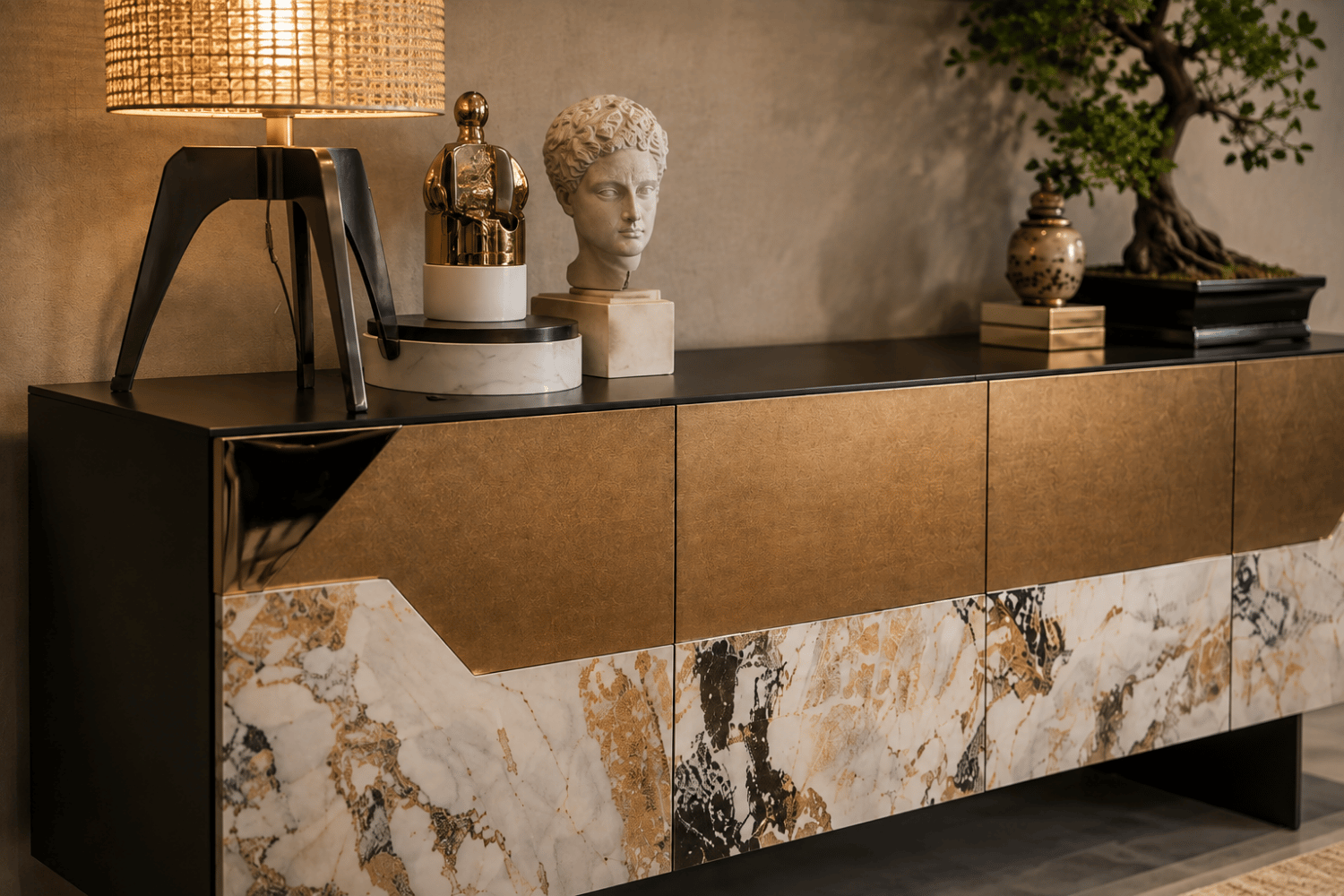
A sideboard cabinet can turn a dining room into a place that supports real hosting. It stores the pieces you need, clears the table, and gives the wall a composed focal point.
Quick answer: Choose a sideboard cabinet by measuring the wall, mapping chair movement, planning storage zones, and coordinating its finish with the dining table. The best piece makes serving easier without narrowing the room's circulation.
Plan your room with EuroHome: Visit the EuroHome design center for furniture selection and space-planning guidance.
This guide takes a room-first approach. Begin with what happens before, during, and after a meal. Then select the cabinet shape, storage mix, and finish that support that routine.
A sideboard cabinet is a storage and serving piece placed along a dining room wall. Its enclosed compartments can hold dinnerware, linens, glassware, serving pieces, and entertaining supplies.
Its top creates a second work surface. You can stage platters before a meal, set out drinks during a gathering, or display a small arrangement between occasions. This keeps the dining table available for place settings and conversation.
A sideboard also helps define the dining zone in an open-plan home. It creates a visual boundary without blocking sightlines or requiring a full-height partition. Its length and finish can connect the dining area with the kitchen or living room.
Think through the order of a typical meal. Plates may move from the cabinet to the table, while serving bowls travel from the kitchen to the sideboard before guests sit down.
Store the most frequently used pieces in the easiest-to-reach drawers or shelves. Keep seasonal linens and special-occasion items in less accessible compartments. A practical interior layout reduces repeated trips and keeps hosting calm.
Leave part of the top available for temporary use. Decorative objects can be moved when you are serving, but a crowded surface makes that transition unnecessarily difficult.
Furniture along a dining wall should feel intentional from seated and standing viewpoints. A long, low cabinet can reinforce a horizontal room composition. A taller design can add presence when the wall has generous height.
Let the cabinet relate to the table without matching it exactly. Repeated lines, compatible wood tones, or one shared accent finish can create continuity. Exact matching may make the room feel staged rather than collected.
Sideboard, buffet, and credenza often describe overlapping furniture. The label matters less than the piece's height, depth, storage pattern, and intended relationship to the room.
| Term | Typical emphasis | Best selection question |
|---|---|---|
| Sideboard | Flexible storage and serving support | Will it organize the items used in this room? |
| Buffet | Dining service and presentation | Is the surface comfortable for staging dishes? |
| Credenza | Low-profile, adaptable storage | Will its scale work beyond the dining area? |
These categories have never been perfectly rigid. The Art Institute of Chicago describes a sideboard as furniture associated with serving food and storing items such as linens or cutlery. Read the Art Institute's sideboard reference.
A buffet-inspired cabinet may suit a household that stages meals directly beside the table. A lower credenza profile may work better in a compact room or open-plan setting where sightlines matter.
A sideboard cabinet can cover either role. Assess the usable top, door and drawer movement, interior capacity, and clearance around the piece. Those details affect the room every day.
Compare the cabinet with the dining table's length and visual weight. A delicate table may need a lighter cabinet profile. A substantial table can support a stronger storage wall.
EuroHome's European sideboard collection is a useful place to compare silhouettes, finishes, and storage approaches. Review each piece against your measurements rather than choosing from a label alone.
Measure the room before browsing specific pieces. Record the wall width, ceiling height, nearby windows, baseboards, outlets, vents, doors, and architectural trim.
Clearance is part of comfort. A sideboard cabinet may fit against the wall while still making chairs difficult to pull back or doors awkward to open.
Use a generous passage behind chairs when the layout allows it. A working target of about 30 to 36 inches can help preserve movement.
The actual requirement depends on the chair, table, cabinet, and household routine.
Test the room with real actions. Pull out a chair, turn toward the kitchen, open a drawer, and carry a serving dish. These movements reveal conflicts that a floor plan may miss.
Proportion is more than width. Compare the cabinet's visual mass with the table, chairs, ceiling, rug, and lighting. Dark solid fronts can feel heavier than open or pale designs at the same dimensions.
When comparing tables, browse EuroHome's modern European dining tables with the cabinet footprint in mind. A coordinated plan prevents the storage piece from becoming an afterthought.
The right interior is the one that matches what you own and how you host. Count your dinnerware, measure large platters, and note which items need quick access.
Closed cabinets are useful for serving bowls, pitchers, extra glassware, and table linens. They protect the room from visual clutter between meals.
Consider shelf height before choosing a door configuration. Tall platters and stacked bowls may need more vertical room than everyday plates. If shelving is adjustable, use that flexibility to create zones.
Drawers suit napkins, flatware, placemats, candles, and serving utensils. They can shorten the distance between storage and table setting.
Look for a drawer layout that matches your habits. One wide drawer may suit folded textiles. Several smaller drawers may make it easier to separate cutlery, linens, and table accessories.
Open shelves can make a large cabinet feel lighter. They also offer a visible place for ceramics, books, or objects that contribute to the room's character.
Display storage requires discipline. Use it for items you enjoy seeing and can keep orderly. Store backups and irregular pieces behind doors so the room remains restful.
Reserve a section of the top for the work that happens during a meal. A beverage area, platter staging zone, or dessert station can be more valuable than a fully decorated surface.
Keep decorative pieces movable. A vase or bowl should not force guests to balance dishes around it. Good styling supports the room's use instead of competing with it.
Style the cabinet as part of the wall composition. Start with one anchor, add a few supporting objects, and preserve open space for visual relief.
Artwork, a mirror, or a restrained architectural object can establish the relationship between the cabinet and wall. Center the arrangement on the cabinet unless the architecture calls for an intentional offset.
Keep the scale related to the furniture below. A tiny object can disappear above a long cabinet. An oversized piece can make the room feel compressed.
Wood, ceramic, glass, and metal can create a refined European-modern palette. Use contrast to add depth, not to introduce a new visual theme with every object.
Repeat one finish from elsewhere in the room. A warm wood tone may connect with the table. A dark metal accent may echo the lighting. The relationship can be subtle.
Before guests arrive, clear the section where dishes or drinks will sit. Keep linens and serving tools inside the cabinet so the top can change roles quickly.
During everyday use, an edited surface is easier to maintain. Rotate one or two objects seasonally instead of adding layers to an already full arrangement.
Material affects the cabinet's visual weight, light reflection, and relationship to surrounding furniture. Begin with the room's existing undertones.
Wood surfaces can soften a dining room built around straight lines and hard surfaces. Walnut-inspired tones create depth. Lighter woods can support an airy, relaxed composition.
Grain direction also changes the impression of scale. A horizontal grain may emphasize length. A more varied grain can make the cabinet feel tactile and expressive.
Do not match every wood surface exactly. Coordinate undertones instead. A warm cabinet can work beside a lighter table when upholstery, flooring, or accessories create a bridge.
Glass can lighten a substantial cabinet and create a display opportunity. Use it when selected objects add character and can remain visually edited.
Metal details can sharpen the composition through handles, legs, or trim. Choose one dominant metal family when the room already contains several finishes.
Ceramic accessories provide texture without requiring a large color commitment. Their irregular shapes can balance a cabinet with strong geometry.
Finish samples can appear different under daylight, evening lamps, and nearby wall colors. Compare them at the cabinet's intended position whenever possible.
Look from the seated viewpoint as well as the entry. A surface that seems quiet up close may become the strongest visual element across the room. The final choice should work in both views.
A sideboard cabinet can support other rooms when its proportions and storage pattern suit the setting. In an open plan, it may help connect dining, living, and entry zones.
A cabinet does not need to be limited by a category label. A low profile can work behind a sofa. A refined finish can support an entry arrangement.
In a living area, a display section can hold books or objects.
Keep the function clear in each location. In the dining room, storage should support serving. In a living area, it may hold media accessories, games, books, or throws.
Consider how the room may change. A cabinet that looks right beside today's table may later move to an open-plan wall or larger living space.
Adaptability is especially useful when the piece has a calm silhouette and useful enclosed storage. A design with a strong but not overly specific identity can move between rooms without feeling misplaced.
Want a second opinion on fit or finish? Bring your measurements to EuroHome's design center before you finalize the cabinet.
A sideboard cabinet stores dining essentials and provides a secondary surface for serving or staging. Use it for dinnerware, linens, glassware, serving pieces, and selected decor.
The terms overlap. A buffet often emphasizes dining service, while a sideboard or credenza may describe a broader range of storage profiles. Compare measurements and function instead of relying on the name.
Leave enough room for chairs, people, doors, drawers, and everyday routes. About 30 to 36 inches can be a useful planning target behind chairs, but test the actual furniture arrangement before ordering.
Store the items that support meals and entertaining. Plates, bowls, serving dishes, flatware, linens, glassware, candles, and seasonal pieces can all work when the interior is zoned thoughtfully.
Use one focal piece above it, then add a restrained group of objects with varied height and texture. Keep part of the top open so the surface remains useful for serving.
A well-planned sideboard cabinet can organize the practical work of dining while giving the room a stronger visual center. Begin with measurements, storage needs, and the way people move through the space.
Talk with EuroHome's design team about your dining room plan
Bring your wall measurements, table dimensions, and a few room photographs when comparing options. EuroHome's curated European furniture collections can help you evaluate storage, proportion, and finish as one cohesive decision.

