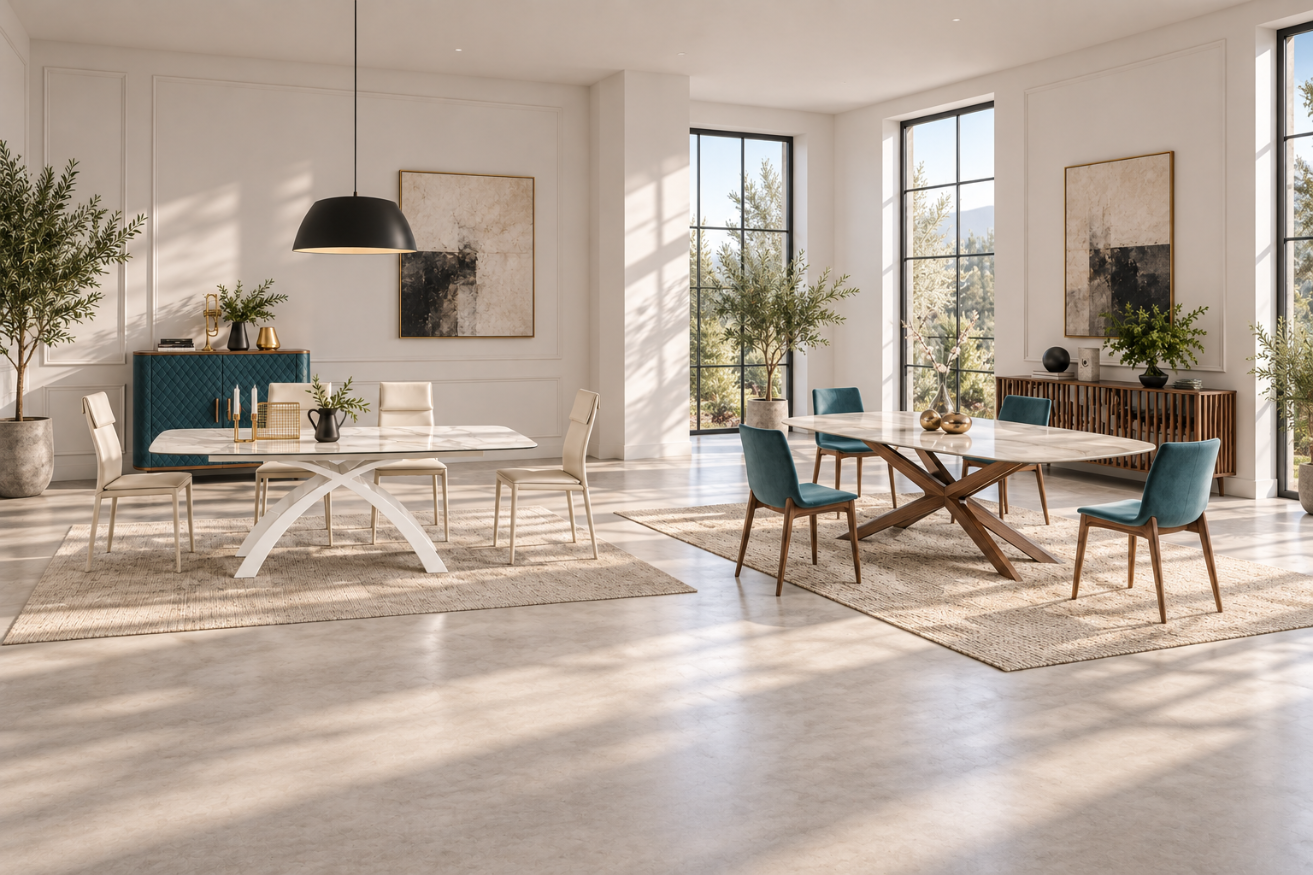
At first glance, porcelain and ceramic dining tables look like twins. They both offer that sleek, modern vibe that can instantly anchor a room. But when you look closer, you’ll find they have distinct personalities shaped by how they’re made. Think of them as sisters—related, but with their own unique strengths. Understanding these key differences is the secret to choosing the perfect surface for your home. The debate over a porcelain vs ceramic dining table isn't just about aesthetics; it's about aligning your furniture with how you actually live. One is practically indestructible, while the other offers a classic look that asks for a little more mindfulness. Let’s break down what really sets them apart.
At first glance, porcelain and ceramic dining tables look like twins. They both offer that sleek, modern, and sophisticated vibe that can instantly anchor a room. But when you look a little closer, you’ll find they have distinct personalities shaped by how they’re made. Think of them as sisters—related, but with their own unique strengths. Understanding these key differences in their composition, durability, and design potential is the secret to choosing the perfect surface for your home. Whether you’re hosting lively dinner parties or enjoying quiet family meals, one of these materials is likely a better fit for your lifestyle. Let’s break down what really sets them apart. Both materials bring a sense of refined elegance to a space, but their performance under pressure is where they truly diverge. One is practically indestructible, ready for spilled wine, hot pans, and artistic kids. The other offers a beautiful, classic look but might ask for a little more mindfulness in return. Choosing between them isn't just about aesthetics; it's about aligning your furniture with how you actually live. By getting to know their true nature, you can pick a table that not only looks stunning but also works seamlessly with your daily routine.
The core difference between porcelain and ceramic comes down to their ingredients and how they’re fired. Porcelain is crafted from a very refined and pure kaolin clay, which is then mixed with minerals like feldspar and quartz. This mixture is pressed into shape and fired in a kiln at incredibly high temperatures—we’re talking 1300°C or more. This intense process makes porcelain extremely dense, strong, and non-porous. Ceramic, on the other hand, is a broader term for items made from fired clay. It’s typically fired at lower temperatures (around 1200°C), which results in a material that’s slightly more porous, a bit thicker, and generally heavier than its porcelain counterpart.
When it comes to durability, porcelain is the clear winner. Thanks to that high-temperature firing process, it’s incredibly hard and resistant to just about everything life can throw at it. It stands up to scratches, stains, and heat, and because it’s non-porous, you don’t have to worry about spills seeping in and leaving a mark. This makes it a fantastic choice for busy households or for anyone who loves to entertain without stress. Ceramic is still a durable material for a dining table, but it’s a bit more delicate. It can be more susceptible to chipping or cracking from a strong impact and can be sensitive to sudden, extreme temperature changes.
Both materials are champions of modern design, offering clean lines and a smooth finish that feels right at home in minimalist, contemporary, or even industrial-inspired spaces. Ceramic tables are a major trend for their ability to create a calm, uncluttered look that complements a wide range of decor. Porcelain, however, takes design versatility to another level. The manufacturing process allows for an incredible variety of colors, patterns, and finishes. You can find porcelain tabletops that convincingly mimic the look of luxurious natural stone, like marble or slate, giving you that high-end aesthetic without the associated maintenance. This makes it easy to find a piece that perfectly suits your vision for your dining space.
A porcelain dining table can be a stunning and practical centerpiece for your home, blending high-end style with everyday resilience. It’s a popular choice for those who love to entertain and want a surface that looks pristine without constant worry. But like any material, it has its unique strengths and weaknesses. Understanding both sides will help you decide if a porcelain table is the right long-term investment for your dining room and lifestyle.
Whether you’re hosting lively dinner parties or managing daily family meals, knowing what to expect from your furniture is key. Let’s break down what makes porcelain so appealing and a few things to keep in mind before you make your choice.
If you’re looking for a dining table that can handle the beautiful chaos of daily life, porcelain is a fantastic choice. Its biggest advantage is its incredible durability and ease of maintenance. Thanks to a non-porous surface, the material doesn’t absorb liquids, which means spills from wine or coffee wipe away without a trace, preventing stains and bacteria from settling in.
Porcelain is also highly resistant to bumps, scratches, and high heat, making it a truly functional option for your home. You can place a hot dish on it without panicking. Aesthetically, porcelain tables offer the sophisticated look of natural stone, like marble, but are much stronger and less demanding. They come in a wide array of colors and textures, allowing you to find the perfect centerpiece for your dining space.
No material is perfect, and it’s smart to know the full picture before you commit. Porcelain often comes with a higher price tag than some other options, like ceramic. It’s best to think of it as an investment in longevity and peace of mind, as its durability means it will look great for years.
While it’s incredibly resistant to surface-level wear, porcelain can be brittle. A very heavy object dropped from a height could cause a chip or crack, which can be difficult to repair. Stylistically, you'll find many beautiful, classic designs that fit perfectly within a modern or contemporary home. However, if you’re searching for something more rustic or unconventional, your options might be a bit more limited, so it's important to consider how it fits with your overall vision to beautify your space.
Ceramic tables are a popular choice in contemporary design, known for their sleek look and impressive durability. But like any material, they come with their own set of advantages and potential drawbacks. Let's break down what you need to know before making a decision so you can feel confident in your choice. This material offers a fantastic blend of style and function, but understanding its unique characteristics is key to finding the perfect fit for your home and lifestyle.
Ceramic has become a go-to material for dining tables, and for good reason. Its biggest strength is its incredible design flexibility. With a sleek, smooth finish and clean lines, a ceramic table can feel right at home in almost any setting, from a stark minimalist apartment to a cozy Scandinavian-inspired dining room. It effortlessly bridges the gap between modern and traditional decor. Because ceramic tops can be crafted to mimic natural stone like marble or feature unique patterns, they offer a sophisticated look that is both stylish and practical. This adaptability makes it a fantastic centerpiece for your dining space, allowing you to build the rest of your room's aesthetic around it.
While ceramic is celebrated for its durability, it’s not completely invincible. It stands up incredibly well to scratches and heat, but a sharp, heavy impact—like dropping a cast-iron skillet on the edge—can cause it to chip or crack. It's something to keep in mind, especially in a busy household. Another practical point is the weight. Ceramic tables are often heavier than their wood or metal counterparts, which can make them a challenge to move. If you enjoy rearranging your furniture or anticipate moving homes, this is a definite consideration. Finally, while the range of patterns is a plus, be mindful of choosing a design with lasting appeal to ensure your table remains a timeless piece in your home.
When you invest in a beautiful dining table, the last thing you want is to spend all your time worrying about spills and scratches. You want to live your life, host dinner parties, and enjoy family meals without stress. The great news is that both porcelain and ceramic are champions of low-maintenance living. They are specifically engineered to handle the demands of a busy home, making them fantastic choices for anyone who values both style and practicality. You get all the visual impact of a material like marble without the high-maintenance relationship.
While both materials are incredibly easy to care for, they have slightly different strengths that might make one a better fit for your specific household. Porcelain’s claim to fame is its non-porous surface, which makes it nearly impossible to stain. Think of it as your best defense against accidental spills. Ceramic, on the other hand, is exceptionally hard and stands up beautifully to scratches, making it a workhorse for daily use. Let’s break down what that means for your daily routine and the long-term beauty of your table. Ultimately, choosing between them is less about which one is "better" and more about which one aligns perfectly with the rhythm of your life.
Let's be honest: after a wonderful meal, no one wants to face a complicated cleanup. This is where porcelain and ceramic tables truly shine. For a porcelain table, daily cleaning is as simple as it gets. Because the surface is non-porous, it doesn't absorb liquids. A quick wipe with a damp cloth and a bit of mild soap is all you need to handle spills and crumbs, keeping the surface hygienic and looking pristine.
Ceramic is just as straightforward. Its smooth, sealed surface means messes sit on top instead of seeping in. A simple wipe-down is usually enough to restore it to its original beauty. Both materials free you from the need for harsh chemicals or special cleaners, making them a perfect fit for a healthy, happy home. You can explore stunning, easy-to-clean options in our collection of dining tables.
Life happens. Wine gets spilled, keys get dropped, and kids will be kids. Your dining table should be able to handle it all. Porcelain is a superstar when it comes to stain resistance. That non-porous surface we mentioned means that even notorious stain-culprits like red wine, coffee, or tomato sauce can’t penetrate the material. They simply wipe away without a trace, giving you total peace of mind when entertaining.
Ceramic’s superpower is its incredible hardness, which makes it highly scratch-resistant. It’s one of the toughest materials you can choose for a dining table, making it ideal for daily, heavy use. You won’t have to constantly worry about scratches from plates, cutlery, or serving dishes. This durability ensures your table remains a flawless centerpiece in your dining room for years to come.
A dining table is more than just furniture; it’s where memories are made. You want it to look just as stunning in a decade as it does the day it arrives. Thanks to their inherent durability, both porcelain and ceramic are built for the long haul. Their resistance to staining, scratching, and even heat means they don’t show their age. They won't fade or discolor over time, even in a sun-drenched room.
This long-lasting beauty means your investment is protected. You can confidently choose a style you love, knowing it will remain a timeless and elegant part of your home. Whether your decor is minimalist, industrial, or contemporary, these tables adapt and endure. Their simple care routine ensures that maintaining that "like-new" look requires minimal effort, giving you more time to simply enjoy your beautiful space.
When you’re choosing a dining table, the price tag is always part of the conversation. Both porcelain and ceramic offer incredible style, but their costs are driven by different factors. Understanding what goes into the price can help you decide where you want to invest and which material gives you the best return for your home and lifestyle. Let’s break down the costs so you can feel confident in your choice.
Generally, you’ll find that porcelain tables come with a higher price tag, and for good reason. The manufacturing process is more intensive, resulting in a denser, more durable material. Porcelain’s luxurious appearance and non-porous surface make it incredibly easy to maintain, which adds to its long-term value and initial cost. On the other hand, ceramic tables have become a top trend for minimalist spaces, making them more widely available. Their clean lines and smooth finish fit beautifully into modern and traditional homes, and this popularity has made them a more accessible option for many design lovers.
Value isn't just about the initial price—it's about what you get for your money over time. While porcelain may require a larger upfront investment, its incredible durability makes it a piece you can count on for years of family dinners and gatherings. Many homeowners see it as a worthwhile investment in quality that pays off in longevity and peace of mind. But don't mistake ceramic for a lesser option. The definitive guide to ceramic dining tables shows they are no longer limited to simple, basic designs. Today’s ceramic tables feature stunning patterns and textures, offering a high-end look that delivers amazing style for its price point.
Your budget will ultimately guide your final decision, and there’s a beautiful option for you either way. If you have more room in your budget and want to invest in a piece that is both timeless and tough, consider getting a porcelain table. It’s an excellent choice for a "buy it once, love it forever" approach to furnishing your home. If you're looking for a stylish, high-quality table that’s a bit more wallet-friendly, ceramic is a fantastic choice. It’s typically the more budget-friendly option, giving you a chic and durable surface for everyday dining without the higher investment.
Your dining table is more than just a place to eat. It’s where you host holiday dinners, help with homework, and catch up with friends over a glass of wine. The right table should not only look beautiful but also fit seamlessly into your daily life. So, how do you choose between porcelain and ceramic? It really comes down to what you value most—effortless maintenance, a specific aesthetic, or a bit of both. Let’s figure out which material is the perfect match for your home and habits.
If your life is full and you love to entertain without the stress, a porcelain table might be your perfect match. Think of it as the workhorse of the design world. Because porcelain has a non-porous surface, it’s incredibly resistant to stains from things like red wine, coffee, or kids' art projects. You can simply wipe spills away without a second thought. This makes it a fantastic choice for busy families or anyone who hosts frequently. You get the luxurious look of natural stone without the high-maintenance relationship, giving you more time to enjoy the moments that matter around your dining table.
A ceramic table is for the person who curates their space with intention. If you’re drawn to clean lines and a smooth, refined finish, ceramic will feel right at home. It’s a top choice for creating a minimalist aesthetic, where every piece serves a purpose and contributes to a calm, uncluttered atmosphere. Ceramic tables have a subtle, modern elegance that doesn't overpower a room, allowing them to blend beautifully with both contemporary and more traditional decor. If you see your dining area as a serene sanctuary, the understated sophistication of ceramic is an ideal fit.
Beyond the material itself, think about how your new table will harmonize with your home's overall style. A ceramic table, for instance, can adapt beautifully to minimalist, Scandinavian, or even industrial-inspired spaces. The key is to look at the complete picture. Consider the table's base—a sleek metal frame creates a modern feel, while a sculptural pedestal can act as a statement piece. Don't forget to pair it with the right chairs and surrounding decor. A table with a dramatic marble-like porcelain top, for example, might call for simpler chairs to let it be the star of the show.
Once you’ve decided between porcelain and ceramic, the fun part begins: picking the perfect table for your home. Beyond the material, you’ll want to think about craftsmanship, size, and style to find a piece that truly fits your space and your life. Getting these details right ensures your new table isn't just a place to eat, but the heart of your home.
A beautiful tabletop is only half the story; the quality of the entire piece is what makes it last. Pay close attention to the base and legs. Are they made from solid, sturdy materials that complement the top? A well-crafted table feels stable and substantial, with no wobbling. Look for clean lines and a smooth, consistent finish, which are hallmarks of great design. Ceramic tables, for instance, are a top trend partly because their sleek finish signals a modern, high-quality aesthetic. When you browse different dining tables, inspect the joints and construction—these are the details that separate a good table from a great one.
Before you fall in love with a specific design, grab a tape measure. You’ll want at least three feet of clearance on all sides of your table to allow for comfortable seating and easy movement. Think about how you use your dining area. Do you host large dinner parties or intimate family meals? This will help you decide on a shape. Rectangular tables are classic for seating a crowd, while round tables are fantastic for encouraging conversation in smaller spaces. Don’t forget to consider scale—the table should feel proportional to the room, not overwhelm it or get lost in it.
Your dining table should reflect your personal style and fit seamlessly with your home’s decor. With open-concept living spaces becoming more common, it’s important that your table complements your entire living area. Materials like ceramic are incredibly versatile, fitting beautifully into minimalist, Scandinavian, or even industrial designs. Think about the table's overall silhouette. Do you prefer a simple, understated base or something more architectural and sculptural? A table with a unique base can act as a stunning focal point, turning everyday meals into a special occasion. The goal is to find a style that feels both current and timeless to you.
Feeling informed and ready to find the one? Now that you’re an expert on the nuances of porcelain and ceramic, you can start the exciting process of choosing a dining table that fits your home and lifestyle perfectly. Here’s how to approach your search with confidence.
At EuroHome, we specialize in sourcing stunning contemporary and modern pieces from Europe. Our collection of dining tables showcases a variety of designs, each offering a unique blend of style and practicality. We focus on clean lines, high-quality materials, and impeccable craftsmanship to bring you furniture that’s both beautiful and built to last. Whether you’re drawn to the sleek finish of a ceramic top or the durable elegance of porcelain, you’ll find options that feel both current and timeless. Explore the latest looks and discover a table that will truly become the heart of your home.
Before you add a table to your cart, take a moment to run through a few key questions. First, what shape best suits your space and needs? Modern dining tables come in many forms, including rectangular, round, square, and even curved designs with rounded edges. Next, consider the base. What material and style will complement your chairs and other decor? Also, think about the finish. Do you prefer a matte look or a polished gloss? Finally, ask about the specific care requirements for the finish you choose. Answering these questions will help you narrow down your options and select a table you’ll be happy with for years to come.
To make your purchase process smooth and stress-free, a little prep work goes a long way. Start by measuring your dining area carefully, leaving enough room for chairs to be pulled out comfortably. It’s also a great idea to request material samples if they’re available. Seeing and feeling the surface in your own home’s lighting can make all the difference. Don’t forget to clarify the details on delivery and assembly—knowing what to expect will save you any surprises. By taking these simple steps, you can shop with confidence and ensure your beautiful new table is a perfect fit for your home from the moment it arrives.
Is porcelain just a fancier type of ceramic? You can think of them as being in the same family, but with different upbringings. Both start as clay, but porcelain is made from a much finer, purer clay and is fired at a significantly higher temperature. This intense process makes porcelain denser, less porous, and stronger than its ceramic cousin. So while they share a similar modern aesthetic, their core composition and performance are quite distinct.
Which table is better if I have young kids? This is a great question because both are fantastic choices for family life. If your main concern is spills and potential stains from art projects or tipped-over juice cups, porcelain is your winner. Its non-porous surface means nothing can seep in, making cleanup incredibly simple. If you're more worried about scratches from utensils or toys, ceramic's exceptional hardness makes it a true workhorse that resists daily wear and tear beautifully.
Can I really put a hot pot directly on the surface? Yes, for the most part, you can. Both porcelain and ceramic are fired in kilns at extremely high temperatures, which makes them highly resistant to heat. Placing a hot dish directly on the table generally won't cause any damage like it would with a wood or laminate surface. That said, it's always a good practice to use trivets for very hot cookware, like a pan straight off the stove, just to ensure the longevity of your table's finish.
What happens if I chip the edge of my table? Can it be repaired? While both materials are incredibly durable and resistant to everyday use, a very hard impact from a heavy object can cause a chip. Repairing a chip on porcelain or ceramic can be challenging to do perfectly and often requires a professional specialist to get a near-invisible result. The best approach is prevention; simply be mindful of heavy items around the table's edges to keep it looking flawless.
Besides the material, what's the most important thing to consider when choosing a table? Once you've picked your material, pay close attention to the table's base. The legs or pedestal are just as important as the top, as they provide stability and define the table's overall style. A well-crafted base made from solid materials ensures your table is sturdy and wobble-free. Also, make sure the style of the base complements your dining chairs and the rest of your room's decor to create a cohesive, intentional look.

