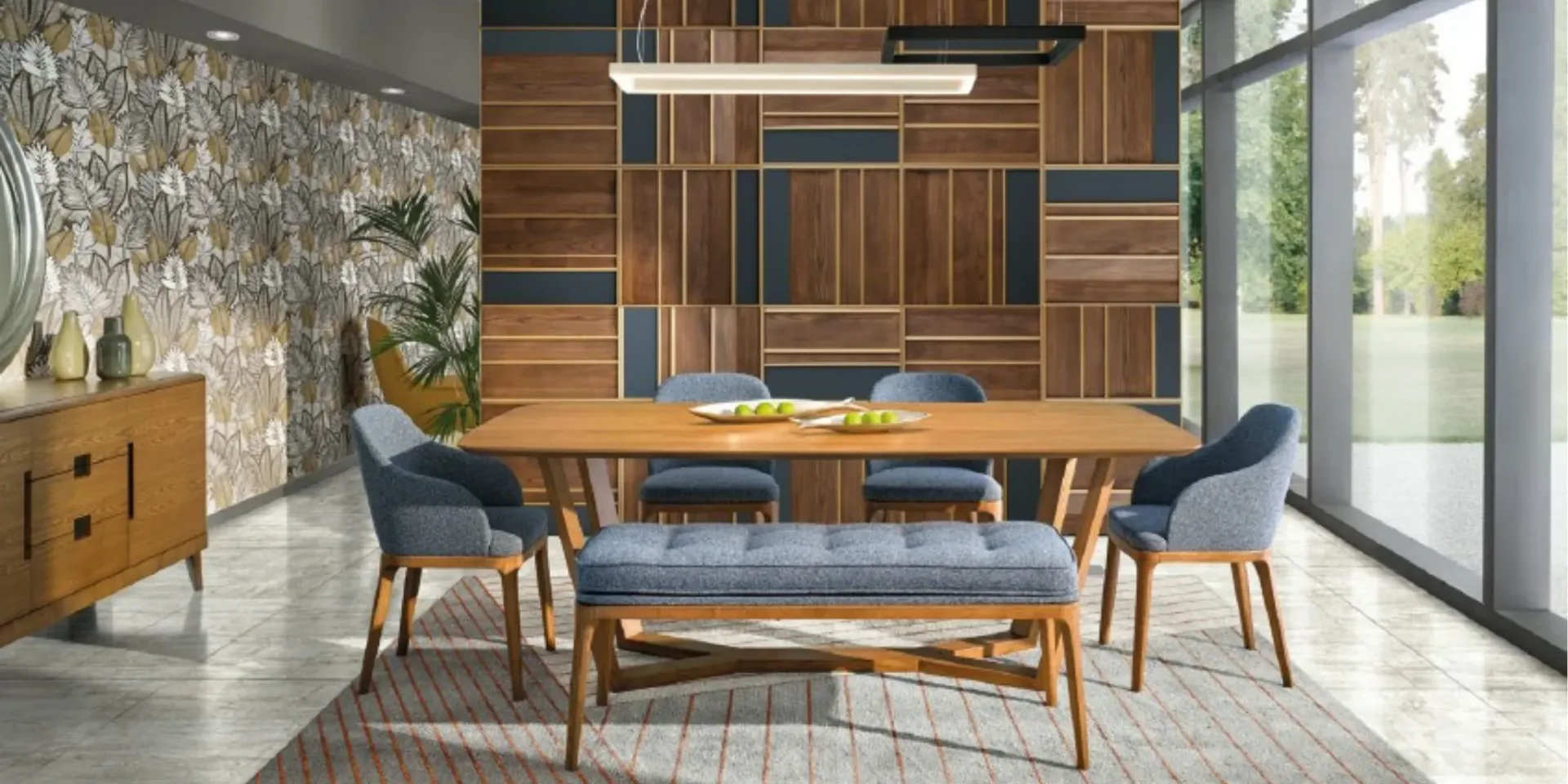
A modern pendant light is a single hanging fixture, usually one shade on a cord, rod, or cable, chosen to light a table, island, or seating spot without turning the ceiling into a chandelier. The useful choice is not the prettiest photo. It is the shade that fits the furniture under it, hangs clear of heads and sightlines, and throws the kind of light the room actually needs. Scale, drop, distribution, and finish decide that. Style names do not.
Book a design consultation if you want the drop and finish checked against your ceiling and furniture before you order.
EuroHome's designer lamps collection is the place to shop once those four checks are done. This guide stays on the hanging piece itself. Dining-room mood, chandelier sizing, and European style families belong in the European dining room lighting guide. Bedroom layering belongs in the bedroom lighting guide.
A pendant hangs. A flush or semi-flush mount sits against the ceiling. A chandelier spreads several arms from one canopy. That difference matters in a contemporary room because the pendant is often the only decorative light people notice. If it is too small, the ceiling looks unfinished. If it is too low or too bright, the room feels harsh even when the furniture is calm.
Treat the fixture as one layer, not the whole plan. A glass or metal shade can light a table, but it will not wash a wall or give you a reading pool on a sofa. Pair it with hidden ceiling light, a floor lamp, or a table lamp when the room is used after dark. The living room projects show how one strong object sits inside a quieter room. The pendant should do the same job.
Before you fall for a shape, write down four facts:
Those notes keep a modern pendant light from becoming a sculpture that lights the wrong place.
Width is the first filter. A pendant should relate to the object it hangs over, not to the whole room. Over a dining table, a single shade that is about one half to two thirds of the table width usually holds the center without crowding the place settings. A 36-inch round table can carry a shade near 18 to 24 inches wide. A 72-inch rectangular table can carry one larger shade near the center, or a run of smaller shades if you want light at both ends.
Living rooms are looser because nobody sits under the shade. A globe or arc over a coffee table can be smaller than a dining pendant and still read as the focal point, as long as it clears the sightline across the sofa. In an entry, size the shade to the console or the open floor, not to the hallway width. A tiny glass ball disappears in a two-story foyer. A wide drum in a narrow hall hits shoulders.
Live EuroHome hanging pieces show how wide that range really is. On the designer lamps page, checked for this guide:
| Fixture | Listed type and size | Listed price | Best scale job |
|---|---|---|---|
| Chique suspension. | Curved crystal shade. About 6 3/4 inches wide and 16 to 18 inches high. Amber or transparent fume glass. Black nickel frame. | $1,347. | A small single, or a staggered group, where a large shade would crowd the table. |
| Dalla Hanging Lamp. | Semi-circle glass diffuser with a leather belt. About 15 inches wide, 2 inches deep, and 31 inches high. | $1,885. | A slim vertical accent over a narrow table or in a tight ceiling zone. |
| Bijois pendant. | Opal white blown-glass globe in metal ellipses. About 20 3/4 inches wide and 16 1/2 inches high. Cable is 63 inches. Black chrome or gold chrome. | $2,339. | One statement globe over a medium table, or a group in a taller entry. |
| Drema hanging lamp. | Textured glass with polished metal and wood, made in Italy. Sizes run from about 14 7/8 by 21 3/4 inches up to about 24 3/8 by 33 1/8 inches. | $2,159. | A larger single shade when the table or ceiling span needs more presence. |
Prices and sizes are the figures published on those product pages at the time of writing. Made-to-order finishes can change what is available, so confirm the current listing before you treat a number as an order.
If the shade you love is narrower than the table, do not stretch one pendant to fake the width. Use two or three smaller shades, or move the single pendant to a place where its real size is enough. A Chique shade near 7 inches wide is a group fixture. A Drema shade near 24 inches wide can stand alone over a smaller table.
Drop is the distance from the ceiling canopy to the bottom of the shade. It is the measurement people get wrong, because a photo never shows the ceiling height. Hang the bottom of a dining pendant about 30 to 36 inches above the tabletop on an 8-foot ceiling. Add roughly 3 inches of drop for each extra foot of ceiling so the shade stays in the same relationship to the table. On a 10-foot ceiling, that puts the bottom closer to 36 to 42 inches above the table.
Check the walking path next. The bottom of the shade should stay at least 7 feet off the floor anywhere people pass under it. A low dining drop is fine because chairs, not a walkway, sit underneath. The same drop over a kitchen peninsula or an open living room will clip heads. In that case, shorten the cord or choose a shallower shade.
Cable length is not the same as installed drop. Bijois lists a 63-inch cable, which is enough for a tall ceiling if the canopy hardware can stop the shade where you need it. It is too much length to leave slack over an 8-foot dining ceiling. Ask whether the cable locks, and where the canopy sits, before you assume the product photo is the hanging height.
Dalla is the opposite problem. The shade itself is about 31 inches tall and only 2 inches deep. On a standard ceiling it may already fill the drop, even with a short stem. Measure from canopy to shade bottom with the stem included, then compare that number with the 30-to-36-inch dining target. A beautiful vertical shade that lands in someone's eyes is still the wrong fixture.
Distribution is how the light leaves the shade. It changes the room more than the metal color does.
An open or clear shade throws light up and down and puts a brighter pool on the surface below. Use it when the pendant is task light: a dining surface, a work counter, or a table where you want to see faces and food. Clear glass also shows the bulb, so the lamp shape becomes part of the design. Choose a bulb you are willing to look at.
A diffused shade, such as opal, satin, or textured glass, softens the source. Bijois uses a milky white blown-glass globe. Drema uses textured glass. Both are easier to live with in a room where the pendant stays in your line of sight. You give up a hard pool of light and gain a calmer glow. That is usually the better trade in a living room.
A downward shade, or a shade with an opaque top, keeps light on the table and off the ceiling. It is useful over a dark dining top when you want sparkle on the surface and less glare at eye level. It is a poor choice as the only light in a large living room, because the ceiling will go dim.
Brightness is lumens, not watts. The ENERGY STAR brightness guide says light output is measured in lumens, and that a typical 60-watt incandescent is about 800 lumens, while a 75-watt bulb is about 1,100. For a single dining pendant, start near 800 to 1,600 lumens and put it on a dimmer. For a living-room globe that is mostly ambient, the lower end of that range is enough if a floor lamp covers reading. Skip a high-output bulb in a clear glass shade. You will see the hotspot every night.
Color temperature is the other half of comfort. Warm-white light, around 2700K, sits easily with wood, leather, and cream upholstery. A cooler bulb makes chrome and pale stone look crisp, and it can make a traditional room feel clinical. Match the bulb to the room you have, not to a showroom photo.
Finish is how the pendant joins furniture you already own. A contemporary room can take a strong contrast, but the metal should echo one other material, not introduce a fifth.
Black chrome and black nickel, used on Drema, Bijois, and Chique, disappear against dark window frames and ground a pale room. Gold chrome, offered on Bijois, works when brass or warm wood is already in the dining set. Do not add gold only because the product photo used it. Leather on Dalla is a different kind of finish. It belongs where the room already has hide, stitching, or a deep brown, and it will look like an accident next to an all-glass, all-chrome interior.
Glass color changes both the light and the daytime look. Transparent fume and extra-clear glass keep a small shade from feeling heavy. Amber and smoked glass warm the bulb and hide the lamp, which helps in a room with a lot of daylight glare. Opal white reads as a solid object even when the light is off, so it needs enough ceiling around it.
If the pendant is made to order, the finish choice is part of the order, not a swap you make after delivery. EuroHome's shipping and delivery page is the right place to check timing before you promise a fixture for a dinner or a renovation date. The Design Center in King of Prussia is where finish samples and ceiling height can be looked at together.
Count is a scale decision. Use this order:
Chique is built for the second and third cases. The product copy describes the suspension light hung at varying heights in amber or transparent fume glass. Keep the lowest shade at the dining drop you already set, and let the others sit higher so the group has rhythm without dropping into eye level. Pagona is a different object: the collection includes floor and table versions with globe shades, so do not treat it as a ceiling pendant just because the shape is round.
A pair is usually calmer than a cluster in a contemporary dining room. Two matching shades over a rectangular table give even light and a clear centerline. A cluster is the better move when the ceiling is tall and one shade would look lost, or when you want the fixture to be the art. Bijois, with its globe and metal ellipses, can do that job as a single piece or as a small group. Give each globe enough air that the metal rings do not visually tangle.
Dining is the strict case. Center the canopy on the table, not on the room, if the table sits off center. Keep 30 to 36 inches from the tabletop on an 8-foot ceiling, and keep the shade narrower than the tabletop so people can see one another. If you also need the broader dining plan, use the dining lighting guide for chandelier and mood decisions, then come back here for the single-shade measurements.
A living room wants the pendant over a table or a defined seat, not in the middle of a walkway. A globe at standing eye height between two sofas will bother anyone facing it. Raise it until the shade sits above seated eye level, or move it to the edge of the seating group. Floor lamps in the same lamps collection, such as Misty or Odyssey, can take the reading job so the pendant stays decorative.
An entry can take a lower drop because people pause rather than pace, but the shade still needs a 7-foot clearance on the path from the door. One pendant over a console, slightly toward the mirror, lights faces without a ceiling full of hardware. The entryway guide covers the console and mirror. This page only sets the hanging light.
Kitchen islands are the easy place to overbuy. Two small pendants, about 24 to 30 inches apart and 30 to 36 inches above the counter, light the work surface. A single oversized shade works only when the island is short. Do not import a dining cluster into a working kitchen. You will block cabinet doors and the sightline to the sink.
Book a design consultation to set the count, drop, and finish against your ceiling before the order is placed.
Start at about one half to two thirds of the table width for a single shade. A shade under one third of a long table usually needs a pair or a row. Check the listed width, such as Bijois at about 21 inches or Drema up to about 24 inches, against the table you own.
Over a dining table, put the bottom of the shade about 30 to 36 inches above the top on an 8-foot ceiling, and a little higher as the ceiling rises. Anywhere people walk, keep the bottom at least 7 feet off the floor. Cable length on the product page is not the installed height.
Often yes, if the bulb is around 800 to 1,600 lumens and the shade is diffused or open on purpose. ENERGY STAR treats lumens as the brightness measure, not watts. Add a dimmer so the same pendant can drop from dinner to a quieter evening.
Yes, when the table is small or round and one shade is wide enough to hold the center. A long rectangular table usually needs a larger shade, a linear run of small pendants, or the chandelier path covered in the dining lighting guide. A single tiny pendant will look like a leftover.
The hanging lights verified for this guide are Chique, Dalla, Bijois, and Drema, listed from $1,347 to $2,339 on the designer lamps pages. Floor and table lamps in that collection are a different category. Confirm size, finish, and price on the product page before you order.


