
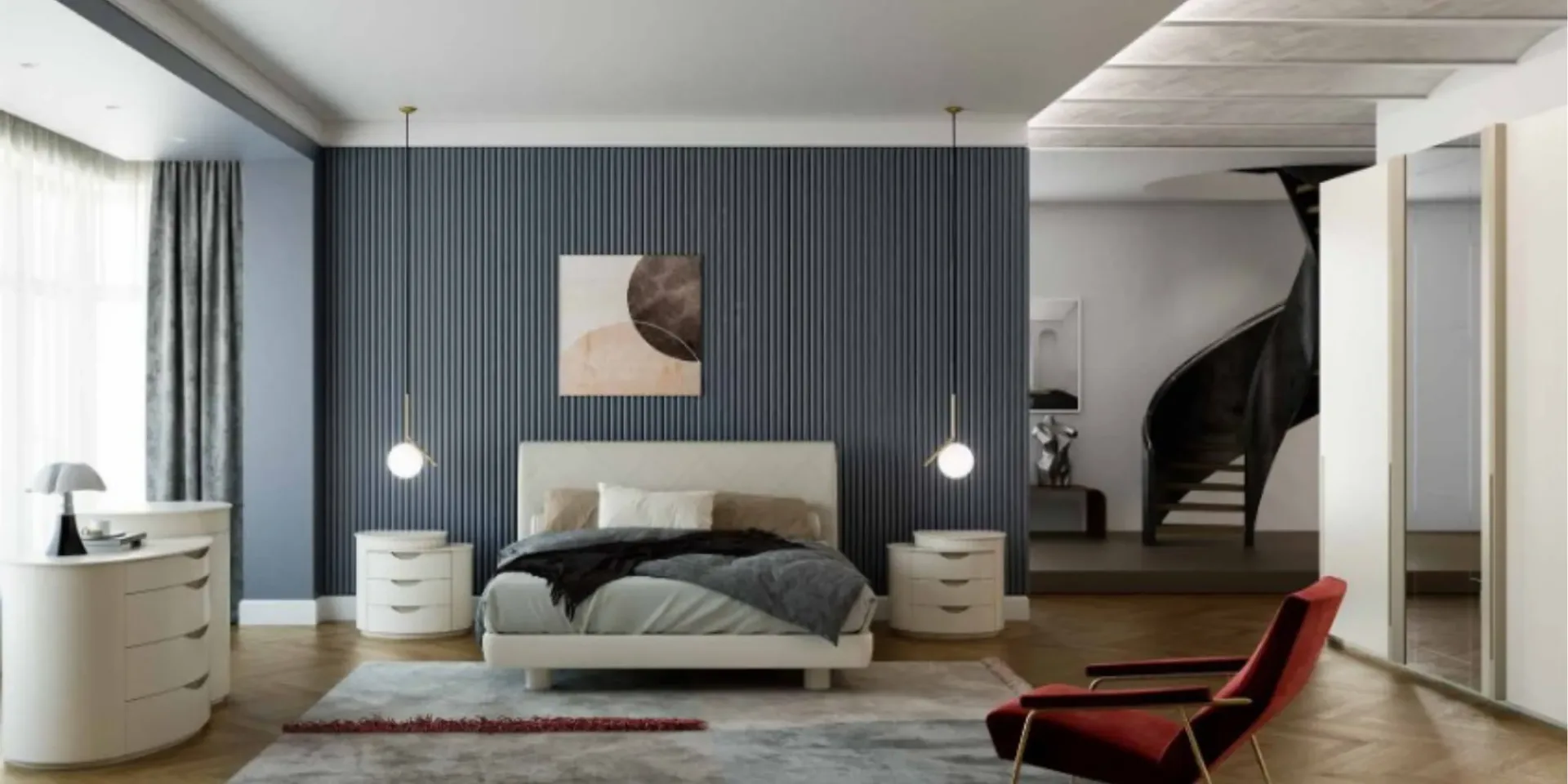
A well-planned closet begins with more than a row of shelves. The best arrangement accounts for what you store, how you reach it, and the room's circulation. It also considers door swing, available depth, and the visual relationship between storage and the bedroom around it. Treat shelving as part of the room's furniture, and practical decisions about proportion, finish, and flexibility become easier to make.
Book a EuroHome design consultation to plan closet shelving around your room, wardrobe, and preferred finish.
Closet shelving works best when its depth, openings, material, and finish are chosen around actual belongings and daily habits rather than a universal template. A practical starting range of 12 to 14 inches can suit folded clothing, but the final dimensions should respond to the room, storage zones, and items that need a home.
Before comparing materials or finishes, clarify how the room functions and the atmosphere you want it to create.
What Should You Decide Before Choosing Closet Shelving?
A shelf plan is easier to get right when you begin with the wardrobe rather than the hardware. Before comparing materials, take inventory of what the closet must hold. Separate folded shirts, knitwear, denim, handbags, shoes, bedding, luggage, and seasonal items. Note which pieces need daily access and which can live in a higher or less convenient zone.
Measure the clear width, available height, depth, door swing, baseboards, outlets, and nearby furniture. In a reach-in closet, every inch of depth affects circulation and door clearance. In a walk-in closet, deeper shelves may be possible, but depth alone does not improve storage if items disappear at the back.
Also consider whether the shelving is a temporary organizer, a modular furniture component, or part of a lasting bedroom design. A utility closet can prioritize low cost and ventilation. A primary bedroom deserves a finished surface, consistent proportions, and details that feel appropriate beside the bed, dresser, and other European furniture.
Which Closet Shelving Materials Work Best?
Closet shelving materials should be judged by four practical criteria: stability, span, surface quality, and visual relationship to the room. A shelf that looks attractive but flexes under a stack of clothing will frustrate you. A shelf that performs well but has rough edges or an unfinished appearance may make an otherwise refined bedroom feel temporary.
| Material or surface. | Strengths. | Best use. | Watch for. |
|---|---|---|---|
| Finished wood or wood veneer | Warm appearance, solid feel, furniture-like character. | Primary bedrooms and visible shelving. | Confirm the finish, edge treatment, span, and care requirements. |
| Quality laminate or engineered panel | Consistent surface, broad finish range, practical maintenance. | Everyday folded clothing and modular systems. | Inspect edge quality and choose a finish that does not look visually thin. |
| Wire shelving | Airflow, light weight, visibility, simple utility. | Pantries, linen storage, and utility areas. | Small items can tip or fall through; the appearance may feel less tailored. |
| Glass or specialty surface | Light visual weight and display potential. | Selective accessory or display zones. | Consider fingerprints, impact, load limits, and whether it suits clothing storage. |
Finished wood and veneer
Finished wood or veneer is a natural choice when closet shelving is visible from the bedroom. It can relate to a wood bed, dresser, flooring, or architectural detail without making the storage look like a separate kit. The important decision is not simply the species or color. Evaluate the full sample, including the edge, sheen, grain direction, and how the finish looks in the room's natural and artificial light.
Wood surfaces also reward restraint. A calm grain and consistent tone can make open shelving feel intentional. A highly contrasting finish can become a focal point, which may be right for a dressing area but distracting in a compact bedroom.
Laminate and engineered panels
Quality laminate and engineered panels can provide a practical, consistent surface for daily use. They are especially useful when a design needs repeated shelves with a uniform appearance. Look for clean edges, an appropriately thick profile, and a finish that complements the rest of the room. A plain white panel may be useful in a hidden storage zone, while a coordinated wood or matte finish can better support a furniture-led bedroom.
When composite wood is used in bedroom furnishings, ask for the relevant emissions documentation as part of the material review. The U.S. Environmental Protection Agency explains compliance requirements for composite wood products under TSCA Title VI, including formaldehyde emissions standards. This documentation adds a useful layer of confidence when comparing engineered panels for an enclosed bedroom environment. See the EPA composite wood compliance guidance for the applicable requirements.
Wire shelving
Wire shelving allows air to move around stored items and can be useful where ventilation and utility matter most. It is often a sensible choice for a pantry, linen closet, or secondary storage area. For folded clothing, however, the open grid can allow smaller items to shift or create an unfinished visual effect. If you use wire, plan the shelf liner, baskets, and edge details as part of the system instead of treating them as afterthoughts.
How Deep Should Closet Shelves Be?
For folded clothing, 12 to 14 inches of usable depth is a practical starting range. It generally gives sweaters, shirts, and jeans enough support without creating an unnecessarily deep pocket. The correct measurement still depends on the closet, the shelf material, the door position, and the size of the items you store.
- Reach-in closets: Keep depth controlled so clothing stays visible and doors or passageways remain comfortable.
- Walk-in closets: Use additional depth selectively for bins, luggage, or bulky seasonal items, rather than making every shelf deep.
- Shoe shelves: Size the zone around the footwear and the direction it will face. Avoid adding depth that only creates unused space.
- Bag and accessory shelves: Favor visibility and easy reach over maximum capacity.
- Hanging zones: Do not confuse shelf depth with the clearance needed for hanging garments. Rods, doors, and clothing movement need their own assessment.
Deep shelves are not automatically more efficient. When the back half is difficult to see, clothes can become compressed, forgotten, or hard to remove without disturbing the front stack. A shallower, well-spaced shelf often provides more usable capacity because the entire surface remains accessible.
How Far Apart Should Closet Shelves Be?
There is no single spacing number that suits every closet. Plan each opening around the objects it will hold, then leave enough clearance to remove them without scraping the shelf above. The goal is a small amount of useful breathing room, not a large band of empty air.
| Storage zone. | Spacing approach. | Design note. |
|---|---|---|
| Folded shirts and light knits. | Use a compact opening that keeps stacks stable. | Make everyday items easy to see and reach. |
| Sweaters and bulky knitwear. | Allow more height than a T-shirt zone. | Do not compress delicate or thick fabrics. |
| Shoes. | Set clearance around the tallest pair in the group. | Use a lower or visible zone for frequent pairs. |
| Bags and bins. | Measure the actual containers before fixing shelf heights. | Reserve upper shelves for less frequent access. |
| Seasonal storage. | Use taller, less accessible openings where practical. | Keep a clear path for retrieving boxes safely. |
Adjustability is valuable when the wardrobe changes. It lets you create shorter openings for accessories and taller ones for winter layers without rebuilding the entire arrangement. Adjustable shelves should still be supported properly and checked for level, especially when a wide shelf will carry dense stacks.
Schedule a EuroHome design consultation for help balancing storage capacity, bedroom proportions, materials, and finish.
How Should You Organize Shelves in a Reach-In or Walk-In Closet?
Use the closet's architecture to decide where shelving belongs. In a reach-in closet, prioritize visibility and a clear relationship between shelves, rods, and doors. Place everyday folded clothing where it can be reached without leaning into the deepest part of the closet. Keep high shelves for seasonal items that do not need daily handling.
A walk-in closet gives you more flexibility, but it also creates more opportunities for wasted corners. Use one wall for the most frequently accessed clothing, another for longer hanging or specialty storage, and a corner only when the depth remains usable. If shelves turn a corner, check that the intersection does not create a dark, unreachable pocket.
Think in zones rather than isolated shelves. A useful arrangement may include folded clothing near short hanging, shoes below, bags at a visible middle height, and seasonal pieces above. When shelves and rods are planned together, the closet feels calmer and the room makes better use of its vertical volume.
Keep daily reach separate from reserve storage
Daily items should not compete with luggage, spare bedding, or out-of-season pieces. Give the most frequently used clothing the clearest sightline and most comfortable reach. Use labeled baskets or consistent boxes only when they improve retrieval. Containers that hide everything can create the same access problem as shelves that are too deep.
How Do You Choose a Finish for Closet Shelving?
Finish is where practical storage becomes part of the interior. Start by identifying the room's visual anchors: the bed, dresser, flooring, doors, trim, and hardware. The shelving does not need to match every surface exactly, but it should relate to at least one or two of them in tone, texture, or sheen.
Match the finish to the room's visual weight
Light finishes can make a compact closet feel brighter and less visually dense. Medium wood tones can add warmth beside neutral walls and upholstery. Darker finishes can create a more architectural effect, especially when the closet is open to a larger dressing area. Consider the amount of natural light before choosing a strong contrast.
Coordinate edges, hardware, and backing
A shelf's front edge is often more visible than its top surface. Choose edge details that look finished from the room and from inside the closet. Coordinate brackets, rails, pulls, and backing so the system reads as one composition. If the closet has open shelving, the wall behind it becomes part of the palette too.
Use samples in the actual bedroom
View finish samples next to the bedroom furniture and under the lighting used at night. A color that feels neutral in a showroom can look warmer, cooler, brighter, or darker at home. Samples also reveal how grain, sheen, and nearby upholstery interact. This small step helps avoid a finish that is technically attractive but visually disconnected.
When Is Custom Closet Shelving Worth Considering?
Custom or furniture-led shelving is worth considering when the closet has unusual dimensions, a demanding wardrobe, visible architectural importance, or a finish requirement that standard components cannot meet. It can also make sense when you want storage to coordinate with a larger bedroom project rather than appear as a separate utility purchase.
The decision should follow the room and the way it is used. Customization is most useful when it solves a real constraint, such as an awkward wall, a sloped ceiling, a specific mix of folded and hanging clothing, or a need for a cohesive finish. EuroHome's Sleeping collection provides a starting point for exploring bedroom furniture, while a design consultation can connect storage decisions to the wider room.
For a freestanding alternative, compare the role of a European armoire wardrobe. It may suit a room where you want substantial storage without committing every wall to a built-in arrangement. The right choice depends on the architecture, the wardrobe, and how permanent you want the storage plan to be.
FAQs: Closet Shelving Questions, Answered
What is the best material for closet shelving?
The best material depends on the load, moisture, span, and finish you need. Wood or quality panel shelving gives a solid, furniture-like appearance, while wire shelving can suit ventilated utility storage. Choose a stable, finished surface for folded clothing and accessories.
How deep should closet shelves be?
For folded clothing, plan around 12 to 14 inches of usable depth as a starting point. Adjust for the items being stored, the closet type, door clearance, and how far you can comfortably reach.
How far apart should closet shelves be?
Shelf spacing should follow the items in each zone. Allow more clearance for sweaters, bags, and bins, and less for shoes or compact folded items. Adjustable shelves are useful when the wardrobe changes seasonally.
How do I choose a closet shelving finish?
Choose a finish that relates to the bedroom's dominant furniture, flooring, wall color, and hardware. A quiet neutral can recede, while a richer wood tone can make storage feel like intentional architectural furniture.
Talk with EuroHome's design team before you commit to a shelf plan. A measured conversation can help align materials, spacing, finish, and the rest of the bedroom.
