A luxury sideboard buffet should do more than fill an empty dining room wall. It should make entertaining easier, keep essentials organized, and strengthen the European character of the room. The right piece balances proportion, storage, finish, and daily function so the dining area feels intentional rather than crowded.
Browse EuroHome sideboard buffets for refined dining room storage
To choose a luxury sideboard buffet, start with the room dimensions, then match the storage layout to how you serve, host, and display. EuroHome Interiors recommends comparing width, depth, door swing, finish, and table pairing before selecting a piece. A well-chosen sideboard supports everyday organization and polished entertaining.
For design-focused homeowners, the best buffet is not simply the largest or most dramatic option. It is the piece that fits the wall, clears the traffic path, relates to the dining table, and gives every serving piece a home. Use the guide below to evaluate scale, storage, finishes, and pairings before you invest.
A luxury sideboard buffet earns its place through craftsmanship, proportion, material quality, and storage that feels considered. It should look refined at first glance, then prove useful every time you host dinner, set out drinks, or put away linens.
High-end European storage usually shows its quality in the details. Doors should align cleanly, drawers should move smoothly, and finishes should feel substantial rather than thin. Italian and Scandinavian pieces often rely on balanced lines, rich veneers, lacquer, stone, metal, or glass to create a calm but memorable focal point.
That level of build matters because a buffet works hard. It may hold serving platters, glassware, table linens, candles, bar tools, and seasonal pieces. A poorly built cabinet can sag, rattle, or look worn quickly. A better piece feels stable and keeps its presence for years.
Most dining rooms work best with a sideboard that feels connected to the table without overpowering it. A compact room may need a slim cabinet around 16 to 18 inches deep. A larger dining room can support a wider buffet with more storage and stronger visual weight.
As a practical starting point, many standard sideboards sit about 30 to 36 inches high. Widths vary widely, but the piece should usually feel shorter than the table or wall it supports. The goal is visual balance, not a cabinet that competes with the entire room.
Luxury is not only about the exterior. It is also about how easily the interior works. Drawers help organize napkin rings, flatware, and small accessories. Adjustable shelves make room for tall vases or serving pieces. Closed doors hide everyday clutter, while glass or open sections display ceramics, barware, or art books.
EuroHome Interiors curates pieces such as the Strepia Sideboard for homeowners who want storage with a strong design point of view. A thoughtful cabinet should feel like part of the architecture of the dining room, not an afterthought.
Room flow is the first technical test. Even a beautiful cabinet can feel wrong if guests cannot pull out chairs, walk behind the table, or open cabinet doors comfortably. Measure before browsing finishes or narrowing styles.
Measure the wall where the buffet will sit, then measure the distance between that wall and the nearest table edge. If the dining room is narrow, depth may matter more than width. A shallow piece can give you storage without interrupting movement.
For comfortable circulation, aim for about 36 inches of clearance where people need to walk or pull out chairs. More space is helpful in formal dining rooms or homes where guests often move around the table during meals. If you cannot reach that distance, choose a slimmer cabinet and avoid deep swing doors.
Use this quick process before ordering:
Open-plan homes, narrow townhouses, and formal dining rooms with oversized tables can be harder to judge. EuroHome Interiors offers professional design services with space planning and 3D visualization. This helps clients compare options before committing to a size or finish.
This is especially useful when a sideboard needs to serve more than one role. In many modern homes, the same piece may support dining storage, bar service, decorative display, and living room overflow. Planning the layout first prevents expensive mismatches.
The best sideboard is the one that supports your actual habits. A household that hosts plated dinners needs different storage than one that entertains with drinks, small bites, and casual gatherings.
If you host seated dinners, prioritize concealed cabinets, deep shelves, and drawers. These features keep plates, serving bowls, linens, candles, and seasonal pieces close to the table. A long top surface also makes a useful staging area for serving dishes or dessert.
Closed storage keeps the room calm between events. It is ideal for homeowners who want an uncluttered dining room with only a few decorative objects on view. Choose a finish that complements the dining table so the room feels collected.
If you enjoy showing glassware, ceramics, or sculptural pieces, consider glass-front or mixed storage. Display sections add depth and personality. They can also soften a larger cabinet by breaking up solid doors.
For bar service, look for generous top space and interior shelves that can hold bottles, trays, and stemware. A mirrored or lacquered finish can make this zone feel more polished. The Divana Sideboard is one example of a modern piece that can bring more visual drama into the room.
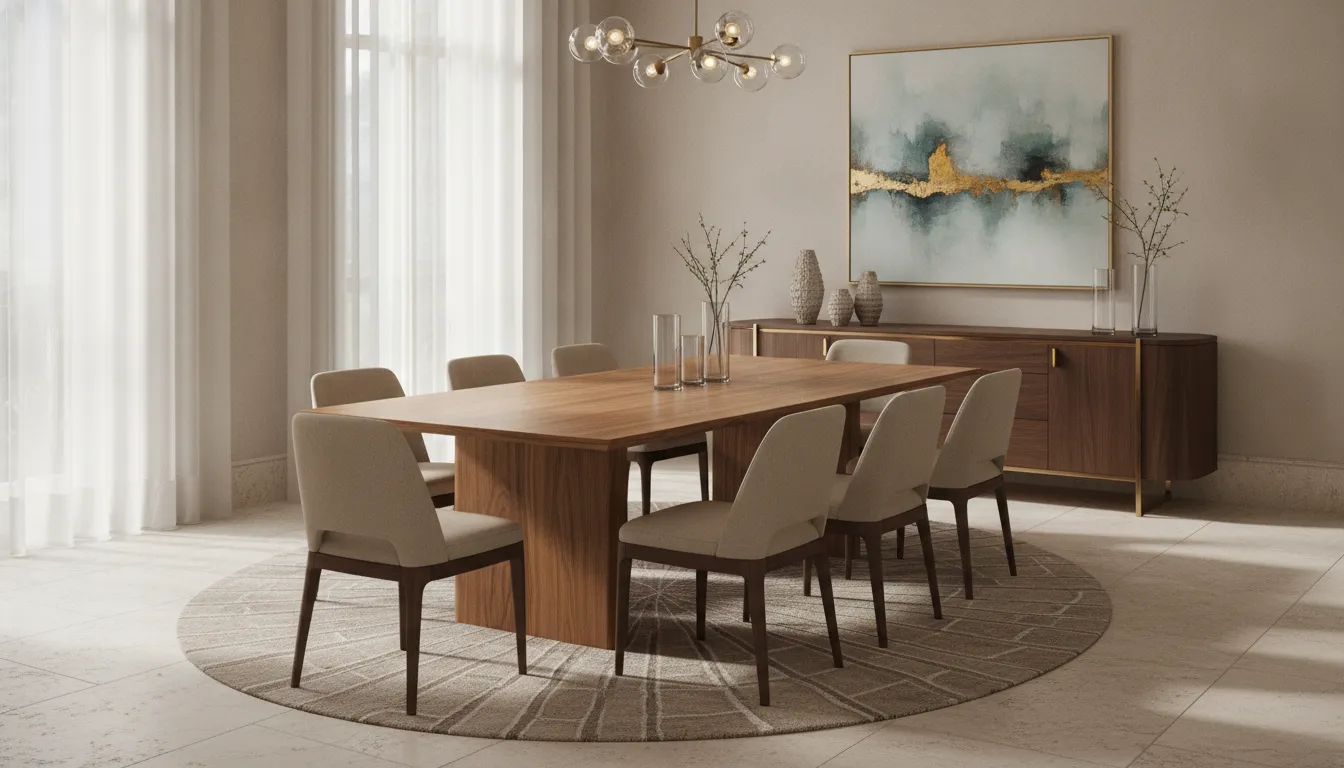
Display and concealed storage create very different dining room moods. Neither is automatically better. The right choice depends on what you own, how tidy you want the room to feel, and whether the cabinet should act as a quiet backdrop or a visible focal point.
| Storage style | Best for | Design watchout |
|---|---|---|
| Display storage | Glassware, ceramics, art objects, and curated collections. | Needs careful styling so shelves do not feel busy. |
| Concealed storage | Linens, serving pieces, extra dishes, and less decorative items. | Large solid fronts can feel heavy in a small room. |
| Hybrid storage | Homes that need both beauty and daily practicality. | Works best when the display area stays edited. |
Display storage is strongest when your pieces are part of the room's visual story. Tinted glass, open niches, and lit compartments can make everyday items feel curated. This works beautifully in contemporary rooms where ceramics, glass, or sculpture add texture.
Concealed storage is the safer choice when you need the buffet to reduce visual noise. It hides mismatched serving pieces and keeps practical items within reach. For families or frequent hosts, closed doors can make a dining room look composed in minutes.
Finish selection determines whether the buffet feels integrated or isolated. Look at the dining table, chairs, lighting, flooring, and nearby living room pieces before choosing wood, lacquer, stone, glass, or metal.
Wood does not have to match perfectly, but undertones should make sense together. Warm walnut, oak, or smoked finishes often pair well with creamy upholstery and bronze accents. Cooler woods can feel clean and architectural with glass, chrome, or black metal.
If the dining table is already bold, choose a quieter buffet. If the table is simple, the buffet can carry more texture. The best rooms avoid looking like a showroom set while still feeling intentional.
Lacquer, glass, and mirrored finishes can brighten a room and add a modern Italian edge. They are useful when the dining table is matte or the room needs more light. Just consider daily use. High gloss surfaces can show fingerprints more easily than textured wood.
Stone tops can add weight and luxury, especially in larger rooms. Metal legs or details can connect the sideboard to dining chairs, chandeliers, or cabinet hardware. This creates a quiet thread through the space.
Pairing a sideboard with European dining furniture is about proportion, shape, material, and rhythm. The sideboard should support the table and chairs rather than compete with them.
If your table has rounded edges, a sideboard with softened corners can feel natural. If the table is angular, a clean-lined cabinet may look more intentional. You can also repeat materials, such as a metal leg detail, a similar wood tone, or a shared stone accent.
EuroHome Interiors organizes dining pieces within the dining room furniture category so clients can compare tables, chairs, and storage together. Viewing these pieces as a group helps the final room feel cohesive.
A sideboard top should not become a clutter zone. Treat it as a designed surface. A lamp, sculptural bowl, framed art, or tray can make the piece feel finished. During gatherings, the same surface can become a clean serving area.
Lighting above or beside the buffet also matters. Wall sconces, a mirror, or art can turn the cabinet into an elegant dining room focal point. Keep accessories edited so the furniture remains the main statement.
The most common mistakes come from buying for appearance before function. A sideboard may look perfect online but still fail the room if the scale, finish, or interior layout is wrong.
Depth is easy to overlook. A deep cabinet can offer more storage, but it can also crowd chairs and walkways. In a smaller room, a slimmer profile often feels more luxurious because it preserves comfort.
For a polished room, variation matters. Do not repeat one finish, one material, or one design move so often that the dining room feels flat. Compare European buffet styles, individual products, and design services instead of focusing on one phrase or one look.
Luxury storage pieces can be heavy, wide, or delicate. Confirm doorway clearances, stair turns, elevator access, and installation needs before ordering. EuroHome Interiors supports clients with delivery options and white-glove service, which helps protect both the furniture and the home.
Visit EuroHome's design center to plan your dining room storage with expert guidance
A sideboard and a buffet are closely related. Both are low storage pieces used for dining rooms, living rooms, and entertaining spaces. The word buffet is often used when the piece supports dining service, while sideboard is a broader furniture term.
Many sideboard buffets are about 30 to 36 inches tall. This makes the top comfortable for serving and keeps the piece visually connected to most dining tables. Taller cabinets can work, but they create a different presence.
Plan for about 36 inches of clearance where possible, especially between the table and the buffet. The exact need depends on chair size, room shape, and whether doors or drawers swing into the walking path.
Many luxury sideboard buffet options can be customized by finish, size, material, or storage layout. EuroHome Interiors helps clients compare European pieces and choose details that fit the room, lifestyle, and design goals.
A refined dining room depends on more than a table and chairs. The right buffet completes the room, stores what you need, and supports the way you host. Explore sideboard buffets at EuroHome, compare them with your dining table, or contact EuroHome Interiors for design guidance before you choose.

