
An Italian sofa is more than a place to sit. It is the piece that can make a living room feel tailored, relaxed, and unmistakably European from the moment someone walks in.
Looking for an Italian sofa with the right scale, comfort, and style? Shop EuroHome's living room furniture or use the design team as a guide before you choose.
In simple terms, an Italian sofa is a sofa made in the Italian design tradition: refined proportions, strong attention to materials, and a close link between modern comfort and visual elegance. A European sofa is the broader category. It can include Italian design, Scandinavian minimalism, German modular planning, French curves, and many other regional styles.
That distinction matters when you are comparing pieces online. The label "European" can signal quality and style, but it does not always tell you what the sofa will feel like in your home. The sections below explain where Italian design sits inside the larger European furniture world and how to choose with confidence.
An Italian sofa is a type of European sofa, not a separate category. The European label covers designs shaped by many regional traditions. Italian sofas form one distinct branch, often pairing a strong visual idea with skilled production, refined materials, and close attention to comfort.
Think of "European sofa" as the wider family and "Italian sofa" as one clear design lineage within it. A European sofa may reflect restrained Nordic forms, classic French details, or the practical logic found in other regional styles. Italian pieces tend to make design itself a central part of the purchase.
That focus has deep roots. The International Trade Administration describes Italy's furniture industry as a long manufacturing tradition built around innovative, well-designed products. This context helps explain why many Italian sofas balance bold ideas with careful craft, rather than choosing one over the other.
Design philosophy affects the sofa's visible proportions. An Italian sofa may use a low profile, sculpted arms, slim legs, or a broad modular shape. Other European sofas can be just as refined, but their forms depend on the region, maker, and intended room.
Materials also show the difference in emphasis. Italian designs often place leather, fine textiles, metal, wood, and precise upholstery details in full view. The material is part of the visual statement, not merely a surface. Buyers comparing upholstery can review Italian leather sofa construction before judging finish quality and upkeep needs.
The right label depends on buyer intent. Choose the broader European category when you want to compare several regional looks, comfort styles, and price points. Focus on Italian sofas when you want a piece with a clear design identity and a close link between form and craft.
This distinction also changes the shopping process. A general buying guide starts with size, layout, upholstery, and care. An Italian-versus-European comparison starts with origin and design philosophy, then asks how those traits suit the room. It helps a buyer judge what the label means, rather than treating either term as a promise of quality.
An Italian sofa is defined by more than its country of origin. It brings together skilled making, bold design ideas, fine materials, and comfort meant for daily life. The result often feels refined without becoming stiff or showy.
Italy has a long furniture-making tradition built around local centers of skill and production. The country has 13 furniture industrial districts known for innovative, well-designed products, according to the U.S. International Trade Administration. These districts help connect designers, material experts, makers, and factories.
This system supports both craft knowledge and modern production. A sofa may pair hand-finished details with precise factory methods, rather than treating craft and industry as opposites. Italy's long focus on industrial design also encourages makers to rethink shape, structure, and how people use a room.
Design innovation is part of that heritage. Since 1954, the Compasso d'Oro has honored outstanding industrial design products in Italy, as described in this Virginia Tech design history. That culture helps explain why Italian seating can look fresh while still showing close attention to detail.
There is no single Italian sofa silhouette. Many modern examples use low profiles, clean lines, broad seats, or sculpted curves to create a calm, balanced look. Others make a stronger statement through unusual forms, modular sections, or visible structural details.
Good Italian design also treats comfort as part of the form. Seat depth, cushion support, arm height, and upholstery all affect how the sofa looks and feels. This blend of ease and visual control is central to modern Italian luxury.
| Quality signal | What to look for |
|---|---|
| Proportion | Low or balanced lines that keep the room open. |
| Tailoring | Clean seams, neat upholstery, and resolved edges. |
| Comfort | Supportive cushions within a precise overall shape. |
| Flexibility | Modular or sculptural forms that still serve daily needs. |
Leather and fabric should do more than cover the frame. Their texture, drape, color, and finish help define the whole piece. Quality becomes visible in even seams, neat joins, consistent upholstery, and details that hold up under close inspection.
For leather seating, shoppers should look past a polished surface and ask about the hide, finish, frame, and care needs. Our guide to Italian leather sofa construction explains how those choices affect upkeep and long-term use. Authentic Italian character comes from the complete design, not one material or label alone.
European sofas do not follow one fixed design language. Regional traditions shape their forms, materials, comfort, and practical details. Even within one country, makers can take different approaches. Treat these labels as useful starting points, not strict rules for every sofa.
An Italian sofa often places expressive form and fine upholstery at the center of the design. Curves, tailored seams, slim profiles, and a strong visual presence are common cues. Italy also has a long furniture-making tradition built around innovation and well-designed products, according to the International Trade Administration.
Scandinavian styles often appear quieter, with clean lines, pale woods, and an emphasis on everyday ease. German designs may lean toward precise mechanisms, modular planning, and orderly construction. French sofas can favor refined proportions, graceful curves, and details that nod to older decorative traditions.
Italian designs often use sculpted forms, tailored upholstery, and a strong room-anchoring presence. Scandinavian pieces often rely on clean lines, light tones, and visual calm. German designs often support flexible planning through precise modular details. French styles may bring graceful curves and polished character into the mix.
Use those cues as a guide, then compare the real sofa in front of you. The best choice still depends on comfort, scale, materials, and how the piece supports the way you live.
These categories now overlap. A Scandinavian-inspired sofa may use a modular format, while an Italian sofa may have a restrained silhouette. Contemporary European design often mixes regional ideas while keeping close attention on proportion, materials, and daily comfort.
That overlap matters because a label alone cannot explain how a sofa will perform in your home. Compare seat depth, cushion support, upholstery, and module sizes alongside its country of origin. For changing floor plans, review how a modern Italian sofa can use separate sections without losing a cohesive look.
Start with the role the sofa must play. A statement piece can support a more sculpted Italian profile. A busy family room may call for simple care, steady support, and a flexible layout instead. Room size, traffic flow, and nearby furniture should guide the final choice.
Next, look beyond broad style terms and inspect the actual piece. Check how the frame, suspension, cushions, seams, and fabric suit regular use. If leather is part of the plan, understanding Italian leather sofa construction can help separate surface appeal from lasting quality.
The strongest choice may blend traditions rather than represent only one. Use regional cues to narrow the field, then judge each sofa by comfort, build, and fit. This approach keeps the comparison useful without turning varied European design into a set of rigid stereotypes.
Yes, an Italian sofa can be comfortable enough for daily lounging, conversation, and entertaining. The right choice depends less on its country of origin than on its seat, cushions, upholstery, and fit for your household.
Italian furniture has a long manufacturing tradition built around innovation and well-designed products, according to the International Trade Administration. In a well-chosen sofa, thoughtful design should support daily life as well as create a refined look.
Start with seat depth because it shapes how the sofa feels. A deeper seat suits relaxed lounging and taller users, while a shallower seat often makes upright sitting easier. Test whether your feet rest comfortably on the floor and whether the back cushions give enough support.
Cushion density also changes the experience. Firm foam tends to hold its shape and makes standing easier, while softer fills create a more casual sink-in feel. Ask how the cushions are built, whether covers can be removed, and how often the cushions need turning.
Modular Italian sofas can adapt to movie nights, guests, or a room that serves several roles. Separate pieces may form a compact sofa today and a larger sectional later. For layout ideas, explore how a modern Italian sofa can make better use of limited floor space.
Measure the full room, not just the open wall. Note walking paths, side tables, doors, and the view toward a television or fireplace. Also check module connections and total seat height, since a sleek profile may sit lower than expected.
Choose upholstery around how the sofa will be used. Leather offers a tailored look and can be simple to wipe clean, but its finish and feel vary. Woven fabric may feel warmer and provide more color or texture choices.
Luxury furniture still needs to work on an ordinary Tuesday. Before buying, sit in several positions and test the exact cushion and upholstery combination. If leather is under consideration, this guide to Italian leather sofa construction explains useful quality and care points.
The right choice begins with the space, not the label. Measure the room, doorways, halls, and elevator before comparing designs. Mark the planned sofa footprint with tape, then leave clear paths around it. For tighter rooms, EuroHome's guide to a design-conscious Italian sofa set offers useful sizing ideas.
Next, decide how much visual impact you want. An Italian sofa may suit a room that calls for sculpted forms, refined details, or a bold focal point. Broader European styles can range from quiet and practical to warm and traditional. That range reflects Europe's varied regional design cultures, materials, and values.
Need help comparing sofa dimensions, upholstery, and room fit? Explore EuroHome living room furniture or visit the King of Prussia design center for guided selection.
Use the same tests for every sofa on your shortlist. Italy has a long furniture-making tradition shaped by innovative, well-designed products, according to the International Trade Administration. Still, a country of origin alone does not prove that one sofa fits your home better.
For a busy family room, comfort and care needs may matter more than a dramatic shape. Ask for material samples and view them in your home's daylight. If leather is on your shortlist, the guide to Italian leather sofa construction explains quality, upkeep, and durability considerations.
Compare value by looking beyond the initial price. A strong candidate should fit the room, support daily habits, and remain useful as the space changes. Custom modules may help with an unusual layout, while a fixed sofa can keep the plan simple. Confirm what is included, what costs extra, and which choices cannot be changed after ordering.
Bring all findings into one short comparison sheet. Record dimensions, comfort notes, material care, custom options, delivery details, warranty terms, and total cost. This makes the choice easier when two sofas look equally appealing. It also gives a design advisor clear facts for checking scale, color, and placement.
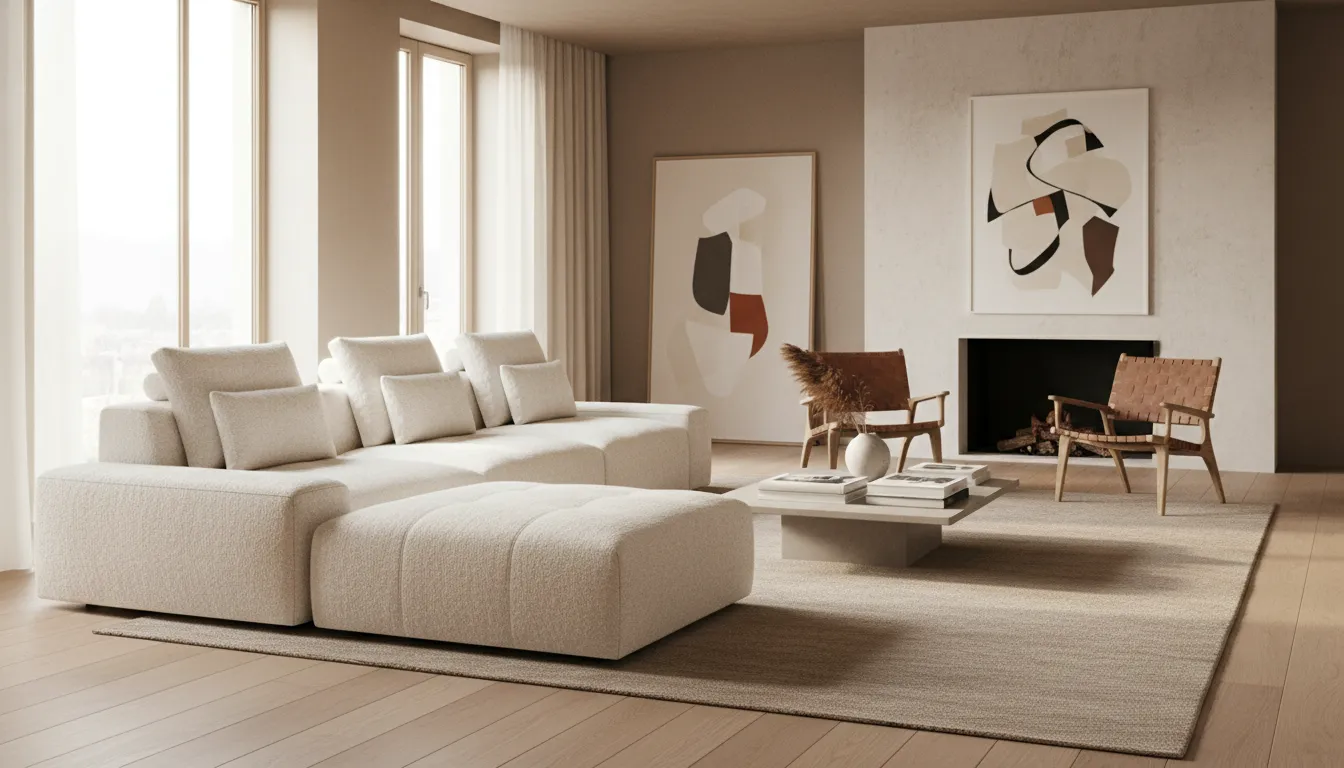
Start with documentation, not a country-of-origin label alone. Italy has a long furniture-making tradition built around industrial districts known for innovative, well-designed products, according to the International Trade Administration. Still, each sofa deserves a close review. Ask the retailer where the piece was designed, made, and upholstered.
Request the maker's name, designer attribution, model number, and material specifications. These details should be clear and consistent across the label, invoice, and product literature. Vague answers do not prove poor quality, but they make authenticity harder to assess.
A quality frame should feel rigid when you sit, shift, or press on an arm. Listen for creaks and check whether the sofa rocks on a level floor. Ask what supports the seat and how damaged parts can be replaced. A seller should explain the frame and suspension without relying on broad terms such as premium construction.
Good proportions serve both the room and the person using the sofa. Measure doorways, lifts, and the planned floor area before ordering. For tighter rooms, review this guide to choosing a design-conscious Italian sofa set.
Look closely at seams, piping, corners, and the back panel. Stitching should follow the sofa's lines without loose thread, sudden curves, or puckered fabric. Patterned upholstery should meet neatly at visible joins. On leather, ask for the leather type, finish, care needs, and covered surfaces.
Press the cushions, then watch how they recover. Removable cushions should fit their spaces neatly and stay level. Check hidden areas beneath cushions and behind the sofa, since careful finishing there can reveal the maker's attention to detail.
Customization can help verify that a sofa comes through an established production process. Ask which sizes, modules, fabrics, leathers, feet, and finishes are available. Then request samples and written confirmation of every choice. Make sure the final order lists those details rather than a general model name.
Before buying, read the warranty and service terms. Ask who handles delivery damage, repairs, replacement covers, and spare components. Confirm whether service is local and what proof a claim requires. Clear answers matter because long-term value depends on both the sofa and the support behind it.
An Italian sofa is a sofa shaped by Italy's furniture design tradition, often with refined proportions, careful tailoring, premium upholstery, and a clear balance of comfort and style. It may be sleek and modern, soft and sculptural, or modular, but the common thread is design intent.
Italian sofa design is known for clean lines, elegant silhouettes, strong material choices, and a close link between craft and innovation. Many designs feel polished without looking stiff, which is why Italian sofas work well in luxury contemporary living rooms.
Yes, many Italian sofas are made for daily use, not just display. Comfort depends on seat depth, cushion support, upholstery, frame quality, and the way the sofa fits your room. Always compare measurements and sit style before choosing.
An Italian sofa is one type of European sofa. Italian designs often lean toward sculptural form, luxury materials, and fashion-like refinement. Other European styles may focus more on minimalism, modular engineering, rustic warmth, or classic ornament.
Look for balanced proportions, neat stitching, strong frame construction, supportive cushions, quality leather or fabric, and clear product details. A good retailer should also help you compare scale, configuration, care needs, and customization options.
Waiting to compare your options can leave you settling for a sofa that looks appealing but does not support your space, comfort, or routine. Starting now gives you time to study proportions, materials, construction, and design details before making a choice meant to serve your home for years. A thoughtful review also helps you separate the Italian features you value from the wider range of European styles available.
Ready to narrow the choices with confidence? Explore EuroHome's curated seating, compare designs at your own pace, and identify options that fit how you live. Then shop living room furniture or contact EuroHome for design guidance before uncertainty delays a decision you can begin making today.

