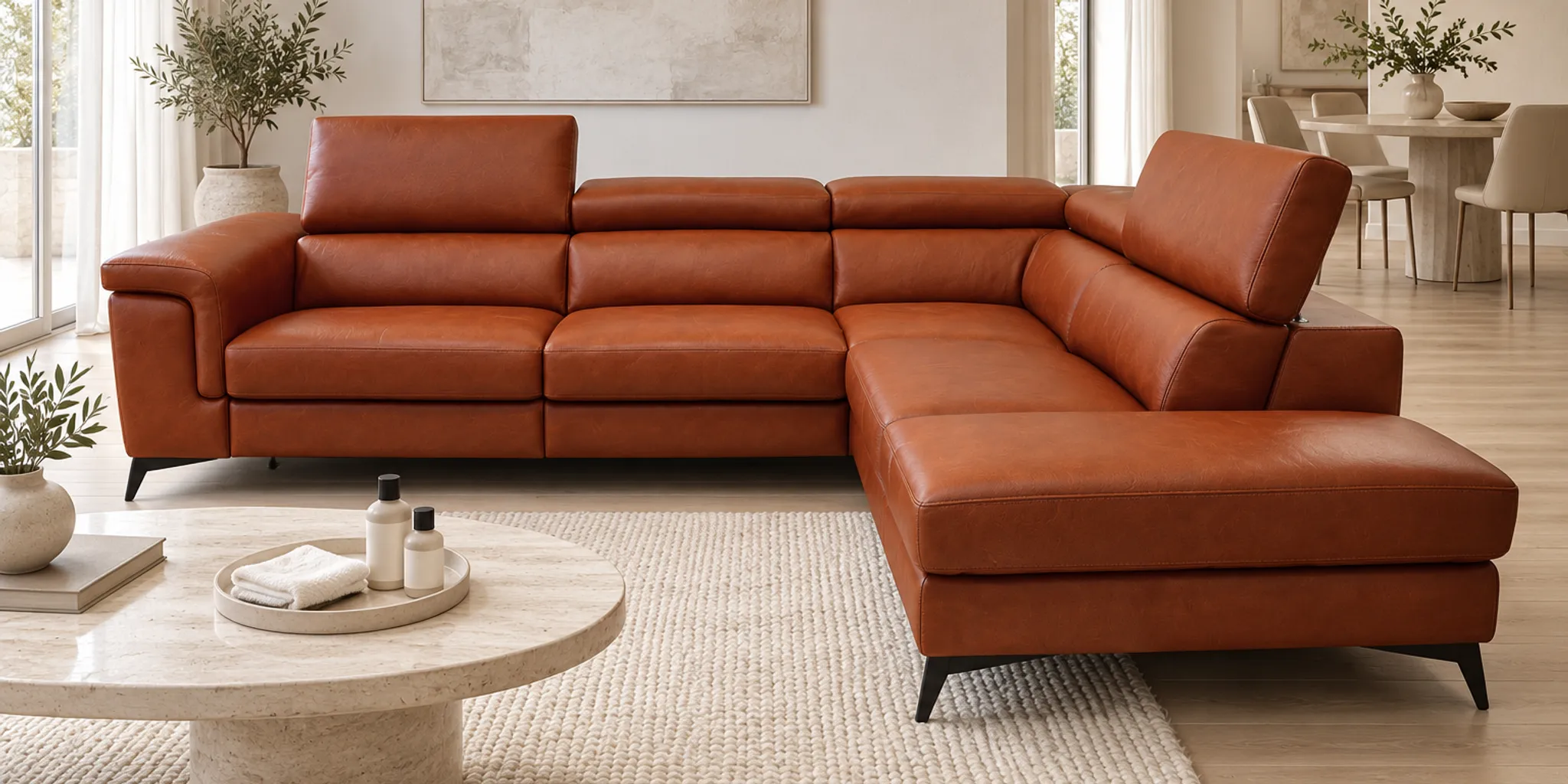
Italian leather furniture care is less about frequent treatment and more about matching simple habits to the leather finish, the room, and the way a piece is used. A dining chair, a bedroom bench, and a living-room armchair face different kinds of contact, but all benefit from gentle cleaning, prompt attention to spills, and protection from harsh conditions. Always begin with the care instructions supplied for your specific piece, since leather types and finishes do not all respond the same way.
Start a design conversation about leather furniture
Leather care means removing ordinary dust and soil without stripping or damaging the surface, responding thoughtfully to spills, and keeping furniture in an environment that suits its materials. It does not mean applying conditioner or cleaner on a fixed schedule regardless of the product. A protective coating, dye, texture, or finish can change which products are appropriate.
That distinction matters when shopping for European furniture. “Italian leather” describes an origin or design association, not one universal surface treatment. Different pieces may use different leathers and finishes. Before cleaning, find the product’s care card or ask the retailer or manufacturer what the leather is and what products are approved. If the information is unavailable, avoid experimenting with household cleaners, oils, or improvised remedies.
Think of care in three layers:
For most rooms, a soft, clean cloth is enough to lift surface dust. Use a dry cloth first. If the care instructions allow a slightly damp cloth for a particular surface, wring it out well and follow with a clean, dry cloth. Do not soak the leather or scrub it. A vacuum with a soft brush attachment can help remove crumbs from seams, but keep the nozzle from scraping the surface.
Look over the parts people touch most: seat fronts, arm tops, headrests, and handles. These areas collect body oils and everyday soil faster than the back of a chair or a cabinet-facing side. Gentle, regular dusting helps you notice a fresh mark early, when it may be easier to address using the maker’s instructions.
For more than a light dusting, use a cleaner only if the manufacturer says it is suitable for that exact leather. Read the label and care instructions together. If a product is approved, follow its directions and test it in a hidden area first. Let the test area dry fully before deciding whether the finish or color has changed. Do not assume that a product labeled “leather” is right for every leather surface.
Living-room seating gets repeated contact, snacks, and shifting light. Dust the seat, arms, and back regularly, and check seams for crumbs. Keep a leather chair or sofa far enough from radiators, fireplaces, and heating vents to avoid concentrated heat. Window coverings can help manage strong sunlight, while thoughtful placement preserves the room’s comfort and keeps the furniture from becoming the hottest spot in the room.
Coordinate care with the rest of the room rather than isolating leather as a special, untouchable material. A leather lounge chair can sit comfortably beside soft upholstery, a textured rug, and warm wood. For ideas on balancing seating and other pieces, explore EuroHome’s living-room collection and lounge chairs.
Dining chairs and benches encounter crumbs, splashes, and repeated movement. Brush away dry crumbs without grinding them in. If a spill happens, gently blot excess liquid with a clean, absorbent cloth; do not rub, which may spread the mark or work it deeper into the surface. Then follow the furniture’s care instructions. Avoid applying heat to speed drying.
Make cleanup easier by keeping a clean cloth nearby, not by keeping a general-purpose cleaner within reach. If you are planning a dining area, consider how chair upholstery, table placement, and everyday routines work together. EuroHome’s dining chair selection and dining tables offer starting points for coordinating those choices.
A leather headboard, bench, or accent chair may collect dust even when it sees less traffic than living-room seating. Dust its exposed surfaces during routine room cleaning. Keep lotions, cosmetics, and hair products from contacting leather where possible, and avoid resting damp clothing or towels on it. If a spot appears, check the care guide before treating it.
Bedroom furniture works best when it feels composed rather than overly matched. Pair a leather accent with a bed, nightstands, and textiles in complementary tones and textures. Browse bedroom furniture to see how different pieces can contribute to a cohesive room.
A leather desk chair or occasional seat may be used for long stretches. Check the seat and arm areas for wear, and keep sharp objects, rough-edged accessories, and abrasive clothing from repeatedly scraping the surface. If the chair sits near a bright window, adjust its position or manage the light rather than relying on a coating or treatment to compensate.
Room layout is part of furniture care. Allow enough clearance to move around a chair without catching it on desk corners or other hard surfaces. If you are planning a larger update, the EuroHome Design Center can be a place to discuss how furniture, placement, and finishes work together.
Start with the least intervention. This comparison is a decision aid, not a substitute for the instructions for your specific furniture.
| Situation | First step | What to avoid | Next decision |
|---|---|---|---|
| Loose dust or crumbs | Use a soft, dry cloth or soft brush attachment carefully. | Rough cloths, abrasive brushes, and pressing debris into seams. | Repeat as needed; inspect the surface for marks. |
| Small fresh liquid spill | Blot gently with a clean, absorbent cloth. | Rubbing, soaking, hair dryers, or direct heat. | Check the product care instructions before any further cleaning. |
| Unknown mark or residue | Identify the substance if possible and consult the care guide. | Solvents, household sprays, soap, or stain removers unless approved. | Ask the maker or a qualified leather-care professional if uncertain. |
| Routine deeper cleaning | Confirm the exact leather type and approved cleaner. | Assuming all leather cleaners, conditioners, or wipes are interchangeable. | Test discreetly and follow label and manufacturer directions. |
For an ordinary small spill, blot rather than rub, and let the surface dry naturally in a suitable room. Do not place the piece in direct sun or next to a heater to make it dry faster. A local government guide on salvaging personal belongings similarly advises that leather goods should dry away from heat and sun, and recommends wiping leather with a damp cloth followed by a dry cloth in its specific post-fire salvage context: Frederick County’s salvage guidance. That guidance is not a product-specific furniture-care standard, so follow your furniture maker’s directions first.
If a large amount of liquid has soaked in, or the furniture was exposed to flooding, fire, or an unknown substance, stop before applying a cleaner or conditioner. Contact the manufacturer or a qualified professional for advice suited to that material and situation. Avoid promises that a home remedy will restore the original finish.
These habits are practical, not a guarantee against normal changes in appearance. Leather is a material that responds to use, light, and its environment. Ask about expected characteristics and care before buying, especially if a particular color or finish is important to your room.
A small, consistent routine is easier to follow than an elaborate treatment plan. Keep a soft, clean cloth in a nearby drawer or cabinet, along with the furniture’s care instructions. Do not store liquids or cleaners on the furniture itself, where a leak or accidental spill could create a new problem. When you dust the room, take a moment to check exposed leather surfaces and seams.
A useful rhythm might look like this, adjusted to how much the piece is used:
This routine does not require frequent conditioning or polishing. More product is not necessarily better, and an unnecessary treatment can introduce a new substance that must then be removed. If a piece has not been used for a while, start with a careful visual check and gentle dusting; do not apply a treatment simply because it has been sitting in a room.
The appearance of a leather surface alone may not tell you how it was finished or what care it can tolerate. Some surfaces have a protective finish, while others may be more sensitive to moisture, abrasion, or cleaning products. Grain, color, and softness are not enough to identify the right cleaner. Use the item’s care card or ask the seller or manufacturer for the exact guidance.
When comparing options for a room, ask the same practical questions about each piece so you can make a fair choice:
Write down the answers and keep them with the product documents. This is especially useful when several people share the home or when you own leather pieces from different makers. One item’s care routine should not automatically become the routine for another. If you are considering a custom finish, ask for care guidance before finalizing the selection, so the look you choose also fits the way you want to use and maintain the room.
Use the care card or product documentation as your starting point. Confirm the exact leather and finish, the product type allowed, and any instructions about application or testing. If the item’s documentation names no cleaner or conditioner, ask the manufacturer or retailer before choosing one. Keep the product label and instructions for future reference.
Be cautious of broad claims such as “safe for all leather,” “restores every finish,” or “one-step protection.” A product may suit one kind of treated leather but not another surface. Do not apply wax, oil, polish, or a conditioner just because the furniture looks dry; first confirm that the treatment is appropriate. If care guidance conflicts between a product label and the furniture maker, pause and ask for clarification rather than guessing.
Care decisions begin before delivery. Ask what kind of leather and finish the piece uses, which routine cleaning method is recommended, and which products should be avoided. Request the care instructions in writing so everyone in the household can follow the same approach. For a made-to-order piece, also ask whether a different color or finish changes the care guidance.
Then consider how you actually use the room. A household that eats in the living room, hosts often, or places furniture near a sunny window may prioritize different upholstery and placement decisions than a low-traffic sitting room. Test samples in the room’s light and consider how the leather feels beside wood, textiles, and other finishes. The goal is not simply to keep a room looking pristine; it is to choose furniture that feels inviting and works with daily life.
EuroHome’s about page describes its design-led approach, and its frequently asked questions can help with general shopping questions. For delivery planning, review the delivery information and ask for details about the specific item and service.
Talk with EuroHome about your room and furniture care questions
Only if the care instructions for that particular leather allow it. Some guidance supports a lightly damp cloth for specific situations, but leather types and finishes vary. If permitted, wring the cloth well, avoid soaking the surface, and dry it gently afterward.
There is no universal schedule that applies to every leather finish. Do not condition automatically. Check the manufacturer’s care directions and use a conditioner only if it is recommended for the specific material.
Blot excess liquid gently with a clean, absorbent cloth. Do not rub or use heat to dry the spot. Once the excess is removed, follow the furniture’s instructions and ask for professional guidance if the spill is extensive or the substance is unknown.
Do not assume these products are safe for leather. Household soaps, sprays, wipes, and solvents can affect a finish. Use them only if the furniture maker explicitly approves them for that leather.
Where practical, reduce prolonged direct sun with placement or window coverings. Avoid moving the chair close to a radiator or heater instead, since concentrated heat is also a concern. Follow any location-specific advice from the manufacturer.
Good Italian leather furniture care is a set of calm, repeatable choices: know the finish, dust gently, respond to spills without scrubbing, and avoid unnecessary products or harsh drying. Pair that routine with thoughtful placement and a room design that supports how you live. When the care guidance is clear before purchase, leather can feel like a welcoming, practical part of a warm and personal home.

