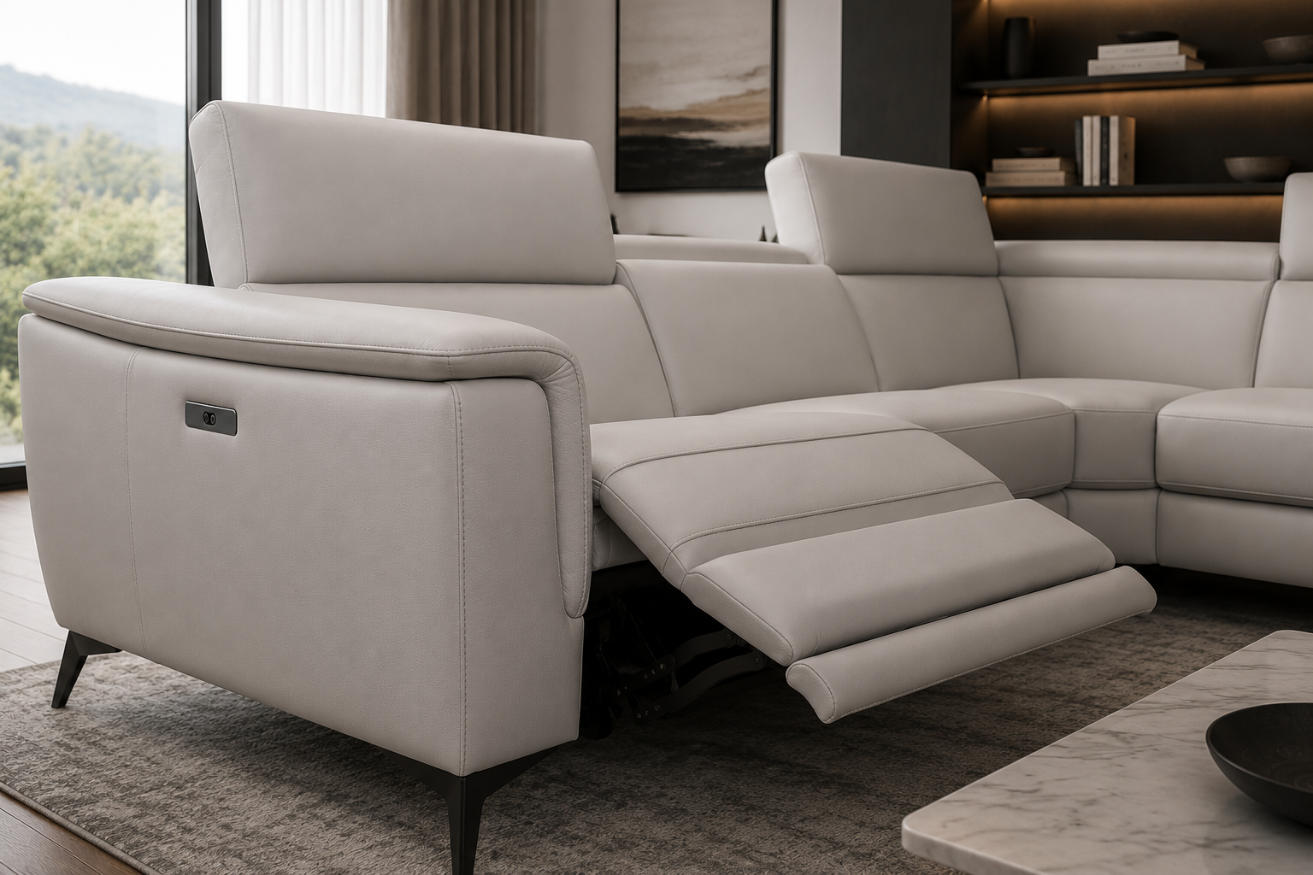
A luxury sectional sofa with chaise has to do more than look beautiful. Its depth, support, upholstery, and scale must fit daily life.
Schedule a Design Consultation with EuroHome
A luxury sectional sofa with chaise joins group seating with one extended lounge section. The right choice fits the room and supports the way you sit. It also uses top-grain leather or performance fabric suited to daily life. EuroHome's design guidance brings those decisions together through custom sizing, finish swatches, 3D visualization, and careful planning from selection through installation.
Choosing well means looking beyond the first impression. Start with layout, then compare the frame, cushion feel, upholstery, scale, and service behind the piece. That sequence makes the investment easier to judge.
A luxury sectional sofa with chaise joins several seats with one long, open-ended lounge. That extension changes the piece from simple group seating into a place for reading, resting, and hosting. To compare shapes and finishes early, browse EuroHome's Living Room Furniture collection.
A standard sofa asks each person to sit in much the same way. A chaise adds room to stretch out without using a separate ottoman. It can also give guests a relaxed corner while keeping the main seats open for conversation.
Comfort still depends on more than a deep cushion. Seat support, height, and firmness affect how the body rests over time. One study of supportive seating found differences in trunk flexion and pressure across chair designs. That finding makes a simple point: thoughtful support matters as much as appearance.
The chaise gives a sectional a strong visual direction. In an open room, it can mark the edge of a seating area without adding a wall. In a smaller room, its open side may feel lighter than another full sofa arm.
This shape also supports different ways of gathering. Some guests can sit upright, while another person can lounge without leaving the group. Clean lines and a low profile help a large piece look composed rather than crowded.
Italian and European sectionals often pair a precise shape with choices in upholstery, finish, and layout. Modular designs add another useful layer because sections can suit a new arrangement later. EuroHome's Mesatin chaise sectional shows how lounge seating and a side table can work within one plan.
That mix of comfort, flexible use, and clear design gives the sectional long-term value. The right piece can serve quiet evenings, larger gatherings, and changing room plans. Before choosing, confirm the chaise direction, overall scale, seat support, and fabric needs against daily life.
A sectional should support the way the room works before it sets the room's style. Begin with the main use, whether that is watching television, talking with guests, or serving both needs. Then map doors, windows, and the paths people take through the space.
A luxury sectional sofa with chaise has more visual weight than a standard sofa. Its chaise can guide movement, define a zone, or block a useful path. Review the whole floor plan before choosing its size and direction.
Facing direction describes the chaise side when you stand in front of the sofa and look at it. Confirm this convention with the retailer, since product descriptions may differ. Place the chaise on the quieter side of the room, away from doors and common walkways.
Use painter's tape to mark the complete footprint on the floor. Open every nearby door, cabinet, and drawer while the outline is in place. This simple test shows whether the chaise limits movement or makes a corner feel crowded.
An L-shape works well in a corner or as a soft divider in an open-plan room. It can separate a conversation area from dining space without adding a wall. A flexible chaise sectional layout also gives you more freedom when the layout changes.
A U-shape creates a strong social zone and offers seats that face one another. It needs more open floor area, so check that it does not close off the room. Aim the open side toward the main entrance to make the seating area feel welcoming.
Comfort depends on more than the plan view. Seat depth, back support, and lounge position also shape how the sectional feels in daily use. Published research on seat support shows that seating design can affect trunk flexion and pressure.
Keep the main route clear from the entry to other rooms. Do not let the chaise point into a door swing or force people around a tight corner. In an open plan, use its long edge to define the living zone while keeping sight lines open.
Check scale from several points in the room, not only from the main entrance. A taped outline or 3D plan can reveal awkward gaps before you order. Compare that plan with the dimensions of a Barbine chaise sectional to judge proportion and placement.
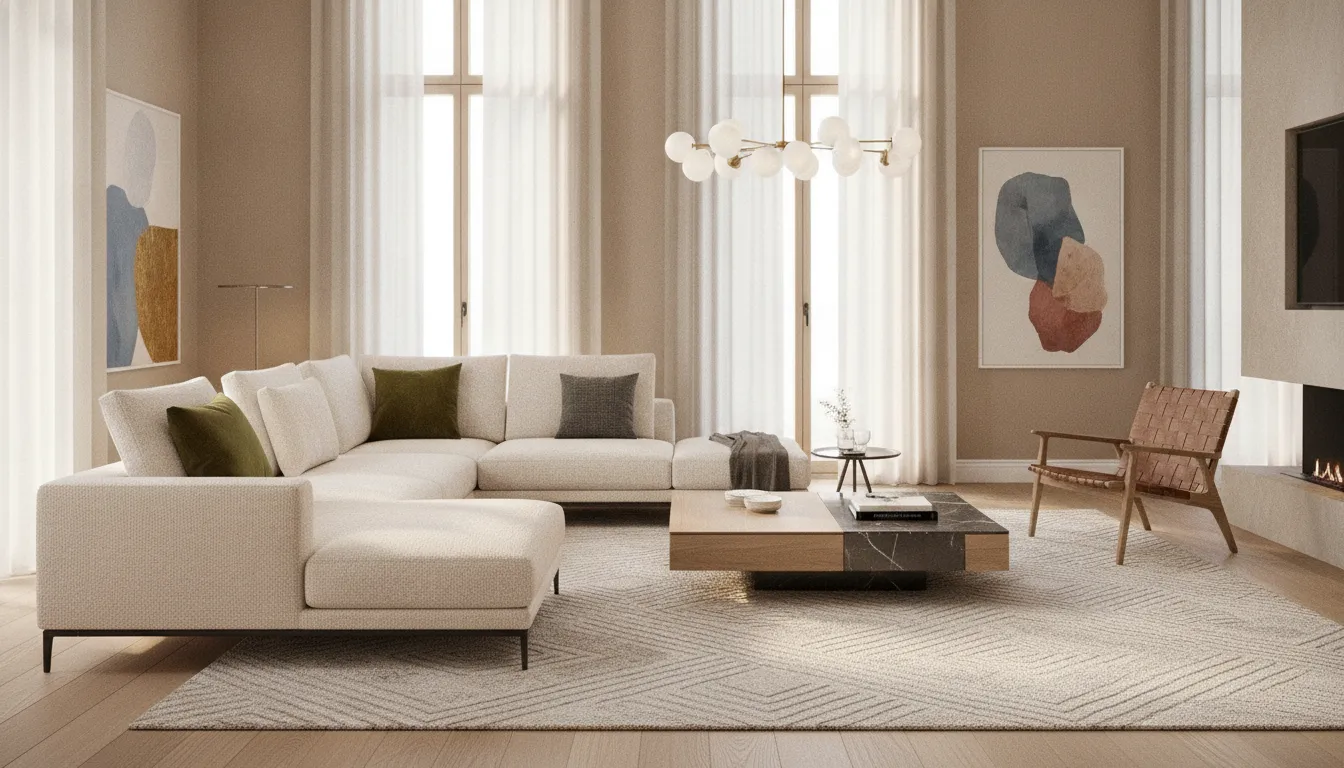
Before ordering, measure more than the open floor area. A useful plan covers the sectional footprint, daily movement, nearby furniture, personal comfort, and the full delivery path.
Start with a tape measure, painter's tape, paper, and the sectional's full dimensions. Record the room first, then build a life-size outline on the floor. Include the chaise extension and note whether it sits on the left or right.
Measure each wall, doorway, window, radiator, outlet, and fixed feature. Note ceiling height and any trim that reduces usable space.
Mark the complete sofa and chaise footprint with floor tape. Walk around it from every doorway and test each common route through the room.
Place tape where the coffee table, side tables, lamps, and other seats will sit. Check that doors, drawers, and footrests can open freely.
Compare the listed seat depth and arm height with seating you already find comfortable. Seat support can affect posture and pressure, as a study of chair support found.
Delivery path: Measure every part of the delivery path, including doors, halls, turns, stairs, and elevators. Record the narrowest width and lowest height at each point.
Final fit review: Compare all notes with the model dimensions and module list. Confirm the plan through EuroHome's Showroom & Consultation and request a 3D view before ordering.
Schedule a showroom consultation before you order
Floor tape shows whether a luxury sectional sofa with chaise fits, but daily use decides whether the plan works. Sit inside the taped outline and picture how each person will lounge, talk, watch television, or host guests. Make sure the chaise does not cut across the room's main route.
Test the coffee table position from each seat. It should feel easy to reach without crowding knees or blocking passage. If you are considering a modular seating plan, tape each module separately so you can test alternate layouts.
A sectional that fits the room may still fail at a tight stair turn or elevator door. Compare each packaged module with the narrowest delivery clearance, not just the assembled sofa size. Ask whether legs, arms, or connectors arrive detached.
Finish by giving your room sketch, photos, ceiling height, and delivery measurements to the design team. A 3D view can check scale, chaise direction, and furniture balance before commitment. Keep the final marked plan on hand for delivery and placement.
The right upholstery should fit how the room is used, not just how it looks in a showroom. Top-grain leather offers a rich hand and can develop character with use. Performance fabric may suit homes where spills, children, or pets are common. Before choosing either, ask how the material should be cleaned and what the warranty covers.
Inspect seams, welting, and patterned areas at close range. Stitching should look straight and even, with no loose threads or puckered corners. Request full care instructions and physical swatches, then view them in the room during daylight and at night. A swatch also lets you test texture against skin and see how easily lint shows.
A luxury sectional sofa with chaise should feel steady across every seat and connection point. Ask what the frame is made from, how its joints are secured, and how modular pieces lock together. Sit near the arms and joins, then listen for creaks or feel for movement. These checks matter as much as the finish.
Suspension shapes how the seat responds and supports the body. Ask whether the design uses springs, webbing, or another support system, and request an explanation of its repair options. Research on seat support and sitting comfort links supportive seating design with changes in trunk flexion and pressure. Test the chaise and standard seats because their support may feel different.
| Quality point | What to inspect | Why it matters |
|---|---|---|
| Upholstery. | Swatch, care needs, and surface consistency. | Guides look, feel, and upkeep. |
| Stitching. | Straight seams and clean corners. | Shows attention to finish. |
| Frame and joins. | Materials, joint method, and movement. | Supports the sectional as one unit. |
| Suspension. | Even response across each seat. | Shapes support and comfort. |
| Cushions. | Fill, firmness, rebound, and covers. | Affects comfort and care. |
Cushion density alone does not tell the full comfort story. Fill type, layering, seat depth, and suspension all shape how a cushion feels. Sit for several minutes instead of making a quick test. Notice whether the cushion supports you evenly, rebounds after use, and feels consistent across the sectional.
Ask whether seat and back cushions can be removed, rotated, or replaced. Removable covers can make routine care simpler, but confirm whether they are washable or require professional cleaning. Compare these details on a EuroHome modular chaise design before deciding. Clear care steps help protect the upholstery and keep the seating comfortable over time.
Choosing a luxury sectional sofa with chaise starts with more than its overall width. The right choice also accounts for how each module, finish, and seat depth supports the room's daily use. A tailored plan often makes sense when standard retail sizes leave wasted space or block a clear walking path.
Modularity gives you more control over the number, order, and direction of the seats. It can help a sectional fit an offset wall, frame a view, or adapt as the room changes. The Mesatin modular seating system from EuroHome shows how separate seating and a side table can form one planned composition.
A fixed sectional is a sound choice when its set dimensions already suit the room and your seating habits. It also removes decisions, which can make the buying process simpler. A tailored configuration is better when you need a specific chaise side, extra seat, corner angle, or end piece.
Italian design often pairs a low profile with generous lounge seating and a strong visual line. Scandinavian influence tends to favor lighter forms, useful details, and a calm sense of restraint. Either approach can look refined, but the seat must still fit the people who will use it most.
Test seat depth rather than judging it from a photo. A deeper seat supports relaxed lounging, while a shallower seat can make upright conversation easier. Research on supportive seating also links seat design with trunk position and pressure, both tied to comfort. Review the study of seat support and posture for useful context.
Customization should solve a clear design or use need. Start with the sectional's size and layout, then select upholstery, color, leg finish, and other details. This order keeps a favorite finish from distracting you from poor proportions. Physical swatches and a 3D room plan can make the final scale easier to assess.
Compare the planned layout with windows, tables, lighting, and walking paths. Leave enough visual space around the chaise so it feels intentional, not crowded. If you want a more streamlined example, EuroHome's premium European chaise sofa offers another useful reference point for comparing the form.
A chaise changes how a sectional works from morning coffee through an evening with guests. It gives one person room to stretch out while leaving upright seats open for conversation. In a family room, that mix supports reading, movies, casual work, and time together without making everyone sit the same way.
Comfort begins with choice, not just softness. Some people prefer the chaise for full-leg support, while others want an upright seat with a firm back cushion. A well-planned luxury sectional sofa with chaise gives both options within one clear, cohesive form.
Seat depth, cushion firmness, back height, and arm position all shape how a sectional feels over time. Research on supportive seating found differences in trunk flexion and gluteal pressure, showing why seat support deserves careful attention. This does not mean one design fits every body, so test several positions before choosing.
Consider who will use the room most often and how long they tend to sit. A deep chaise may suit relaxed lounging, while shallower upright seats can make conversation and standing easier. Try the seats with your feet on the floor, then stretch out to judge both modes.
During a small gathering, the chaise creates an informal end seat without closing off the group. It can also define the edge of a seating area in an open room. Keep nearby chairs angled toward the sectional so guests can see one another without turning sharply.
For larger gatherings, a adaptable sectional configuration offers more ways to adapt the layout. Separate pieces can support a wider conversation zone, then return to a relaxed family-room setup. Leave clear walking paths around the chaise so serving and movement remain easy.
Side tables also matter when people gather. Place a stable surface within reach of the chaise and the main seats for drinks, books, or a lamp. This small detail helps the room work for both quiet nights and lively visits.
A chaise sectional can suit a formal living room when its comfort features stay visually controlled. Look for balanced proportions, tailored seams, consistent cushion lines, and upholstery that suits the room's level of use. Low arms and slim legs can make generous seating feel lighter.
Use textiles and accents to connect the sectional with the rest of the space. A restrained rug, sculptural table, and focused lighting can frame a luxury sectional sofa with chaise without making the room feel crowded. The goal is a polished setting that still invites people to sit, stretch out, and stay awhile.
The purchase price matters, but it does not show the full value of a luxury sectional sofa with chaise. Frame construction, upholstery, cushion support, and finish quality all shape how well the piece handles daily use. Research shows that seat support can affect trunk position and pressure, which are key parts of long-term comfort. A study of supportive seating offers useful context for judging comfort by more than softness.
Accurate scale matters just as much as craftsmanship. A sectional that crowds a walkway or puts the chaise on the wrong side may lead to an early replacement. Review exact dimensions, map the footprint, and check doorways before ordering. EuroHome uses 3D space planning and physical finish swatches to help clients test proportion, color, and material before they commit.
Customization has value when it solves a clear need. A different chaise side, module count, seat depth, or fabric can make one design fit the room and household better. Modular pieces may also adapt more easily if the layout changes. The customizable chaise arrangement shows how separate seating units and a side table can form one planned arrangement.
Delivery and installation belong in the value calculation too. Large sections can be hard to move, assemble, and place without damage. White-glove service within EuroHome's service area includes placement, assembly, and packaging removal. That support reduces guesswork between the showroom decision and the finished room.
EuroHome's general sectional range runs from about $2,500 to $7,000 in the upper-mid tier. Luxury options may exceed $12,000. These figures are planning ranges, not quotes. Final pricing depends on the model, size, upholstery, finish, and custom choices. Transparent pricing should make those differences clear before an order moves ahead.
A larger investment makes sense when the sectional will serve as the room's main seat for years. It is also easier to justify when customization fixes a hard layout issue or supports frequent hosting. Compare the cost against likely use, fit, service, and the risk of buying twice. Before deciding, a showroom consultation can help confirm scale, comfort, materials, and the full project cost.
Measure the room, doorways, hallways, and elevator before comparing couch dimensions. Mark the proposed footprint on the floor, then allow clear paths around it. Match the layout to daily use, whether that means conversation, entertaining, or lounging. Also test seat height and depth, since properly matched furniture dimensions can support comfort and reduce strain, according to ergonomics research.
European style alone does not guarantee durability. Look for a sturdy frame, reinforced joints, resilient cushion cores, and upholstery suited to the household. Ask how the frame is built, whether cushion covers are removable, and which parts can be replaced. A well-made couch also needs routine care, including prompt spill cleanup, cushion rotation, and protection from direct sunlight.
High-end European couches often combine top-grain leather or performance fabric with resilient foam, supportive webbing, and a strong wood or metal frame. Details may include tailored seams, precisely fitted upholstery, and exposed wood finishes. Material quality should be judged by its grade, construction, care needs, and suitability for daily use, not by appearance alone.
A modular sofa is a seating system made from separate sections that connect into different arrangements. Common modules include armless seats, corners, chaises, and ottomans. This format can adapt when a room layout or seating need changes. Before buying, confirm how sections connect, whether additional modules will remain available, and whether every planned arrangement fits the room.
A chaise is the extended lounge seat that lets one person stretch out. A sectional is the full seating system made from connected sofa sections. A luxury sectional sofa with chaise combines both ideas: group seating plus one extended lounge section. That combination works best when the chaise side, total width, seat depth, and walking paths are planned together.
Waiting too long to choose a couch can leave your living room unfinished. It can also make rushed compromises more likely when appealing options demand careful comparison. Starting now gives you time to compare proportions, comfort, materials, silhouettes, and finishes before deciding what truly fits your home and daily life. With a clear plan and expert design guidance, you can choose a European couch that supports your style, available space, comfort preferences, and long-term needs.
Contact EuroHome for design guidance
Explore European living room furniture with practical help based on your space, preferences, and priorities.

