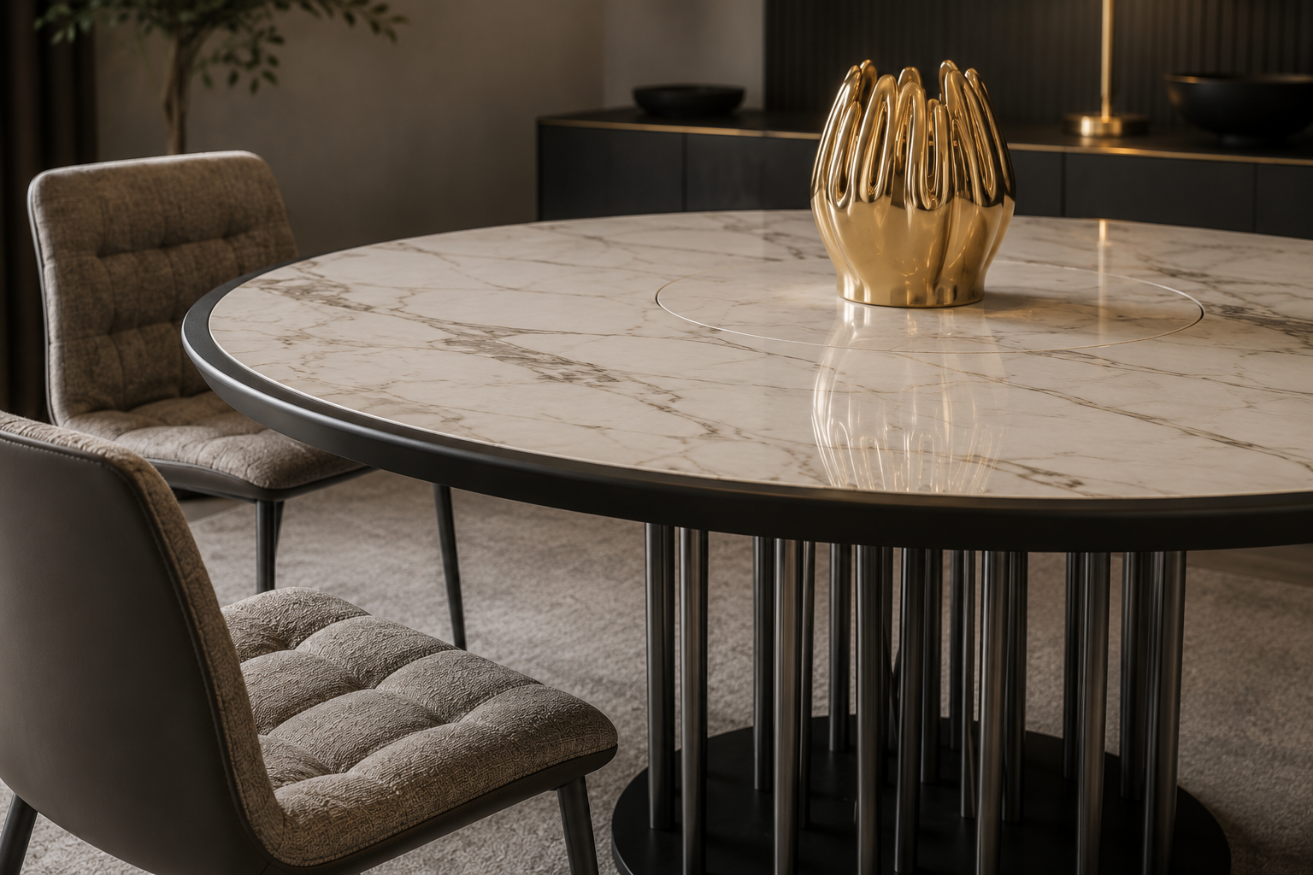
The right dining table makes every guest feel considered before the first course arrives. It also sets the room's rhythm long after dinner ends with ease.
A european dining table combines refined design, practical proportions, and enduring materials for daily meals and memorable gatherings. Modern choices include warm wood, clear glass, ceramic, and porcelain stoneware in round, oval, or rectangular forms, with many designs made to order. Extendable mechanisms add guest seating without leaving the room crowded every day, supporting both casual dinners and larger gatherings with flexible function. EuroHome's Eating Collection illustrates how Italian, European, and contemporary tables can serve as the room's central anchor for a cohesive interior. Measure your space, preserve comfortable circulation, then compare closed and extended seating capacity, finishes, base positions, extension operation, and chair clearance before deciding.
Before comparing materials or mechanisms, the essential question is how the table will shape movement, conversation, and every shared occasion. How a european dining table anchors the room is the first design decision, because scale and placement guide every choice that follows. Here is how.
A european dining table does more than fill an open area. It sets the room's visual center and shapes how guests gather, move, and talk. Its form also gives nearby chairs, lighting, rugs, and storage pieces a clear point of reference.
The anchor role starts with presence. A sculptural base can draw the eye, while a slim top can keep a compact room feeling open. Round tables support an easy flow of conversation, while long rectangular forms create a strong line through larger entertaining spaces.
Dimensions still matter, but they should not make the whole decision. A table may fit the floor plan yet feel too light, too formal, or out of step with the room. Design-led selection considers proportion, material, finish, shape, and the mood of the full space.
Start by deciding what the table should do within the room. It may need to frame a pendant light, balance a sideboard, or create contrast against soft seating nearby. EuroHome's Eating collection brings Italian, European, and contemporary forms together for this broader view of the space.
Material changes how the anchor feels. Glass can reduce visual weight, while wood adds warmth and a more grounded presence. Ceramic and porcelain stoneware can bring a crisp surface and a distinct pattern. The right choice should relate to the room without making every finish match.
Function is part of the design language as well. An extendable top lets the setting shift from daily meals to larger gatherings without losing its core role. Chair scale deserves equal care because a proper chair-to-table height supports comfortable posture during longer meals, as ergonomics research explains.
A thoughtful plan also accounts for movement around the table, views from nearby rooms, and how the setting changes when guests arrive. The table should feel intentional from every common sightline, not only when viewed straight on. This approach helps connect beauty, comfort, and use in one focal piece.
For made-to-order pieces, finish swatches and visual plans can clarify how scale and material will read before an order is placed. EuroHome's design guidance considers the table with chairs, lighting, storage, and delivery needs. That wider lens helps the dining area work as a complete entertaining space.
The best top for a European dining table depends on how the room looks, how often it hosts guests, and how much care feels practical. Glass, ceramic, porcelain stoneware, and wood each bring a distinct balance of visual weight, daily upkeep, and warmth.
Material is only one part of the decision. The top must also suit the base, chairs, lighting, and room proportions. EuroHome's Eating Collection shows how Italian, European, and contemporary tables pair refined materials with useful forms.
A formal dining room may favor presence and rich texture. An open-plan space may need a lighter look and an easy surface for frequent meals. Use this comparison as a starting point, then review the actual finish and edge detail.
| Top material. | Durability and care. | Visual weight. | Hosting style. |
|---|---|---|---|
| Glass. | Shows marks; needs regular wiping. | Light and open. | Ideal for bright, social spaces. |
| Ceramic. | Practical for frequent use. | Sleek and refined. | Suits relaxed or formal meals. |
| Porcelain stoneware. | Low-fuss surface for busy rooms. | Substantial, often stone-like. | Strong fit for frequent entertaining. |
| Wood. | Rewards routine, material-specific care. | Warm and grounded. | Inviting for long dinners. |
Glass keeps sightlines open, so it can help a sculptural base stand out without making the room feel crowded. It suits hosts who enjoy a crisp setting and do not mind wiping fingerprints after meals.
Ceramic offers a clean, modern expression with enough visual depth to anchor a dining zone. Porcelain stoneware gives a similar design-led effect, often with a stronger stone-like presence. Both suit households seeking an elegant surface that feels practical for regular hosting.
Wood brings grain, warmth, and a softer sense of formality. It can balance cool metals, pale floors, or sharp architectural lines. Owners should follow finish-specific guidance when they care for a dining table, since daily habits affect how a natural surface ages.
Begin with the room's mood and your normal guest list. Choose glass when openness matters most, ceramic for polished versatility, porcelain stoneware for a grounded modern look, or wood for lasting warmth. Then compare finish samples in the room's daytime and evening light.
Also check how the top works with the selected chairs. Table height and chair dimensions shape comfort during long dinners. Research on furniture ergonomics supports matching furniture dimensions to the user's body dimensions, so comfort should carry as much weight as appearance.
Finally, test the full composition before ordering. Review the table at its standard and extended size, allow clear paths around the chairs, and consider where serving pieces will sit. A well-chosen material should support daily meals while giving special gatherings an assured setting.
Choose a dining table by planning around the room, the chairs, and the way you host. A table can fit on paper yet feel crowded once chairs move and guests arrive. Begin with the full dining area, not with a preferred tabletop length.
Measure the room from wall to wall, then note doors, windows, radiators, cabinets, and nearby walkways. Mark the proposed tabletop on the floor with removable tape. Next, pull a dining chair away from that outline and walk behind it. This simple test shows whether the layout supports both seated guests and normal movement.
Plan seating around real routines. A table for six may suit daily meals, while an extendable model can provide room for eight or ten when needed. For larger gatherings, consider how often every seat will be used. An extension should solve a real hosting need without making the closed table too large for the room.
Chair size matters as much as seat count. Wide upholstered chairs need more edge space than slim chairs, while armchairs may require extra clearance near the tabletop. Test the actual chair dimensions instead of relying on a general seats-per-side rule. Research on furniture ergonomics also supports matching chair and table dimensions to the people using them.
Check the base before setting the final seating plan. A central pedestal can leave the table edge open, while legs near the corners may limit chair placement. Sit in each planned position and make sure knees, chair arms, and feet do not meet the base. This step is useful for sculptural European table designs with angled supports.
Visual proportion also shapes the choice. A long rectangular table can give an open room a strong center. A round table may soften a compact or square space. Keep enough open floor visible so the dining group does not overpower nearby furniture. Browse contemporary dining table options to compare clean-lined forms and materials.
Use a short planning checklist before ordering:
Standard sizes may not suit an unusual room, a large family, or a specific set of chairs. In those cases, custom sizing can refine length, width, finish, and seating capacity as one plan. EuroHome's design services and showroom also offer 3D views and physical finish samples. These tools help confirm scale, proportion, and material before a made-to-order piece enters production.
The right european dining table should feel balanced in both daily and expanded settings. Measure with the room in use, not empty. A careful plan protects comfortable movement while giving the table enough presence to anchor the dining area.
An extendable European dining table can make daily life simpler without giving up a composed look. Closed, it keeps the room open and well balanced. Extended, it creates more surface area for guests, serving pieces, or a longer meal.
The best choice depends on how often the table will change size and how well its mechanism fits the room. Extendable tables are a core option for homeowners who entertain, as shown among EuroHome's European dining furniture. A fixed table may still be the better answer when the room and guest count rarely change.
Start with the leaf system. Some leaves store inside the table, so they remain close at hand and protected between uses. Separate leaves need a safe storage place where heat, moisture, and pressure will not affect them. Ask to see the table both closed and fully extended.
A hidden mechanism should move with little effort and lock firmly into place. Check whether one person can open it and whether the base stays centered after extension. A sound design should also keep the top level, with no distracting gaps or movement at the joints.
Finish continuity matters most on wood, stone-look ceramic, and other patterned surfaces. Leaves may show natural shifts in grain or tone, while some designs use those shifts as a clear detail. EuroHome's guide to contemporary dining table options explains how clean lines and useful design work together.
Also plan the extended table around the chairs, not only the room outline. Chair height and table height should suit the people using them. Research on matching furniture dimensions to body dimensions supports the role of fit in seated posture and comfort. Leave enough room for chairs to move at both table sizes.
Choose a fixed table when its everyday size already suits the space, or when a single, uninterrupted top is the priority. It also makes sense when guests gather elsewhere or added seats would block circulation. For flexible rooms and frequent hosting, a well-made extension system offers useful range while preserving a refined European profile.
A contemporary European dining room can take several clear directions without losing its sense of balance. Modern Italian rooms often pair a precise silhouette with a bold base, rich finish, or sculptural detail. Scandinavian-influenced rooms use lighter woods, softer forms, and a quieter palette. Both approaches value useful design, fine materials, and visual restraint.
Organic style brings curved edges, tactile finishes, and nature-led tones into the room. A sculptural European dining table creates a stronger focal point through an expressive pedestal or an unusual top shape. These choices still feel calm when chairs, lighting, and storage use simpler forms. For more background, explore the principles behind European dining table design.
Shape should follow the room and the way people gather. A round table encourages an open flow and makes each place feel connected. It can also soften a square room or offset straight cabinetry. A rectangular table gives a longer room structure and creates a natural axis for a pendant light or sideboard.
Mixed materials help define the style without adding clutter. Wood adds warmth, while glass keeps the view open and ceramic brings a crisp, architectural surface. A table can combine these materials through its top, base, or extension leaves. The strongest choice repeats one finish elsewhere, then lets the remaining pieces provide contrast.
Chairs should support both the design and long meals. Their seat height must work with the tabletop, while the back should relate to its edge and base. Research on furniture ergonomics links matched chair and table dimensions with better posture and comfort. This makes proportion as important as color or upholstery in a finished dining room. See the ergonomic furniture research for added context.
The sideboard and lighting complete the composition. A sideboard can repeat the table finish, or it can introduce a quieter material that grounds the wall. Lighting should center on the table rather than the room alone. Its size, drop, and glow should suit the tabletop shape and keep sightlines open.
EuroHome plans these choices as one connected project, from early design through white-glove installation. The team can use finish swatches and 3D views to test scale, proportion, and material pairings before an order is placed. This process helps a round, rectangular, organic, or sculptural table belong to the broader room. The Design Center brings the table, chairs, sideboard, lighting, delivery, and installation into one plan.
Specifying a European dining table starts with the room, not a finish or a favorite silhouette. A clear process helps balance daily comfort, guest capacity, material care, and the visual weight of the table. It also gives a design team the details needed to confirm a made-to-order piece before production.
Begin with a measured floor plan and a clear account of how the dining area works each week. Then compare those needs with suitable sizes, shapes, and extension systems. Keep the plan nearby as you review each option, since small changes in size or base placement can affect chair clearance.
Measure the full room. Measure from wall to wall, then mark doors, windows, radiators, cabinetry, and main walking paths. Note the space needed around every table side, including room to pull chairs back.
Define daily and entertaining needs. Record how many people dine there most days and how often you host a larger group. An extendable model can keep the daily footprint restrained while adding useful seats for gatherings.
Select a practical material. Compare glass, ceramic or porcelain stoneware, and wood tops against your habits and preferred care routine. Review contemporary dining table options for a clearer view of how clean lines and useful materials work together.
Choose the table shape. Let room proportions, traffic flow, and seating goals guide the choice. Rectangular tables suit long rooms, while round forms can support easy movement in compact or square plans.
Coordinate the chairs. Once table dimensions are set, check seat height, width, arm height, and clearance beneath the top. Proper chair-to-table height supports comfortable posture during longer meals, according to published ergonomics research.
Review visuals and delivery. Examine physical finish swatches and a room visualization before approving the order. Then confirm the delivery route, assembly plan, placement, and final inspection process.
Treat a swatch as part of the room, rather than viewing it alone. Place it near flooring, upholstery, and other finishes at different times of day. The Design Center can also help test table proportions and chair pairings within a full dining plan.
Check chairs from every angle, including their position when someone is seated. A sculptural table base may change where each chair fits. Armchairs also need enough space beneath the top, especially when the table is not in use.
Before production begins, confirm the final dimensions, finish code, base position, extension method, and chair count in writing. Also review doorway widths, stairs, elevator limits, and the route into the dining room. Ask who will assemble, position, and inspect the table during installation.
Share any building access rules or delivery time limits early. For an extendable European dining table, ask the installer to show how the mechanism works. Confirm where leaves will be stored and how the finish should be cleaned.
A European dining table style is defined less by one shape than by a balance of refined form, useful design, and skilled craftsmanship. Modern versions often feature clean lines, sculptural bases, and mixed materials. Traditional versions may use warmer wood, richer detailing, and familiar proportions, while still reflecting the design-led approach described in EuroHome's European style furniture guide.
European dining tables are not limited to solid wood. Glass, ceramic, porcelain stoneware, and combinations of materials are also available, as outlined in EuroHome's contemporary furniture guide. Wood provides warmth and visible grain, while glass creates a lighter visual effect. Ceramic and porcelain stoneware suit crisp contemporary rooms and regular entertaining.
A traditional European dining table often emphasizes wood, familiar proportions, and detailed craftsmanship. A modern European dining table usually favors cleaner lines, restrained finishes, mixed materials, or a sculptural base. Both can offer durable construction and practical function. The better choice depends on the room's architecture, nearby furniture, and whether the table should blend quietly or serve as a focal point.
Putting off your dining table choice can delay decisions about room layout, lighting, rugs, and seating, leaving less time to prepare for future gatherings. Starting now gives you time to compare materials, confirm measurements, review extendable designs, and settle important details before an upcoming dinner adds pressure. Early planning helps you choose a table that fits your space, supports your hosting style, and works with the wider design of your dining room.
Ready to move from ideas to a dining room planned around how you live and entertain? Shop the Eating collection to explore design options for your home. Contact EuroHome for design guidance on table size, finish, seating, and a layout that works for daily meals and special gatherings.


