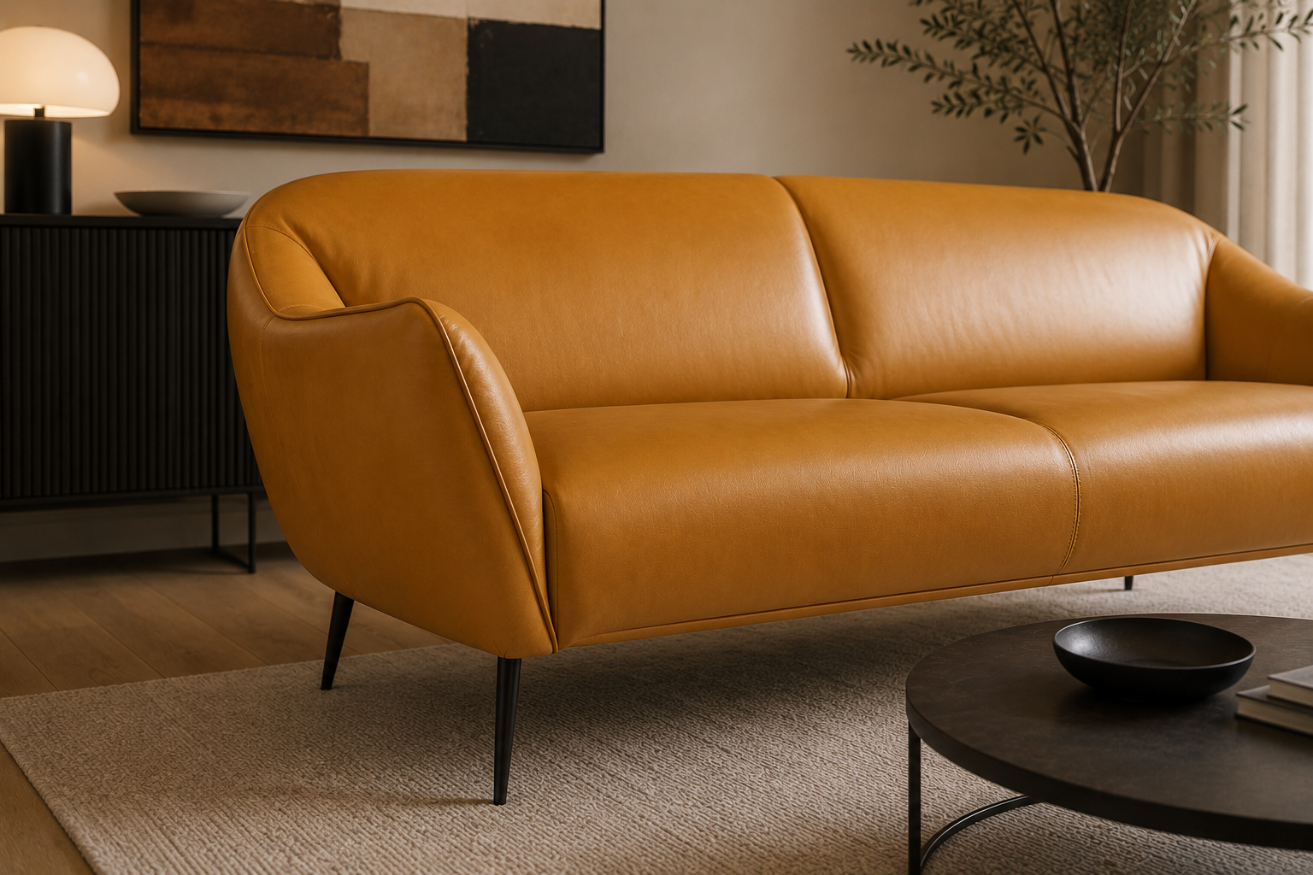
A beautiful sofa fails the moment its depth, support, or upholstery fights daily life. The best choices balance a distinctive European silhouette with materials and proportions suited to the room.
European couches are seating designs shaped by European traditions that join expressive silhouettes with thoughtful proportions, skilled construction, and lasting materials. They range from restrained Scandinavian forms to sculptural Italian sectionals, so the label describes a design approach rather than one fixed look. A sound choice fits the room, supports the way you sit, and uses top-grain leather or performance fabric suited to daily life. Comfort deserves close attention because research links mismatched furniture dimensions with musculoskeletal problems during prolonged sitting, especially when seat depth and height ignore the user's body. EuroHome's design guidance brings those decisions together through custom sizing, finish swatches, 3D visualization, and careful planning from selection through installation.
Choosing well means looking beyond the first impression to the frame, cushion feel, upholstery, scale, and service behind the piece. The first question is simple: What defines european couches? That answer gives you a clear foundation for judging comfort, quality, durability, and fit. Here is how.
European couches are best understood as a design approach, not one fixed shape. They pair clean proportions with careful construction, useful comfort, and materials chosen for lasting appeal. The category spans bold Italian forms, calm Scandinavian pieces, and modular seating made for changing rooms.
Begin by browsing EuroHome's living room furniture to compare these ideas across sofas and sectionals. Notice how each piece balances its visual profile with the way people sit, gather, and move through the room.
Design restraint gives European couches a clear visual order. Arms, legs, seams, and cushions work together instead of fighting for attention. Some pieces sit low and wide, while others use slim frames and raised legs. In both cases, each line has a purpose.
Proportion matters as much as appearance. Seat depth, back height, arm width, and overall scale shape how a couch feels in daily use. Research on furniture dimensions notes that a poor match with users can lead to musculoskeletal problems. A sound choice should fit both the room and the people using it.
Italian influence often appears through sculpted profiles, rich leather, precise tailoring, and a confident focal shape. These couches can make a strong statement without relying on excess detail. For a closer look at materials and selection points, review EuroHome's guide to modern Italian leather sectionals.
Scandinavian influence takes a quieter path. It favors simple forms, warm texture, practical comfort, and an easy link between furniture and open space. Many European couches blend both schools. A sofa may pair an expressive Italian curve with the lighter frame and calm finish tied to Nordic design.
Craftsmanship becomes visible in the details people touch and test. Look at seam alignment, cushion support, frame stability, leather quality, fabric feel, and the finish on exposed wood. Top-grain leather and performance fabrics can serve different homes well. The right option depends on use, care needs, and the desired look.
Modularity is another defining trait for shoppers who need flexibility. Separate units can form a compact sofa, an open chaise, or a larger sectional. They can also adjust as a room or household changes. This makes the layout part of the couch's function, rather than a fixed choice made once.
The term "European couches" should therefore guide more than style. It is a useful prompt to compare form, comfort, construction, materials, and future fit together. Long-term value comes from choosing a couch that remains useful and visually sound, not simply one that looks current today.
European couches range from crisp Scandinavian benches to sculptural Italian forms and flexible modular systems. The right silhouette should support the room's scale, movement, and daily use. Start with the space rather than choosing a shape from a showroom view alone.
A low-profile sofa sits close to the floor and keeps sightlines open across an open-plan living area. Its wide seat and slim base can bring visual calm without making the room feel empty. Pair it with low tables, or use a taller lamp and artwork to balance the horizontal line.
Track arms and tailored bench seats create a neat outline that suits compact rooms and formal seating zones. These shapes often reflect Scandinavian restraint. Curved backs and rounded arms add a softer, more sculptural Italian note. Our guide to contemporary design principles offers more context for mixing those clean and expressive forms.
Scale also depends on the furniture around the couch. A slim sofa can look lost beside a large media wall. An oversized sectional can crowd light chairs. Match the visual weight of each piece, not just its measured width.
A modular sectional works well when one room must support conversation, media viewing, and quiet reading. Separate pieces can define a seating zone or face more than one view. They can also adapt when a layout changes. The Abacini Sectional shows how a European modular form can pair generous seating with a low, clean profile.
Chaise sectionals suit lounging and entertaining, but the chaise must not cut through the room's main walking route. Place it along a wall or at the quiet edge of an open plan. A sleeper sofa is better when guest use matters more than flexible seating, especially in an office or smaller den.
Curved sofas can guide people toward each other and soften a room built from straight architectural lines. They need breathing room, since pushing a curved back against a wall can hide its shape. A tailored bench is easier to place when every inch must work.
Measure the sofa's full width, depth, and height. Then mark that footprint on the floor before making a choice. Leave a clear path around corners and between the couch and nearby tables. Also check doorways, stair turns, and elevator openings.
Room fit is not only visual. Research on furniture dimensions notes that a mismatch with user body measurements can contribute to musculoskeletal problems. That makes seat height, depth, and back support worth testing in person.
Deep, low seats favor relaxed lounging, while a higher seat and firmer edge make standing easier. For frequent entertaining, choose enough upright seats for guests to talk without leaning across a chaise. Open-plan rooms often benefit from modular pieces that can shift as the gathering changes.
European couches may share a clean profile, yet their materials can create distinct experiences. A tailored silhouette is surface styling. True craftsmanship appears in the frame, support system, seams, cushion recovery, and careful finish work.
Top-grain leather develops a rich patina and suits owners who value natural character. Performance fabric is easier to live with in busy homes. Wool blends offer warmth, soft texture, and a refined woven look.
Material choice should follow daily use, not color alone. Ask how each cover handles spills, sunlight, pets, and routine care. Buyers comparing modern Italian leather sectionals should also inspect grain, stitching, and panel matching.
| Material | Strength | Inspect |
|---|---|---|
| Top-grain leather. | Natural feel. | Grain and seams. |
| Performance fabric. | Easy care. | Texture and cleaning. |
| Wool blend. | Warm texture. | Fiber and weave. |
| Wood or metal support. | Stable seating. | Joinery and movement. |
| Resilient cushioning. | Shape recovery. | Density and depth. |
A strong couch starts with a sound inner structure. Look for a well-built wood frame, secure joinery, and metal support where the design needs reinforcement. Walnut or oak details should be neatly finished and aligned, not added only as decoration.
Cushions matter just as much as the frame. High-resilience cushioning should feel supportive, recover after use, and suit the intended seat depth. Fit also affects comfort, since mismatched furniture dimensions can contribute to musculoskeletal problems.
Test for quiet movement, even seams, and consistent gaps between modules. These signs reveal the care behind European couches more clearly than a dramatic shape. Ask whether covers, cushions, or support parts can be serviced later.
Direct relationships with Italian and Danish makers can open access to custom sizing, upholstery, and finishes. This sourcing model helps a couch fit the room and the design plan. It also gives buyers more control than choosing a stock color.
Review physical swatches in the room before placing an order. Leather, performance fabric, wool blends, walnut, and oak can shift under daylight and warm evening light. EuroHome's design services and showroom can pair finish samples with space planning and visualization.
Compare the full specification, not just the showroom appearance. Confirm the frame, suspension, cushion fill, upholstery grade, wood finish, and available service. That review separates a stylish couch from one built with lasting care.
A European couch should feel supportive at first contact, then remain comfortable as you settle in. The right feel depends on your body, preferred posture, and daily routine. Treat a showroom visit as a practical test rather than a quick sit.
Start with seat depth because it shapes your whole posture. Sit with your back against the cushion and place both feet on the floor. If the seat edge presses behind your knees, the seat may be too deep for upright conversation.
For lounging, a deeper seat can give your legs more room and support a relaxed pose. Test cushion density by noticing firmness, rebound, and how easily you can stand. A soft cushion may feel inviting, but it should not make movement hard.
Furniture dimensions that do not fit the user can contribute to physical strain, according to an ergonomics study. Bring each regular user to the showroom when possible. A couch that fits one person well may feel awkward to another.
Back pitch affects whether you sit upright or naturally recline. Your shoulders should relax while the back cushions support your lower back. If you must brace your core or reach backward, the angle is likely wrong for you.
Arm height also changes comfort. Low arms suit open lounging and can make a room feel less enclosed. Higher arms offer more side support, but they may interfere with reading or resting across the couch.
Compare several silhouettes before choosing among modern Italian leather sectionals or other European couches. Use the same sitting positions on each model. This makes subtle differences in pitch, cushion feel, and arm placement easier to judge.
Picture how the couch will work on a typical week. Families may need easy movement between seats and cushions that recover after frequent use. People who entertain may prefer an upright posture that helps guests face one another.
If the couch includes a sleeper mechanism, test both modes in the showroom. Open and close it yourself, then sit along the areas where the mechanism rests below. Check that the seating still feels even and that moving parts do not disrupt normal use.
Finally, stay seated longer than a brief first impression. Shift from conversation to lounging, use the arms, and try your usual reading pose. The best choice should support those real habits without forcing you into one position.
Durable European couches begin with more than a strong-looking frame. Ask how the frame is built, where it is reinforced, and how the sections connect. Then check whether the suspension and cushions can support the way your household sits, lounges, and entertains. A sound frame should remain stable during normal use, without loose joints or uneven gaps between sections.
Fit also shapes long-term comfort. Furniture dimensions that do not match the user can contribute to musculoskeletal problems, according to a peer-reviewed ergonomics study. Seat depth, back height, and cushion support should suit the people who will use the couch most.
Upholstery should reflect real use, not just showroom appeal. Top-grain leather can develop character with care, while performance fabric may suit busy homes. Before choosing either, ask about cleaning methods, light exposure, pets, spills, and the maker's care instructions. Finish samples can help you judge texture and color, but they should also guide practical care questions.
Cushion quality matters just as much as the cover. Ask what fills the cushions, whether covers are removable, and whether seat parts can be rotated. Sit in several spots and notice how quickly each cushion regains its shape after you stand. The guide to contemporary leather sectionals offers more detail for shoppers weighing leather, construction, and daily comfort.
Not sure which material or cushion feel suits your room? EuroHome's design guidance can help align finish samples, layout needs, and care expectations before an order is placed.
Long-term value comes from how well a couch fits its job over time. A formal sitting room has different demands than a family room used each day. Modular pieces may also offer flexibility when a layout changes, but connection points and moving parts still need careful review. Compare construction, care needs, and expected use together rather than judging value from style or initial cost alone.
Professional delivery and assembly can protect that investment at the start. Correct unpacking, inspection, placement, and section alignment reduce avoidable setup issues. Clear doorways and confirm access before delivery so the team can move and place each part with care. Keep all care documents after installation, and review the couch from several angles before the delivery team leaves.
Choosing among European couches starts with the room, not a favorite silhouette. A clear plan helps balance scale, daily comfort, and the restrained look common to European design. Explore EuroHome's living room furniture to compare forms after you know the space and function you need.
Measure carefully before choosing a model. Sofa dimensions should suit the people using it because a poor size match can contribute to musculoskeletal problems, according to research on furniture dimensions and ergonomics. Then map how the sofa will relate to doors, windows, tables, and other seats.
A slim European profile can still offer deep comfort, but proportions matter more than appearance alone. A tall person may need greater seat depth, while a shorter person may prefer firm support and easier floor contact. Test the exact cushion and upholstery combination when possible, since different covers can change how a seat feels.
Bring swatches home rather than judging them under showroom lighting. View each sample beside flooring, rugs, and window treatments. For busy homes, weigh stain care and wear against texture and softness. For leather, compare grain, tone variation, and the finish's expected care needs.
Before ordering, review the complete room rather than the sofa alone. Confirm side-table clearance, viewing angles, lighting, and the visual weight of nearby pieces. EuroHome's design center can help with space planning, finish samples, custom sizing, and three-dimensional views before the final choice.
Ask for written dimensions, configuration details, upholstery codes, lead-time terms, and delivery requirements. Keep the taped footprint in place for a day to catch issues that a quick measurement may miss. This final pause helps ensure the sofa works from arrival through daily use.
EuroHome serves as a design partner between early research and final installation. Its curated selection helps narrow a broad market of European couches into suitable Italian, European, modern, and contemporary options. This focused process can reduce guesswork while keeping each choice tied to the full room.
Start by sharing the room, preferred look, and how the seating will be used. EuroHome can then guide the search toward fitting forms, materials, and modular layouts. Its selection includes top-grain leather, performance fabrics, canaletto walnut, thermal oak, and other refined finishes.
Comfort depends on more than a couch's appearance. Furniture dimensions that do not suit the user can contribute to musculoskeletal problems, according to research on furniture dimensions and ergonomics. This makes seat depth, height, and support useful parts of the buying conversation.
Direct relationships with Italian and Danish manufacturers give EuroHome access to custom sizing and finishes. That support can help adapt a piece to the room instead of forcing the room around a fixed design.
Buyers can also review 3D visualizations and physical finish swatches before committing to a selection. These tools make scale, color, and material choices easier to judge together. For more detail on upholstery and construction, consult EuroHome's guide to modern Italian leather sectionals.
The buying process does not end when a couch is ordered. EuroHome's white-glove delivery covers professional assembly, unpacking, inspection, and packaging disposal. This end-to-end approach keeps design choices connected through final placement.
That role is useful for a single statement piece or a wider living room plan. Buyers comparing styles can first review contemporary design principles, then use design guidance to create a cohesive room. EuroHome fits where product knowledge, customization, and project support need to work as one.
Measure the room, doorways, hallways, and elevator before comparing couch dimensions. Mark the proposed footprint on the floor, then allow clear paths around it. Match the layout to daily use, whether that means conversation, entertaining, or lounging. Also test seat height and depth, since properly matched furniture dimensions can support comfort and reduce strain, according to ergonomics research.
European style alone does not guarantee durability. Look for a sturdy frame, reinforced joints, resilient cushion cores, and upholstery suited to the household. Ask how the frame is built, whether cushion covers are removable, and which parts can be replaced. A well-made couch also needs routine care, including prompt spill cleanup, cushion rotation, and protection from direct sunlight.
High-end European couches often combine top-grain leather or performance fabric with resilient foam, supportive webbing, and a strong wood or metal frame. Details may include tailored seams, precisely fitted upholstery, and exposed wood finishes. Material quality should be judged by its grade, construction, care needs, and suitability for daily use, not by appearance alone.
A modular sofa is a seating system made from separate sections that connect into different arrangements. Common modules include armless seats, corners, chaises, and ottomans. This format can adapt when a room layout or seating need changes. Before buying, confirm how sections connect, whether additional modules will remain available, and whether every planned arrangement fits the room.
A sleeper sofa combines everyday seating with a bed that folds or slides out when needed. It can suit a guest room, office, or smaller home where one piece must serve two purposes. Compare the open-bed footprint, mattress dimensions, operating mechanism, and seating comfort. Measure access routes carefully because sleeper mechanisms can make the couch heavier and harder to move.
Waiting too long to choose a couch can leave your living room unfinished and make rushed compromises more likely when appealing options demand careful comparison. Starting now gives you time to compare proportions, comfort, materials, silhouettes, and finishes before deciding what truly fits your home and daily life. With a clear plan and expert design guidance, you can choose a European couch that supports your style, available space, comfort preferences, and long-term needs.
Ready to make a thoughtful choice without losing more time to uncertainty or settling for a couch that feels wrong in your room? Contact EuroHome for design guidance to explore European living room furniture and request practical help based on your space, preferences, and priorities.

