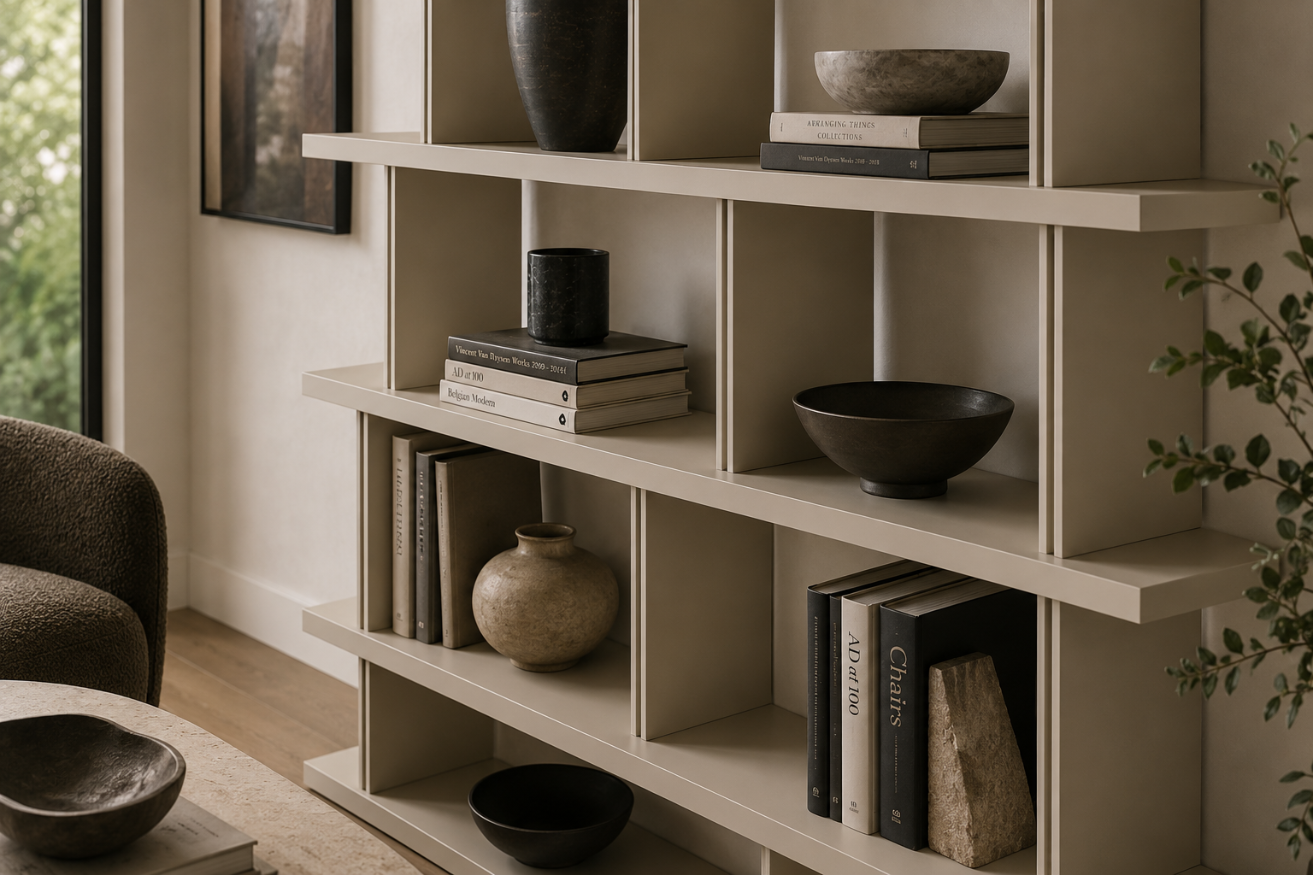
A European bookshelf can do far more than hold books. In a contemporary home, the right bookcase brings order, proportion, and architectural presence to a living room, office, dining area, or media space. It can create a focal wall, soften a minimalist room, display the pieces you love, and hide the items you use every day.
Shop EuroHome's curated European bookcase collection or visit the Design Center for guidance on scale, materials, and placement.
The best storage pieces feel intentional. They relate to the room's height, the seating plan, the finish palette, and the way people actually live in the space. This guide explains how to choose a European bookcase that supports both function and design, with practical advice on open shelving, closed storage, scale, materials, and styling.
European furniture design often treats storage as part of the room rather than an afterthought. A well-chosen bookcase can frame a wall, emphasize clean lines, and give a space a finished sense of rhythm. Instead of placing a generic unit against an empty surface, you are shaping the room with a piece that has visual weight, proportion, and purpose.
This is especially useful in open-plan homes. A tall bookshelf can visually anchor a living area without adding a full wall. A lower bookcase can define a reading corner, support artwork, or connect a seating group to the rest of the room. A modular system can stretch across a long wall and create the effect of a contemporary library.
For EuroHome clients, this architectural role matters because many homes combine modern furniture, large windows, open circulation, and carefully selected materials. A bookcase should work with those features. It should not interrupt the room. It should clarify it.
Before choosing a piece, look at the major lines in the room. Notice window heights, door frames, ceiling beams, fireplace edges, and the top line of sofas or sectionals. A refined European bookshelf often feels best when it relates to those existing lines. The eye reads the whole room as calmer when heights and proportions are considered together.
Pieces such as the Naviglia Bookcase show how strong geometry can turn storage into a design feature. The goal is not only to fill a wall. The goal is to give the wall structure.
The most successful bookcases usually balance display and concealment. Open shelving adds personality and lightness. Closed storage keeps the room organized. A hybrid bookcase gives you both, which is why many contemporary European storage systems combine shelves, doors, drawers, and asymmetrical compartments.
| Storage style | Best for | Design effect | Consideration |
|---|---|---|---|
| Open shelving | Books, art, sculpture, ceramics, framed photos | Airy, personal, layered | Requires editing so it does not feel cluttered |
| Closed storage | Documents, media equipment, games, office supplies, everyday items | Calm, clean, architectural | Too much closed storage can feel heavy without contrast |
| Hybrid systems | Rooms that need beauty and utility | Balanced, flexible, sophisticated | Works best when proportions are planned carefully |
If your room already has many decorative objects, a bookcase with more closed storage can bring quiet back into the space. If your room feels too minimal, open shelves create warmth and personality. If you entertain often, closed sections can hide serving pieces, accessories, and media items while open shelves display books, art, and collected objects.
A design-led approach avoids the common mistake of choosing a bookcase only by how much it stores. Storage capacity matters, but so does visual calm. The right mix makes the room easier to use and more enjoyable to live in.
Scale is one of the most important decisions. A bookcase that is too small can look temporary. A piece that is too large can dominate the room and make circulation feel tight. The right scale should feel confident without overwhelming the furniture around it.
Measure the wall from corner to corner, then note ceiling height, window placement, outlets, vents, and door swings. A tall unit can make a room feel more architectural, especially when it nearly reaches the ceiling. A lower unit can work beautifully under artwork, behind a sofa, or along a dining wall where full-height storage would feel too formal.
For a large room, consider a wider modular arrangement that creates a complete storage wall. For a smaller room, a slimmer vertical bookcase can add useful storage without taking over. The Osunara Bookcase is an example of a sculptural piece that can make storage feel artistic rather than purely practical.
A bookcase should not interrupt natural paths. Leave enough space for people to walk comfortably around seating, tables, and entry points. Also consider depth. A very deep case may offer more storage, but it can project too far into a narrow room. A shallower design may look more elegant and still hold the items you use most.
This is where professional space planning helps. EuroHome's design process can help you visualize whether a piece should be freestanding, wall-spanning, or placed as a sculptural accent. Planning the scale before ordering is especially important when you are choosing custom sizing, special finishes, or a full storage composition.
Material choice is where a European bookshelf often separates itself from ordinary storage. Wood, lacquer, glass, metal, and thoughtful joinery all affect how the piece feels in the room. The goal is not to choose the flashiest finish. The goal is to select materials that support the room's palette and stand up to daily use.
Walnut and oak are popular choices because they add natural texture without feeling ornate. Walnut brings depth and richness, which works well in sophisticated living rooms and studies. Oak can feel lighter and more Scandinavian, making it a strong option for airy contemporary spaces. Both can soften clean-lined furniture and make a room feel more inviting.
Quality matters. Strong shelves, refined edges, and durable finishes help the piece maintain its shape and appearance over time. A bookcase is often used every day, so it should be built for more than a quick visual impression.
Matte lacquer can create a smooth, modern surface that pairs beautifully with wood. Glass doors or shelves add lightness, especially in larger units. Metal accents can introduce crisp detail and help a bookcase relate to lighting, tables, or other hardware in the room.
Mixed-material storage works well when the finishes repeat elsewhere. A dark metal detail may connect to a floor lamp. A walnut shelf may relate to a dining table. A pale lacquer door may echo a sectional or wall color. These relationships are subtle, but they make the room feel designed rather than assembled piece by piece.
Styling should feel curated, not crowded. A European bookshelf looks best when it has breathing room. Instead of filling every inch, think of each shelf as a small composition of shape, height, color, and negative space.
Lighting can also change the effect. A nearby floor lamp, picture light, or integrated shelf lighting can make a bookcase feel warmer in the evening. If the piece sits in a media room or lounge, softer lighting helps it feel like part of the atmosphere rather than a storage zone.
Bookcases are often associated with living rooms, but they can solve storage challenges throughout the home. In a living room, a bookcase can display books, art, and collected pieces while grounding a seating arrangement. In a home office, it can organize work materials while keeping the space refined enough to share with the rest of the home.
In a dining area, a bookcase or storage wall can hold serving pieces, design books, glassware, and decorative objects. In a media room, closed compartments can conceal technology, remotes, games, and accessories. In a hallway or landing, a slender bookcase can turn an overlooked wall into a useful design moment.
The key is to match the storage plan to the room's real habits. A beautiful piece will not feel successful if it does not support daily life. Start by listing what needs to be stored, what deserves to be displayed, and what should stay hidden. Then choose the form that supports those needs with the least visual noise.
EuroHome Interiors offers a curated selection of Italian, European, and contemporary furniture for homeowners who want design, comfort, and craftsmanship in one place. The bookcase collection includes options for modern living rooms, home offices, and refined storage walls, with styles that range from sculptural to understated.
For clients who want a more complete design process, EuroHome also provides professional guidance through the Design Center. That support can include space planning, finish coordination, and help choosing pieces that fit the room's dimensions and architecture. This is especially valuable when a bookcase needs to align with seating, lighting, wall length, and the overall furniture plan.
Because EuroHome works with European manufacturers and design-forward collections, clients can explore storage that feels personal rather than generic. The result is a piece that does more than organize. It completes the room.
Ready to refine your storage? Browse EuroHome's European bookcases or contact the Design Center for help choosing the right scale, finish, and layout.
A European bookshelf usually emphasizes clean proportion, refined materials, and a close relationship between storage and room design. It is often chosen as a design feature, not only as a place to hold books.
Choose open shelving when you want display, lightness, and personality. Choose closed storage when you need to hide everyday items. For most contemporary homes, a hybrid bookcase offers the best balance.
Walnut, oak, lacquer, glass, and metal accents are common choices. The best material depends on the room's palette, how much warmth or contrast you want, and how the piece will be used.
Yes. A slim vertical bookcase or lighter open design can add storage without making a small room feel crowded. Careful depth, height, and placement are more important than choosing the largest unit possible.
Use a mix of books, art, sculptural objects, and open space. Keep the arrangement edited, repeat materials from the rest of the room, and avoid filling every shelf completely.

