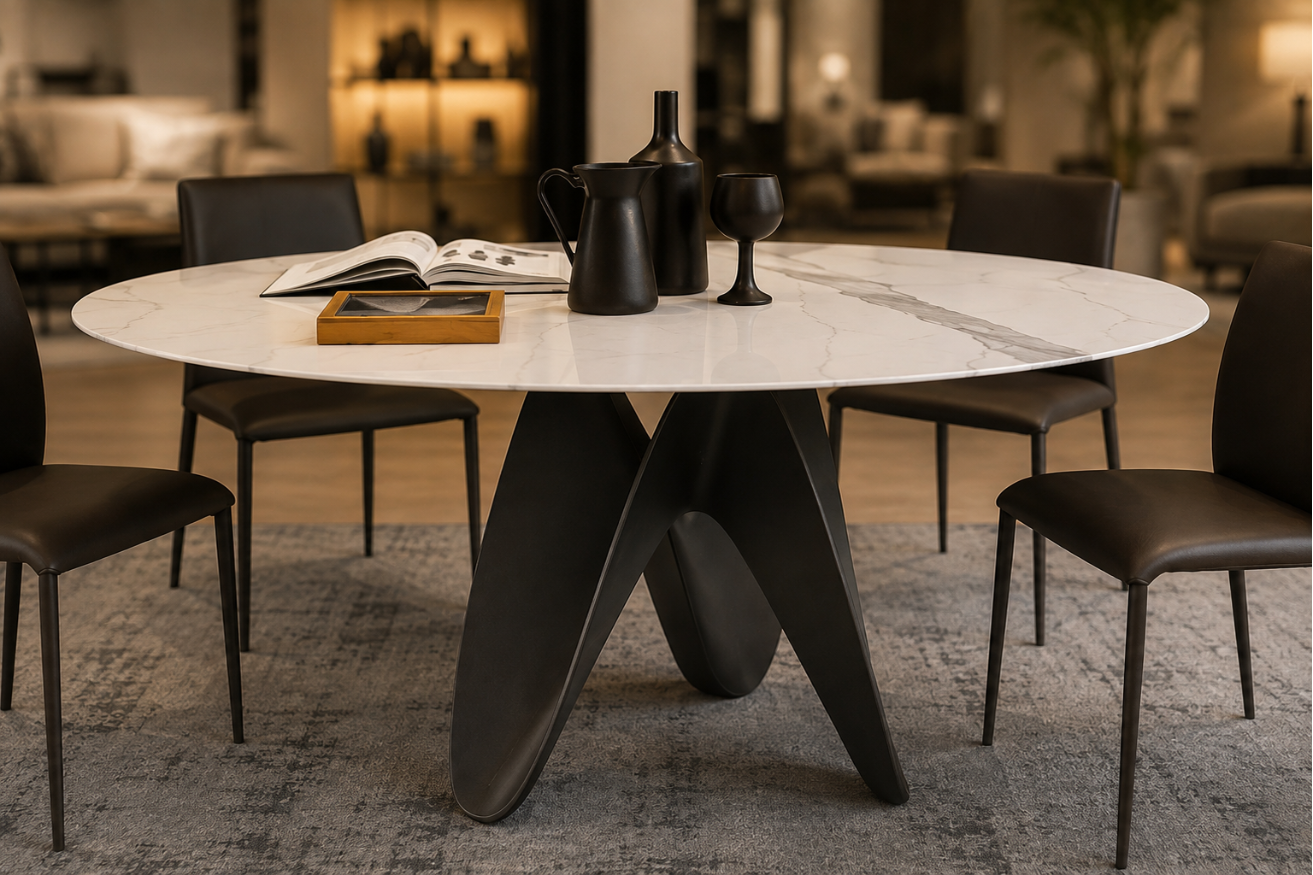
If you love the luxurious look of natural stone like marble but dread the thought of stains and constant upkeep, you’re in the right place. Modern materials like ceramic and porcelain offer the best of both worlds: a sophisticated, high-end aesthetic combined with practical, worry-free performance. These engineered surfaces are designed to resist scratches, heat, and spills, making them perfect for real-life use. But while they share many benefits, they aren’t the same. To find your ideal fit, you need to compare ceramic vs porcelain dining table options. We’ll explore the subtle but important distinctions in their composition and durability to help you choose the perfect high-performance centerpiece for your dining room.
At first glance, ceramic and porcelain dining tables look quite similar. They both offer a sleek, modern aesthetic that can instantly update your dining space. However, the real differences are found in how they’re made and how they perform over time. Think of porcelain as ceramic’s tougher, more refined older sibling. While both are excellent materials for furniture, understanding their unique characteristics will help you choose the perfect centerpiece for your home, whether you're furnishing a formal dining room or a casual breakfast nook. The choice between them often comes down to your lifestyle, your budget, and how you plan to use your table day-to-day. Are you a frequent entertainer who needs a surface that can handle spills and hot dishes? Or do you have a busy family with kids who might not always be gentle with the furniture? Exploring the key distinctions in their creation, resilience, and strength will give you the clarity you need to select a table that you'll love for years to come.
The journey from raw clay to a finished tabletop is where ceramic and porcelain take different paths. Ceramic is crafted from natural clays and minerals that are pressed together with immense force and then fired in a kiln at high temperatures, around 1280 degrees Celsius. This process creates a hard, durable surface.
Porcelain, on the other hand, starts with a more specific and refined clay called kaolin. This fine-grained clay is fired at even higher temperatures than ceramic. This intense heat vitrifies the material, making it denser, less porous, and stronger than standard ceramic. So, while all porcelain is technically a type of ceramic, its specialized production process gives it a superior edge in durability.
If you love to entertain or have a busy family, stain resistance is a huge plus. Because both materials are fired in a kiln, their surfaces are non-porous and don't absorb liquids easily. Ceramic is incredibly dense, with a water absorption rate of almost zero, which means spills from wine or coffee wipe away without a trace.
Porcelain takes this a step further. Its higher firing temperature makes it even less absorbent than ceramic, which is one of the key ways to identify true porcelain. This quality makes it exceptionally resistant to staining and very easy to clean. You can confidently place a porcelain table in your outdoor space or use it for daily family meals without worrying about lasting marks.
When you invest in a piece of furniture, you want it to last. Both ceramic and porcelain are known for their resilience. Ceramic is a very hard material, typically ranking between 6 and 7 on the Mohs hardness scale. This means it’s highly scratch-resistant, so you generally don’t have to worry about everyday utensils or keys leaving marks on the surface.
However, due to its denser composition, porcelain is the winner for overall durability. It’s more resistant to chipping, cracking, and heavy impacts. This makes it an ideal choice for high-traffic areas or for anyone who wants a beautiful table that can truly stand up to the demands of daily life. This level of strength ensures your furniture remains a stunning part of your living area for years to come.
A ceramic dining table is a fantastic choice if you're looking for a piece that blends modern style with everyday practicality. It hits that sweet spot of being beautiful enough for dinner parties yet durable enough to handle daily life, from morning coffee to kids' homework sessions. Think of it as the sophisticated, low-maintenance friend you've always wanted for your dining room. Ceramic offers incredible design flexibility, an accessible price point, and a surface that’s refreshingly easy to care for. It’s a smart, stylish option that proves you don’t have to sacrifice functionality for a high-end look. For anyone wanting to create a welcoming and chic space for eating and gathering, a ceramic table is definitely worth considering. It’s a choice that feels both intentional and effortless, perfectly suiting a contemporary home where life is meant to be lived and enjoyed.
One of the best things about a ceramic dining table is its chameleon-like ability to fit into almost any interior design style. Whether your home is minimalist, Scandinavian, or has an industrial edge, there’s a ceramic table that will feel right at home. The magic is in the variety. Ceramic tops can be crafted to mimic the look of luxurious materials like marble or the raw texture of concrete, giving you that coveted aesthetic without the associated maintenance. Paired with bases made from warm wood or sleek metal, you can truly customize the piece to complement the other furniture in your living spaces. This versatility ensures your dining table isn't just a functional item, but a central design element that ties the room together.
Let’s talk about budget. We all want our homes to look beautiful, but smart investments are key. Ceramic offers the look and feel of more expensive materials, like natural stone, at a more approachable price. This makes it an excellent choice for design-savvy professionals and new homeowners who want to create a polished space without committing to a massive expense. Choosing ceramic means you can achieve a luxurious, high-end feel in your dining area while freeing up your budget for other pieces that help beautify your home, like lighting or art. It’s a practical decision that delivers a major style payoff, giving you a durable and beautiful centerpiece that feels like a splurge but is actually a savvy find.
If you value low-maintenance living, a ceramic table will be your new best friend. The surface is non-porous, which means spills from wine, coffee, or juice aren't a cause for panic. They simply wipe away with a damp cloth, no special cleaners required. This makes it ideal for families and anyone who loves to entertain without worrying about accidental stains. While these tables are solid and sturdy, ceramic is generally lighter than a solid slab of marble or stone, making it a bit easier to move when you’re rearranging your space or deep cleaning. Its durability and simple cleaning routine mean your table will look pristine for years with minimal effort, letting you focus more on enjoying meals and making memories around it.
If you’re looking for a dining table that truly does it all, porcelain is a fantastic choice. It brings together the best of both worlds: the sophisticated, high-end look of natural stone with the practical, everyday resilience you need in a busy home. Think of it as the beautiful centerpiece of your dining room that you don’t have to be afraid to actually use. Whether you’re hosting lively dinner parties, helping kids with homework, or just enjoying a quiet morning coffee, a porcelain table stands up to the demands of modern life without sacrificing an ounce of style.
Porcelain is an engineered material, created by firing fine clay at extremely high temperatures. This process results in a surface that is incredibly dense, non-porous, and tough. It’s a material that offers peace of mind, blending stunning aesthetics with performance that other materials just can’t match. For those who value both form and function, choosing porcelain means investing in a piece that will remain a timeless and reliable part of your home for many years to come.
One of the biggest draws of a porcelain dining table is its incredible strength. Thanks to the intense heat used in its creation, porcelain is exceptionally hard and dense, making it highly resistant to scratches, chips, and cracks from daily use. You can slide plates across the surface or accidentally drop your keys without worrying about leaving a permanent mark. This level of durability makes it a perfect fit for households with children or for anyone who loves to entertain frequently. Unlike softer materials like wood or even some natural stones, porcelain maintains its flawless finish through years of meals, gatherings, and everyday activities, making it a smart, long-lasting investment.
Spilled red wine or a forgotten coffee mug won’t cause a panic with a porcelain table. Its surface is non-porous, which means liquids can’t seep in and cause stains. A simple wipe is usually all it takes to clean up messes, keeping your table looking pristine. This key feature is a result of its manufacturing process, which creates a glass-like surface that is far less absorbent than other materials. Furthermore, porcelain is highly resistant to heat. You can place a hot dish directly on the table without needing a trivet, a convenience that is invaluable when serving a large meal. This combination of stain and heat resistance makes porcelain one of the most low-maintenance and worry-free options available.
Porcelain delivers the luxurious aesthetic of natural materials like marble or slate without the associated upkeep. Modern manufacturing techniques allow porcelain to be designed with a huge range of stunning finishes, from subtle veining that mimics Carrara marble to rich textures that resemble concrete or wood. This versatility means you can achieve a timeless, elegant look that perfectly complements your home’s decor. Because it resists fading from UV light, its color and pattern will remain vibrant even if placed in a sunny dining area. This lasting beauty, combined with its robust durability, ensures a porcelain table offers incredible long-term value, becoming a cherished piece of your home’s story.
Choosing between a ceramic and a porcelain dining table often comes down to subtle differences in style and durability. The good news is that both materials are remarkably low-maintenance, freeing you from the constant worry that comes with more delicate surfaces like marble or wood. Your beautiful new table is designed for real life, from busy family breakfasts to lively dinner parties.
However, knowing the best way to care for your specific table will ensure it remains a stunning centerpiece in your home for years to come. While daily upkeep is simple for both, understanding how to handle cleaning, prevent damage, and what not to do is key to protecting your investment. Think of it less as a list of chores and more as a simple routine to preserve the piece you love. With just a little attention, both ceramic and porcelain will reward you with lasting beauty and performance.
Keeping your dining table looking pristine is refreshingly simple, whether you choose ceramic or porcelain. For most daily spills and messes, a soft, damp cloth is all you’ll need to wipe the surface clean. You can add a drop of mild, pH-neutral cleaner for stickier situations, but harsh chemical products are unnecessary and should be avoided.
Because of its incredible density, porcelain is almost completely non-porous, making it exceptionally hygienic and resistant to staining. Ceramic is also highly resistant to stains, but it is slightly more porous than porcelain. For both types of dining tables, it’s always a good practice to wipe up spills from liquids like red wine or coffee promptly to keep your table in perfect condition.
One of the biggest advantages of choosing a ceramic or porcelain table is that they do not require any special sealing. Unlike natural stones such as marble or granite, which need to be sealed regularly to prevent staining and etching, ceramic and porcelain surfaces are manufactured to be non-porous and resilient right from the start.
This means you can place a hot dish or a cold, condensating glass on the surface without worrying about immediate damage. The manufacturing process, which involves firing the materials at extremely high temperatures, creates a hard, vitrified surface that naturally repels liquids and resists heat. This built-in durability saves you both time and money on long-term maintenance.
While both ceramic and porcelain are known for their strength, they aren't indestructible. The most important thing to avoid is sharp, heavy impacts. Dropping a heavy cast-iron pot or a sharp object directly onto the surface could cause a chip or crack. Porcelain is denser and generally more resistant to this kind of impact than ceramic, but it’s wise to be careful with both.
To prevent scratches over the long term, avoid dragging heavy, unpadded items across the surface, like a ceramic vase with a rough bottom. Using placemats, coasters, and trivets is a simple habit that provides an extra layer of protection. When you’re styling your table with beautiful decor, just be mindful of the objects you choose. With these easy precautions, your table will stand up beautifully to daily life.
When you invest in a beautiful dining table, you want it to be more than just a showpiece. It’s a central piece of your home where memories are made, so you need it to stand up to family dinners, late-night work sessions, and lively gatherings with friends. Both ceramic and porcelain are fantastic choices for durability, but they have distinct strengths that might make one a better fit for your lifestyle. The real difference comes down to how they are made, which affects their performance under pressure.
Porcelain is fired at much higher temperatures than ceramic, creating a denser, less porous, and harder material. Think of it as the stronger, more resilient sibling. This process gives it a significant edge in resisting chips, scratches, and stains. Ceramic is still incredibly tough and offers excellent value and style, but porcelain provides that extra layer of assurance for a truly long-lasting piece. Ultimately, both materials are built to last, but their unique properties mean one might be better suited to the demands of your household. When you’re choosing from our dining collections, considering how you’ll use your table every day will help you decide which material offers the performance and longevity you need for your home.
Your dining table is the heart of your home, and it needs to handle everything from spilled wine to arts and crafts projects. Both ceramic and porcelain excel here. Because they are non-porous, they don’t absorb liquids, making them highly resistant to staining. A quick wipe with a damp cloth is usually all it takes to clean up messes, so you won’t have to worry about that coffee ring or pasta sauce spill. Porcelain has a slight advantage with an even lower water absorption rate, making it practically impervious to stains. For a busy household, this low-maintenance quality means you can enjoy your beautiful table without constant stress.
Accidents happen, but choosing a resilient table means they don't have to leave a lasting mark. Ceramic is very hard and scratch-resistant, easily standing up to daily use like sliding plates or cutlery. You can feel confident that it will maintain its smooth, pristine surface for a long time. However, if you’re looking for maximum durability, porcelain is the clear winner. Its dense, solid structure makes it exceptionally strong and far more resistant to chips and heavy impacts. This added toughness provides peace of mind, especially in homes with children or for those who love to entertain frequently.
Taking the dining experience outside requires a table that can withstand the elements. This is where porcelain truly shines. Its incredible density and near-zero porosity mean it won't absorb water, so it’s safe from cracking in freezing temperatures. It’s also highly resistant to UV rays, so its color won't fade in the sun. This makes it the ideal material for a chic patio or terrace centerpiece from our outdoor furniture selection. While some ceramic tables can be used in covered outdoor areas, they are generally not as equipped to handle direct exposure to weather. On the other hand, both materials are highly heat-resistant, so you can place hot dishes directly on the surface without worry.
Deciding between a ceramic and a porcelain dining table comes down to your lifestyle, aesthetic preferences, and budget. Both materials offer a sleek, modern look and impressive durability, but they have distinct characteristics that make each one better suited for different homes. Think about how you use your dining space every day. Is it a bustling hub for family meals, a formal setting for dinner parties, or a multi-purpose surface for work and play? Answering these questions will help you pinpoint the perfect material for your home.
A ceramic table is an excellent choice if you want a blend of modern style and everyday practicality. Because ceramic can be finished to look like other materials, such as marble or concrete, you can achieve a high-end aesthetic without the associated maintenance. These tables are known for their impressive durability; they resist scratches, stains, and heat, making them ideal for busy households with kids or for those who love to entertain without worry. If you’re looking for a versatile, low-maintenance piece that delivers great value and complements your home’s decor, a ceramic table is a fantastic option for your dining space.
Choose a porcelain dining table if you prioritize exceptional strength and a luxurious, timeless feel. Porcelain is denser and less porous than ceramic, which gives it superior resistance to scratches, stains, and heat. This makes it one of the most durable materials available for a dining surface. Its sleek, elegant appearance brings a minimalist yet sophisticated look to any room, offering a centerpiece that lasts for years. For those who see their furniture as a long-term investment and desire a piece that combines peak performance with refined, modern design, a porcelain table is the clear winner.
When it comes to budget, ceramic tables are typically the more affordable option upfront. They provide incredible value by combining a stylish appearance with robust, low-maintenance features suitable for daily life. On the other hand, a porcelain table often comes with a higher price tag, but its unmatched durability and longevity make it a worthwhile long-term investment that will withstand years of use without showing wear. Ultimately, your choice will depend on what you value most: the accessible, versatile style of ceramic or the premium, lifelong performance of porcelain to beautify your home.
In simple terms, what's the biggest difference between ceramic and porcelain? Think of it this way: all porcelain is a type of ceramic, but it's made from a more refined clay and fired at much higher temperatures. This intense heat makes porcelain denser, stronger, and less porous. So, while both are incredibly durable, porcelain has the edge in overall toughness and resistance to wear and tear.
Is porcelain really worth the higher price tag? This depends entirely on your lifestyle and priorities. If you're looking for the absolute best in terms of durability, scratch resistance, and longevity, then yes, porcelain is a fantastic long-term investment. It offers peace of mind, especially in a very active home. However, ceramic offers a similar high-end look and excellent durability for daily use at a more accessible price, making it a smart and stylish choice for many people.
How careful do I really need to be with these tables day-to-day? Both materials are designed for real life, so you don't have to treat them with kid gloves. They resist stains, heat, and scratches from everyday activities like sliding plates or setting down a hot coffee mug. The main thing to avoid is a sharp, heavy impact, like dropping a cast-iron pan on the edge. As long as you're mindful of heavy impacts, your table will handle daily life beautifully.
Can I use regular household cleaning products on my table? It's best to stick to the simple stuff. For most messes, a damp cloth and water are all you need. If you need a little more cleaning power, a drop of a mild, pH-neutral soap will do the trick. You should avoid using abrasive sponges or harsh chemical cleaners (like bleach or ammonia-based products), as they can damage the finish over time.
Which material is the better choice for an outdoor dining table? Porcelain is the clear winner for outdoor use. Because it's so dense and non-porous, it won't absorb water, which prevents it from cracking in freezing weather. It's also highly resistant to fading from sunlight. While some ceramic tables might work in a covered patio, porcelain is the only one truly built to withstand direct exposure to the elements year-round.

