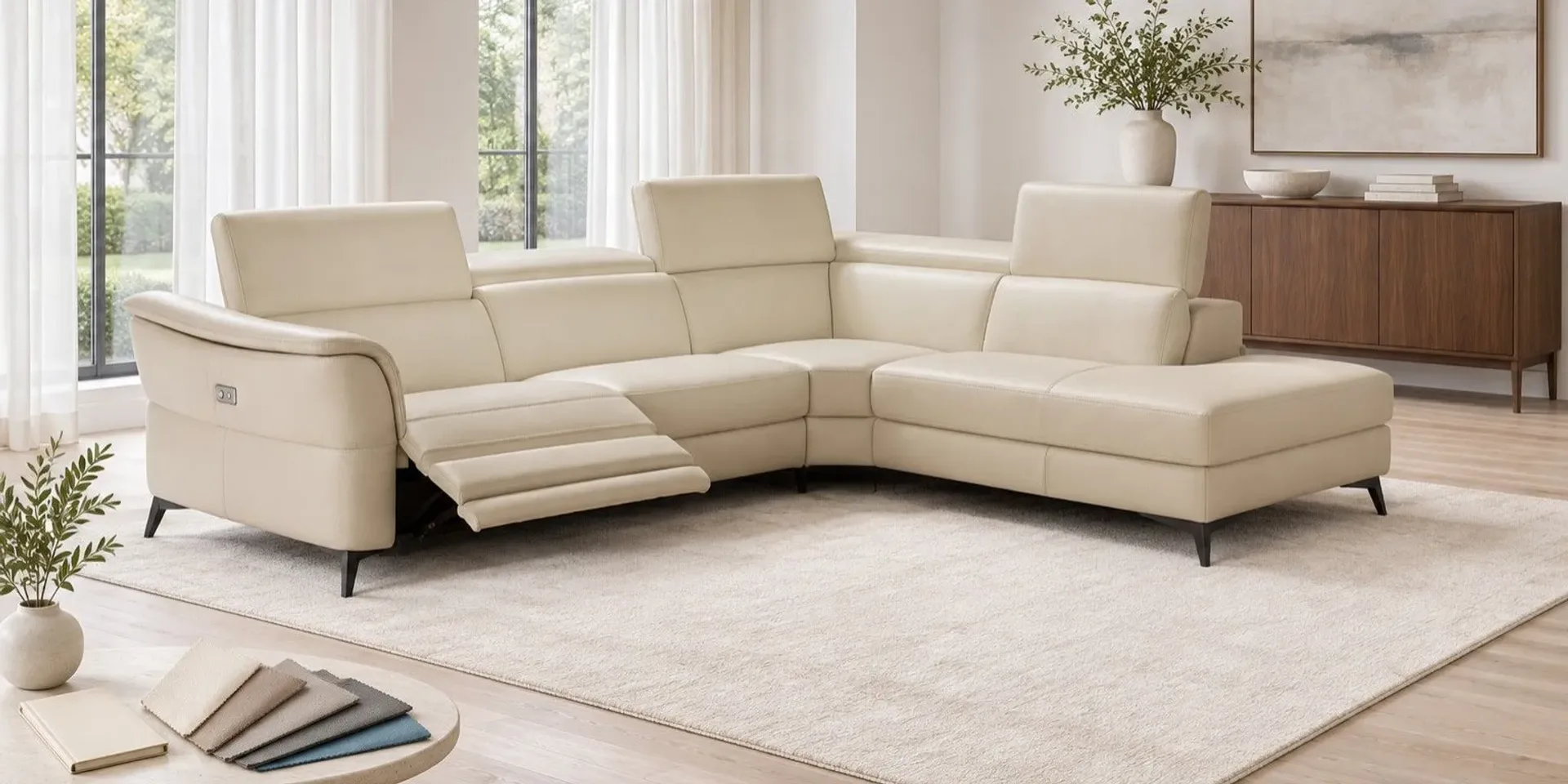
Choosing Italian living room furniture often means balancing a personal fit with the desire to enjoy a room soon. If you are comparing a made-to-order sofa with an in-stock piece, look beyond the calendar: consider dimensions, upholstery, comfort, delivery timing, and how the sofa will work with the rest of your home.
Schedule a design consultation
A made-to-order sofa is produced or configured after an order is placed, rather than selected from an item already available for dispatch. Depending on the manufacturer's options, you may choose upholstery, colors, dimensions, or other specifications. The choices vary by model, so confirm exactly what is customizable before comparing.
This approach can be useful when the room has a particular scale, the sofa needs to coordinate with existing pieces, or a specific finish matters to your plan. It is not automatically a better-quality choice. Construction, materials, support, and care requirements still deserve their own review.
An in-stock sofa is already available in a specified configuration. It can be practical when timing matters or when you like the dimensions and upholstery offered. Ask whether “in stock” means physically available, allocated to your order, or awaiting another delivery step. Confirm the expected arrival and installation details in writing.
Availability can change, and a ready-to-ship item may still need transportation and scheduling. In stock does not mean instant delivery, nor does it tell you whether the piece fits your doorway or room. Measure and verify the particulars just as carefully as you would for a custom order.
Timing. Made to order: production or configuration can add time; ask for an estimate and when it begins. In stock: may be available sooner, subject to confirmation, shipping, and scheduling.
Choice. Made to order: may offer fabric, color, or dimension options; verify choices for the model. In stock: usually limited to the available configuration.
Room fit. Made to order: some dimensions or details may be selectable; confirm exact measurements. In stock: the room and access route must work with the piece as offered.
Decision process. Made to order: requires earlier choices and careful specification review. In stock: can simplify selection when the available piece already meets your needs.
Best fit when. Made to order: you have a clear design brief and can plan around the timeline. In stock: you need a quicker option and like the available size, comfort, and finish.
Start with the date the sofa needs to be usable, not simply the date you hope to place the order. Ask for the current estimate, whether it covers production or delivery, and what could change it. Include time for delivery coordination and installation arrangements. If you are furnishing a home in stages, decide whether other rooms can be completed while the sofa is being made.
For an in-stock option, ask the seller to confirm that the exact configuration is available and whether it can be reserved. Clarify the expected delivery window and what happens if the schedule changes. Review the retailer's shipping and delivery details.
Write down the date you need the room ready, then work backward. Leave room for delivery coordination, access questions, and any assembly or installation. If the date is tied to a move, guests, or a renovation, tell the seller that context rather than asking only for a general lead time. Ask what event starts the estimate and whether updates are provided if circumstances change.
For a made-to-order piece, find out when the configuration becomes final and whether a change after approval affects timing. For an in-stock option, ask whether the specific sofa can be held while delivery is arranged. These are different kinds of uncertainty: production progress on one side, stock allocation and logistics on the other.
Measure the usable wall length, depth, and nearby circulation space. Note door swings, windows, radiators, walkways, and the distance between the sofa and coffee table. A sofa can fit along a wall and still make the room feel crowded if people cannot move comfortably around it.
Measure the route from the entrance to the final position, including hallways, stair turns, elevators, and door openings. Check the product dimensions and ask how they are measured. A made-to-order option may help with a tight space if the manufacturer offers a suitable size, but do not assume every model can be altered. An in-stock sofa can be excellent when its proportions and access requirements work as-is.
For a broader sense of available forms and scale, browse living room furniture. Treat listings as a starting point, then confirm exact dimensions and configuration for the item you are considering.
Mark the sofa footprint on the floor with painter’s tape or paper. Include the full width and depth, not just the visible seat area. Then walk the usual route through the room, open nearby doors, and sit where other furniture will go. This simple test can reveal a blocked path or awkward coffee-table distance before an order is placed.
Repeat the test for at least two candidate sizes if you are comparing them. A slightly narrower sofa may preserve a clear route; a deeper one may feel more relaxed but take space from circulation. Think about the room at its busiest, when people are walking through or gathering, not only when it is empty.
Comfort is personal, so use more than a photograph to judge it. If possible, sit on the sofa or ask for clear information about seat depth, seat height, cushion feel, back support, and arm height. Think about how you use the room: conversation, reading, or shared family time may call for different support and proportions.
A made-to-order configuration can help align a sofa with your preferences when meaningful options are offered. But a familiar, comfortable in-stock model may be the more confident choice if you have tried it and like its feel.
When you test more than one model, sit in each for long enough to notice posture rather than relying on a quick impression. Sit upright, lean back, and change position as you would at home. Notice whether your feet rest comfortably, whether the back supports you, and whether the arms are at a useful height. If several people will use the sofa, invite them to assess it too; one person's ideal depth may not suit everyone.
If a made-to-order sofa cannot be tested in the exact final configuration, ask what you can experience in person and which specifications differ. A change in upholstery may affect the surface feel, while cushion or dimension choices can affect how you sit. Do not treat a sample or a similar model as a perfect substitute; use it as one source of information and verify the written specifications.
Upholstery changes the way a sofa looks and feels, but it should also suit daily use. Compare colors in the room's own light and alongside flooring, rugs, and nearby wood tones. When possible, view samples in the space at different times of day. A small swatch is not the same as a full sofa, but it helps you test the palette.
Ask about the material, care instructions, and limitations that matter to your home. Do not choose a fabric solely because it photographs well. For made to order, confirm the precise fabric name or code on the order. For an in-stock piece, ensure the displayed finish is the one being supplied. If considering leather, review care guidance for the specific type and finish rather than assuming all leather behaves alike.
Italian design can feel at home in a warm, traditional interior. Pair clean sofa lines with textured rugs, wood furniture, art, and soft lighting. The aim is not to make every piece match; it is to create a room that feels considered and comfortable. Explore sofas and sectionals as one part of the larger composition.
Collect the room's fixed elements first: flooring, wall color, window treatments, and the pieces you plan to keep. Then decide whether the sofa should blend into that palette or provide contrast. A warm neutral can sit comfortably beside traditional wood and patterned textiles. A deeper color can become a focal point, but test it against the room's natural and evening light.
Consider texture as well as hue. A smooth surface may make a room feel more tailored; a textured fabric can soften clean lines and add depth. Ask about cleaning instructions and how the material responds to ordinary use. If you have pets, children, or frequent guests, explain the household's needs and request material guidance for the exact option under consideration.
Compare the complete purchase, not just the listed price. Check what is included, such as selected upholstery, delivery, assembly, or other services, and ask about additional charges before you commit. Confirm the order specifications, payment terms, cancellation conditions, warranty information, and process for reporting an issue.
A made-to-order sofa may deliver a more particular fit or finish, but that benefit matters only if it solves a real need. An in-stock sofa may offer strong value when the available design already meets your comfort, size, and style requirements. Use the same questions for both routes and compare like with like.
Materials and design traditions can inform what you value in a piece, but broad claims about a country's furniture are not a substitute for inspecting a specific sofa. The Italian Art Society's discussion of furniture design history offers context; it is not a product-quality rating or buying guarantee. Read its article on Italian furniture design history as background, then evaluate the sofa's actual specifications.
Make a short side-by-side record for each candidate: exact model and configuration, total price, delivery terms, included services, expected arrival, material and care, and the terms that apply if plans change. A lower listed price may not represent the lower total if delivery or assembly differs. Likewise, a more tailored finish may be valuable when it solves a color or scale problem, but less important when the available option already fits.
Separate must-haves from preferences. A maximum width, a firm delivery deadline, or a particular care requirement may be non-negotiable. A secondary color preference or decorative detail may be flexible. This prevents a small enhancement from outweighing a practical issue that affects everyday use.
Yes. Modern European furniture does not require a bare, cool interior. Its clean lines can sit comfortably with traditional architecture, layered rugs, collected art, wood furniture, and soft lighting. The contrast between a simple silhouette and familiar textures can make a room feel personal rather than staged.
Start with the parts of the home you want to preserve. If the room has substantial trim, a patterned rug, or heirloom furniture, use those elements as design inputs rather than obstacles. A sofa with restrained lines can provide visual breathing room. A warmer upholstery tone or tactile fabric can connect it to the existing palette.
This is also where made-to-order options can help, when the offered choices address a real need such as a particular color or scale. But do not customize for its own sake. An in-stock design may work beautifully if its shape and finish balance the room. The goal is a living space that supports daily routines and feels like yours, not a room where every object comes from one style or period.
Keep the answers with your quote or order confirmation. That makes it easier to check the delivered piece against the configuration you selected. If a detail is important to the decision, ask for it in writing rather than relying on a general description or a conversation you may not remember later.
Check that the paperwork identifies the model and configuration clearly. It should reflect the chosen dimensions, upholstery or finish, and any options that affect the appearance or use of the sofa. Compare the delivery terms and estimated timeline with what you discussed. If the documents use a code for a fabric or finish, make sure you understand which selection that code represents.
Before final approval, read the cancellation and change terms carefully. Made-to-order purchases may have different conditions from items available in stock, so do not assume the same rule applies to both. If anything is unclear, get clarification before signing or submitting payment.
Choose made to order when the offered options solve a clear need—such as a particular finish or fit—and the expected timeline works for your plans. Choose in stock when the available sofa meets your comfort and room requirements and getting it sooner matters. In either case, verify the exact model, dimensions, materials, total cost, delivery timing, and terms before deciding.
A short room plan makes comparison easier. Record the sofa's maximum width and depth, preferred seat feel, finish priorities, and date by which you need the room ready. Then compare only options that satisfy those essentials. EuroHome's Design Center provides a place to explore furniture and design guidance. For another part of the home palette, you can also browse dining furniture alongside your living room choices.
Imagine that a living room must be ready before family arrives. First, list the non-negotiables: a sofa below a certain width, a comfortable seat depth, and delivery before the event. Next, ask which in-stock configurations meet those conditions and verify their availability and delivery window. If none fit, ask whether a made-to-order model can meet the dimensions and whether its estimate is compatible with the date.
Now identify what can flex. Perhaps the exact shade is less important than comfort and timing, or perhaps the room can be used temporarily with existing seating while a preferred finish is produced. This reframes the decision from “custom or ready-made?” to “which verified option meets the needs that matter most?” If no option can be confirmed against the deadline, adjust the plan rather than treating an estimate as a promise.
Consider a narrow room where a standard-depth sofa would restrict the path to a window. Measure the wall, the approach, and the usable depth, then mark candidate footprints. Ask whether a made-to-order model has a supported dimension that preserves the route. Compare that against an in-stock piece with a slimmer profile; customization is useful only if the offered specification improves the layout enough to justify waiting.
In both examples, the decision comes from constraints and verified details, not a general belief that one ordering method is superior. The piece should support the room's daily use, coordinate with its materials, and arrive under terms you understand.
No. The phrase describes how an item is ordered or configured, not a universal quality level. Compare construction, materials, comfort, care requirements, and terms for the specific sofa.
Not necessarily. Confirm that the exact item is available and ask about delivery scheduling, transport, and assembly or access considerations.
Customization depends on the manufacturer and model. Ask which dimensions and options are offered, and get the selected specification confirmed before ordering.
Identify the essentials you cannot compromise on, such as a maximum width or comfortable seat feel. Ask about confirmed available configurations and made-to-order lead times, then weigh the trade-off rather than relying on a general estimate.
The best choice is the sofa that fits your room, supports the way you live, and arrives on a timeline and in a configuration you have verified.


