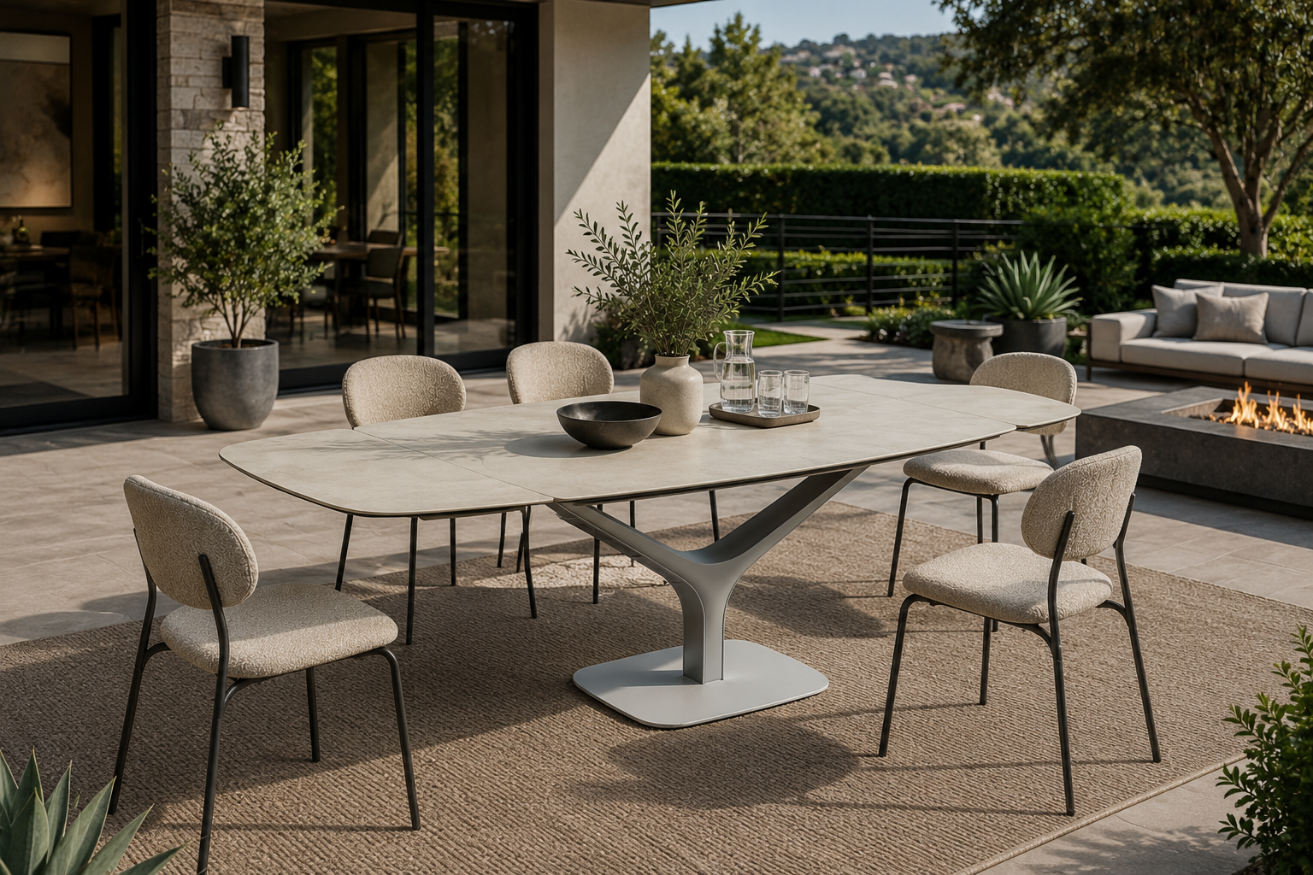
A soft microfiber cloth and warm water are the only tools you need for everyday cleaning of your ceramic dining table. Porcelain stoneware is fired at temperatures exceeding 2,000 degrees Fahrenheit, producing a surface that is dense, non-porous, and remarkably smooth. This engineering means spills sit on the surface rather than soaking in, which makes daily upkeep simple and fast.
After each meal, wipe the table with a damp microfiber cloth to remove crumbs, smudges, and light fingerprints. Microfiber is ideal because it lifts particles rather than pushing them across the surface, reducing the risk of micro-scratches over time. For a weekly deeper clean, add two to three drops of mild pH-neutral dish soap to a bowl of warm water. Dip your cloth, wring it well so it is damp not wet, and wipe the entire surface. Rinse with a separate clean damp cloth to remove any soap residue, then dry with a soft lint-free towel.
Avoid using dish soaps with moisturizers, bleach additives, or citrus extracts. These leave a film that can dull the ceramic glaze. Stick to a simple unscented liquid soap. The entire process takes less than five minutes. Because ceramic is non-porous, it does not trap bacteria, odors, or mold, which makes it one of the most hygienic dining surfaces available. For a full range of porcelain stoneware dining options, explore EuroHome's curated collection of ceramic dining tables.
Knowing what not to use is just as important as knowing the right method. Ceramic is tough, but the protective glaze that gives it that glossy or satin finish can be damaged by the wrong cleaning agent. Several common household cleaners can dull, etch, or strip this protective layer over time.
Abrasive cleaners are the top offender. Scouring powders, steel wool pads, Scotch-Brite scrubbing sponges, and gritty cream cleansers all create microscopic scratches on the ceramic surface. These scratches accumulate with repeated use, turning a glossy tabletop hazy or dull. The damage is gradual and often irreversible without professional refinishing.
Bleach and ammonia-based cleaners are equally harmful. Both chemicals can break down the lacquer or protective coating applied to ceramic tabletops during manufacturing. Oven cleaners, heavy-duty degreasers, and drain openers are far too aggressive. Multipurpose cleaners with strong solvents or citrus oils can also strip the surface over many applications.
Vinegar deserves special attention. Many homeowners reach for white vinegar as a natural cleaner, but its acidity can gradually dull polished ceramic finishes. A 2023 guide from BoConcept, a leading Danish furniture brand, explicitly advises against acidic cleaners on ceramic tabletops. If you must use vinegar on a matte finish, dilute it heavily and rinse thoroughly. Never use vinegar on a polished ceramic surface.
The rule is simple: if a cleaner says "abrasive", "heavy-duty", "acidic", or "industrial", keep it away from your ceramic dining table. Stick to warm water and mild soap as explained in the daily cleaning section above.
Understanding the strengths of ceramic versus other materials helps you appreciate why care matters. Each dining table surface has distinct properties that affect durability, maintenance, and long-term appearance.
| Material | Durability | Scratch Resistance | Stain Resistance | Heat Tolerance | Daily Maintenance |
|---|---|---|---|---|---|
| Ceramic / Porcelain Stoneware | Harder than granite; extremely durable | High (polished more vulnerable than matte) | Non-porous; resists wine, coffee, grease | Heat resistant; use trivets for oven-hot items | Damp cloth wipe only |
| Glass | Fragile; chips and cracks under impact | Moderate; prone to fine scratches | Good but acidic spills can etch the surface | Moderate; thermal shock risk | Streak-prone; frequent polishing needed |
| Solid Wood | Moderate; susceptible to dents and scratches | Low to moderate; surface finishes wear | Low; absorbs liquids, stains easily | Low; heat rings are common | Requires oiling, waxing, and immediate wipe-ups |
| Marble | Moderate; scratches and etches from acids | Low; scratches from normal use | Low; citrus, wine, and vinegar etch the finish | Moderate; heat can cause cracks | Sealing required; special cleaners needed |
Ceramic outperforms other materials in nearly every category. It is non-absorbent, which makes it essentially stain-proof. It resists heat better than glass and wood. It does not warp in humid conditions like wood does, and it does not etch from lemon juice or red wine like marble. The one real trade-off is that ceramic can chip on edges from a hard impact, and it feels cooler to the touch than wood. For most households, these are minor compared to the daily convenience of a surface that cleans up with plain water. For a deeper look at porcelain tabletop advantages, read our article on seven reasons for an Italian porcelain dining table.
Not all ceramic finishes are the same. The care routine that works for a matte ceramic table may need slight adjustments for a glossy polished one. Understanding the difference helps you keep your table looking as good as the day it arrived.
Polished ceramic has a high-gloss, reflective surface that shows off rich color and depth. However, this glossy finish is more vulnerable to visible micro-scratches. According to BoConcept's ceramic care guide, their brown and white polished ceramic is more vulnerable to scratches than the ash gray matte ceramic. Which has a more roughly textured surface. If you own a polished table, be extra careful about dragging items across it. A single grit particle trapped under a plate can leave a fine arc that is visible in certain lighting.
Matte ceramic has a satin or lightly textured finish that hides microscratches better. It also feels warmer and more natural to the touch. The textured surface can hold onto residue slightly more than polished, so thorough rinsing after soap cleaning matters more on matte finishes.
For both finishes, the same protective habits apply. Place felt pads under ceramic serving dishes. Unglazed pottery and stoneware have rough bottom rings that act like sandpaper when dragged. Use coasters under glasses to prevent condensation rings, though ceramic will not stain like wood. Lift heavy items such as cast iron skillets, roasters, and large serving platters instead of sliding them across the surface. If you use a tablecloth or runner for daily meals, the ceramic surface underneath will stay pristine for years. Browse ceramic dining table sets from EuroHome's Eating Collection to see how premium finishes complement your home.
Ceramic's non-porous nature means most spills clean up easily if addressed promptly. However, certain substances can leave surface residue if left to dry, especially on polished finishes. Knowing the right technique for each type of spill keeps your table spotless.
Red wine and dark liquids like grape juice or soy sauce should be blotted immediately with a clean cloth, then wiped with a damp microfiber cloth. Even on non-porous ceramic, tannins in red wine can leave a faint ring if allowed to dry overnight. Coffee and tea stains respond to the same approach: immediate blotting followed by a mild soap wipe.
Grease and oil from cooking, salad dressings, or butter can create a hazy film over time if not fully removed. Use a drop of mild degreasing dish soap on a damp cloth to cut through the grease, then rinse with a fresh damp cloth. Dry the area to check for remaining film. Repeat if needed.
Sticky dried spills like honey, syrup, or dried pasta sauce may need extra help. Apply a small amount of isopropyl alcohol to a soft cloth and rub gently. Always rinse the area with water afterward and dry it.
Hard water marks and limescale rings appear when water droplets dry on the surface, leaving calcium deposits. Wipe the table dry after each meal to prevent this entirely. For existing marks, wipe with a cloth dampened with distilled water. For matte ceramic only, a dilute white vinegar solution can break down mineral deposits. Do not use vinegar on polished ceramic. For a complete guide on dining table care and selection, see our luxury dining table buyer's guide.
A ceramic dining table is a long-term investment, and a few seasonal habits will keep it looking exceptional for decades. Temperature, sunlight, and storage conditions all play a role in preserving the finish.
Direct sunlight can cause fading and discoloration over time. While ceramic is more UV-resistant than wood or fabric, prolonged exposure will gradually alter the color of the glaze. Position your table away from south-facing windows, or use sheer curtains to diffuse the light.
Ceramic handles normal indoor temperature ranges well. However, avoid placing the table near radiators, air conditioning vents, or fireplaces. For the structural components, check the base and legs annually. Tighten any loose hardware.
When moving the table, always lift it rather than dragging it. The combination of a good cleaning routine and basic protective habits means your ceramic table will retain its luxury finish for the life of the piece. Explore EuroHome's full Eating Collection to see how porcelain stoneware tables anchor a beautifully designed dining space.
It depends on the finish. For matte ceramic surfaces, a heavily diluted white vinegar solution can be used occasionally for limescale, but it must be rinsed thoroughly. For polished ceramic, avoid vinegar entirely because the acidity can dull the glossy glaze over time.
A soft microfiber cloth dampened with warm water is all you need for daily cleaning. For stuck-on residue or grease, use a few drops of mild pH-neutral dish soap.
Ceramic tabletops are heat resistant, but for very hot items straight from the oven, it is wise to use a trivet or hot pad to protect the structural support beneath the ceramic sheet from thermal stress.
No. Ceramic is one of the most scratch-resistant dining table surfaces available. It scores higher than glass, wood, and most laminates. However, dragging rough-bottomed ceramics or cast iron cookware across the surface may cause micro-scratches, especially on glossy polished finishes.
For hard water marks, wipe with a soft cloth dampened with distilled water. If residue persists, use a small amount of isopropyl alcohol on a microfiber cloth. Avoid vinegar on polished surfaces.
Ceramic is harder, more durable, and more resistant to stains and heat than both glass and wood. It is non-porous, so it will not stain from red wine, coffee, or sauces. The trade-off is that ceramic can feel cooler to the touch and may chip on edges from hard impacts.
A ceramic dining table is an investment in daily elegance and effortless upkeep. The right piece becomes the center of your home, hosting everything from quiet weeknight dinners to grand holiday gatherings. EuroHome Interiors offers a curated selection of Italian and European ceramic and porcelain stoneware dining tables, each piece selected for its craftsmanship, durability, and timeless design. Visit our design center at 690 Dekalb Pike in King of Prussia to see and feel the finishes in person. Our design team can help you choose the right size, shape, and finish for your space. Explore the full collection online or call (610) 477-7760 to schedule a showroom appointment.
A soft microfiber cloth and warm water are the only tools you need for everyday cleaning of your ceramic dining table. Porcelain stoneware is fired at temperatures exceeding 2,000 degrees Fahrenheit, producing a surface that is dense, non-porous, and remarkably smooth. This engineering means spills sit on the surface rather than soaking in, which makes daily upkeep simple and fast.
After each meal, wipe the table with a damp microfiber cloth to remove crumbs, smudges, and light fingerprints. Microfiber is ideal because it lifts particles rather than pushing them across the surface, reducing the risk of micro-scratches over time. For a weekly deeper clean, add two to three drops of mild pH-neutral dish soap to a bowl of warm water. Dip your cloth, wring it well so it is damp not wet, and wipe the entire surface. Rinse with a separate clean damp cloth to remove any soap residue, then dry with a soft lint-free towel.
Avoid using dish soaps with moisturizers, bleach additives, or citrus extracts. These leave a film that can dull the ceramic glaze. Stick to a simple unscented liquid soap. The entire process takes less than five minutes. Because ceramic is non-porous, it does not trap bacteria, odors, or mold, which makes it one of the most hygienic dining surfaces available. For a full range of porcelain stoneware dining options, explore EuroHome's curated collection of ceramic dining tables.

