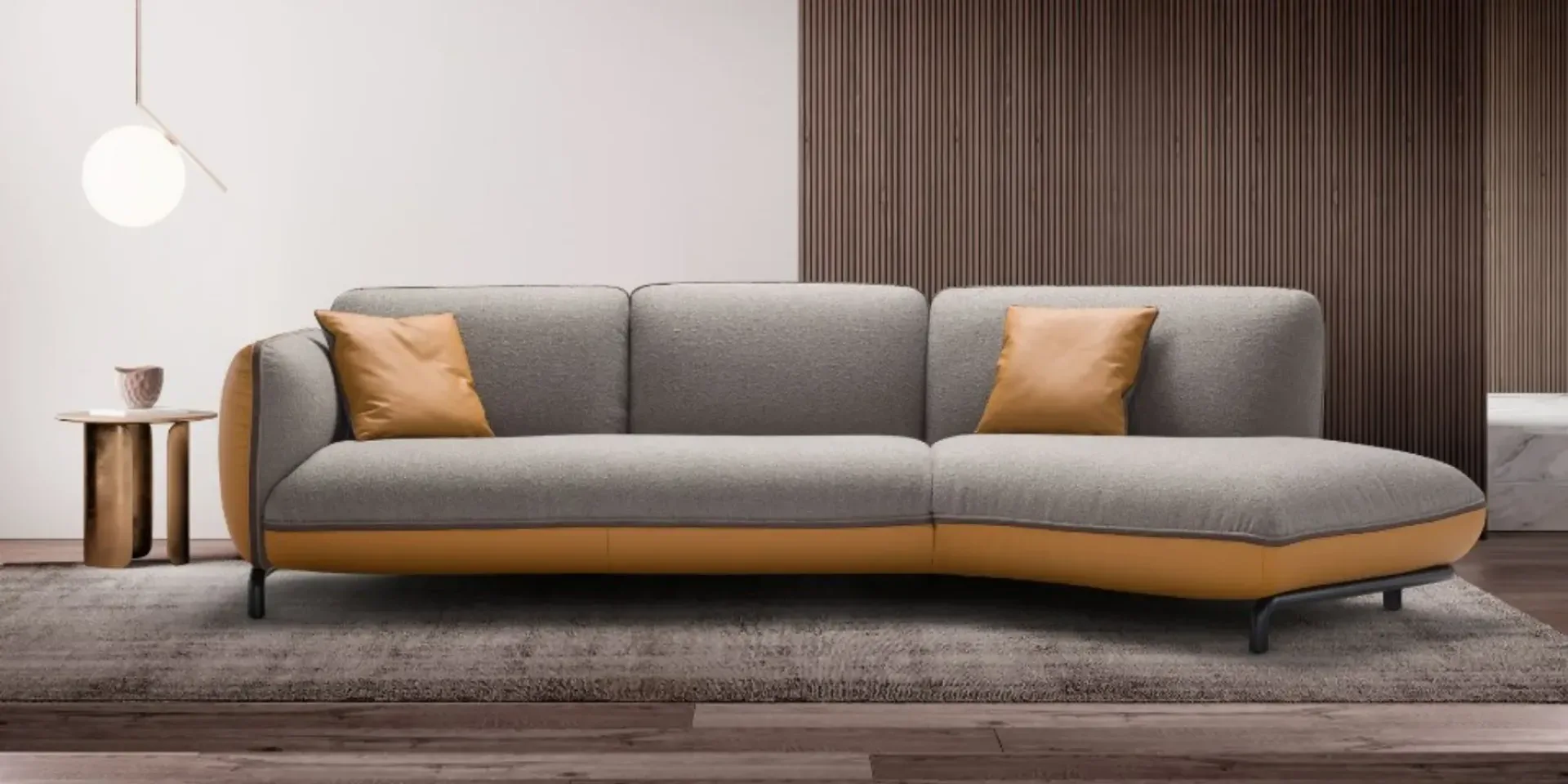
Clean line sofas industrial loft rooms can feel calm and inviting when their scale, upholstery, and proportions work with the architecture rather than competing with it. A tailored silhouette offers a clear counterpoint to brick, concrete, steel, and tall windows, but clean lines alone do not guarantee comfort or a good fit. Measure the room, consider how you use the seating, and choose tactile materials and warm details that make the whole space feel lived in.
Contact us to discuss your loft seating plan
An industrial loft often brings together generous open areas and visually strong materials. A sofa can give that open room a comfortable center without blocking its sense of space. Clean lines help: a simple outline is easy to read against exposed structure, while a restrained profile can keep the seating from feeling too heavy.
Think of “clean line” as a silhouette rather than a style rule. It may mean a straight, composed arm; a low, continuous back; or a crisp frame with cushions that still look soft. The best choice depends on the room and on how you want to sit. A sculptural sofa that looks spare in a photograph may feel less welcoming for long evenings than one with deeper cushions and a more supportive back.
Industrial character does not require a cold room. Contrast a precise sofa shape with a woolly rug, textured cushions, warm wood, or a softly colored throw. These layers give the eye a place to rest and make hard architectural finishes feel more balanced. The goal is not to disguise the loft, but to make its scale and material mix comfortable for daily life.
Start with measurements, not a guess based on the room’s total square footage. Open-plan lofts can make a sofa look smaller in a showroom plan than it will feel once it is in the room. Measure the intended seating zone, then note the nearest walkway, window, dining area, doors, columns, and any fixed features that affect placement.
Mark the proposed footprint on the floor with painter’s tape or paper. Include the sofa’s full depth, not only the front-to-back measurement shown in a product listing. If the model has a reclining mechanism, chaise, or generous cushions, check the full operating or lounging space too. Then walk around the taped outline. Can two people pass comfortably? Can you reach a window or move between the kitchen and living area without cutting through the seating?
Visual weight matters as much as dimensions. A broad sofa with a low base may feel grounded and relaxed, while a higher leg can reveal more floor and make the piece appear lighter. Slim arms preserve usable seat width, but a wider arm can make a sofa feel more substantial and provide a practical place to rest a book or a cup if designed for that use. Compare the outside width with the actual seat width, since the two can be quite different.
For open plans, treat the sofa as a room-making element. Its back may define the living area without a wall. Check how that back looks from the dining space and entrance, and make sure it does not create an awkward barrier. A sofa with a refined profile on all visible sides can work well in a central position. If you are comparing sizes and forms, browse EuroHome’s sofa and sectional collection as a starting point, then confirm the dimensions of each specific piece.
Let everyday movement guide placement. A sofa should support conversation, reading, hosting, or quiet lounging without making the loft difficult to navigate. Before choosing a focal point, notice where people naturally enter and cross the room. Keep a clear route through the space, and avoid placing the main seat so that it faces only a blank wall if the room offers a more useful view.
Use a rug to connect the seating group, rather than expecting the sofa to do all the work. A rug that extends under at least the front part of the seats can help the arrangement read as one zone. Add a side table where someone can reach it from the seat, and check the height and clearance of any coffee table before settling on the final plan. EuroHome’s living-room rug selection and coffee tables offer options to consider alongside the sofa.
Comfort is personal, so use a repeatable test instead of relying on a style photograph. Sit as you normally would. Notice whether your feet rest naturally, whether the seat depth lets you sit upright without strain, and whether the back supports the posture you prefer. If you like to curl up or stretch out, test that position too. A seat that feels pleasant for a quick showroom visit may not be right for a long evening.
Compare the seat height, depth, cushion feel, and back height of the pieces you are considering. Ask whether cushions are fixed or loose and how the upholstery is intended to be cared for. If more than one person will use the sofa, have each person try it. Their preferences may differ, especially around seat firmness and back support. Do not assume that a low, sleek profile must mean a firm or uncomfortable seat; evaluate the individual piece.
Think about the way the sofa will be used over time. A room used for entertaining may need a seat that makes it easy to sit down and get up, with space for people to talk across the group. A reading-focused room may call for a deeper seat and a supportive back. If the sofa is the main everyday seat, prioritize the positions you actually use rather than choosing by silhouette alone.
A useful study on sofa fabrics examines how people perceive fabric through visual and tactile evaluation. That is a reminder to consider both what upholstery looks like and how it feels when you encounter it in person; the study does not establish that one fabric is best for every household. Read the research on visual-tactile perception of sofa fabrics, then assess your own comfort and care priorities with actual samples where available.
Choose upholstery in relation to the room’s existing material palette. Smooth leather can echo the crispness of metal and polished concrete, while a woven fabric introduces a softer, more relaxed note. A textured neutral can make a large sofa feel less flat; a deeper color can anchor a pale room or connect with darker window frames. Neither approach is automatically more “industrial.” The effect comes from how the sofa relates to the floor, walls, light, and other furnishings.
Do not decide on color from a small screen image alone. A fabric can shift in appearance with daylight, warm lamps, and the colors around it. If samples are available, view them in the room at different times of day. Hold them beside the flooring, rug, and any wood or metal finishes you plan to keep. Look at the texture from across the room as well as close up: a subtle weave may read as a calm field from a distance and feel richly tactile nearby.
Consider maintenance honestly. A pale upholstery may suit a quieter household and a darker one may better suit the way your room is used, but color does not tell the full care story. Ask for the maker’s specific cleaning instructions and avoid applying a cleaner or treatment unless it is approved for that material. If the room needs more softness, use removable layers such as a rug or cushions rather than selecting a sofa fabric that does not fit your care preferences.
For an eclectic loft, the sofa does not have to match every piece. It can act as the calm anchor among collected art, vintage objects, contemporary lighting, and warm wood. Use one or two shared elements, perhaps a repeated tone, material, or shape, to create a relationship among otherwise varied pieces. EuroHome’s living-room furniture selection can help you consider seating in relation to the rest of the room.
Small profile choices affect both visual balance and everyday use. A narrow arm can make a sofa feel streamlined and preserve more sitting space within a fixed overall width. A broad, squared arm contributes a strong architectural line, but may reduce the seat area. Before choosing, compare the sofa’s outside measurements and usable seat dimensions, then think about whether anyone actually uses the arm as a support or resting surface.
Legs also influence the sense of weight. Visible legs can create a gap beneath the sofa and allow more floor to show, which may help a compact seating zone feel less crowded. A plinth or low base can feel settled and substantial, a quality that can suit a lofty room with tall ceilings. Make sure the base and overall height make sense with nearby tables and the view through the room.
Back height changes the sofa’s presence from across an open plan. A lower back often keeps sight lines open, while a taller back can provide a more enveloping seat and make a strong visual boundary. If the sofa will sit in the middle of the loft, examine the rear profile as carefully as the front. If it will sit against a wall, check how its height relates to artwork, windows, and wall lighting.
Use a short comparison to keep the decision focused. The right choice is the one that fits your room, your sitting habits, and your care expectations, not the one that checks the most style boxes.
Use the table to shortlist, not to replace a comfort test. A sofa can look visually light yet have a deep footprint. A woven fabric can appear soft but feel too rough for your preference. Confirm model-specific measurements, construction details, options, and care recommendations before making a purchase.
Work in layers. Let the sofa establish the seating zone, then add materials that balance rather than erase the building’s character. A rug can soften the floor and define where the living area begins. Wood brings a warmer note beside metal. A side table in a contrasting finish can keep the room from feeling like a single matched set. Cushions can add variation in texture without introducing many competing colors.
Scale the supporting pieces to the sofa. A tiny table beside a large seat may feel impractical; a bulky table can make circulation tight. Place a lamp where it supports reading or conversation, and leave space to set down a drink. EuroHome’s side tables and lighting selection can be considered as part of the seating plan.
Personal details make a loft feel like a home rather than a design exercise. Display objects that matter to you, mix a few eras, and allow some breathing room around them. A clean-lined sofa can provide visual calm while art, books, and meaningful pieces make the space individual. A restrained color palette can still be layered and welcoming; warmth comes from touch, light, proportion, and personal use, not from adding clutter.
For a large or unusual loft, a measured plan can prevent costly mismatches. A design professional can help compare proportions, circulation, colors, and supporting pieces as one coordinated composition. EuroHome describes its design services as including space planning, 3D visualization, and project management; you can learn more at the King of Prussia Design Center or review the company’s approach to European furniture and interiors.
No. A clear silhouette can work with plush cushions, tactile upholstery, and warm accessories. The shape may be restrained while the room remains layered and personal.
Not necessarily. In an open plan, a sofa can float to define the living zone. Check the view from behind, preserve walkways, and make sure the back and any visible sides look appropriate from the rest of the room.
Either can work. Leather may create a smooth, tailored contrast, while fabric can add visible texture and softness. Compare specific samples, consider how the sofa feels, and follow the maker’s care guidance for the material you choose.
Measure the room, tape out the full footprint, and walk the surrounding routes before ordering. Include the depth of cushions and any chaise, and confirm that the piece can reach its final location through the home.
Yes. A clean-lined sofa can sit comfortably in a traditional setting when its color, texture, and scale relate to the existing architecture. Warm wood, patterned textiles, or collected furnishings can make the contrast feel intentional rather than stark.
Contact EuroHome to plan a sofa for your space
The most successful loft sofa is not simply the sharpest-looking piece; it is the one that fits the room, supports your habits, and feels inviting in the materials and light around it. Measure carefully, test comfort, and bring samples into the context of your home before deciding. When scale and texture work together, clean lines can make an industrial space feel both composed and genuinely comfortable.


