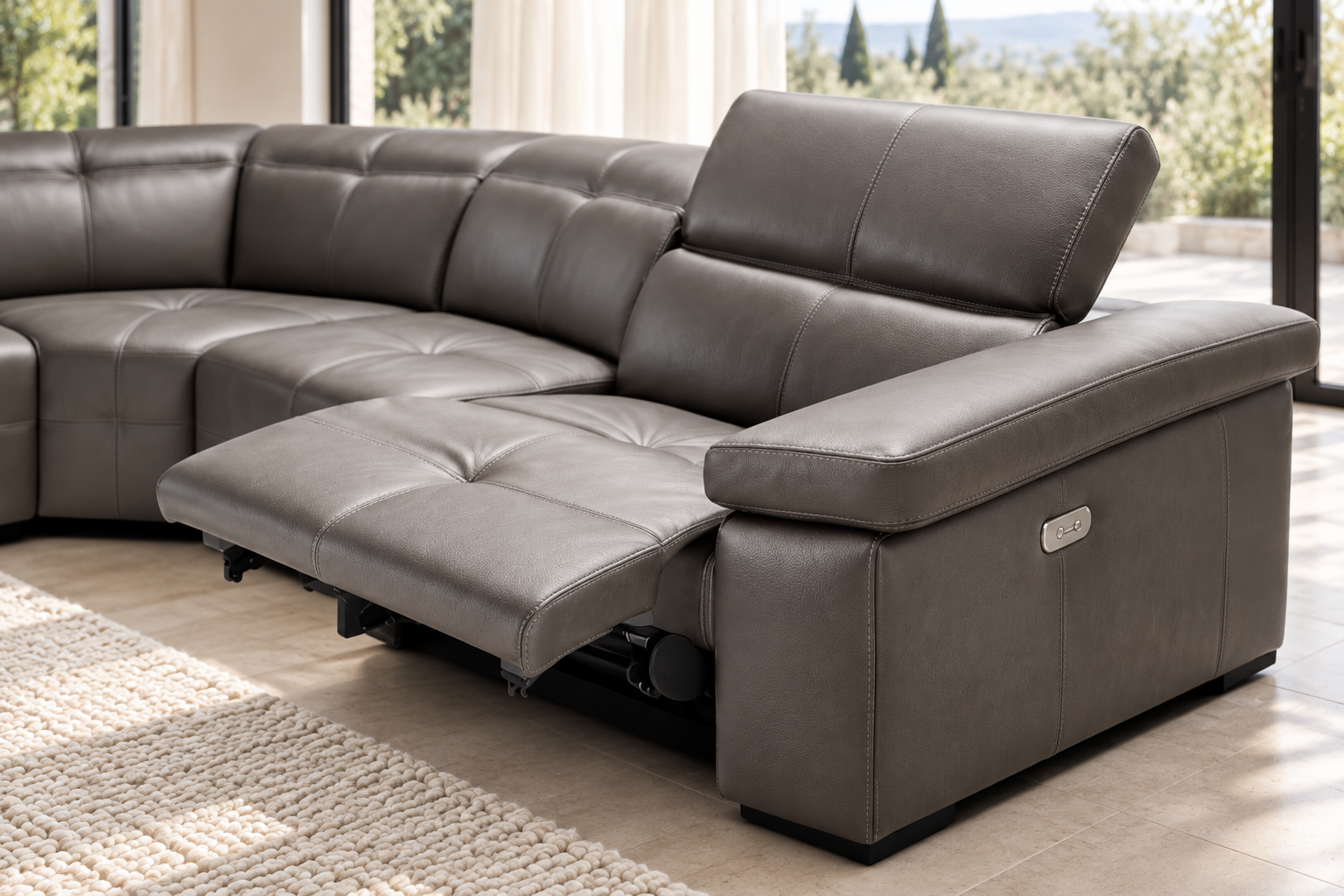
A luxury sofa 5000 15000 is a substantial purchase, but the price range alone cannot tell you whether a piece is right for your home. The better question is what the sofa gives you in return: comfortable daily use, a suitable scale, materials you can care for, a configuration that fits the room, and a clear plan for delivery and support. A careful comparison helps you choose a sofa that works in real life, not only in a showroom photograph.
Compare the complete ownership experience rather than one dramatic feature. Two sofas can have a similar silhouette and differ greatly in seat depth, cushion feel, upholstery options, configuration, dimensions, lead time, and delivery requirements. Begin with how you use your living room. Is the sofa for long evenings, conversation with guests, reading, family use, or a combination of these activities?
Next, separate essentials from preferences. Essentials might include a maximum width, a particular sitting posture, a material that suits your household, or a delivery route that can accommodate the finished piece. Preferences might include a particular leg finish, piping detail, or color family. This distinction prevents an attractive detail from distracting you from a basic fit problem.
EuroHome’s sofa and sectional collection can help you compare forms and configurations. Use product information as a starting point, then test each candidate against your own room measurements, habits, and priorities.
Value is the relationship between what a sofa offers and what matters to you. It may include a comfortable fit, a frame and suspension suited to regular use, upholstery that matches your care routine, useful customization, and support with planning and delivery. A higher price is not proof that every one of these qualities is present. Ask for model-specific details and compare equivalent specifications.
It is also useful to distinguish price from affordability. Before visiting a showroom, decide what total purchase amount fits your plan. Include selected options, delivery, installation, and any other stated charges. A consumer discussion about expensive furniture purchases makes the same practical point from a household-budget perspective: a high price should be considered deliberately rather than justified by impulse. Read the consumer discussion about furniture purchases as one perspective, not as a product-quality assessment.
Think in terms of useful service rather than an unsupported promise of a specific lifespan. There is no universal number of years that applies to every sofa. Use, care, materials, household needs, and repair options all affect the result. Instead, ask what can be maintained or replaced, how the upholstery should be cared for, and whether the piece can still serve you if the room changes.
| What to compare | Questions to ask | Why it matters |
|---|---|---|
| Comfort | Does the seat support your usual posture? Can you test it for more than a moment? | A striking profile is not useful if you avoid sitting in it. |
| Construction | What are the frame, suspension, and cushion details? | Specific answers let you compare build choices instead of relying on a price label. |
| Upholstery | What fabrics or leathers are available, and how are they cared for? | The material should suit the room, household, and maintenance you are prepared to do. |
| Fit | What are the full dimensions, including depth and clearance? | Measurements affect comfort, circulation, and delivery access. |
| Order and service | What can be customized, and what do delivery and installation include? | These details shape the full project and the result at home. |
Ask the retailer to explain the frame, joinery, suspension, cushion construction, and upholstery specifications for the exact model. Look for clear, model-specific answers. If you are comparing two pieces, write down what is known and what remains unclear. Broad labels such as “premium” or “luxury” are not technical descriptions by themselves.
Inspect seams, piping, upholstery tension, and the way cushions meet the frame. Check whether cushions are reversible or removable if that matters to your care routine. For leather, ask what type and finish are used and how those choices affect appearance and maintenance. For fabric, request samples and care instructions. A sample viewed in your own room can help you judge color and texture under your lighting.
EuroHome’s guide to judging furniture craftsmanship offers a broader inspection checklist. Use it alongside the exact specifications for the sofa you are considering, because general workmanship guidance cannot replace product-specific information.
Comfort depends on the relationship between your body, the seat, and the way you sit. Try the sofa in the position you use at home. Sit upright, lean back, put your feet up if you normally do, and share the seat with another person. Notice whether your feet rest comfortably, whether the seat supports your thighs, and whether the back height feels suitable.
Seat depth is especially important. A deeper seat can suit lounging, while a shallower seat may feel easier for upright conversation. Neither is automatically better. If household members have different preferences, test the sofa together and ask whether a configuration or cushion choice can accommodate them.
Ask whether the showroom sample has the same upholstery and cushion specification as the item being quoted. Comfort can vary with materials and options. Make notes after trying several sofas, since details blur together quickly. If you have a particular physical comfort need, treat it as a personal fit question and spend enough time testing the seat.
Measure the available wall length, room depth, doorways, halls, stairs, and elevator openings on the delivery route. Record the sofa’s width, height, and depth, along with sectional returns and removable components. A floor plan or a simple tape outline on the floor can make scale easier to judge.
Consider the room as a whole rather than treating the sofa in isolation. A substantial sofa can feel inviting in a traditional home when balanced with warm woods, rugs, side tables, and layered lighting. A clean-lined European design does not require a stark room; color, texture, and familiar pieces can make it personal and welcoming.
For a coordinated living area, compare the sofa with coffee tables, side tables, and living room rugs. Think about clearances and daily use as well as finish and shape.
Made-to-order can provide choices in size, configuration, upholstery, or finish that help a sofa work better in a particular room. It also makes it important to confirm exactly what is being ordered. Ask which dimensions and options are available, what the quoted specification includes, and whether the selected upholstery or finish changes the production timeline or care requirements.
Customization should solve a real need. If a standard size fits the room and the desired material is available, extra options may not add value for you. If the room has a tight wall, unusual proportions, or a specific palette, a tailored choice may help create a more coherent result. Request written confirmation of the final dimensions and configuration before approving the order.
Before choosing a custom option, ask whether it affects returns, cancellations, delivery access, or future replacement parts. These questions are not intended to discourage customization. They help you understand the commitment attached to a made-to-order decision.
A sofa’s purchase price is only one part of the decision. Confirm delivery charges, assembly or installation, packaging removal, access requirements, and the process for reporting damage or missing parts. Ask who will coordinate delivery and what you need to prepare beforehand. Clear expectations reduce last-minute surprises.
Read the retailer’s delivery information and ask questions if the service description does not cover your home’s circumstances. EuroHome provides details on its delivery options; check the current terms for the order you are considering. You can also review shipping and delivery information before finalizing logistics.
When evaluating a high-value purchase, ask how aftercare works, what warranty terms apply to the specific product, and how to request assistance. Do not assume that coverage or service is identical across manufacturers or models. Get applicable details in writing.
Take a short, consistent question list to each retailer. It makes comparisons more useful and helps surface missing information before you commit.
Compare answers in a simple table or notes app. Mark each item as confirmed, not applicable, or still to be verified. If a seller cannot answer a product-specific question immediately, ask when and how you will receive the information.
Choose only a few candidates that meet your essential requirements. First remove sofas that do not fit the room, access route, or spending plan. Then compare comfort and upholstery in person or with suitable samples. Finally, review the written specification, customization, delivery, and aftercare.
A decision matrix can make tradeoffs visible. Give each priority a weight from one to three, then rate each sofa against it. For instance, if everyday comfort matters most, make it a higher priority than a particular leg shape. The scores are not a substitute for judgment; they simply show where your preferences point.
EuroHome’s Design Center is a place to explore furniture and design guidance. A consultation can help connect room dimensions, materials, and the broader scheme, especially when the sofa is part of a larger project.
Suppose one candidate has the ideal silhouette but a seat that feels too deep, while another feels comfortable but requires a material that needs more care than you want to provide. Treat those as real tradeoffs, not minor details to rationalize after you have fallen for a photograph. Write a one-page comparison before asking for a quote.
Give each option a simple rating from one to five for comfort, room fit, material care, visual fit, and service clarity. Keep the ratings separate rather than hiding them in one total. A sofa that scores highly in appearance but poorly in access may not be viable, regardless of its average.
European modern furniture can complement a warm, traditional home when the room balances shape, texture, and familiar materials. A sofa with a clean outline can sit comfortably beside an inherited wood table, a patterned rug, or collected art. The goal is not to make every piece match. It is to let contrasting forms share a consistent scale and palette.
Start with one connection: repeat a wood tone, pick up a color from the rug in a cushion, or pair a smooth upholstery surface with a tactile throw. Keep enough open space around the sofa so its shape reads clearly. If the room already has ornate details, a simpler sofa can provide visual calm without making the home feel cold.
Think about using the room as well as how it photographs. A place to rest a drink, good reading light, and a clear route through the seating area can make the sofa feel integrated into daily life. Explore living room furniture as a wider context, but make each decision in relation to your own room and habits.
Two quoted prices are comparable only when the included items and assumptions match. Check whether each figure covers the same configuration, upholstery grade, finish, delivery level, and installation. Confirm whether taxes, access surcharges, or optional services are separate rather than assuming they are included. This is not a reason to choose the lowest total automatically; it is a way to see what each offer represents.
Use a worksheet with one row per cost and one column per candidate. Put “not confirmed” where a detail is missing. That wording keeps an incomplete quote from looking like a cheaper complete offer.
| Cost or term | Candidate A | Candidate B | What to verify |
|---|---|---|---|
| Base configuration | Quoted model and size | Quoted model and size | Are dimensions and number of sections equivalent? |
| Upholstery and finish | Selected material | Selected material | Do both quotes include comparable material choices? |
| Delivery | Included, separate, or unknown | Included, separate, or unknown | What service level and access conditions apply? |
| Installation | Included, separate, or unknown | Included, separate, or unknown | Is assembly, placement, and packaging removal covered? |
| Order terms | Written terms requested | Written terms requested | Check timing, cancellation, and warranty details. |
Keep a copy of the final quote and the exact finish or fabric selection. If a sample has a reference name or code, record it. Before authorizing production, compare the paperwork with your room plan and confirm that every open question has an owner and a response date.
Set aside time to inspect the delivery before the team leaves, following the retailer’s stated process. Compare the delivered pieces with the order, look for visible transit damage, and note any concern promptly in the manner the delivery terms require. Keep packaging or paperwork as instructed until you know the item is complete and functioning as expected.
Ask for care instructions before the first spill or cleaning need. Use products and methods recommended for the selected upholstery, rather than applying a general cleaner to an unfamiliar material. Make a note of whom to contact about a question, repair, or replacement component. These records make it easier to care for an expensive piece over time.
Revisit the room after living with the sofa for a few days. Check whether side tables are reachable, walking routes remain clear, and lighting works for the ways you use the space. Small adjustments to a lamp, rug, or table may improve the whole seating arrangement without changing the main purchase.
Use your notes to close the gaps rather than relying on a general assurance. Ask for the exact specification, care guide, current order estimate, delivery plan, and applicable terms. EuroHome’s frequently asked questions may help with general process questions, while product-specific details should be confirmed for the sofa you select.
For support with room planning, materials, and the choice between a few options, a consultation can help organize the decision around your home rather than an isolated product image.
Book a consultation to compare sofa options
No. Price alone does not establish durability. Compare the specific construction, materials, care requirements, and available support, then consider how the sofa will be used in your home.
Not for everyone. A deeper seat may suit lounging, while a shallower seat can support a more upright posture. Try the sofa in your normal sitting position and consider the needs of everyone who will use it.
Choose based on appearance, touch, household needs, and maintenance preferences. Ask for exact material information and care instructions, and view a sample in the room’s lighting when possible.
It can be useful when an available size, configuration, or finish better suits your room. Confirm the final specification, dimensions, and order terms before deciding whether the added choice addresses a meaningful need.
A considered sofa purchase begins with how you live and ends with a specification that fits your room, comfort preferences, materials, and delivery needs. Compare the details, verify what is included, and select the piece that best supports everyday use in your home.


