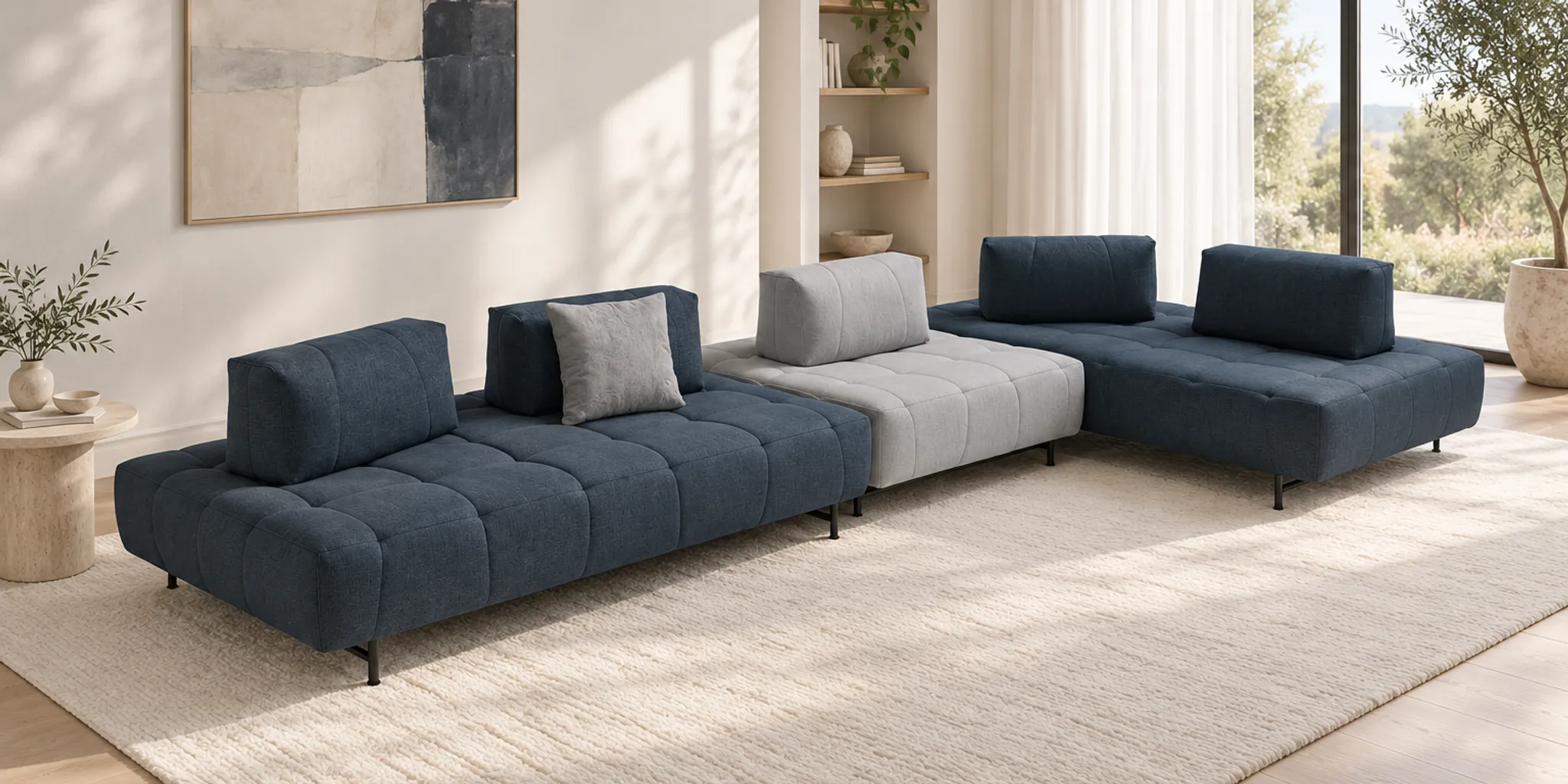
Finding modular sofa replacement parts can sound simple until you discover that a sofa section is more than a cushion or a piece of upholstery. The right fix depends on what failed, how the modules connect, and whether a new component will match the original sofa in size, finish, and comfort. A careful check can help you avoid ordering a part that does not fit or replacing an entire arrangement when a smaller repair may work.
Discuss your sofa repair or replacement options
A modular sofa is made from separate seating sections that can be joined into a larger arrangement. Depending on the design, the sections may include an armless seat, an end seat with an arm, a corner unit, a chaise, or an ottoman. Cushions, legs, upholstery panels, and joining hardware may also be replaceable components, but their availability varies by model and manufacturer.
That distinction matters. A “replacement section” usually means a complete seating module, while a “replacement part” may mean a smaller piece used to repair one module. A sofa with a damaged cushion might not need a new seat unit. A sofa with a broken connector may need hardware rather than upholstery work. And a torn cover may be repairable without replacing the structural frame.
Before shopping, write down what you mean by the part: a full seat, chaise, arm, cushion insert, cover, foot, connector, or frame component. If the sofa came from a collection that is still offered, a furniture professional may be able to help identify a compatible piece. If it is older or discontinued, a visual match alone may not be enough to establish fit.
Often, a modular arrangement can be changed one section at a time. Whether a particular damaged section can be replaced depends on the sofa’s construction, the maker’s parts policy, and the age and configuration of the original model. The fact that a sofa is modular does not guarantee that every module is sold separately or that a current section will connect to an older one.
Start by distinguishing a cosmetic problem from a structural one. A shallow fabric snag, loose seam, flattened cushion, wobbly leg, and cracked frame are different problems. Each points to a different solution and level of work. For example, a cushion insert may be replaceable while its cover is still in good condition; a damaged frame may require a qualified repair or a whole section instead.
Inspect the sofa in good light. Photograph the damage from close up and from a few feet away. Check the underside of the module if it is safe to lift, and look for labels, model names, product numbers, or manufacturer information. Do not force a connector or take apart a frame if doing so could worsen the damage. If the sofa is heavy, get help before moving it.
Then check whether the sections separate cleanly. Some modular sofas use clips, brackets, or other joining mechanisms; other designs rely on their shape and weight. Do not assume that all connectors are interchangeable. If there is a manufacturer guide or original order document, keep it with your photos. It can make identification much easier.
Use a short identification record before contacting a retailer, designer, or manufacturer. It should include:
Take one photo of the complete arrangement, one of the affected module in place, and several close-ups of its label, damage, and connectors. Include a ruler or tape measure in close-up photos when size is difficult to judge. Photos are useful for initial identification, but they do not replace accurate measurements or confirmation of the model.
If you are comparing styles or planning a different room layout, browse the sofa and sectional collection as a reference for the kinds of configurations available. A current product can help you describe the shape you want, but it should not be treated as proof that its modules will fit an older sofa.
Ask for compatibility confirmation before paying for a replacement module. The questions below are especially useful when the sofa has been in your home for several years, has been reconfigured, or came from a collection that has changed.
Do not rely on a product photograph or a general description such as “same size.” Ask for written confirmation of the model and the measurements that matter. If the supplier cannot verify a match, consider whether a repair, custom upholstery solution, or a new coordinated arrangement is more realistic.
The best answer is not always a new module. Use the condition of the sofa, the type of damage, and the goal for the room to compare the main routes. The table is a starting point, not a promise that a particular service or part is available for every sofa.
| Option | Best fit when | What to confirm | Possible trade-off |
|---|---|---|---|
| Repair the existing module | The frame is sound and the issue is localized, such as a seam, leg, or cushion problem. | Whether the repair is appropriate for the material and construction; the repair scope and likely visual result. | A repair may not erase wear or make aged upholstery look new. |
| Replace a cushion or smaller component | The module remains stable but a cushion, cover, foot, or connector is damaged or worn. | Exact measurements, attachment method, material, firmness, and model compatibility. | A new component may look or feel different from older pieces. |
| Replace one complete module | The damage is concentrated in one section and a matching, compatible unit can be confirmed. | Model generation, orientation, dimensions, connectors, upholstery, delivery, and installation. | A matching module may not be available, particularly for discontinued designs. |
| Reconfigure the existing modules | The pieces are usable but the current arrangement no longer suits the room or the damaged piece can be left out. | Whether the remaining modules connect securely and create a comfortable layout. | The new shape may not provide the same number of seats or visual balance. |
| Plan a coordinated replacement | Several modules are damaged, parts cannot be verified, or the sofa no longer meets the room’s needs. | Room measurements, access, preferred layout, upholstery, and how the new sofa will be used. | It involves a broader furnishing decision than replacing one component. |
For a localized issue, ask a repair professional whether the existing module can be restored before assuming that replacement is necessary. For a larger change, consider how the arrangement works as a whole: number of seats, clear walking routes, side-table placement, and how people enter or leave the seating area. The living room collection can help you explore coordinated pieces if you are reassessing the room rather than replacing one exact part.
Even a technically compatible module may stand out beside an older sofa. Upholstery can shift in color through sunlight, cleaning, and everyday use. Leather can develop a patina. Fabric can soften or show wear. Cushion filling can settle. These changes are part of why an exact material match may still look different when placed next to a section used for years.
If you can, compare a physical swatch with the sofa in the room, at different times of day. Look at it beside the existing upholstery rather than in isolation. Check it under the lighting you normally use, and consider whether the sofa sits near a sunny window. If a swatch is not available, ask what reference information is available and how color variation is handled.
You can also make a difference intentional. Instead of trying to disguise a new section, consider whether a reconfiguration could place it at an end, or whether a deliberate contrast would suit the room. This depends on the sofa’s shape and how the modules connect; a contrasting piece should not distract from safe, stable assembly. Pairing the sofa with a complementary living room ottoman or changing nearby accents may help the overall room feel considered, but those additions do not solve a compatibility issue.
Start with the maker or the retailer that sold the sofa. Share the original documentation, product label, measurements, and photos. Ask whether the model has a successor, whether older modules can connect to the newer version, and whether replacement covers or repair guidance are available. Do not infer interchangeability from a similar collection name.
If a matching section cannot be sourced, explore three practical alternatives: repair the damaged piece, arrange the remaining modules in a different configuration, or plan a new seating solution. A competent assessment should account for the sofa’s construction and the damage rather than promising a result based only on photographs.
Think about the entire path into the home before ordering a bulky piece. Measure doorways, hallways, stairs, elevators, and tight turns, as well as the room itself. Ask how delivery and setup are handled and what the service includes. EuroHome’s shipping and delivery information is a useful place to review delivery details when considering furniture through the store.
A damaged section can be an opportunity to reassess how the sofa works. Begin with a simple floor plan. Mark walls, windows, doors, heating elements, and the main walking paths. Then draw the current sofa footprint and note where people sit, stretch out, read, or gather. The goal is not just to fit a module into an empty spot; it is to preserve a comfortable route through the room and an arrangement that supports daily use.
Measure the complete sofa and each module. Record how much space is needed to move around it, and check that a chaise or reclined seat will not block a door or walkway. Consider whether the new layout will still work with a coffee table and side tables. A wide sectional can be visually striking, but if circulation becomes difficult, a smaller configuration may serve the room better.
Also consider the setting. European modern furniture can work in warm, traditional interiors when its scale, materials, and colors relate to the room. Wood, textured textiles, soft lighting, and familiar objects can keep a clean-lined sofa from feeling stark. Choose a repair or replacement based on the experience you want from the room, not just on whether the replacement looks sleek in a product image.
For a more joined-up decision, the EuroHome Design Center is a place to explore furniture and design questions. Bring measurements and photographs so a discussion can start from the room and the sofa you already own. To learn more about the company’s approach, visit About EuroHome.
Use this checklist during a conversation about a replacement part, module, or repair:
Keep the responses with your sofa records. If the recommendation depends on a measurement, ask how to take it. If it depends on the model, ask what evidence supports the identification. Clear answers now make it easier to decide whether to repair, replace one piece, or rethink the arrangement.
Schedule a design consultation about your seating plan
Possibly, but it depends on the manufacturer, model, age, and availability of individual modules. Confirm the exact model, dimensions, connector, orientation, and upholstery before ordering. A similar-looking seat is not automatically compatible.
In some cases, yes. First determine whether the issue is the cushion insert, its cover, or the seat frame beneath it. Match the cushion’s size, shape, attachment method, material, and feel as closely as possible, and ask whether the replacement is designed for your specific sofa.
It may not match perfectly. Existing upholstery can change with light and use, while a newly made piece has not aged in the same way. Compare a material sample in your room when possible, and ask about color and material variation before deciding.
Ask the manufacturer or original retailer whether there is a compatible successor, repair option, or replacement cover. If compatibility cannot be confirmed, consider repairing the existing section, reconfiguring the usable modules, or planning a coordinated new seating arrangement.
A successful modular sofa repair or replacement starts with identification, not guesswork. Document the model and damage, verify the connection and dimensions, and compare repair, replacement, and reconfiguration before you commit. The right solution is the one that restores comfortable, dependable seating and feels at home in the room.

