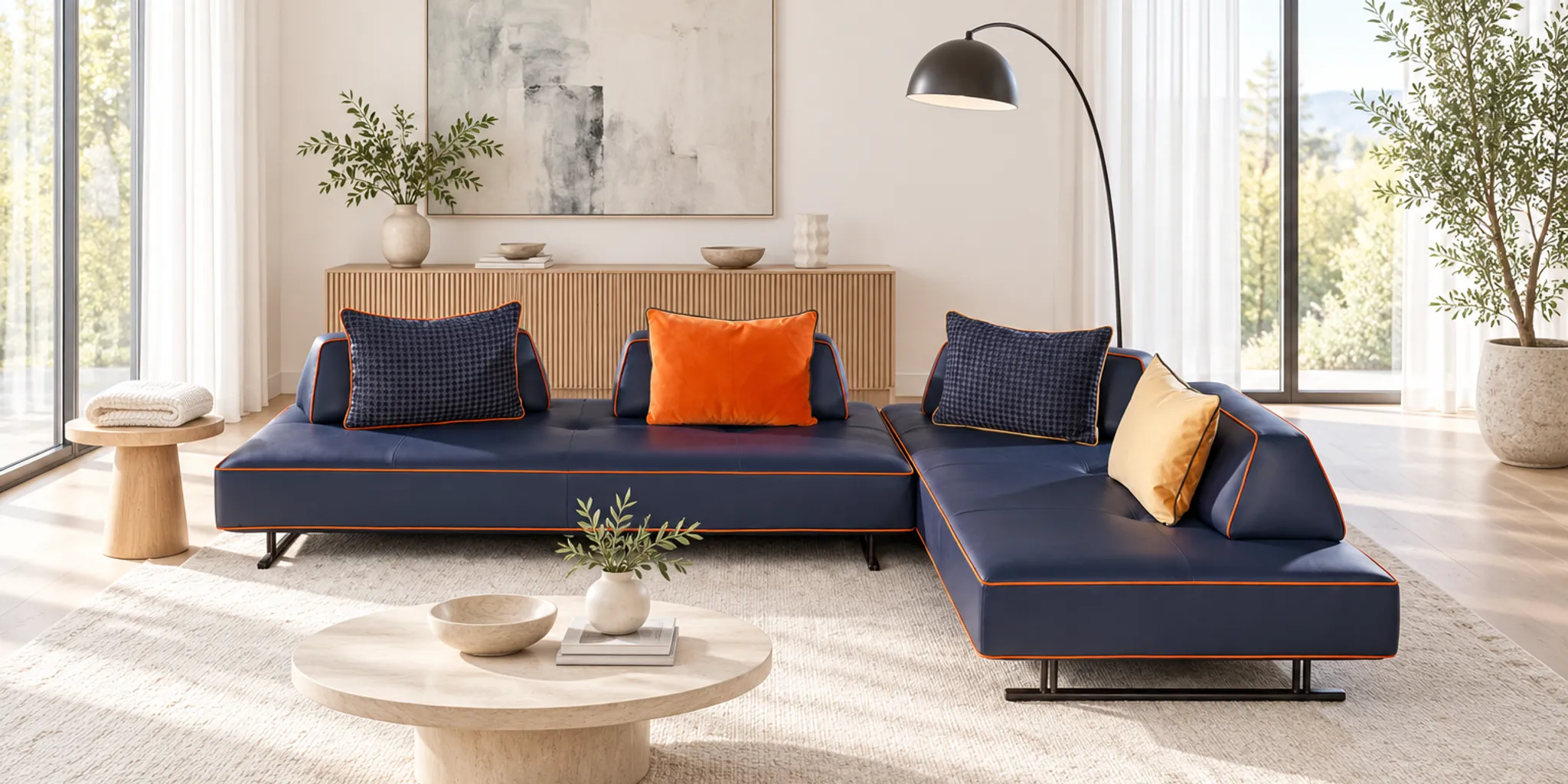
A modern sleeper sofa has to work in two different ways: it should feel inviting as a seat and become a genuinely usable bed when needed. Before choosing one, compare its open footprint, mattress comfort, mechanism, upholstery, and how often it will be used for sleeping. A little planning helps you find an option that suits the room instead of forcing the room to accommodate it.
Schedule a design consultation about your room and sofa needs
A sleeper sofa combines everyday seating with a surface for overnight guests. That sounds simple, but it asks one piece of furniture to serve different purposes. Its closed form should complement the room; its open form needs enough clearance; and its sleeping surface should match the way your household expects to use it.
Modern design does not mean a single look. A streamlined silhouette, tailored upholstery, restrained legs, or a compact profile can all feel contemporary. The right choice may also sit comfortably among traditional details. In a room with wood trim, layered rugs, or collected art, a warm fabric and softly shaped arms can make a contemporary sofa feel at home rather than stark.
Begin with the experience you want, not just the product label. Is this a place for occasional guests, a regular sleeping spot, or a flexible room that changes use every week? A guest bed used a few times a year may call for a different balance of comfort and convenience than a sofa-bed used often. Naming that use case makes comparisons more meaningful. Sleeper sofas also appear in public lodging as an extra sleeping option: Virginia State Parks lists a full-size sleeper sofa among its cabin amenities.
Think through a typical week and a typical overnight visit. During the day, consider who sits there, how many people need room, and whether the sofa will be a main gathering spot. At night, consider who sleeps on it, for how long, and whether they need a wide, uninterrupted surface. A sofa for occasional guests can prioritize a compact footprint, while frequent use makes ease of opening and sleeping comfort more important.
Write down your priorities in order. For example: a generous seat, easy opening, warm neutral upholstery, and occasional use by overnight guests. A clear list helps prevent a striking silhouette or one convenient feature from overshadowing a more important everyday need.
Measure the available wall width, sofa depth, and the route into the room before looking at finishes. Then measure the sofa in its bed-open position. Use the product's actual dimensions rather than estimating from a picture. If the listing gives only closed dimensions, ask for the open footprint before deciding.
Mark the full bed area on the floor with painter's tape or a similar temporary marker. Include the sofa's position and the bed's outer edge. This makes it easier to see whether the open bed blocks a doorway, overlaps a main walkway, or leaves room to move around it. Check nearby tables, floor lamps, radiators, cabinets, and doors as well.
Room fit includes more than the final footprint. Consider whether the sofa can be carried through the entry, hallway, stairway, or elevator. Measure narrow turns and doorway clearances, not only the room itself. A delivery path that works on paper can still be difficult if there is a tight corner or a low ceiling along the route.
Finally, consider how the room works with the bed closed. A sofa bed should not make the everyday arrangement feel cramped just because it can host someone overnight. If the room is a living area, keep a clear path between the seating, entrance, and other regularly used furniture. If it is a study or den, make sure the sofa remains useful as seating when the bed is put away.
Mechanisms differ in how the bed is stored and how the sofa transforms. Some designs unfold from beneath the seat; others convert by moving or reclining parts of the sofa. Do not assume all models open the same way. Ask for a demonstration or clear instructions for the exact model you are considering.
Pay attention to the steps involved. Does the seat need to be cleared first? Can one person open and close it comfortably? Does the mechanism require moving a nearby table? Are bedding and pillows easy to store elsewhere? These practical questions matter especially when the bed will be used regularly, or when the person setting it up should not have to lift or maneuver a heavy component.
When testing a display model, open and close it more than once if possible. Notice whether the movement feels controlled, whether the frame sits level, and whether there is enough room to complete each step. Check that the sofa returns to its intended seating position without awkward adjustments. For online selection, ask the seller to clarify the sequence, clearance, and any operating requirements rather than relying on a single product photograph.
A simple mechanism is not automatically the best one, and a more elaborate design is not automatically difficult. The key is whether the specific sofa's operation matches the users and the room. If the bed is only for infrequent visits, a few extra steps may be acceptable. If it will be opened often, a smooth, repeatable routine deserves higher priority.
Assess the sofa and bed separately. For seating, try the depth, back support, cushion feel, and arm height. Sit as you normally would, rather than perching briefly at the edge. If several people use the room, consider whether the seat feels comfortable across different postures. A sofa may look crisp and tailored but feel too firm or shallow for long evenings; another may feel relaxed but occupy more visual space.
For sleeping, ask what kind of sleep surface is included and whether its dimensions and construction are specified. Terms such as “guest bed” alone do not tell you how the mattress will feel. If you can, lie down on the open bed and notice pressure points, support, and whether the center feels different from the edges. If an in-person test is not possible, request precise information about the sleep surface and any options available for that model.
Think about who will sleep there. A single guest staying one night may have different needs from two people staying for a week. Someone sensitive to firmness or who has mobility concerns may need more confidence in the height and feel of the surface. If the sleeper sofa is likely to become a frequent bed, do not treat sleep comfort as a secondary feature simply because the piece is sold as a sofa.
Also consider the transition between functions. Seat cushions, bedding, and pillows need somewhere to go when the bed is open. Find out what can be stored within the sofa, if anything, and what needs a separate closet or cabinet. A comfortable bed is less convenient if the room has no place for linens or displaced cushions.
Upholstery affects the look, feel, and care routine. Choose a color and texture in relation to the room's light, wood tones, rug, and other major pieces. A quiet neutral can connect contrasting finishes, while a more expressive color can make the sofa a focal point. Samples are useful because fabric can look different under showroom lighting and at home. Review a sample near the room's windows and beside the existing furniture before settling on a color.
Ask what care the upholstery needs and how everyday use may affect its appearance. Consider pets, children, food, sunlight, and how often people will sit on the sofa. Do not assume a fabric is stain resistant, washable, or suitable for a particular household unless the product information confirms it. Learn what cleaning methods are recommended before a spill happens.
Construction deserves the same practical attention. Ask what the frame and support system are made of, how the moving mechanism is secured, and what the product warranty covers. Warranty details vary, so look at the actual terms rather than relying on a general impression of quality. Check whether service or replacement parts are available and how to request help if a component needs attention.
Finish details should support both the room and the way you live. Low-profile legs can keep a sofa visually light; substantial arms can create a more grounded feel. A curved back may soften a room with many straight lines. Consider how the upholstery and silhouette relate to the rest of the interior, not just whether the sofa looks appealing by itself. For additional living-room pieces, explore EuroHome's living room furniture collection and consider how a sofa relates to a coffee table or other nearby furnishings.
Put the details side by side instead of comparing by appearance alone. Use the product specifications and ask for any information that is missing. The table below is a decision framework, not a claim that every model has the same features.
It can also help to compare a sleeper sofa with the other ways you might accommodate guests. A regular sofa paired with a separate guest bed gives you freedom to choose each piece for its own purpose, but it needs more room and may create a storage problem. A sleeper sofa combines functions in one footprint, although its seating and sleeping qualities must both suit your household. A dedicated bed in a guest room can be more straightforward for frequent overnight stays, but it may be less useful in a room that needs to serve as an office or living area most of the time.
These are not universal rules; they are ways to clarify what matters in your own home. If your priority is keeping a multipurpose room open, the combined footprint may be valuable. If overnight guests stay for extended periods, a dedicated sleep space may deserve more weight. If your living room is the main social space, daily seating comfort could matter more than a feature used only a few times each year. Consider the room's primary job, then decide how much flexibility you need from the furniture.
Budget for the whole arrangement, not just the sofa's listed price. Think about delivery, any required assembly, bedding, side tables, and whether you need to move or store other furnishings when the bed is open. The relevant costs and services depend on the specific order, so confirm them directly instead of assuming they are included. This complete view can make two apparently similar choices easier to compare and can help you avoid selecting a piece that requires more room changes than you expected.
| Decision point | What to compare | Why it matters | Question to ask |
|---|---|---|---|
| Room fit | Closed dimensions, open footprint, and entry path | Confirms the piece fits in daily use and in bed mode | What clearance is needed when fully open? |
| Sleep surface | Usable dimensions, construction, and feel | Helps match the bed to guest frequency and comfort needs | Can I test or review details about the mattress? |
| Opening routine | Steps, effort, and space needed to transform it | Determines whether setup is convenient for the household | Can one person open and close this model? |
| Everyday seating | Seat depth, support, cushion feel, and arm shape | The sofa will often be used more as a seat than as a bed | Can I sit on it in my usual position? |
| Materials and care | Fabric choices, cleaning guidance, frame, and mechanism terms | Connects upkeep and durability expectations to the household | What care and warranty information applies to this model? |
| Delivery planning | Access route, assembly, placement, and service details | Large furniture needs a realistic arrival and setup plan | What should I measure or prepare before delivery? |
Use the comparison to eliminate options that miss a must-have, then weigh the remaining trade-offs. If one model fits beautifully but requires more effort to open, decide whether that trade-off is acceptable for your use. If another is easy to transform but feels wrong as everyday seating, it may not serve the room well. A useful shortlist contains a few options that meet the essential conditions rather than many that look similar online.
A modern sleeper sofa can work in a traditional or cozy home when its proportions, materials, and color relate to the existing space. It does not need to make every other piece modern. Pair a clean-lined profile with warm wood, a textured rug, familiar artwork, or layered lighting. The contrast can feel personal and collected rather than mismatched.
Look at the scale of the arms and back in relation to the room. A large, tall sofa may feel imposing beside delicate case goods; a compact silhouette may look lost in a generous room. Fabric texture also changes the impression. A softly woven upholstery can temper a crisp frame, while a smooth surface may reinforce a more tailored look. Samples and room measurements help you judge the overall effect.
Think about the full experience of using the room. Will guests have a place to set a book or a glass of water? Is a reading light accessible when the sofa is converted? Can you maintain a comfortable route around the bed? Small details like these help the room feel hospitable without filling it with extra furniture. If you are coordinating a broader sleeping space, browse the bedroom furniture collection for pieces that can support a cohesive feel.
Before committing, gather the details that affect fit, comfort, and ownership. Confirm the exact model and configuration, finished dimensions, open-bed size, upholstery selection, expected delivery arrangements, and what is included. If the product can be customized, clarify which choices affect the final dimensions or timing. Keep the written product information for reference.
Delivery details matter for large furniture. EuroHome lists information about delivery services and shipping and delivery; review the applicable details for your purchase. It is also sensible to ask any project-specific questions before ordering, especially if the sofa must fit a narrow access route or a room with limited clearance.
If the sofa is one part of a larger room plan, it can help to consider it alongside the surrounding seating. Compare scale and finish with sofas and sectionals and decide what arrangement best supports conversation, circulation, and the occasional overnight stay. EuroHome's Design Center information can help you learn about the showroom and design services before you plan a visit.
Schedule a consultation to discuss sleeper sofa options
It depends on the specific sofa, its sleep surface, and the person using it. Try the open bed when possible, and compare its dimensions and support with the needs of the intended sleeper. If it will be used often, treat sleeping comfort and ease of setup as core requirements rather than occasional bonuses.
Use the product's full open dimensions and allow enough space for the mechanism to operate and for people to move around the bed. Check clearances from walls, doorways, tables, and other furniture. The needed space varies by model, so measure the actual configuration rather than relying on a general estimate.
Yes. Choose a scale, upholstery, and silhouette that relate to the room's existing materials and details. Warm fabric, wood accents, and layered textiles can soften a contemporary profile, while a more restrained shape can balance a room with ornate or collected elements.
Ask how it opens and closes, whether one person can operate it, what clearance it needs, and where cushions or bedding go during use. If you can, test the exact model. These checks help you understand whether the transformation will be manageable in your home.
Start with the need that would make the sofa unsuitable if it failed: often the open footprint, sleep comfort, or ease of transformation. Then check everyday seating, upholstery care, construction information, and delivery access. A balanced choice is one that handles both functions well enough for the way you actually live.
The best modern sleeper sofa is not simply the one with the most striking shape or the longest feature list. It is the one that fits the room in both positions, feels right for everyday seating, and offers a practical sleeping setup for the people who will use it. Measure carefully, compare the details, and make the final choice around your real routine.

