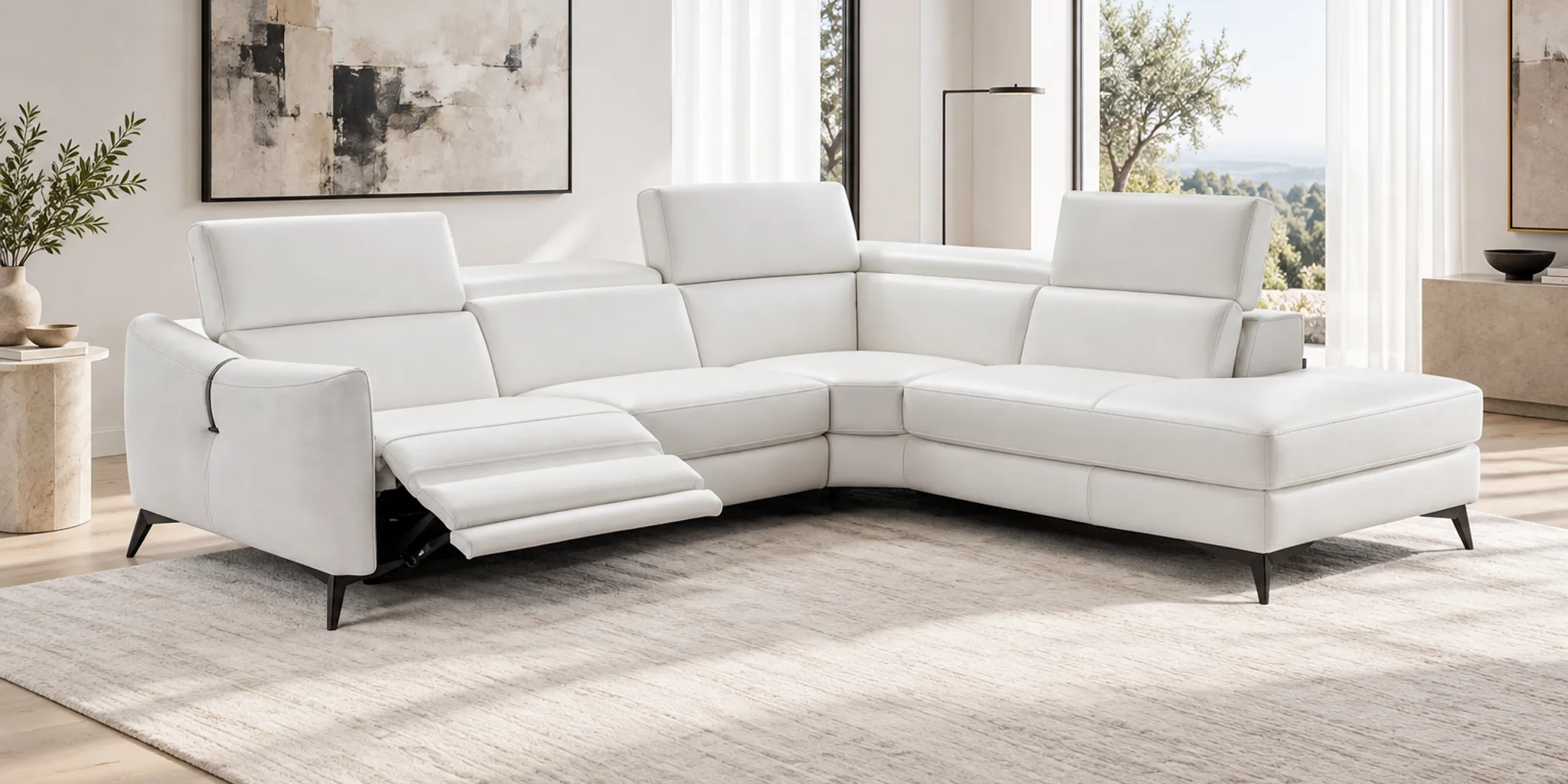
Luxury sectional cost depends on more than the number of seats. Configuration, upholstery, construction, customization, delivery, and the way the piece fits your room all shape the value. If you are comparing options, start by deciding what the sectional needs to do every day, then compare choices on the same criteria.
Schedule a design consultation
A sectional is a coordinated seating system, not simply a sofa with an extra seat. The total may reflect a particular arrangement of modules, upholstery selection, finish details, and the service needed to bring the piece into your home. Two sectionals that look similar in a photograph may differ in scale, construction, configuration, and the options included.
When reviewing a quote, separate the furniture price from delivery and installation, any selected upgrades, and other project needs. Ask what is included and what is optional. This makes it easier to compare proposals without treating a lower starting price as the full cost. A displayed starting price may describe only one size or a base upholstery choice, so make sure the specification you have in mind matches the figure under discussion.
It also helps to decide what “cost” means for your comparison. One shopper may be focused on the amount due for the furniture. Another may want to understand the total project outlay, including room planning and delivery. Both views can be useful, as long as you do not compare one product-only price with another option that includes additional services.
More modules and a larger footprint generally mean more material and a larger piece to manufacture and deliver. A left- or right-facing chaise, corner unit, armless seat, or tailored arrangement may change the configuration. Measure the room and the route into it before settling on a shape. A sectional that overwhelms a room or cannot pass through a doorway is poor value, however appealing the price.
Mark the proposed footprint with painter’s tape. Include the chaise depth and leave usable routes around the seating. Check doorways, stair turns, elevators, and any narrow hall. For a living-room plan, compare the sectional’s dimensions with other living room furniture, including coffee tables and circulation space. A floor plan with the sectional, tables, doors, and windows marked can reveal conflicts that are hard to notice in a product image.
Write down the overall width, depth, and height, along with the dimensions of each module if the arrangement is modular. Confirm the orientation using a clear reference point, such as facing the sofa from the front. “Left-facing” can be interpreted differently if the reference is unclear. A simple sketch that labels the chaise side can prevent a costly misunderstanding.
Fabric and leather differ in feel, appearance, care, and price. Within each material, finish, color, texture, and performance characteristics can affect the selection. Consider who uses the room and how. A family space used daily may call for a different surface than a quieter formal sitting room.
Samples are useful because color and texture shift with daylight and nearby finishes. View them in the room, alongside flooring, rugs, and wood tones. A warm neutral sectional can sit comfortably in a traditional home when balanced with familiar materials, layered lighting, and personal objects. For a more eclectic room, bring together finishes and patterns with a deliberate common thread, such as a repeated tone or tactile quality.
Ask for care instructions for the exact material and finish rather than relying on general assumptions about a category. Consider sunlight, pets, children, and the likelihood of spills. It is useful to compare both the look you want and the routine you are prepared to follow. A fabric sample can help you judge color and hand, while written care information helps you understand the practical commitment.
Ask how the frame, support system, cushions, and upholstery are specified. Comfort is personal, so test the seat depth, back support, cushion firmness, and how easy it is to rise. If possible, sit in a comparable configuration rather than judging from a product image alone.
Try the posture you expect to use most. Sit upright as you might while talking, then lean back as you would while reading or watching a film. If several people will share the sectional, consider their different heights and preferred sitting positions. A deep seat may feel inviting to one person and require extra cushions for another. The aim is to find a balance that suits the household, not to assume one style of cushioning is universally comfortable.
Construction details matter over years of use, but avoid assuming that one label alone guarantees durability. Ask what the manufacturer specifies, how the piece is assembled, and what care the selected finish requires. Compare the answers in writing where available. Ask about removable cushions or covers only if those features are important, and confirm whether they apply to the specific model and upholstery you are considering.
Some European collections offer choices in dimensions, upholstery, and finishes. Customization can help a sectional suit an unusual room or a precise design scheme, but it can also affect price and lead time. Confirm the available options and the final dimensions before ordering. A made-to-order selection is most valuable when it solves a real fit or use problem, not simply because more options exist.
Start by identifying the constraint. Perhaps a standard depth blocks a walkway, a room calls for a particular length, or a finish needs to coordinate with existing furniture. Then ask which changes are possible and which are not. Verify the final configuration and finish on the order documents. If a selection is made to your specification, review the applicable terms before confirming the order.
Customization can also help a room feel collected rather than overly matched. A sectional does not need to dictate every other choice. It can anchor the room while a distinctive lounge chair, side table, or rug adds personality. The useful question is whether the selected adjustment improves fit, comfort, or cohesion enough to justify its effect on the proposal.
Large furniture needs a clear delivery plan. Ask whether delivery, assembly, placement, and packaging removal are included, and whether access conditions change the service. Review the provider’s delivery information and verify arrangements for your address before committing. Installation can be an important part of the overall experience, especially when coordinating several pieces.
Share access details early. Note the building entrance, stairs or elevator, parking restrictions, and any narrow turns. Measure the tightest point in the route, not only the front door. If a sectional separates into modules, confirm the largest module dimensions and how the pieces connect. A delivery plan based on accurate measurements is more useful than a last-minute estimate.
Clarify what happens on delivery day. Ask who places the furniture, whether assembly is part of the service, and how packaging is handled. If the room is being renovated or other furnishings are arriving, coordinate timing so the sectional has a clear path and a prepared destination. The right level of service depends on your project, so make the scope explicit when comparing totals.
Begin by setting a consistent brief. Write down the maximum width and depth, the desired number of usable seats, whether a chaise is necessary, and the upholstery qualities that matter. Then request proposals against that brief. If one option departs from it, note the reason; perhaps it offers a useful change in seat depth or a finish that better suits the room. A clear baseline makes those differences visible without implying that every alternative is directly equivalent.
When you receive specifications, check how the modules combine and whether the measurements describe the assembled arrangement. A list of component widths may not tell you the complete footprint, especially when corner pieces or end units are involved. Ask for a drawing or written layout if the orientation is not obvious. Confirm whether dimensions include cushions or other projections that affect the usable walkway.
Compare like with like: similar dimensions, seat count, upholstery category, configuration, and delivery scope. The table below is a planning tool, not a price list. Exact prices depend on the selected product and specifications.
| Option | What you are comparing | Best question to ask |
|---|---|---|
| Standard configuration | Common arrangement and listed upholstery | What modules, dimensions, and services are included in the quoted total? |
| Expanded configuration | Additional seats, corner pieces, or chaise | How does the added footprint affect room circulation and total price? |
| Customized selection | Available size, fabric, or finish choices | Which changes affect price, production timing, and final dimensions? |
| Different upholstery | Material, texture, color, and care needs | Can I review a sample and compare care guidance before deciding? |
| Different service scope | Delivery, assembly, placement, and packaging removal | Which services are included, and what conditions could change the plan? |
Request an itemized proposal when possible. Put the product configuration, selected finish, delivery, assembly, and any other charges side by side. If financing is relevant to your decision, review the available financing information and its terms rather than focusing only on a monthly amount.
A useful comparison worksheet can have one row per option and columns for model or collection, module arrangement, overall dimensions, upholstery, quoted product amount, delivery scope, estimated timing, and questions to resolve. Keep a copy of the product specification with the quote. This prevents a subtle but important change, such as a different fabric grade or a missing corner module, from being mistaken for a genuine price difference.
When a quote contains an allowance or an estimate, ask what could change it. Confirm whether taxes, access-related services, or optional upgrades are included where applicable. Do not infer that two proposals cover the same work from a short description alone. A clear written scope makes the decision more straightforward for both a single-piece purchase and a larger room project.
One practical way to judge value is to imagine several ordinary days in the room, rather than picturing only a finished photo. Where does someone sit to read? Can two people stretch out without blocking the path to the window? Is there a comfortable place for a guest to join a conversation? These questions turn an abstract price comparison into a test of how well the design supports real use.
For example, a household that hosts often may value a corner arrangement that lets people face one another. A smaller household might prefer a compact chaise configuration that preserves floor space. If children or pets share the room, easy-care upholstery may matter more than a particularly delicate texture. None of these preferences creates a universal best choice; they clarify which features deserve a place in the budget.
Think about the room’s existing architecture, too. In a traditional home, a streamlined sectional can feel warm when paired with wood, patterned textiles, or a familiar rug. In an open-plan space, the back of the sectional may be visible from the dining area, so its shape and finish need to work from more than one angle. Looking at the piece in context helps prevent a costly mismatch between a beautiful object and the room around it.
Think in terms of fit, use, and confidence in the choice. A sectional that suits how you relax, accommodates guests, and works with your room plan may serve better than a less expensive piece that forces compromises. That does not mean the most expensive option is automatically the best one. Decide which features matter, then spend selectively.
It can help to divide your priorities into “must have,” “would be useful,” and “not needed.” A specific orientation or maximum width may be essential. A particular finish may be desirable but flexible. An additional module may add seating but make the room feel crowded. This simple ranking keeps the conversation focused on what the added cost actually accomplishes.
Consider how the sectional will relate to other seating. A generous sofa can be balanced by a lighter lounge chair rather than another large piece. A coffee table should be reachable from the seats without interrupting circulation. A rug can define the conversation area, while lamps add comfortable light in the evening. Explore living-room coffee tables and lounge chairs as you develop the plan, while keeping the sectional’s role clear.
EuroHome brings together curated European furnishings and design support, including space planning and project coordination. If you are planning a broader update, a consultation can help you check dimensions, finishes, and the relationship between the sectional and the rest of the room. You can also explore sofas and sectionals to see current options, and review the Design Center before arranging a visit.
Use the answers to make a final decision matrix. Give each candidate a simple rating for room fit, everyday comfort, upholstery suitability, configuration, and service scope. Add a note beside every rating that depends on an assumption. For instance, if a fabric seems suitable because it looks durable, mark that as unresolved until you receive the care guidance. This avoids treating impressions as confirmed specifications.
It is also reasonable to revisit the plan after seeing samples or testing a seat. A swatch that looks quiet online may appear much warmer beside your flooring, and a seat that feels pleasant for a minute may not suit your usual posture. Bring the same checklist to each review so you compare options consistently. If another person will use the room regularly, ask them to try the seating too.
Get answers before finalizing your selection, especially for made-to-order specifications. EuroHome’s frequently asked questions and cancellation and returns information can help you review policies. If a detail is unclear, ask directly through the contact page.
Before signing off, review the final specification as a whole rather than checking only the headline total. Confirm the orientation, modules, dimensions, material, color, and service scope. If you have a room plan, keep it with the proposal so everyone is working from the same assumptions. A few minutes spent confirming the details can prevent avoidable confusion later.
Configurations, dimensions, upholstery, construction, customization, and included services vary. Compare complete specifications rather than relying on a starting price or a photo.
Additional modules and larger dimensions typically involve more material, but exact pricing depends on the model and options. Ask for a quote based on the precise configuration you want.
It can be useful when standard dimensions do not suit the room or when a particular layout is needed. First measure carefully and confirm what customization is available, how it changes cost, and whether it changes timing.
Measure the full footprint, including chaise depth, and check the path from the entrance to the room. Also leave enough space to move around the sectional and use nearby furniture comfortably.
Compare samples in the room’s light and ask for care instructions for the precise material and finish. Think about daily use, the people and pets in the home, and the maintenance routine you are comfortable with.
Book a consultation to plan your sectional
A thoughtful comparison starts with the way you live, the dimensions of your room, and the complete scope of each proposal. When those details are clear, you can choose a sectional for comfort and fit with confidence. For a sense of how shoppers discuss sectional prices, see this consumer discussion about sectional sofa cost; it is an individual forum conversation, not a price benchmark.


