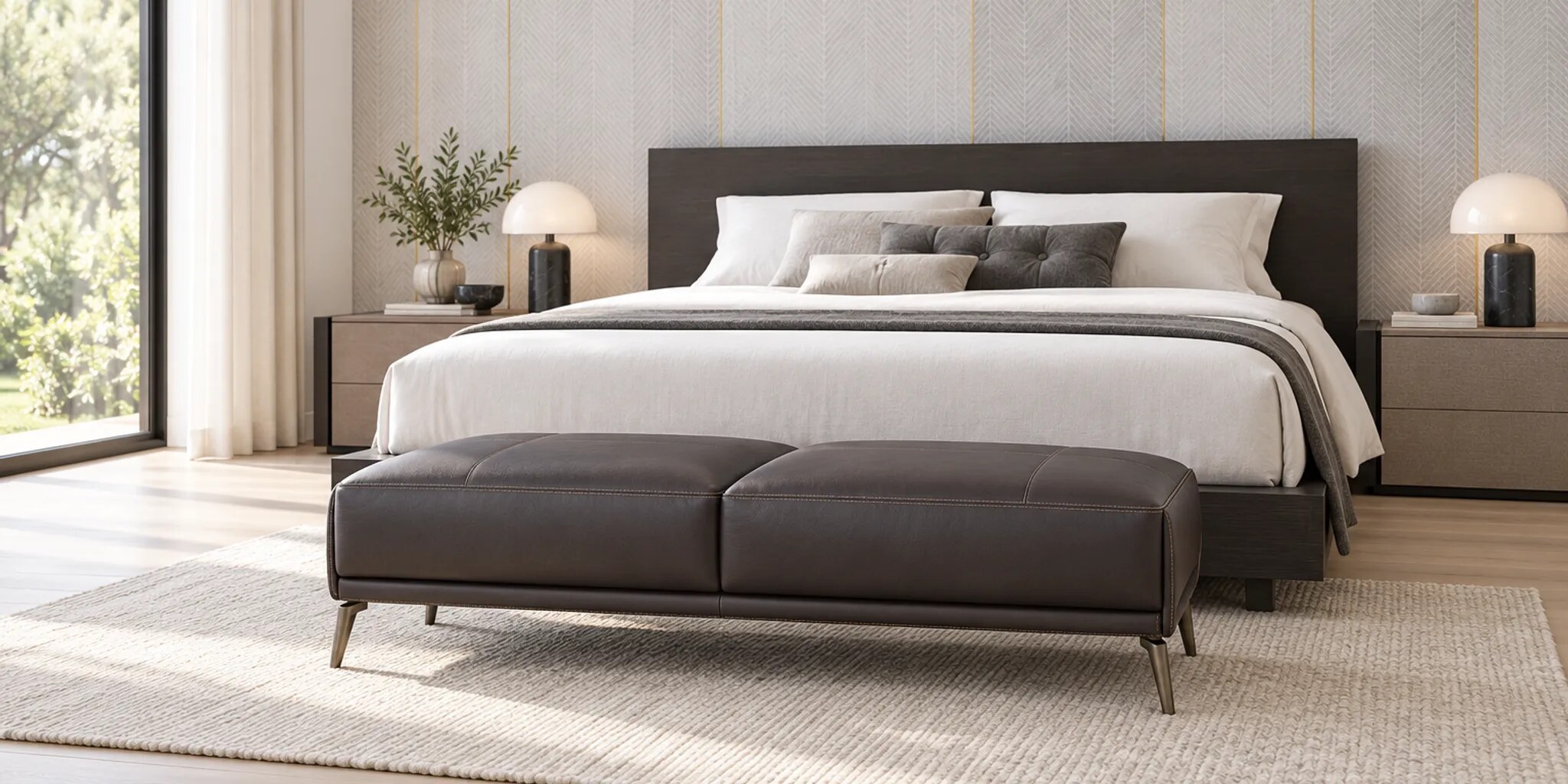
A bedroom bench can make the space at the foot of a bed more useful, but the right choice depends on more than appearance. Bedroom benches vary in width, height, upholstery, storage and visual weight. Measure the bed and the walking path first, then choose a bench that suits how you want to use the roomâwhether that means a comfortable place to sit, a surface for a folded throw or extra concealed storage.
Discuss your bedroom bench plans with EuroHome
A bench at the foot of the bed can serve as a seat for putting on shoes, a place to set a robe or a visual transition between the bed and the open floor. It can also help a large bedroom feel more composed by giving the bed a defined endpoint. In a smaller room, a simple, open bench may provide useful seating without the bulk of another cabinet.
Start with the job the bench needs to do. If you mainly want somewhere to sit briefly, prioritize a comfortable seat and sturdy construction. If it will hold extra bedding, look at storage models and consider how often you will open them. If the main goal is to finish the room visually, focus on proportion, upholstery and how the bench relates to the bed, rug and other bedroom furniture.
Think about the experience of using the room, not only how a piece looks in a photograph. A bench that blocks a drawer or narrows the route around the bed can become an obstacle. One that is too low or has a slick surface may not work well as everyday seating. For a coordinated room, compare the bench with the overall selection of bedroom furniture, while keeping the bench's particular purpose clear.
Use the bed as your starting reference. A bench is often most balanced when it is somewhat narrower than the mattress, leaving visible space at both sides. As a practical first check, measure the mattress width and compare it with the bench's full outside width, including arms or projecting legs. A bench that nearly spans the bed can look substantial; a shorter one leaves more of the bed frame visible and may feel lighter.
There is no single correct ratio for every room. A broad upholstered bed can visually support a wider bench, while a slim bed may pair better with a narrower, more delicate piece. The bed frame's outer width may also exceed the mattress width. Measure that outside dimension so the bench does not look unexpectedly small or extend awkwardly beyond the bed.
Check the room as well as the furniture. Measure the open floor between the foot of the bed and the nearest wall, door, dresser or other obstacle. Mark the proposed bench footprint with painter's tape or a folded blanket and walk around it. Include the space needed to pass comfortably and to use nearby drawers. If the bench has a lid or drawers, allow for their opening and for a person to stand there while accessing them.
Before ordering, write down three measurements: mattress width, bed-frame outside width and available floor depth. Compare them with the bench's listed dimensions, not just a styled room image. If you are still choosing a bed, review the available bed options and think about the bench as part of the room's proportions, rather than treating either piece in isolation.
Seat height affects both comfort and appearance. A bench that is much lower than the mattress can look undersized and may be awkward to use. A taller bench can feel visually heavy or sit too close to the bed surface. Many people begin by comparing the top of the bench cushion with the height of the mattress, then consider their own comfort and the intended use.
Measure the mattress from the floor to its top, including the bedding if it is usually thick. Compare that figure with the bench's finished seat height. A seat around mattress height or a little lower often creates a calm visual line, but personal preference matters more than a strict rule. If you plan to sit to dress, consider whether your feet rest naturally on the floor and whether the seat is easy to rise from. A very soft cushion can compress, so its sitting height may differ from the listed measurement.
Do not confuse seat height with the total height of the piece. A backrest or arms can make a bench look taller, and may interrupt the view of the bed or overlap a footboard. Check the product dimensions for seat height, overall height and cushion thickness separately. If the bench will sit close to a footboard, confirm there is enough room for the shapes to read clearly rather than crowding one another.
Shape determines how the bench sits in the room and how easily people move around it. A backless bench has a simple profile and can be approached from either side. It tends to preserve an open view across the room. A bench with a back can feel more like a small settee and may offer more support for longer sitting, but it usually takes up more visual and physical space.
Arms add definition and can make a bench feel tailored, though they increase its overall width and may make it harder to slide under or beside nearby furniture. A softly curved or rounded silhouette can ease a room full of straight edges. A rectilinear bench can echo a clean-lined bed. Rather than matching every line exactly, choose a shape that feels related to the bed while adding a little contrast.
Consider how the bench looks from the doorway and from the side of the bed. The foot of the bed is often a focal point, so a bulky piece may compete with the headboard or bedding. A lighter frame, visible legs or a restrained profile can keep the floor feeling open. In a more traditional room, upholstered seating can soften contemporary furniture; a warm fabric or wood tone can make a modern European interior feel welcoming instead of stark. Eclectic rooms can bring together different materials, provided there is a shared color, finish or proportion to connect them.
Compare the bench to nearby pieces without turning the bedroom into a matching set. A similar wood tone, metal finish or upholstery color can establish continuity, while one distinct texture makes the arrangement feel personal. Look at the bed, nightstands and dressers as context, but select the bench for the space and use it needs to serve.
Upholstery tends to feel comfortable and can introduce color or texture near the foot of the bed. Fabric makes sense when sitting is a priority, especially if you want a softer look. Consider the fabric's color, weave and care instructions alongside your household's routines. Pale or textured upholstery can be beautiful, but may call for more attention in a room where people regularly set down bags or clothing.
Wood or another hard-surface seat can be easier to wipe clean and may suit a room that needs a crisp, architectural accent. It can be less comfortable for extended sitting, so a cushion may be helpful. A mixed-material designâfor example, an upholstered seat on a visible wood or metal baseâcan balance comfort with a lighter appearance. Check the construction and finish details, and consider whether they relate to the bed and floor rather than matching them exactly.
Color affects the atmosphere. A bench close in tone to the bedding can blend into the room, while a contrasting shade creates a distinct focal point. Neutral upholstery is flexible, but a richer color or tactile fabric can make the room feel more individual. Bring fabric or finish samples into the bedroom if available and look at them in both daylight and evening light. The color may appear different beside the floor, wall paint and bedding than it does in a showroom or on a screen.
A storage bench can hold spare blankets, pillows or other items you want close at hand. It is useful when the room needs extra storage and there is enough space to open the bench without obstructing the walkway. But storage capacity should not be the only measure. A lid that is difficult to lift or a deep compartment that becomes hard to organize may be less useful than a simple, accessible seat.
Compare the access style with the bench's location. A lift-top needs clear space above and in front while it is open. Drawers need room to extend, and their handles should not catch on the bed or rug. An open shelf gives quick access but leaves contents visible and may gather dust more readily. For bedding, check the compartment's usable interior dimensions instead of assuming the outside width tells the whole story.
If storage is secondary, ask whether a lighter bench without a compartment would make the room easier to move through. If storage is essential, consider whether the items you intend to store will fit and whether you will use them often enough to justify the added weight and bulk. A storage bench is not automatically a better choice; it is a better choice when its capacity and access fit your daily routine.
Use the same checklist for each option. The comparison below helps separate visual appeal from practical fit. Dimensions and features vary by design, so confirm the details for the specific piece you are considering.
| Bench type | Best suited to | What to check | Possible trade-off |
|---|---|---|---|
| Backless upholstered bench | Flexible seating and a soft finish | Seat height, fabric care, cushion firmness | Less support for extended sitting |
| Bench with a back or arms | A more defined seating area | Overall height and width; view from the doorway | More visual and floor-space presence |
| Storage bench | Seating plus concealed bedding storage | Interior capacity and lid or drawer clearance | Can be heavier and needs access space |
| Wood or hard-surface bench | A crisp profile and easy surface cleaning | Finish, stability and whether a cushion is needed | May feel less comfortable for longer sitting |
| Mixed-material bench | Balancing a softer seat with a visible frame | How materials and finishes relate to the room | More details to coordinate thoughtfully |
Then compare each candidate against your room measurements and intended routine. Ask: Does the width relate well to the bed? Can people pass around it? Is the seat comfortable at the height you prefer? Will the upholstery or finish work with everyday use? Does storage justify the extra depth? This simple sequence can narrow the options more reliably than choosing by style alone.
The foot of the bed is a familiar placement, but it is not the only one. In a larger bedroom, a bench can sit along a clear wall or near a window if the doors and circulation remain unobstructed. A compact bench can also work near a dressing area, provided it does not interfere with drawers or the route to the closet. Think about light, views and how the seat will be used before choosing a position.
For a foot-of-bed arrangement, align the bench with the bed's center unless the room's layout calls for a deliberate offset. If a rug is under the bed, decide whether the bench will sit fully on it, partly on it or just beyond it. Each arrangement can work, but the rug should not bunch under the bench legs or create an unstable seat. Check that the bench is stable on the actual floor surface and that its feet sit evenly.
Leave enough space to walk around the piece and to make the bed. Test the layout before buying by taping out the bench's full footprint, including any arms or projecting feet. Open nearby doors and drawers, and check the path from the bedroom entrance. A small change in placement can make the room feel much less crowded.
Before placing an order, review the complete specifications and practical details:
For a room-wide plan, it can help to compare the bench with other seating, such as a lounge chair, and with the texture and scale of bedroom rug. Choose linked pieces only if they contribute to how you use the room; the bench does not need to match every furnishing. If you want to see furniture in person, the EuroHome Design Center can be a place to explore options and discuss the overall composition. You can also review delivery information as part of planning the purchase.
As a broad seating principle, design guidance also calls for comfortable seating options; the Northern Kentucky University campus design guidelines make that point for public spaces. A bedroom has different needs, but comfort remains worth considering alongside proportion and appearance.
Plan your bedroom bench selection with EuroHome
Not necessarily. A bench that is somewhat narrower than the mattress or bed frame often looks balanced, but the best width depends on the bed's proportions and the room. Measure the bed's outside width and compare it with the bench's full dimensions.
It can, but compare the two heights before deciding. A high bench may look imposing or feel awkward near the bed. Consider the actual seat height, the mattress height and whether a footboard or bedding changes the visual line.
Depending on its interior dimensions, a storage bench may hold spare bedding, pillows or other bedroom items. Check usable capacity and access style, and make sure the lid or drawers can open fully in the planned location.
It may be, if the footprint leaves a clear walking path and does not block doors or drawers. A compact, backless design can feel less imposing than a deeper settee. Tape out the dimensions on the floor to test the layout before ordering.
The best bedroom bench fits the bed and the available floor space, feels comfortable for its intended use and complements the room without overwhelming it. Compare dimensions, seat height, material, storage and access together. When those practical choices work, the bench can add a welcoming place to sit and a considered finish to the bedroom.

