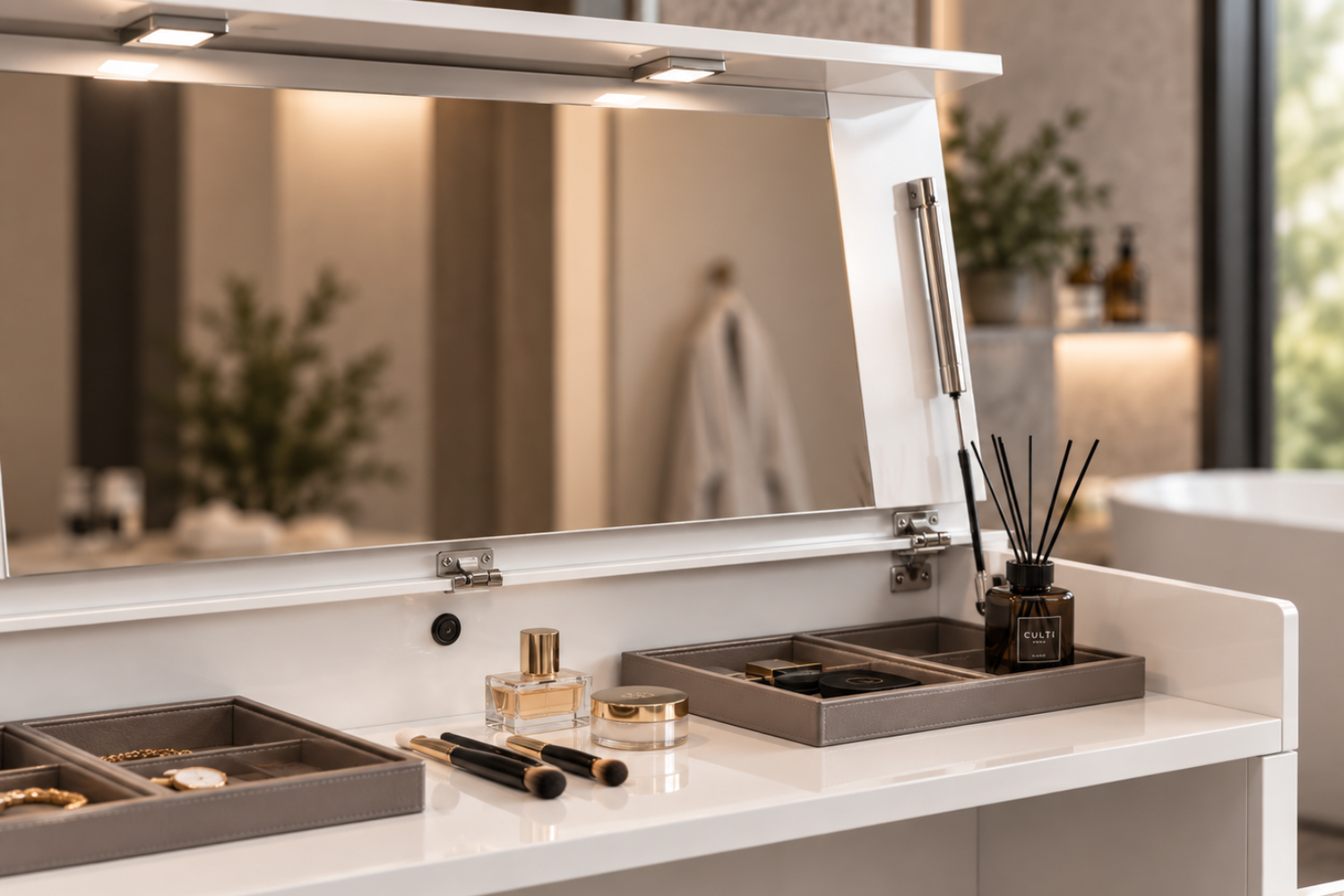
Bathroom furniture works best when every piece has a job. A vanity can anchor the room, a cabinet can keep daily essentials contained, and open storage can make frequently used items easy to reach. The most successful rooms balance those practical roles with proportion, durable materials, and a finish that feels connected to the rest of the home.
Bathroom furniture includes the pieces that support washing, storage, and everyday organization. Depending on the room, that may mean a vanity, a wall-mounted cabinet, a freestanding cabinet, open shelving, or a coordinated mirror. The right combination depends on the room's width, plumbing, circulation, storage needs, and visual character.
Start by separating essentials from preferences. The sink and plumbing establish the practical anchor. Storage should then answer a real need, such as keeping towels, toiletries, or cleaning supplies close without making the room feel crowded. Decorative pieces can follow once the daily routine works comfortably.
Measure before choosing a finish or silhouette. Note the wall available for the main piece, the swing of the door, the location of plumbing, and the clear space needed to stand and move. A beautiful cabinet that interrupts the door or leaves an awkward passage will not feel successful in daily use.
Use the room's visual weight as a guide. A floating piece can leave more visible floor and create a lighter impression, while a grounded cabinet may offer a stronger, furniture-like presence. Neither is automatically better. The useful question is which form gives the room the storage and clearance it needs.
A vanity usually becomes the room's main working surface, so consider basin placement, counter space, drawer access, and how two people might share the area. Look for a proportion that leaves comfortable clearance around the sink and does not overwhelm the wall.
Cabinets are useful when the room needs concealed storage. Compare the depth, door or drawer movement, shelf adjustability, and the items you want to store. Mirrored or tall storage can be helpful in some rooms, but only when its scale and placement suit the available wall.
Open shelving works well for towels, baskets, and a small number of visible objects. It also asks for more editing: anything left in view becomes part of the room's composition. Use open storage where easy access and an airy feeling matter, and pair it with concealed storage when the room needs visual calm.
A mirror should relate to the vanity or basin rather than float as an afterthought. Check its width, height, frame, and the way it meets nearby lighting. A well-proportioned mirror can make the room feel more generous, while lighting placed for the daily routine helps the space remain useful as well as attractive.
When comparing a mirror or mirrored cabinet, think about reflection, storage, maintenance, and the finish of the surrounding furniture together. The goal is not to add the largest reflective surface, but to create a balanced wall that supports the room's use.
Bathrooms combine moisture, cleaning, and frequent contact, so material choices deserve attention. Compare the surface finish, edge details, hardware, and care requirements rather than judging color alone. A restrained palette can feel richer when the proportions and tactile details are well resolved.
European-inspired furniture often works through quiet consistency: a considered wood tone, a calm painted finish, refined hardware, or a clear relationship between the bathroom and adjacent rooms. Choose the details that support the home's broader character instead of treating the bathroom as an unrelated space.
Bathroom furniture can include vanities, cabinets, open shelving, and coordinated mirrors. The right mix depends on the room's plumbing, storage needs, available wall space, and the way the household uses the bathroom.
Begin with clearances and circulation, then choose the smallest piece that provides the required function. Wall-mounted forms, carefully planned concealed storage, and edited open shelving can help, but every choice should be checked against the door swing and daily movement.
It does not have to match exactly. It should feel related through proportion, material, color, or hardware. A consistent design language usually makes the bathroom feel more intentional than a collection of unrelated finishes.
Good bathroom furniture brings together routine, storage, proportion, and atmosphere. Start with the room's constraints, choose pieces that solve real problems, and let the finish support the wider character of your home.
Need help matching scale, storage, and finish? Contact EuroHome Interiors for a design consultation.


